Sheet metal and roofing
Tile-effect metal roofing or clay tiles: which suits the house’s form and structure better?
In brief
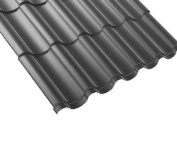
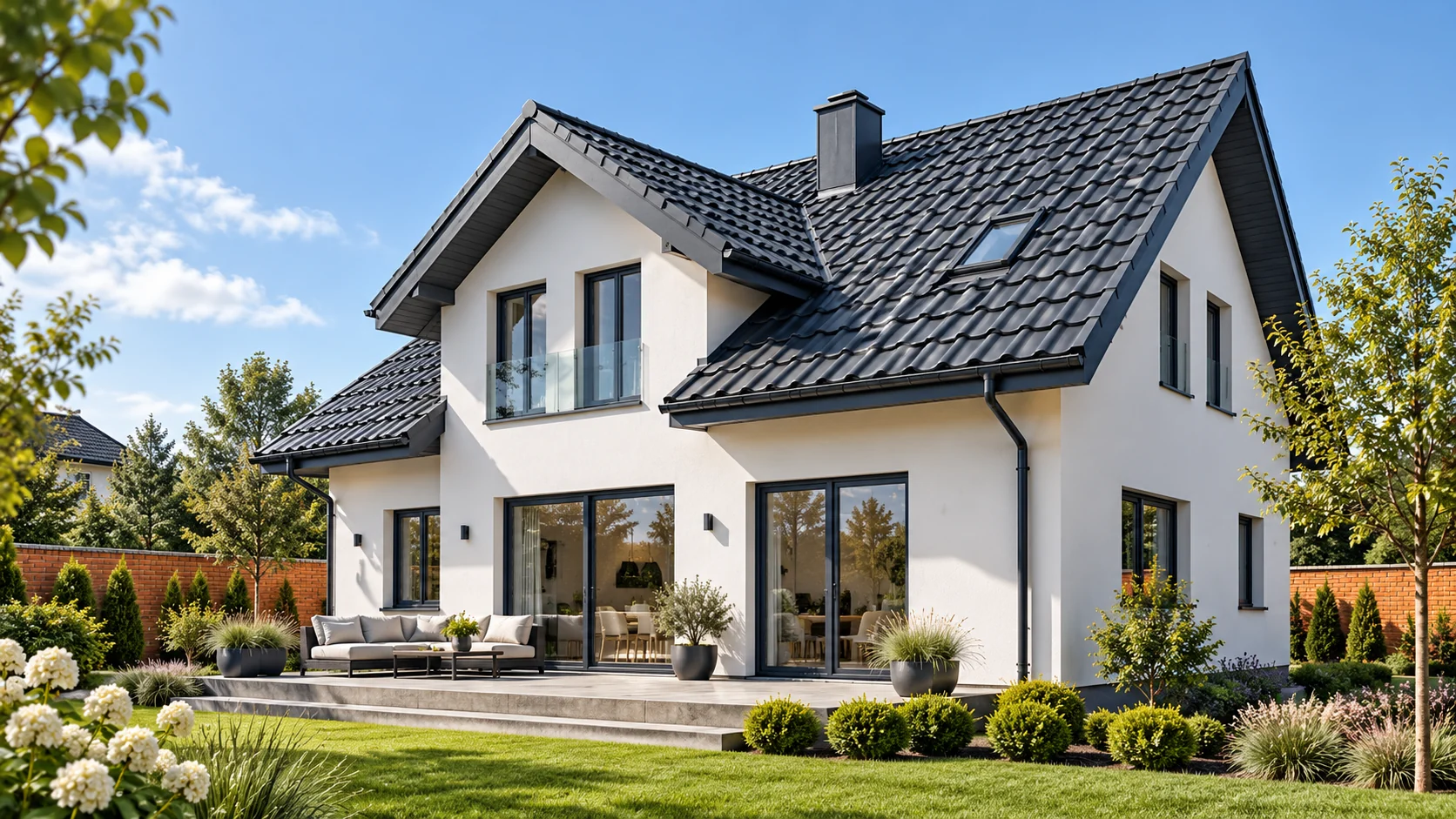
When choosing between tile-effect metal roofing and clay tiles, it is worth starting with the specific roof slope. A simple roof and a roof with dormers will use material differently. The requirements for the structure, transport and flashings will also differ. The price per square metre does not show these differences. The best comparison comes from two quotes for the same roof. On a rectangular slope, long sheets of tile-effect metal roofing can be well matched to the slope length. With roof valleys, dormers and hips, the number of cuts increases. The cut-off piece is not always suitable for the other side of the roof. The direction of the profile or the position of the overlap can be an obstacle.
How does the shape of the roof slope change the cost-effectiveness of the covering?
Small ceramic elements allow the covering to be laid gradually. They also require cutting and appropriate edge components. This does not automatically mean lower waste. It is worth asking for a laying plan for both materials. For steel sheet, additionally compare long and modular sheets. On a complex roof shape, the format may have a greater cost impact than a small difference in coating price.
What does the weight of the covering mean for the roof truss?
Steel roofing is usually significantly lighter than ceramic. This is important when assessing the existing structure. However, it does not mean that checking the roof truss can be omitted after switching to steel sheet. The roof also carries snow and wind. The condition of connections, support and bracing matters.
For a new house, the structure is selected for the planned covering and other loads. For a renovation, the timber and the actual dimensions of the elements must be assessed. Replacing a light covering with a heavier one requires a separate check. It should not be undertaken on the basis of an assurance that a similar house nearby has a ceramic roof. Differences may be hidden in the rafter spacing or the way they are supported.
How to compare the full cost in one summary?
Assume the same roof surface area and the same scope of work. Enter the base covering, accessories, flashings, layers under the covering, transport and labour separately. Add dismantling and disposal if they apply to the renovation. Comparing steel sheet alone with a complete set of tiles and accessories will be uneven.
| Item | What to check in both quotes? |
|---|---|
| Main material | Purchased area and actual coverage |
| Roof edges | Eaves, gables, ridges and roof valleys |
| Penetrations | Chimney, windows, ventilation and access |
| Additional works | Substrate repair, scaffolding and lifting |
Only the sum of these items shows the difference. It is also worth noting what the quote does not include.
Does one material always last longer?
Durability depends on the specific product, the environment and the workmanship. With steel sheet, the protection of the steel core, the organic coating and the condition of cut edges are important. Deep damage to the protection requires assessment and repair. Swarf left behind can cause local corrosion marks.
With a ceramic covering, cracks, fixings and the condition of finishing elements must be checked. The durability of the material itself does not mean that all seals and layers beneath it have the same service life. A long guarantee is also not a promise of a maintenance-free roof. Compare the scope of protection, exclusions, maintenance conditions and the rules for reporting a defect. The number of years alone is not enough for assessment.

What about noise and loft comfort?
The sound of rain depends on the entire building envelope. The external material alone does not determine the sound level in the bedroom. The layers beneath the covering, the insulation, the airtightness, the ceiling and the structural connections are important. An open canopy behaves differently from a properly constructed habitable attic.
If quiet is an important criterion, compare complete solutions. Ask about the layer build-up and how vibration transmission is limited. Do not treat fleece under steel sheet as a substitute for room acoustic insulation. It is a material used primarily for temporarily retaining condensation. Its effect does not solve all noise or moisture problems.
How to decide without relying on the sample’s appearance alone?
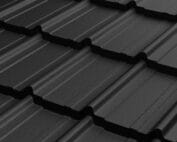
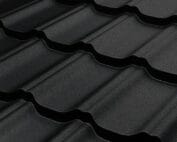
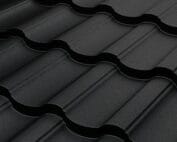
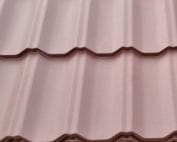
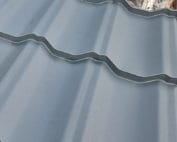
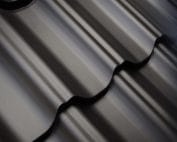
View the material at the scale of the roof slope. A large profile pattern can dominate a small house, while a finer pattern organises a roof with dormers differently. Check the view from the street and from the garden. Assess colour and gloss in daylight, next to the façade and joinery.
Before ordering, also establish the possibility of future repair. A single ceramic element and a long sheet are replaced in different ways. Access to the work location may be more important than the cost of the part itself. Choose the variant for which you have a confirmed structure, a complete quote and a contractor familiar with the given system. Only against this background should you assess the aesthetic difference.
Questions before ordering
Does tile-effect metal roofing always give the cheapest roof?
No. Cost is affected by the cutting layout, the coating, the flashings and the labour. Complete offers must be compared for the same geometry and an identical scope of work.
Can a heavier covering only be chosen after the roof structure has been built?
Any change must be agreed with the designer. The existing structure may have been selected for different loads. The appearance and cross-section of the rafters alone do not confirm its suitability.
7 branches. Materials closer to your project.