Sheet metal and roofing
How to choose between tile-effect metal roofing and trapezoidal steel sheet for a house roof?
In brief
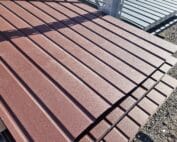
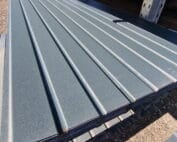
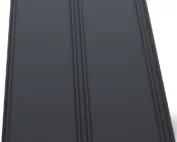
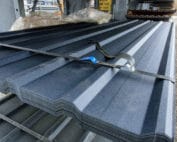
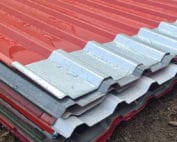
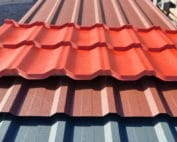
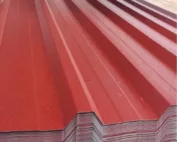
Tile-effect metal roofing and trapezoidal steel sheet are both made from profiled sheet metal, but they organise the appearance of the house differently. The first creates a rhythm of transverse steps. The second runs clear lines from the eaves up the roof slope. The choice should also be determined by pitch, layout and structural requirements. The label ‘for a house’ or ‘for a hall’ alone explains little. On a low building the roof takes up a large part of the visible volume. Tile-effect metal roofing gives a division close to the arrangement of roof tiles. Trapezoidal steel sheet creates a calmer rhythm in one direction. Both solutions can suit a house if their scale harmonises with the façade and joinery.
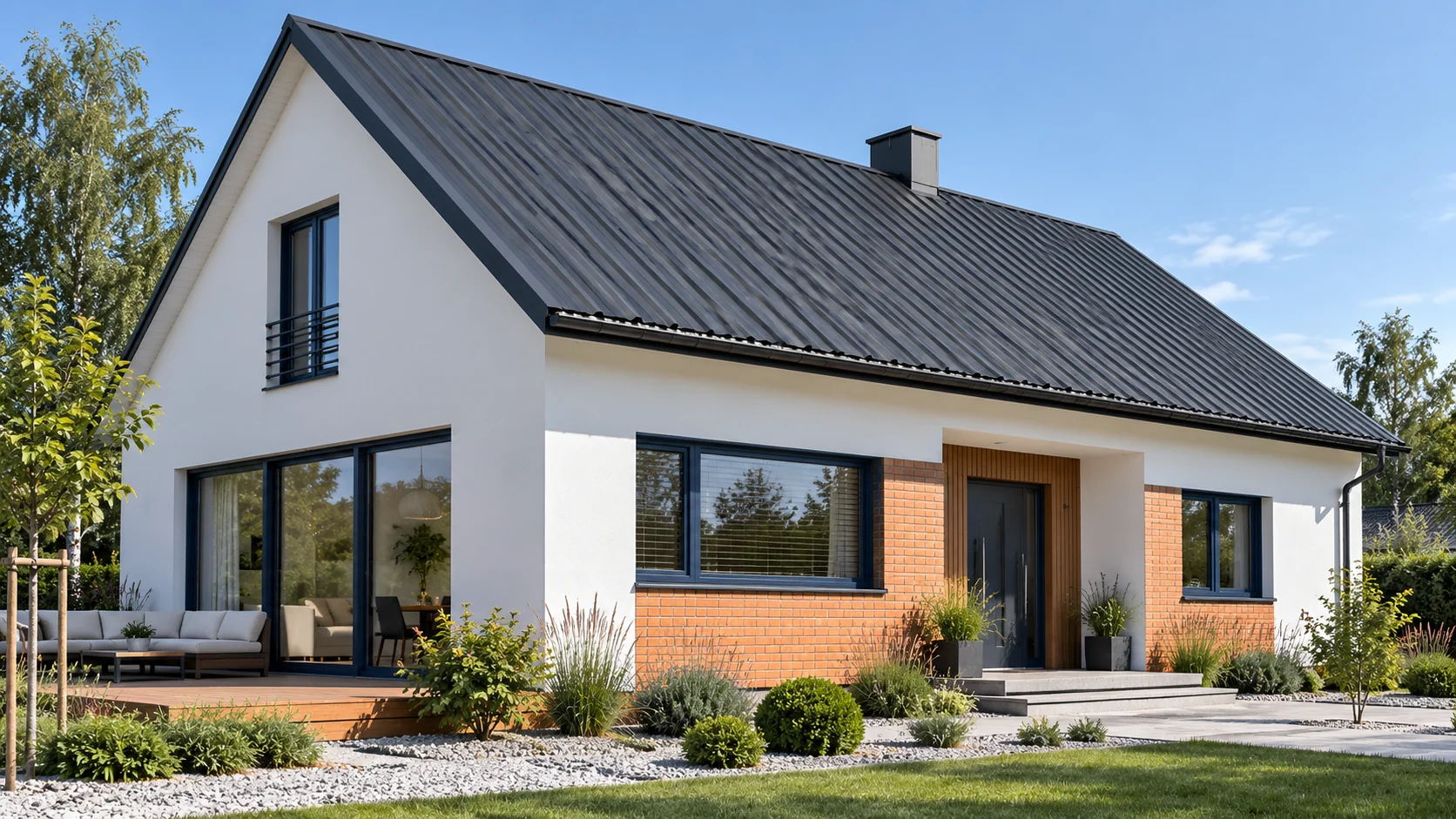
How does the profile change the proportions of a small house?
Do not choose a profile based solely on a small sample. Look at photos of entire roof slopes and compare the height of the ribs. On a short slope, a large pattern may look different than on an extensive roof. It is also worth checking the view from the street. At a low viewing angle, the gloss and the edge of the eaves may affect perception more than the shape of the wave itself.
Are both coverings suitable for the same pitch?
Not always. The minimum pitch results from the documentation of a specific profile. For example, a modular tile-effect metal roofing requires at least 15°, although other solutions have different values. This threshold must not be applied as a common rule for all tile-effect metal roofings.
Trapezoidal steel sheets also have their own limitations. The profile height, the arrangement of overlaps and the length of the drainage path matter. At a low pitch, transverse connections, roof valleys and roof penetrations are important. Do not choose a material solely because its name contains a higher number. The design should confirm the entire roofing system. If the roof slope angle is too small, changing only the coating will not solve the problem.
How to compare the layout on the roof with the windows?
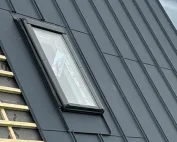
Draw the strips from the eaves to the ridge and mark all openings. In trapezoidal steel sheet, the profile runs along the sheet. In tile-effect metal roofing, a transverse module is added, which affects the position of cuts and overlaps. A narrow section between a window and the gable needs to be checked in both variants.
For example, a roof slope 8 m wide may require a different number of strips depending on the effective width of the selected product. Do not divide the roof area by the area of a single sheet and treat the result as an order. Actual lengths, cut-offs and terminations are needed. Pay particularly close attention to roof valleys, where the cut-off pieces cannot always be reused.
What does the difference in price and structural requirements mean?
Compare the same steel thickness, type of coating and scope of supply. A cheaper trapezoidal steel sheet with different parameters is not a direct equivalent of a more expensive tile-effect metal roofing. The full cost also includes flashings, screws, layers under the covering and labour.
The support spacing must match the profile and the loads. A higher trapezoidal steel sheet rib may increase load-bearing capacity, but the exact result depends on the section and the steel. Tile-effect metal roofing, in turn, has its own batten spacing requirements linked to the module. Changing the material after the substructure has been built may require adjusting it. It is worth calculating this cost before ordering, rather than adapting the sheets to randomly left supports.

Will trapezoidal steel sheet be louder inside the rooms?
This cannot be assessed from the name of the covering alone. The sound of rain is transmitted through the entire roof. Insulation, the ceiling, the layers beneath the sheet and the structural connections all matter. The same sheet over an open shelter and over a finished attic creates completely different conditions inside.
If there is to be a bedroom under the roof, compare complete cross-sections. Check the airtightness of the layer on the interior side and the ventilation solution. Anti-condensation felt will not replace insulation or designed acoustic protection. It is also not a way to fix accidental gaps in the roof layers. Comfort must be planned together with the building envelope, not bought after the sheet has been installed.
What questions should you ask before choosing?
First establish whether both variants suit the roof pitch and structure. Then compare the cutting plans and full quotations. View the colour in daylight and check how the flashings fit. For a house with a small garage, it is worth deciding whether both roofs should form a single rhythm or clearly differ in function.
- Does the contractor know the chosen profile and its details?
- Does the quote cover all edges and transitions?
- Can long elements be safely brought onto the roof?
- Does the coating suit the environmental conditions?
The final choice should follow from these answers. Aesthetics remain important, but a covering only looks good once it is properly matched to the building form and installed without accidental cuts.
Questions before ordering
Can trapezoidal steel sheet be used on a single-family house roof?
Yes, if the specific variant is intended for roofing and meets the project requirements. The pitch, load-bearing capacity, support and connection details must be checked.
Can identical battens be left under tile-effect metal roofing and trapezoidal steel sheet?
This should not be assumed. Each profile has its own requirements. Changing the covering requires checking the spacing, cross-section and condition of the substructure.
7 branches. Materials closer to your project.