Sheet metal and roofing
How do you calculate the real cost per square metre of tile-effect metal roofing on your own roof?
In brief
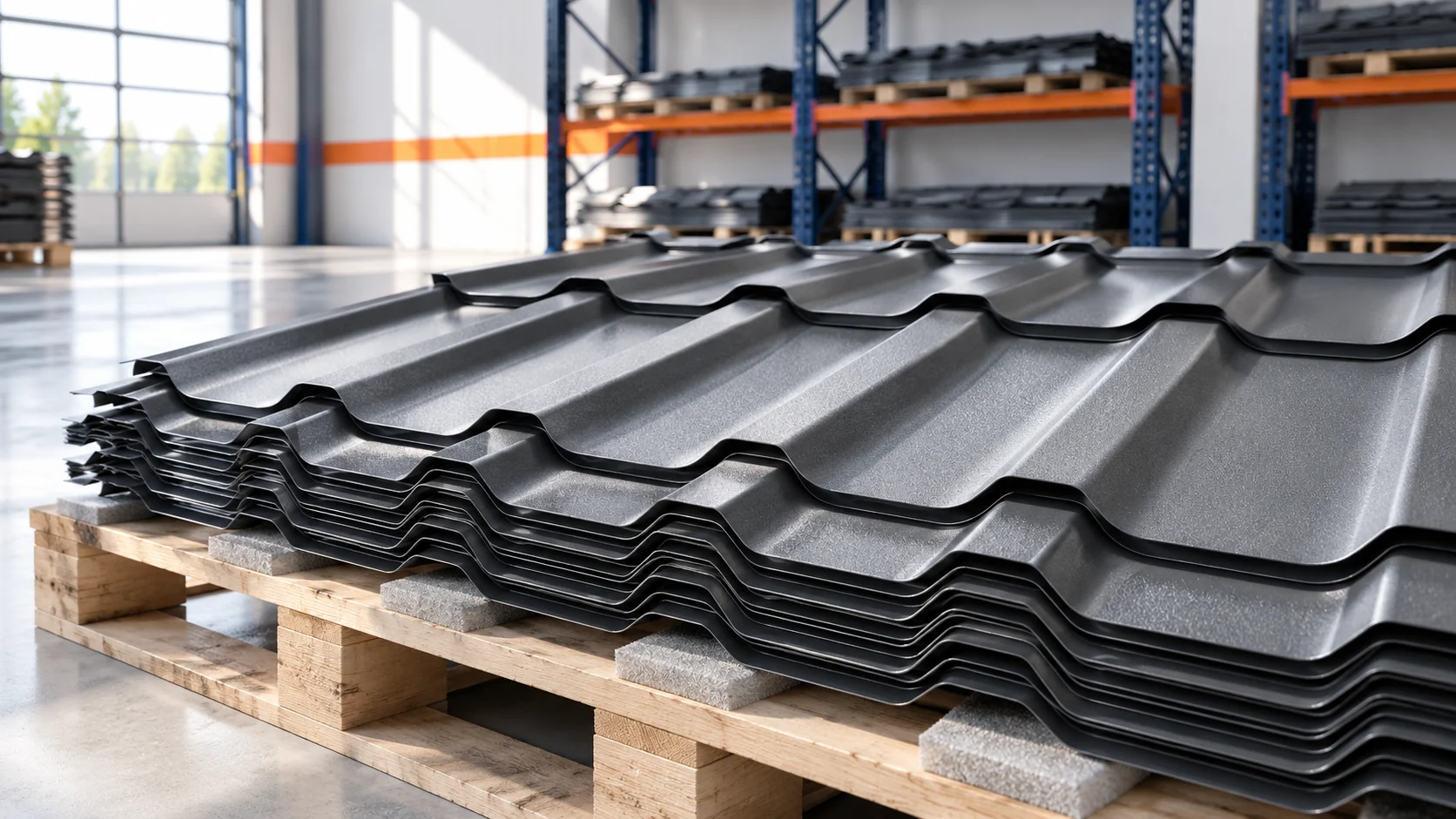
The price of tile-effect metal roofing per square metre may refer to different surfaces. One quote bills the entire sheet, another its coverage. Add to this cut-offs, flashings and fixings. It is worth calculating the cost per square metre of the finished roof slope. Only then can you see whether a cheaper sheet really gives a cheaper roof. The overall width also includes the part hidden in the overlap. The coverage width describes the usable strip after the sheets are joined. For modular elements, a similar difference occurs along the length. The price per overall area and the price per effective area are not directly comparable.
Which square metre are you paying for?
An example profile has an overall width of 1192 mm and a coverage of 1105 mm. The ratio of these values is approximately 1.079. If the price referred to the full width, converting it to the coverage alone would be about 7.9% higher. This does not yet account for offcuts on the roof. First check the unit in the quote, and only then compare the numbers.
How does the cutting layout change the price of the finished roof slope?
In this worked example the roof area is 86 m², but the cutting plan calls for 95 m² of sheets. At an assumed net price of €11.57 per m², the sheets cost €1099.15 before VAT. Dividing by the area covered gives €12.78 net per m² of roof.
This is not a current price list or a complete quote. The example shows why a fixed percentage allowance can be misleading. On a roof with valleys and dormers, the waste results from the shape of the sheets. On a simple rectangle, it may be much easier to limit. Ask for a list of cutting plan elements instead of assuming one allowance for every roof shape.
Which parameters change the material price?
The thickness of the steel core, the type of metallic protection and the outer coating are important. The profile, format and colour are additional factors. A higher price is not in itself proof of greater durability. The declared properties and conditions of use of the specific coating must be checked.
Do not compare sheets only by similar shade. One may have a different steel thickness and a different texture. In the comparison, record the full specification of both proposals. If the quote does not state the thickness or the name of the coating type, ask for it to be completed. Without this data, even a very accurate price per metre calculation does not provide a fair qualitative comparison.
How do you calculate flashings and accessories?
Match the flashings to the roof edge lengths. Count separately the eaves, gables, ridge, valleys and wall connections. Include the effective length of the element after overlaps. The total metres of edges does not have to equal the total metres of flashings ordered.
- Select fixings to suit the profile and type of substrate.
- Include sealants only where the system specifies them.
- Price installation penetrations and chimney flashings separately.
- Check ventilation elements and safe roof access provisions.
On a small roof, accessories can form a significant part of the budget. This results from the long edge length relative to the roof area, not from an error in the sheet price.

Why is it worth pricing transport and labour in advance?
Long sheets can reduce the number of joints but require suitable transport and handling. On a narrow driveway, the stopping point for the vehicle must be determined in advance. It is worth checking whether the contractor has the conditions to lift the sheets without permanent bending.
In the labour quote, establish the scope of substrate preparation. Does it include adjusting battens, replacing damaged elements and making all flashings? Is scaffolding a separate item? The price for laying the covering alone does not describe the cost of a completed roof. For a renovation, an amount for dismantling and sorting materials is also needed. These works may be independent of the chosen sheet colour.
How can you compare two quotes without hidden differences?
Build a simple table: identical roof plan, the same specification and the same scope. Enter quantities, units, net values and the agreed method of tax settlement. Do not add net amounts to gross. Record the quote’s validity period and delivery terms.
Finally, divide the full comparable cost by the same roof area. Keep the total cost alongside, because that is what will burden the budget. If the difference is large, check for missing items. A cheaper proposal can be advantageous, but it should result from a specific scope and parameters. A low figure next to the m² symbol alone does not explain what you will receive on site.
Also check the minimum order value and surcharges for non-standard formats. With a small number of sheets, these items can change the comparison result more than a discount on the material itself.
Questions before ordering
Is it always worth adding 10% extra tile-effect metal roofing?
Not as a substitute for a cutting plan. The required quantity results from the roof slope geometry, the format and the possibility of using offcuts. A fixed percentage can overstate or understate the order.
Can the price per linear metre of a sheet be compared with the price per m²?
Yes, once the correct width is taken into account. It must be established whether the conversion relates to the total area or the effective coverage.
7 branches. Materials closer to your project.