Insulation
What role can metal roofing play in an energy-efficient home?
In brief
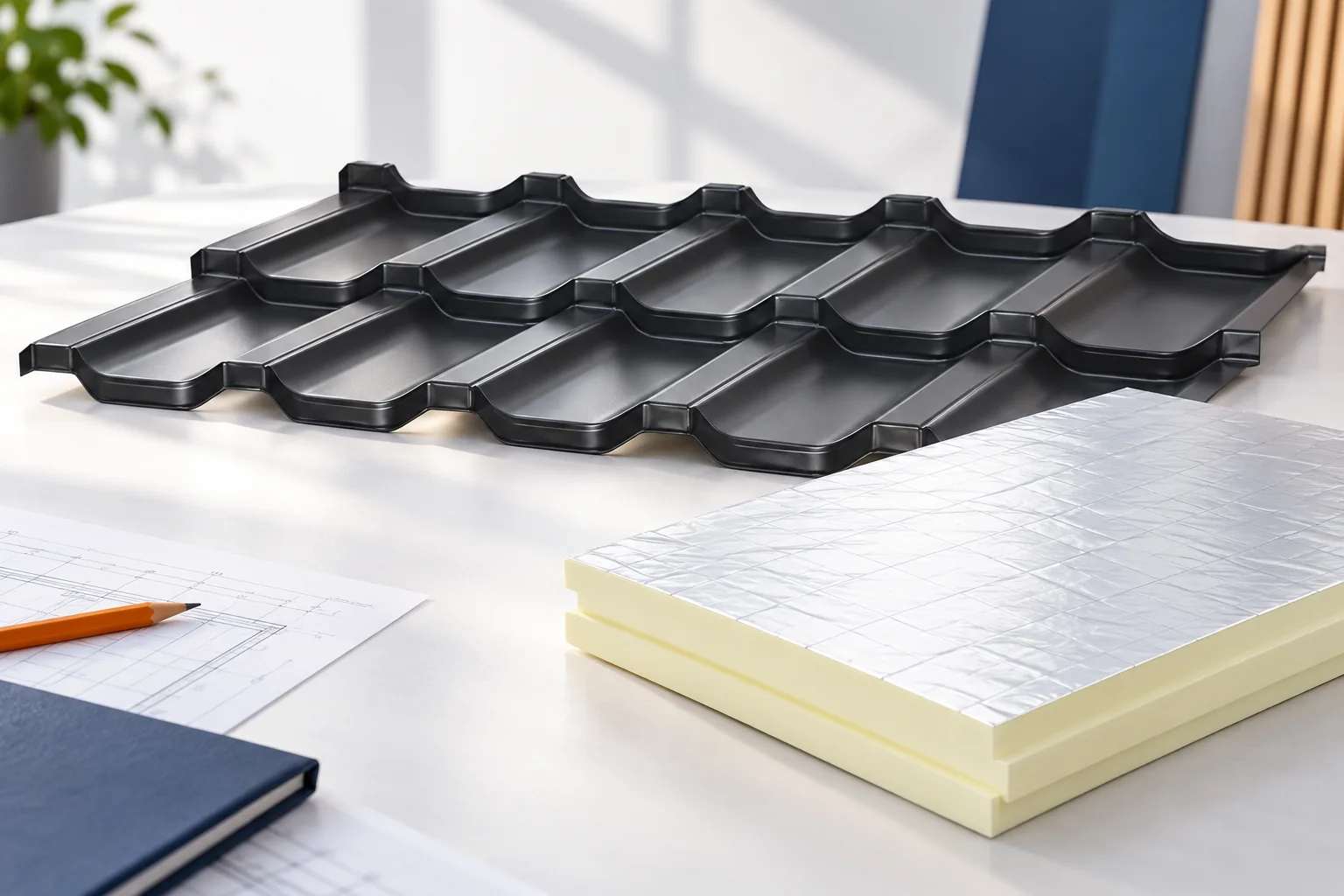
Metal roofing can work well with the roof of an energy-efficient home, but on its own it does not provide thermal insulation. Heat loss is determined by the layers of the building envelope, their continuity and airtightness. PIR boards help achieve high thermal resistance with a smaller thickness. At the same time, thermal bridges, moisture and connections must be resolved. The low weight of the roofing is a structural advantage, not proof of low energy consumption. Tile-effect metal roofing or trapezoidal steel sheet protect the roof from precipitation and form its outer surface. Steel conducts heat well, so a thin sheet is not a thermal insulation layer. In a typical solution, the insulation is located below. Its position and thickness must result from the design of the entire building envelope, not from a declaration concerning the colour or profile of the sheet.
What function does the sheet metal serve in a warm roof?
Tile-effect metal roofing or trapezoidal steel sheet protect the roof from precipitation and form its outer surface. Steel conducts heat well, so a thin sheet is not a thermal insulation layer. In a typical solution, the insulation is located below. Its position and thickness must result from the design of the entire building envelope, not from a declaration concerning the colour or profile of the sheet.
The low weight of the covering can be advantageous when designing or renovating a structure. All layers, snow, wind and equipment are still taken into account. An energy-efficient roof is not a separate type of tile-effect metal roofing. It is a system in which the covering, insulation, sealing layers and details work together as intended. Each of these parts solves a different problem.
What does the low lambda of PIR boards achieve?
The lower the thermal conductivity of a material, the smaller the thickness needed to achieve the same resistance of the layer. For an example PIR board with a lambda of 0.022 W/(m·K), a 100 mm layer gives a resistance of approximately 4.55 m²·K/W. This is a calculation from thickness and lambda, not a ready-made thermal transmittance of the whole roof.
The same resistance would require approximately 164 mm of a material with a lambda of 0.036 W/(m·K). Such a value occurs in some EPS boards. Other variants have different parameters, so this difference should not be attributed to every polystyrene. The comparison must be made for specific products. The benefit of PIR is particularly useful where limited height makes it difficult to increase the insulation thickness.
Why does continuity of insulation matter?
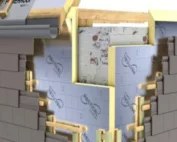
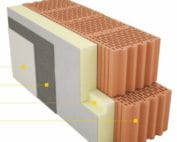
Wooden structural elements, gaps and uninsulated details can increase heat flow. A layer above the rafters allows the insulation to be run over the rafters. Fixings, support and connections at the edges must still be designed. Fasteners and joints do not disappear from the calculations just because the boards form a large, seemingly even surface.
The eaves, wall plate, ridge and connection to windows require the most attention. The material should be fitted without accidental gaps. Milled edges facilitate joining, but do not release from accuracy. With two layers, the arrangement of joints is determined in accordance with the design and instructions. Continuity must be checked before the insulation is covered with further elements.

How does airtightness relate to protection against moisture?
Warm, moist air from the interior should not flow freely through leaks into cool parts of the roof. Therefore a continuous airtight layer and proper vapour control are important. Its connections to the wall, windows and service penetrations are just as important as the surface between them. The insulation boards alone do not guarantee the airtightness of all these places.
Ventilation beneath the roof covering has a separate task. In a ventilated system, an unobstructed inlet and outlet must be left. However, one should not expect this space to remedy any leakage from the dwelling side. The design must account for both issues. When changing the insulation material, it is worth rechecking the moisture behaviour of the entire building envelope.
Does PIR have an advantage in every parameter?
No. Its strength is thermal insulation performance at a small thickness. Mineral wool can offer favourable fire and acoustic properties, depending on the product and the entire system. XPS has applications related to moisture and loads. These materials must not be swapped solely on the basis of a lambda comparison.
PIR should not be called a non-combustible material. The classification must be read for the specific product, and the fire requirements checked for the entire roof. Likewise, energy savings depend on the building, ventilation and how it is used. A fixed percentage of lower bills cannot be reliably promised on the basis of purchasing one board thickness alone.
How do you prepare a sensible roof variant?
Determine the thermal, acoustic and fire requirements, then select the layers and details. The quote should cover the insulation, fasteners, seals and work at the connections. A cheaper board that omits the necessary components does not mean a cheaper correct building envelope. A comparison of two variants should relate to a similar in-use effect.
Before acceptance, check the continuity of the layers and keep photographs. In a house with high energy requirements, it is worth providing for an airtightness test appropriate to the design. It allows areas needing improvement to be detected before the finishing is completed. Metal roofing suits such an approach well if it has been combined with well-considered insulation and careful workmanship.
7 branches. Materials closer to your project.