Installation and workmanship
Storing tile-effect roofing sheets from delivery to installation
In brief
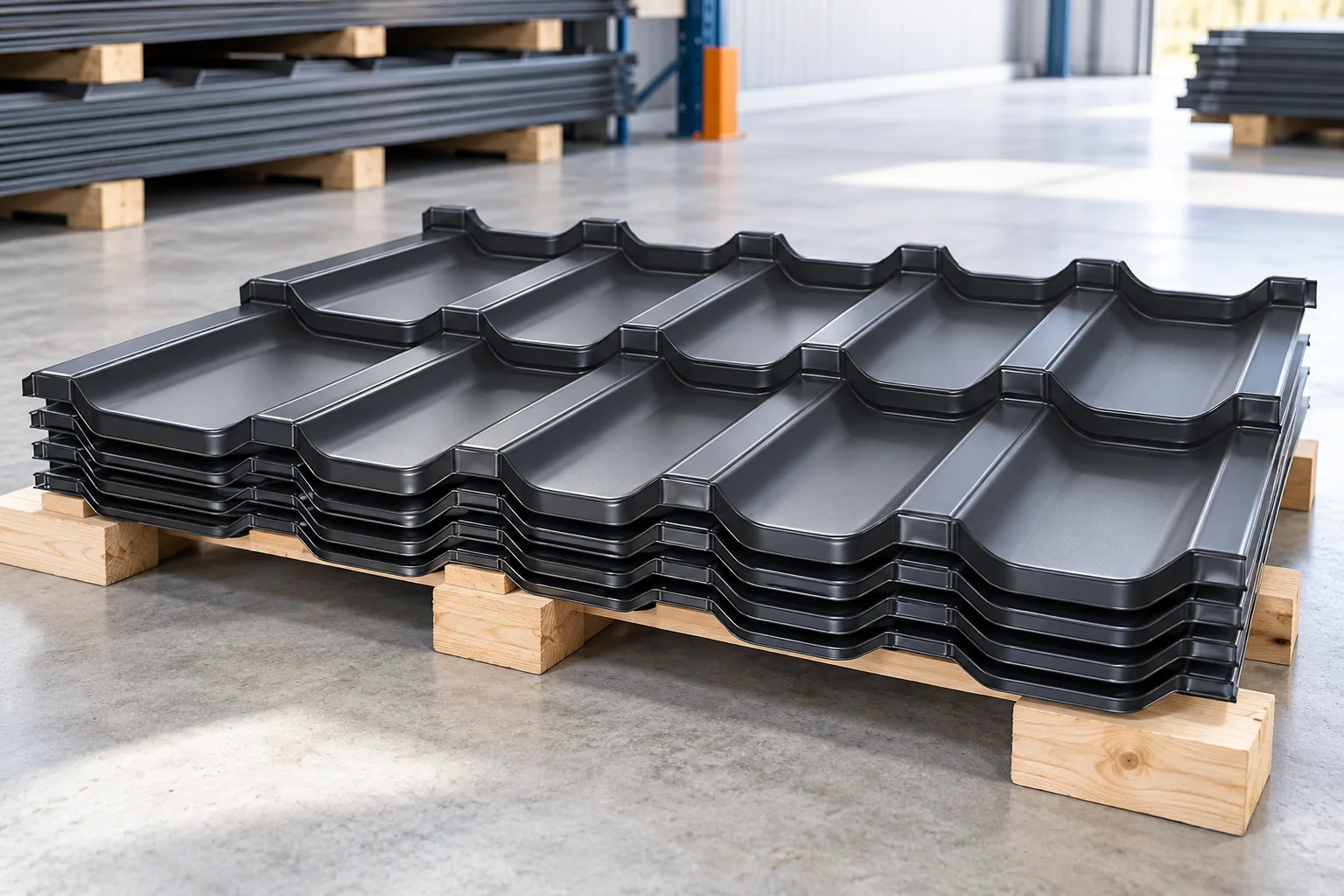
Before installation, roofing sheets need protection, and their condition is already determined at delivery. Check that markings match, count the elements and look for visible dents, abrasions and signs of damp; photographs before unloading and after placing the material will help with any later report. Set the packs on dry, stable and ventilated ground, away from running water, and do not leave them in tight foil in the sun. The permitted storage time and stacking arrangement depend on the specific product, so agree a plan with the team before the vehicle arrives.
What should be checked immediately on delivery?
Begin by checking that the markings, the number of items and the visible condition of the packs match. Look out for dents, scuffing of the packaging and signs of wetting. It is worth taking photographs before unloading and after positioning the material. Damage noticed on delivery must be described in accordance with the supplier’s procedure. Do not wait until the roof covering is finished before reporting it.
Also compare the lengths, colour and finished side with the order. Sheets from different batches should be marked so that the crew knows where to use them. If the packaging is wet, the absence of water on the outside does not prove that the inside is dry. The condition of the material must be checked and the instructions followed. A closed pack can retain moisture between the sheets for a long time.
How should safe unloading be organised?
The method of unloading depends on the length of the sheets and the form of the pack. Long items require support that will not let them buckle. The use of random slings or forks set too narrowly can deform the material. The delivery plan should therefore take into account the available equipment, access and manoeuvring space. Dropping the pack onto the ground is no saving of time.
When carrying individual sheets, avoid dragging one over another. The resulting scratches can be difficult to see on a dusty surface. The number of people and the grip points should suit the format. Even a light sheet becomes difficult to control in wind. Work should be carried out in conditions that allow control over the material to be maintained.
Where should the packs be placed before work begins?
The ground should be level, stable and dry. The material is laid on suitable supports, isolated from the ground. It should not lie where rainwater runs off or mud from passing traffic reaches it. The best conditions are provided by a covered, well-ventilated space meeting the requirements of the instructions. A tarpaulin alone does not solve the problem if it traps moisture around the pack.
The permissible storage time and the arrangement of the packs are important. Rules should not be transferred from one product to another. Different conditions may apply to tile-effect metal roofing, insulated panels and elements with bonded fleece. Stacking further packs on top of one another is permissible only where the documentation allows it and the support does not cause damage.

What should be done if water has got between the sheets?
A damp pack requires a response in line with the manufacturer’s recommendations. Usually this means separating the elements and creating conditions for drying, rather than wrapping them tightly again. The surface must be protected from rubbing in the process. A thin layer of water between the sheets can lead to changes in the coating and the metallic protection, even if the roof has not yet been in use.
Moisture is not always caused by rain. Condensation can occur during temperature changes. A pack left under cover is therefore not automatically safe. Checks should cover the underside and the interior of accessible layers. If deposits or discolouration have appeared, it is worth documenting the condition and agreeing further action before the material is installed.
When should the protective film be removed?
The film is intended to facilitate protection during transport and during part of the works. The deadline for its removal follows from the instructions for the specific product. Leaving it on too long, especially in sun and high temperature, can make removal difficult. It should not be assumed that it protects the sheet until construction is finished at any arbitrary later date. Markings on the pack are worth keeping.
Before closing the seams, it must be checked that no fragments of film remain underneath them. Later they may be difficult to pull out. Random solvents should not be used to clean the adhesive. They may damage the coating. If the film does not come off as expected, a method approved for the given material is needed, rather than an increasingly stronger chemical agent.
How can storage time and risk be reduced?
It is best to coordinate delivery with roof preparation and the availability of the crew. The material should arrive when there is space for unloading and it can be used efficiently. Buying earlier can be justified, but the cost of proper storage must be taken into account. Storage for many months on site requires different organisation than delivery just before installation.
Pass the instructions to the crew and establish responsibility for the material from the moment of receipt. During covering, sheets set aside should still be protected from scratching and moisture. Swarf is removed as work proceeds, before it starts to rust. Well-stored tile-effect metal roofing reaches the roof without losses, and delivery documentation helps clarify any remarks during acceptance.
7 branches. Materials closer to your project.