PIR insulation
IKO enertherm MG in renovation beneath synthetic membranes
At a glance
When the old membrane is removed, the MG boards are exposed with the fleece locally damaged. The condition of the surface must be assessed before choosing how to reinstate the covering. The appearance of the core alone does not decide whether a board can be reused. The repair should take account of the requirements of the new layer and the extent of the actual damage. In a renovation, the scope described as a flat roof under a synthetic membrane requires an investigation of the old layers. The first difficult place to inspect is the interface between the membrane and the fleece facing of the boards. It is not worth determining the thickness of IKO enertherm MG solely on the basis of an old drawing. The measurement should cover the thickness of the insulation and the condition of the surface before the covering is installed, taking into account changes made during earlier work.
What must be exposed before selection
On this basis, a roof cross-section is produced with a confirmed method of fixing the membrane. The purpose of the survey is to answer the question whether the existing conditions allow the thickness and a compatible method of connection to the membrane to be selected.
The right product and the scope of its data
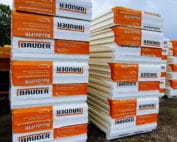
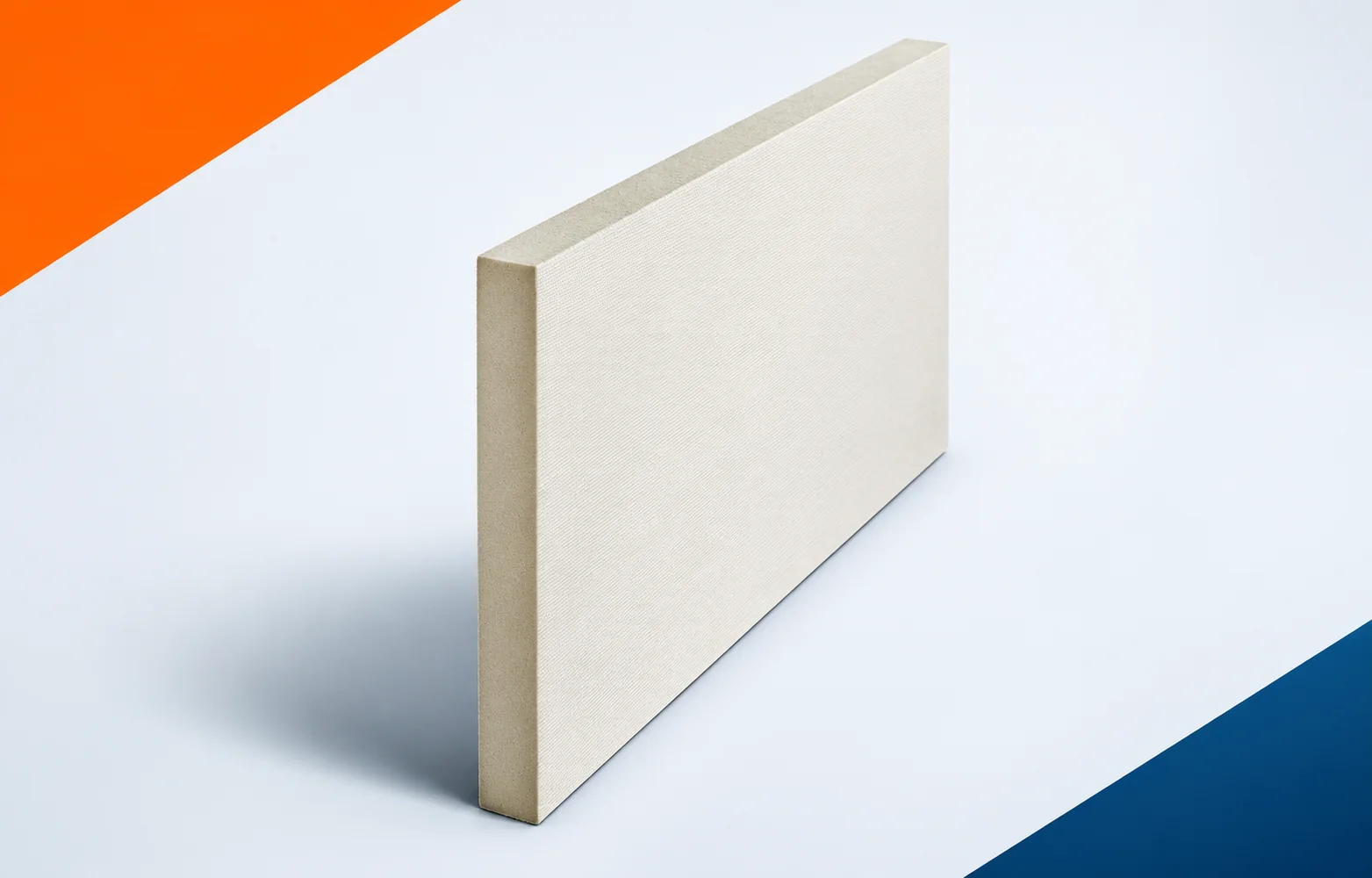
Consider IKO enertherm MG as a board intended by the manufacturer for synthetic membranes. Its PIR is covered on both sides with perforated coated glass fleece; what matters is therefore the entire factory-made product, not only the type of foam. When comparing thicknesses, read the RD: 100 mm has 3.80 m²K/W, and 120 mm — 4.80 m²K/W. The λD also changes: below 120 mm it is 0.026 W/(m·K), whereas from 120 mm it is 0.025 W/(m·K). The declaration also covers compression of at least 150 kPa and reaction to fire E. In the order, retain the name MG and the correct surface, so as not to replace it with another polyurethane board with different facings.
An example versus the actual state of the renovation
Before installing the new membrane, check the surface and the thickness of the IKO enertherm MG insulation. The requirements of the covering must be agreed with the coated glass fleece, alongside a check of the available height. To explain the latter, 150 mm of space and 50 mm of other required layers can be assumed: 100 mm of insulation remain. The 120 mm variant would increase the cross-section to 170 mm, which means the levels must be changed. The figures serve only as an example, without indicating a recommended floor or roof. In a real renovation, meeting the height balance does not replace checking the interaction of the board with the waterproofing.
The calculation presented concerning IKO enertherm MG serves to initially structure the decision. In an old building, the result must be confronted with the limitation: the set of requirements for the coated glass fleece and the waterproofing. The property of the new board described as lambda 0.026 below 120 mm and 0.025 from 120 mm does not remedy a deficiency elsewhere. On site, the conformity of the covering layer with the coated glass fleece must be confirmed before the final scope of works is adopted. The check should be documented by a roof cross-section with a confirmed method of fixing the membrane. If it proves inconsistent with the assumption, the IKO enertherm MG order must be adjusted before repetitive cutting begins.
Which scope of repair is justified
One action under consideration is selecting the MG thickness for the required thermal resistance and the chosen covering. The second may be a reassessment of the entire system following a proposal for a different facing, depending on the result of the exploratory opening. With IKO enertherm MG, both variants should take into account the location of the repair: the junction of the membrane with the board surface at the fleece. Before deciding, the assignment to the MG board of a lambda of 0.022, which belongs to a different variant, must be eliminated. The result of the inspection should be assessed by the roof designer responsible for the specified synthetic membrane, who will link the repair to the remaining layers. Once agreed, a description of the MG is needed covering the thickness, format and method of membrane installation, with information on the elements retained after the renovation.
The junction between new and old material
At the repair location, the simple joint of the boards under the continuous covering layer must be identified and its termination at the existing section planned. The top of the new board is a perforated, coated glass fleece; its interaction with the retained materials must be checked. For IKO enertherm MG, the matching of the core name is not sufficient confirmation of adhesion or tightness of the joint. The basis for documenting acceptance is a record of the MG designation and the condition of the fleece before covering. The next stage will be the synthetic membrane covering in the agreed installation, so the scope of the correction should be closed beforehand. In the renovation documentation, it is worth distinguishing the junction of the membrane with the board surface at the fleece and the boundary between the old and new work.
Phasing in an occupied building
The installation of IKO enertherm MG must be linked to the possibility of protecting the exposed section. At every stage, support with protection against point loading is needed, also after removal of the old layers. The location defined as the junction of the membrane with the board surface at the fleece may require temporary protection against a break in work. The plan should take into account the synthetic membrane covering in the agreed installation, so that the next team’s deadline corresponds to the state of completion. Responsibility for clarifying conflicts should lie with the roof designer responsible for the specified synthetic membrane. The polyurethane insulation will then be part of the planned renovation, the aim of which is to select the thickness and a compatible method of connection with the membrane.
Acceptance after reinstating the layers
At acceptance, the scope covering the flat roof under the synthetic membrane must be compared with the scope of the agreed repair. The reference document is the roof cross-section with the confirmed method of membrane fixing, supplemented with actual dimensions. It is worth keeping a record of the MG designation and the condition of the fleece before covering, because once the layers are closed again the details will become invisible. The ordered PIR boards should have an identity consistent with the installed IKO enertherm MG variant. If the problem returns, a record of how the junction of the membrane with the board surface at the fleece was made will be useful. The review should not be reduced to assessing the appearance of the new surface. It must be confirmed that the thickness and a compatible method of connection with the membrane were successfully selected, and that the cause of the earlier defect was genuinely identified.
7 branches. Materials closer to your project.