Polystyrene and thermal insulation
Acoustic EPS and rigid EPS: what is the difference?
At a glance
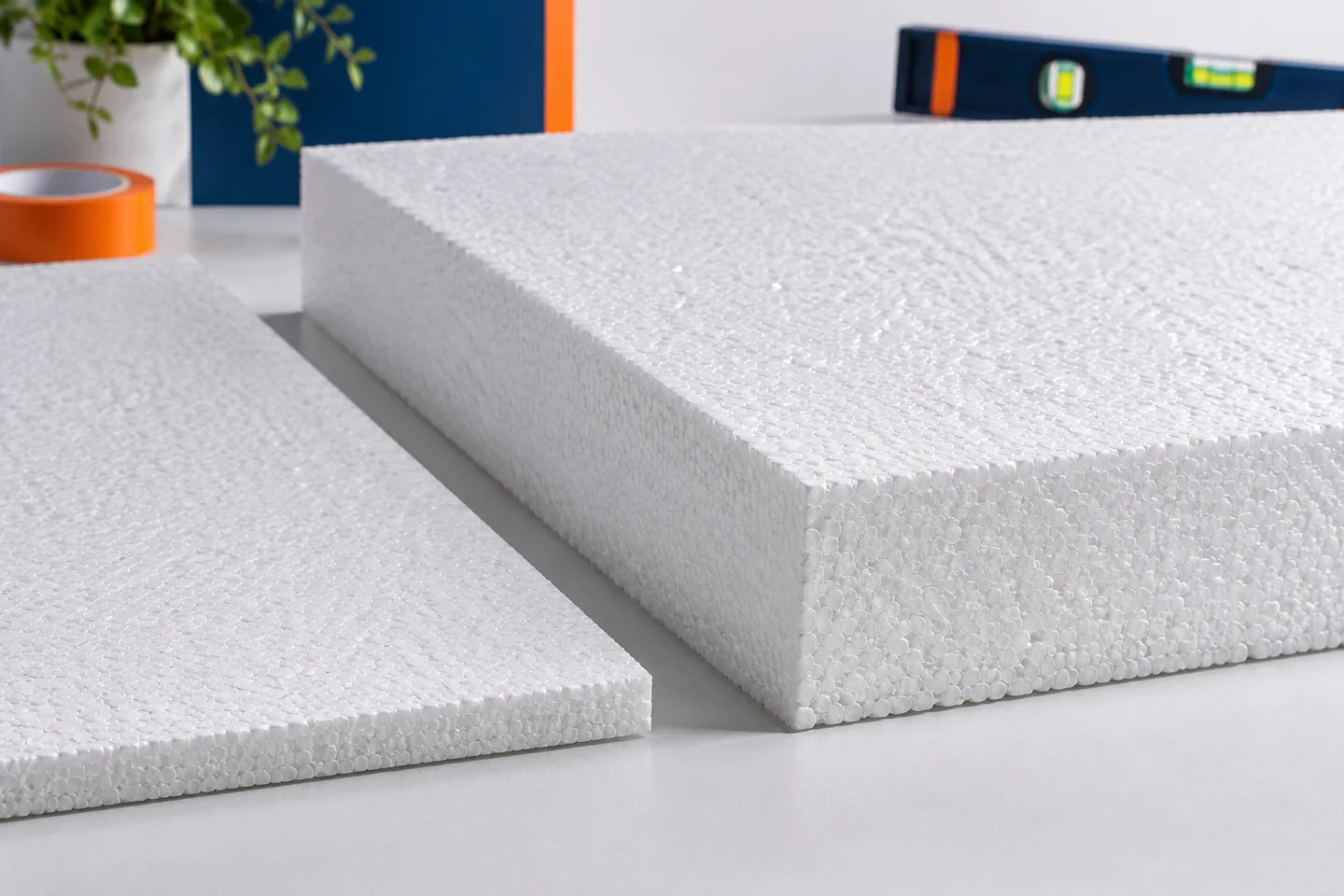
Acoustic polystyrene is intended to reduce impact sound in a properly constructed floating floor. It differs from hard EPS, which is selected primarily for load transfer. We explain the role of dynamic stiffness, compressibility and perimeter insulation, and the reasons why the material alone does not guarantee quiet. Footsteps, moving a chair and objects being dropped can set the floor structure vibrating. The resilient layer under the screed limits the transmission of part of these actions to the structure. It is precisely in such a system that a suitable acoustic EPS is used. Its action should not be equated with absorbing reverberation inside the room or with universally soundproofing every type of noise. Airborne sound, such as conversation, depends on other properties of the entire separating element and on flanking paths.
Which sounds is a floating floor intended to reduce?
Selecting a floor requires identifying the problem. Laying any expanded polystyrene on a ceiling does not by itself guarantee a specified acoustic effect. The construction, the mass of the screed, the resilient layer and the details of the connections to the surrounding building elements all matter.
What does dynamic stiffness SD mean?
Dynamic stiffness describes the behaviour of the resilient layer under vibration-related actions. It is given in MN/m³. It is one of the parameters needed to assess a floating floor. In a suitably comparable system, lower stiffness can help to reduce impact sound. However, the figures alone should not be compared without taking the other layers into account.
Do not confuse SD with density or compressive stress. The units and the meaning of these parameters are different. A board with a high CS(10) may be useful under a loaded floor, but it will not perform like a material intended for impact sound insulation. Choosing the “hardest” EPS is therefore not automatically the best choice for the acoustics of a flat.
Why check compressibility and double thickness?
The resilient layer must perform acoustically and at the same time maintain permissible deformation under the load of the floor. The documents include the compressibility parameter CP. It must be read together with the conditions of use. Excessive settlement can be detrimental to the screed, the finish and the connections at the walls. Softness is not an advantage without limits.
Acoustic boards may state their thickness as two numbers, for example 33/30 mm. This refers to dimensions determined under different load conditions. It does not mean two separate EPS layers. When planning the floor level, use the data specific to the given product and project. Do not arbitrarily choose one number just to fit the floor under the door.
Why is perimeter insulation so important?
The floating screed should be separated from the elements with which it must not form a rigid connection. This applies to walls, columns and appropriately detailed service penetrations. Perimeter insulation in accordance with the design serves this purpose. If mortar gets behind the tape and bonds the screed to the wall, an acoustic bridge can form that bypasses the resilient layer.
Care must also be taken at thresholds, pipes and floor finishes. An accidental joint or fixing can change how the detail performs. The tape is not removed too early merely for the convenience of the next crew. After the works are completed, the connection should still perform as intended. A good laboratory result for the material will not repair a rigid bridge left on site.
Can several soft layers be laid?
The system must correspond to the product documentation and the design. For some acoustic boards, single-layer installation is specified. Adding a second identical layer does not automatically give double the effect. It changes the behaviour under load and the floor height. An assessment of the whole solution is needed, not simply adding up the expected benefits.
If additional thermal insulation is required, select the right material and the position of the layers. Hard EPS and the acoustic board can perform different functions within one designed system. Check the stable support and the routing of services. Pipes and unevenness should not cause the boards to rock. The separating layer is to protect the system in accordance with the intended screed technology.
How should the declared acoustic effect be compared?
If the document states an improvement in impact sound insulation in decibels, check the test setup. The result may relate to a specific screed thickness and mass and to a specific board. It does not mean that every sound in the dwelling will be quieter by exactly that value. The actual effect also depends on the workmanship and the other paths by which vibrations are transmitted.
EPS for the acoustic insulation of floors is offered by, among others, Swisspor, Arbet, Yetico and Austrotherm. The selection should be based on the data for the specific variant.
Before the screed is poured, check the joints, the perimeter strips and the service penetrations. Once they are covered, it is difficult to remedy an acoustic bridge without interfering with the floor. In the documentation, keep a record of the type of EPS, its thickness and the screed setup. This will later allow you to assess whether the installed solution matches the acoustic assumptions, instead of relying solely on the name of the material.
7 branches. Materials closer to your project.