Choosing the covering
T18 or T35: how to choose trapezoidal steel sheet for a roof
In brief
The choice between T18 and T35 does not follow from the profile number alone but from the data for the specific roof. Before buying, compare the load tables, covering width, coating and slope requirements. Check whether the chosen variant is intended for roofing rather than cladding, and whether, when extending an old covering, the lap will match the existing sheet. Leave the final decision on profile, steel thickness and support spacing to the designer, because the number alone does not determine load capacity.
What distinguishes T18 from T35?
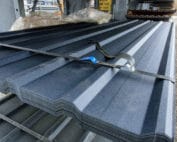
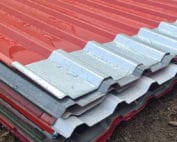
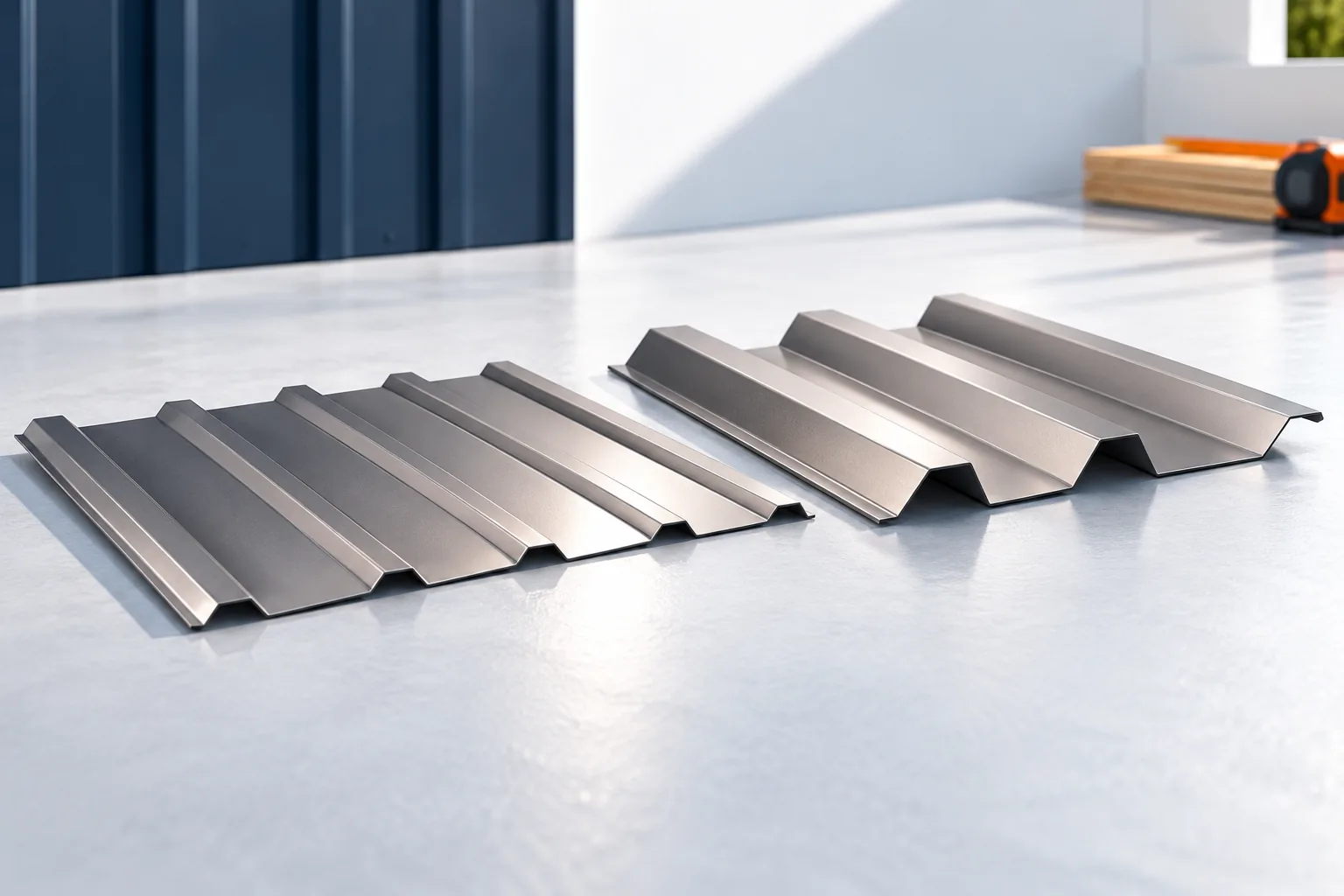
The designations refer to a family of profiles with a specific rib height. The low T18 gives a more delicate surface rhythm, while T35 has more pronounced ribs. The exact width of the flanges, the trapezoid spacing and the overlap edges may differ between products. Therefore, a single set of dimensions should not be created for all sheets with such a name. A drawing of the specific material is needed.
It is worth specifying the roof variant straight away. Some families also include façade versions with a different external surface layout. A sheet viewed from below may resemble a product with a similar designation, but it should not be turned over arbitrarily. When renovating an old roof, the name T18 or T35 alone does not guarantee that the overlap matches the sheet already on the building.
Does a higher profile allow fewer supports?
A higher rib may increase stiffness, but the permissible support spacing results from tables and calculations. The steel thickness, its grade, the number of spans and the support width are significant. Added to this are the loads at the specific location. The roof of an open shelter behaves differently from the slope of an enclosed building. Wind may act on both sides.
It is not enough to compare two sheets of similar price. T35 made of thinner steel does not necessarily have the same load-bearing capacity as a thicker variant. The connection to the support, rather than the profile itself, can also be the limiting factor. That is why the substructure and fixings are selected together with the covering. Arbitrarily removing some battens after purchasing a higher sheet is a change to the structural system, not a simple saving.
What is the significance of the roof slope?
The permissible pitch must be checked in the instructions for the specific product. The requirements may take into account the slope length, transverse joints and the method of sealing the overlaps. A single value assigned to all T18 or all T35 would be misleading. On a low pitch, the accuracy of workmanship and the absence of water-retaining spots are particularly important. A higher rib will not fix an incorrect joint.
If the sheet does not reach from the eaves to the ridge, a designed longitudinal overlap is needed. It should be in the correct place and have the required support. It is not determined by how much sheet was left over from the previous row. Before ordering long sheets, it is worth comparing the benefit of fewer joints with the possibilities of transport and safe carrying onto the roof.

How to choose thickness and coating?
The thickness affects the mechanical behaviour of the sheet, while the coating affects surface protection in a specific environment. These are separate criteria. A roof by the sea, above a damp workshop or near aggressive pollution may need different protection than a simple garage on a dry property. When selecting, the protection of the underside and warranty limitations should also be checked.
Matt and gloss are not a sufficient description of quality. A similar appearance can conceal different coating systems. The order should identify the material variant, and the documentation should allow it to be reproduced later. If resistance to specific factors matters, confirmation of suitability should be obtained. It is not worth paying extra for the finish name alone without information about its actual properties.
What to do about condensation under the steel sheet?
Water vapour can condense on the underside of a cold sheet. This also applies to unheated buildings when temperature and humidity change. Anti-condensation fleece can temporarily retain some water, but it must dry out afterwards. Its presence does not remove the need for ventilation. In a building with high moisture emission, the condensation retention capacity may be exceeded.
In a heated room, a complete insulation system and control of vapour and air flow are required. Neither T18 nor T35 provides such protection on its own. An insulated sandwich roof panel can be an alternative if it suits the design. However, its price should not be compared with the steel sheet alone without adding the layers that must be installed separately in the second option.
How to prepare an order without mistakes?
Provide the dimensions of the roof slopes, the pitch, the position of the supports and the purpose of the building. Determine the profile, thickness, coating, outer side and sheet lengths. The number of runs is calculated using the cover width, not the overall width. It is worth obtaining a material layout drawing. This allows the extreme cuts to be checked and whether all flashings and required laps have been included.
On delivery, compare the labels with the order and check the condition of the edges. Plan storage and handling of long sheets before the delivery arrives. The final answer of T18 or T35 results from the roof data. A well-chosen lower profile may be sufficient, while a higher one may provide a justified benefit in another configuration. Neither replaces checking the structure.
7 branches. Materials closer to your project.