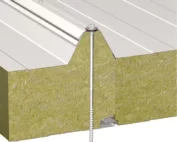
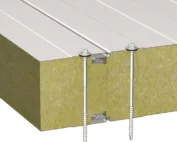
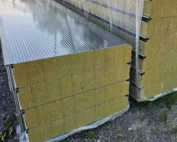
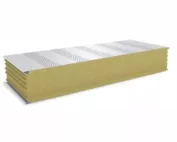
Mineral wool panels
How do you go from the 60–200 mm range to the right mineral wool panel thickness?
In brief
The 60–200 mm range offers many options, but it is not a simple scale from the weakest to the best panel. Each thickness must match the wall’s task. It is worth starting with the thermal, fire and load-bearing requirements. Then check the space for the cladding, the depth of the openings and the weight of the panels. Only this set leads to a specific choice. Describe the internal temperature, humidity and function of the room. Establish the fire protection and acoustic insulation requirements. Check the structural spacing and loads. The panel thickness will be the result of these data, not the starting point.
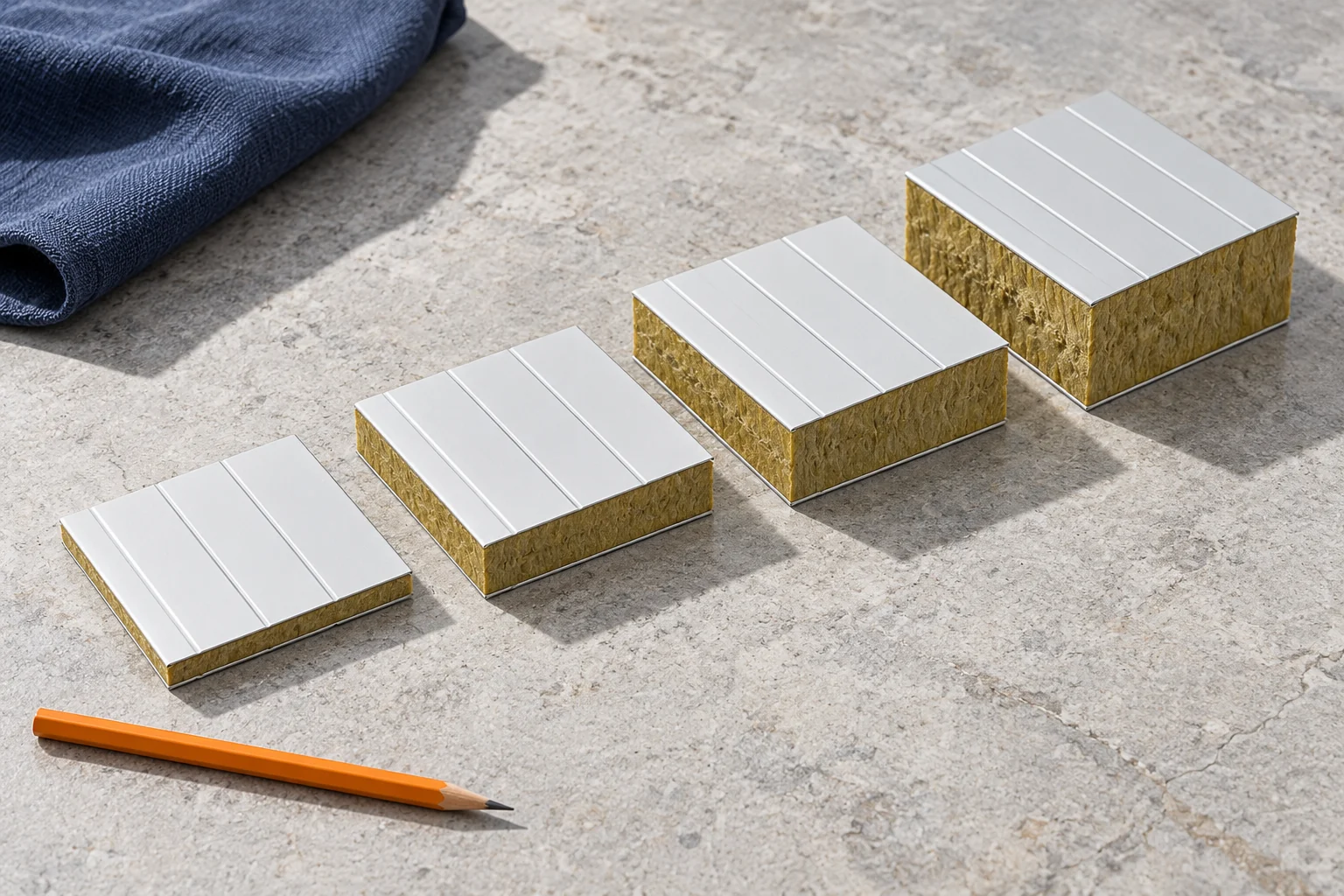
What requirements should be established before looking at the price list?
It is worth separating current conditions from planned future use. An unheated warehouse may later become a workshop. If such a change is realistic, it must be taken into account in the design. This does not automatically mean purchasing the thickest panel. A comparison of variants and the cost of any later conversion is needed. A solution suitable today will not always be suitable after a change of use.
What does an example thickness table show?
The following values relate to one example wall family with specified facings. They serve to show the relationship, not to replace the data sheet of the product being ordered.
| Thickness | Uc in W/(m²·K) | Weight in kg/m² |
|---|---|---|
| 60 mm | 0.66 | 14.1 |
| 100 mm | 0.39 | 18.1 |
| 150 mm | 0.27 | 23.1 |
| 200 mm | 0.20 | 28.1 |
There is a visible improvement in insulation and an increase in mass. Another family may have different values, even at the same thickness. Do not combine the thermal table of one variant with the mass or fire classification of another.
How does limited space affect the decision?
A narrow passage next to the building or a small interior may limit the thickness of the enclosure. It is necessary to establish which plane the structure is set against and in which direction the wall grows. A few centimetres can change the door clearance or access to equipment.
Check the reveals, window sills and the connection to the plinth. A thicker panel requires different dimensions for some flashings and fasteners. It is not worth deciding solely on the basis of the free space between two elements. Sealing and continuity of insulation must also be maintained. If the required thickness does not fit, a detail correction or a different partition solution is needed, not omission of the requirement.
Does thickness resolve fire and load-bearing requirements?
It is an important parameter, but it does not act on its own. Fire resistance depends on the specific system and installation. Load-bearing capacity also depends on the facings, core, supports and loads. One table of ‘thickness equals span’ cannot be adopted for all panels.
Check each requirement separately. If the panel meets the thermal target but does not match the purlin spacing, the variant or the structure must be changed. If it has adequate load-bearing capacity but lacks the required fire classification, simply increasing the number of fastenings will not solve the matter. The selection should indicate one actual product together with the conditions under which its properties are confirmed.

How do you compare the cost of a thicker panel with installation?
The quote should cover the panels, structure, flashings, fastenings and equipment. A thicker variant may increase the weight of the elements. On a small plot, this affects the method of delivery and the reach of the equipment. The additional cost therefore does not end with the difference in price per metre.
On the other hand, improved insulation can reduce heat losses. Its value must be calculated for actual temperatures and heating time. However, an equal payback period should not be promised to every building. In a hall with a frequently opened gate, the share of ventilation will be different than in a sealed room. An economic comparison requires a full balance, not just a U-value table.
How do you finalise the selection with a specific specification?
Once the calculations are complete, record the thickness, module, lengths, facings and coatings. Include the panel layout and details at openings. Check whether the selected length range is available for the given colour and configuration.
Do not leave a general note such as “panel with mineral wool of similar parameters” in the order. Any substitute requires comparison of the full set of properties. On delivery, confirm that the consignment matches. This ensures the selected thickness forms part of a coherent solution rather than a random figure copied from an earlier build. Good selection ends with documentation that can be verified on site.
Nor should you assume that any shortfall in insulation performance can always be made up later with a layer from the inside. Such a change affects temperatures, moisture and connections. It requires a separate assessment, especially for rooms that are heated periodically.
Questions before ordering
Can the thickness be selected from the U-value table alone?
No. Load-bearing capacity, fire requirements, geometry and installation conditions must be checked in parallel. A suitable thermal result does not replace the other criteria.
Does the 60–200 mm range mean all available panels with mineral wool?
No. Individual families have different ranges, sometimes wider or narrower. The documentation and availability of the precisely selected product must be checked.
7 branches. Materials closer to your project.