Choosing sandwich panels
Buying 100 mm second-quality wall panels: what to check
In brief
A 100 mm second-grade wall panel may be suitable for the planned wall, but the reason for the price reduction must first be established. A scratch in the coating is a different problem from a damaged joint or a detached metal sheet. Cost-effectiveness is determined by the usable dimensions of the entire batch, the ability to connect the elements, and the confirmed properties of the material. This is a trade term that does not describe a single class of defects common to all offers. It may relate to shade, surface, dimension or damage. Ask for a clear description of the reason for the price reduction. The phrase “minor blemishes” is too general if the material is to form a visible façade or a partition with a specified fire resistance.
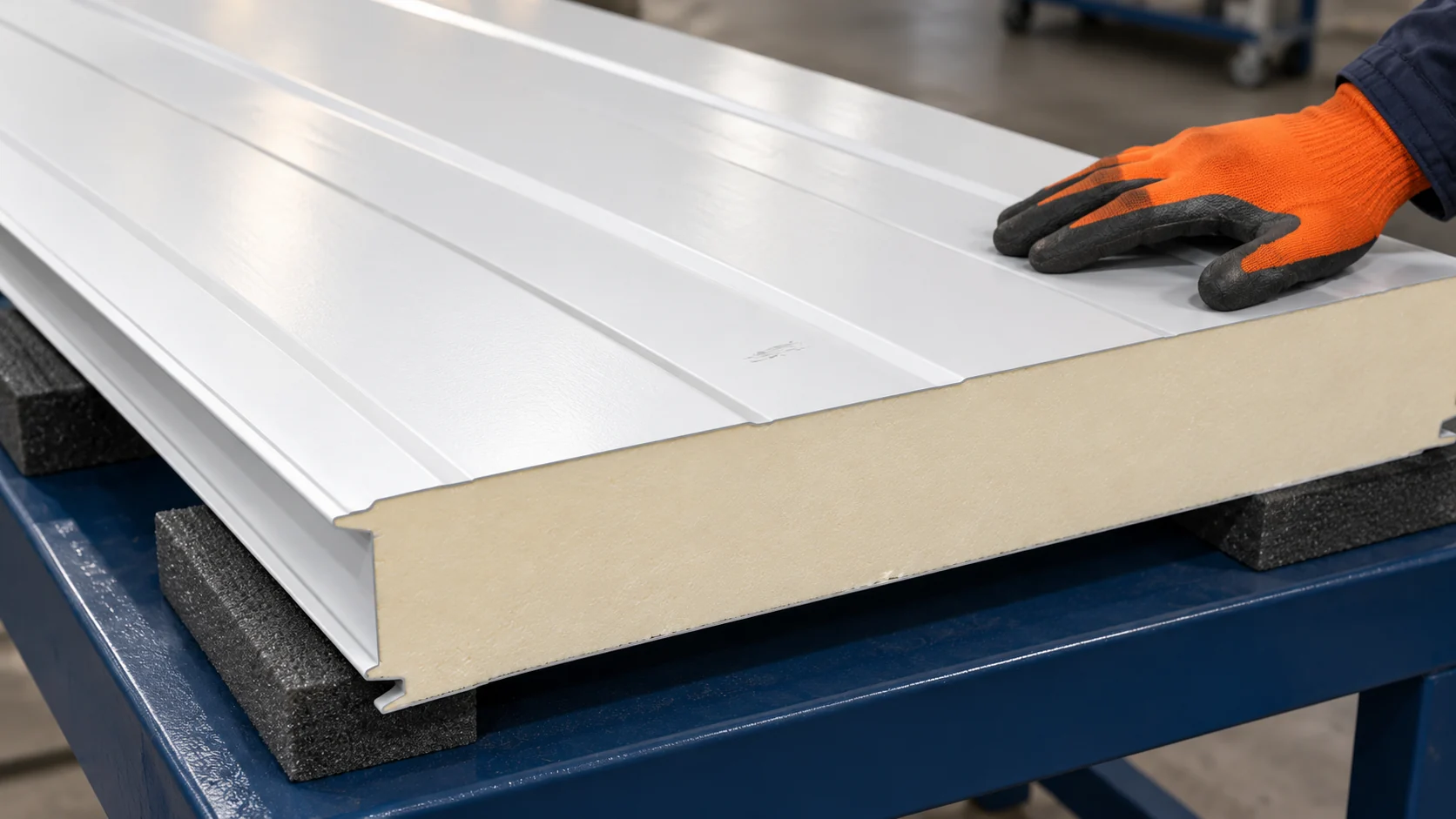
What does second grade really mean?
Distinguish an aesthetic defect from a problem affecting function. Shallow marks on the coating may require a different decision than a crushed edge. Delamination, core damage or the inability to close a joint do not become irrelevant once covered by a trim. The assessment should relate to the specific element and place of application. A low price alone does not confirm suitability.
How to measure the batch before purchase?
Record the length of each panel, the cover width and the nominal thickness. For a thickness of 100 mm, check how the dimension is defined in cross-section. Inspect both long edges and the ends. If the plan is to install the panels vertically, the length must cover the wall height together with the agreed details at the base and top termination.
Also measure the defect-free sections. A 4 m long element may yield less usable material if the end requires cutting off. In the schedule, separate the purchased length from the usable length. For a larger batch, prepare a simple sketch of the walls with panel numbers. Only such assignment shows whether an attractive package will close the entire perimeter without random joints.
Will all joints fit together?
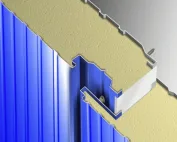
Uniform thickness and colour do not guarantee a compatible connection. The geometry of the interlock, the fixing arrangement and the cover width may differ. Before purchasing a mixed batch, compare the cross-sections. If possible, check a trial assembly of two adjacent elements according to the correct instructions. Do not force a deformed edge into place.
In a wall, tightness, continuity of insulation and evenness of surface are also important. A trim may cover the joint between different panels, but it does not itself create a proven system connection. This requires a separate detail. Assess penetrations at corners, gates and windows separately. There, dimensional tolerances often prove more critical than on a wide, continuous section of façade.
How to calculate the price of the usable area?
Suppose you buy 28 m² at an illustrative price of €18.05/m². The panels cost €505.40. After cutting and rejecting unsuitable sections, only 23.5 m² can be used on the wall. That brings the material cost to about €21.51 per square metre of finished wall before delivery and accessories.
Adding €97.21 for delivery brings the total to €602.61. Divided by the 23.5 m² you can use, that works out at about €25.64/m². Use this figure to compare the panels with new ones cut to size. Add any extra flashings, cutting and labour separately. Some offcuts may be reusable, but count them only if you know where they will fit.

Which properties must not be guessed?
Establish the core type, facing parameters and intended use of the panel. A thickness of 100 mm does not indicate whether the core is foam, mineral wool or polystyrene. It also does not specify the thermal transmittance or fire class of the complete assembly. Data relating to the actual variant being purchased and its condition are required.
If the wall is to meet fire requirements, the suitability of the discounted batch must be confirmed within the given solution. Do not transfer the class from a similar new panel without assessing damage and conditions of use. Hygienic requirements and the coating’s resistance to the environment work in the same way. Failure to identify the material is a real limitation, not a minor formality.
What should be recorded at acceptance?
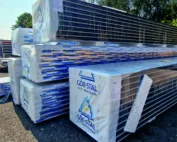
Prepare a list of pieces, dimensions and identified defects. Take your own photos of individual damage and its location. Agree whether you are inspecting the entire batch or only the items on top. The surface of the first board does not show the condition of the panels lying below. It is worth establishing the rules for unpacking and acceptance before the transport arrives.
Use cutting methods permitted for the given material. Protect the coating and remove swarf. Cut areas and exposed core require proper finishing. A well-purchased second-grade batch has known limitations and a specific plan for use. If you have to invent a way to hide each successive defect, the saving quickly disappears.
Questions before ordering
Can the scratch be painted over with any paint?
No. The repair method depends on the coating and the extent of the damage. An unsuitable product may impair the appearance or durability of the surface.
Is a 100 mm panel from the end of a production run always second grade?
No. The end of a production run may be fully functional. The reason for the price reduction and the description of condition must be established separately, without equating these concepts.
7 branches. Materials closer to your project.