Fibre cement roofing
Four-sheet junctions in fibre cement roofing: why corners are mitred
In brief
Where successive rows meet, the sheets overlap in two directions. If every corner is left full despite the required trimming, a build-up of material occurs. Fibre cement sheets may then fail to sit properly and remain under stress. Preparing the corners is not cosmetic. It is part of the roofing method. Asbestos-free fibre cement must be ordered with a specified version of edge treatment, and the installation plan should show which corners are to remain intact. At a normal side joint, one sheet overlaps the other. A similar situation occurs between the lower and upper rows. At the intersection of these joints, more layers of material build up. Without the solution provided in the system, the upper sheet may be lifted.
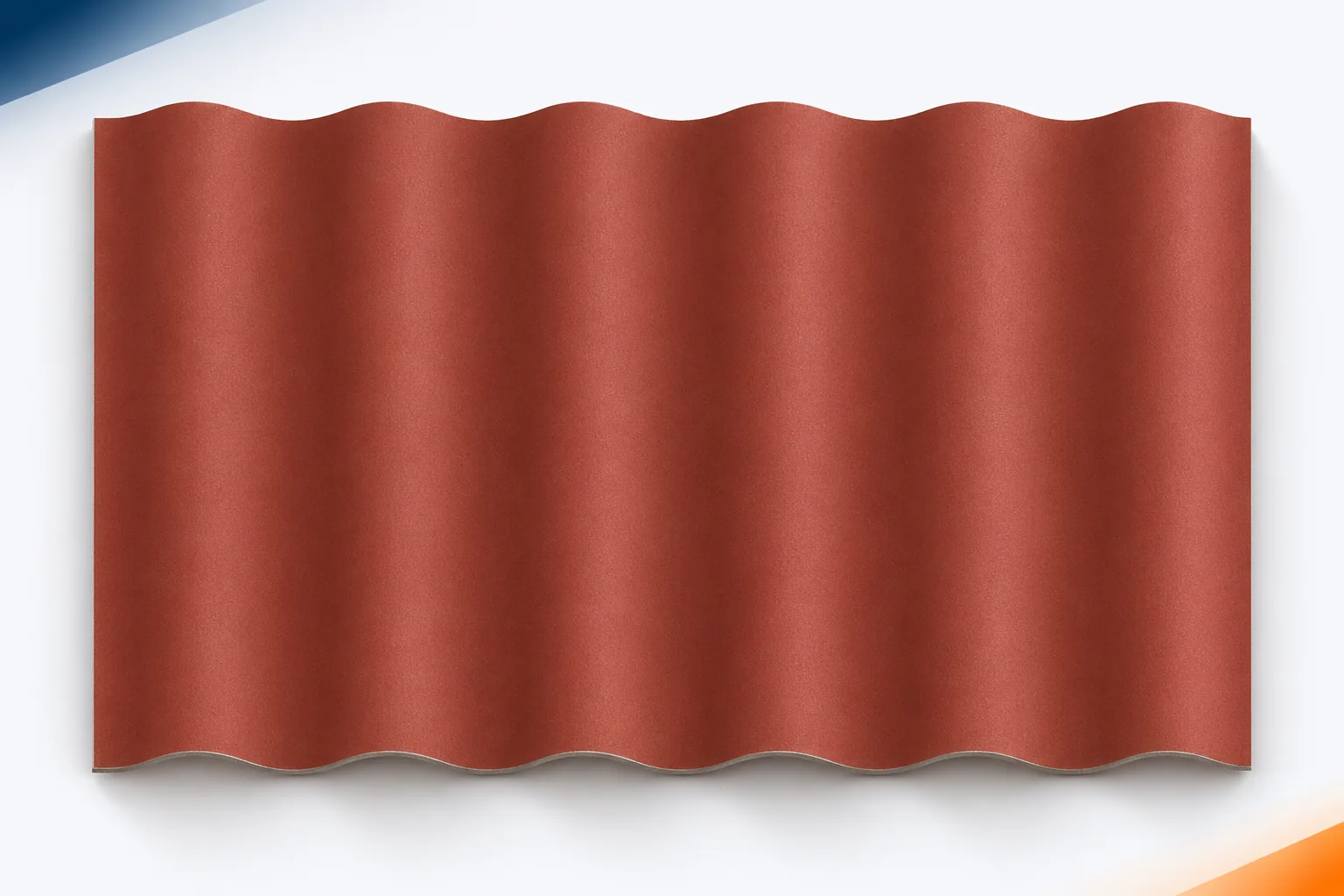
Where the problem arises at the intersection of overlaps
Attempting to press it down with a fastener introduces additional forces. Cement composite is rigid and does not offer the same freedom as thin sheet metal. This is precisely why the instructions for some systems specify an appropriate corner cut. It limits local material build-up. Its dimensions and position must correspond to the actual overlaps, not to a random template from another roof.
The roofing direction determines the cutting side
There is no single set of corner cuts suitable for every sheet orientation. What matters is the laying direction of the panels and the position of the element within the roof slope. Fibre-cement panels intended to start a course may require different preparation from sheets in the middle of it. This also applies to the finish at the ridge and the verge. The installer should first read the installation diagram and only then prepare the material. Otherwise, a corner that was meant to protect the roof edge may be cut off. Rotating a finished panel to hide a mistake often changes the position of the holes and the side overlap. Such a shortcut does not solve the problem of conformity.
A gap between the corners prevents pressure
In a suitable solution, the cut edges do not have to meet tightly. The instruction specifies the required gap and the laying method. It should not be automatically filled with hard mortar nor should the panels be pulled together. The joint must allow for tolerances and movement of the system. Fibre-cement panels should not transfer loads through accidental corner-to-corner bearing against a neighbour. In practice, cleanliness of the contact area is also important. A leftover cutting fragment or hard contamination can become a point of pressure. Inspection before fastening is far easier than replacing a cracked sheet in a finished roof field.
Ready-made edge treatment makes work easier but requires a plan
Some panels are supplied with prepared corners and holes. This reduces the number of operations on site and helps maintain repeatability. However, it does not mean complete freedom of installation. Asbestos-free Eternit in such a version may have a fixed covering direction and a defined top and bottom. Different hole diameters or the arrangement of the chamfers are not accidental. Before unloading, it is worth determining how the sheets will be handled so that they are not rotated. Full panels must also be provided for edge locations if the instruction requires it. Purchasing the factory-prepared version alone does not remove the need to lay out the entire roof.
The corner cut is related to the overlap
The cutting dimensions result from the width and length of the joint and the required clearance. They cannot be safely reproduced from a photograph. Where the project specifies different overlaps, the permissible processing for that variant must be checked. Fibre-cement panels with ready-made holes may limit the possibility of changing the layout. Increasing the overlap solely to suit an old batten may shift the position where the corners cross. The correct order is the reverse: first the choice of system, assessment of the supports and covering plan, then determination of the sheet preparation. This avoids repeating the same error across an entire pallet.
Processing is organised with dust in mind
The new asbestos-free material still requires an appropriate cutting method. Mineral dust is generated, and its containment and worker protection are governed by the instruction and the safety data sheet. The sheet must have stable support. Tools are selected for the product, without transferring random advice for other coverings. After processing, fibre-cement panels must be cleaned in accordance with the recommendations. Leftover contamination can affect the surface and the adhesion of components. These notes must not be treated as cutting instructions for an old roof of unknown composition. A suspicion of asbestos requires separate investigation and organisation of work.
Acceptance begins before the joint is covered
Most can be checked when the corners are still visible. The direction of the mitres, the spacing, the cleanliness and the free seating of the sheets on the supports should be assessed. The top sheet should not be held in its correct position by the screw alone. Fibre-cement sheets should also be checked after the first full field has been completed, before the error carries over to subsequent rows. Photographic documentation of the detail helps at handover. However, it does not replace checking compliance with the instructions. If the joint stands proud, the cause must be clarified immediately. Covering the problem with the next sheet makes assessment difficult and usually increases the scope of later repair.
When ordering, specify the sheet version and the laying direction. Asbestos-free fibre cement with properly prepared corners makes installation easier as intended for the selected roof.
7 branches. Materials closer to your project.