Fences
Choosing a metal picket fence for your home
In brief
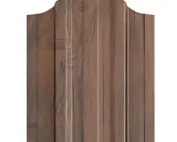
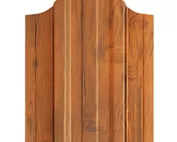
Think about where privacy matters before choosing a metal picket fence. Marking the boundary, sheltering a patio from view and screening the house from the road may call for different heights, gaps and arrangements on one or both sides of the rails. Look at a sample from an angle as well as straight on. Closer pickets can block more of the view, but they also affect daylight, airflow and wind loading. The posts and foundations need to suit the finished fence panel as a whole.
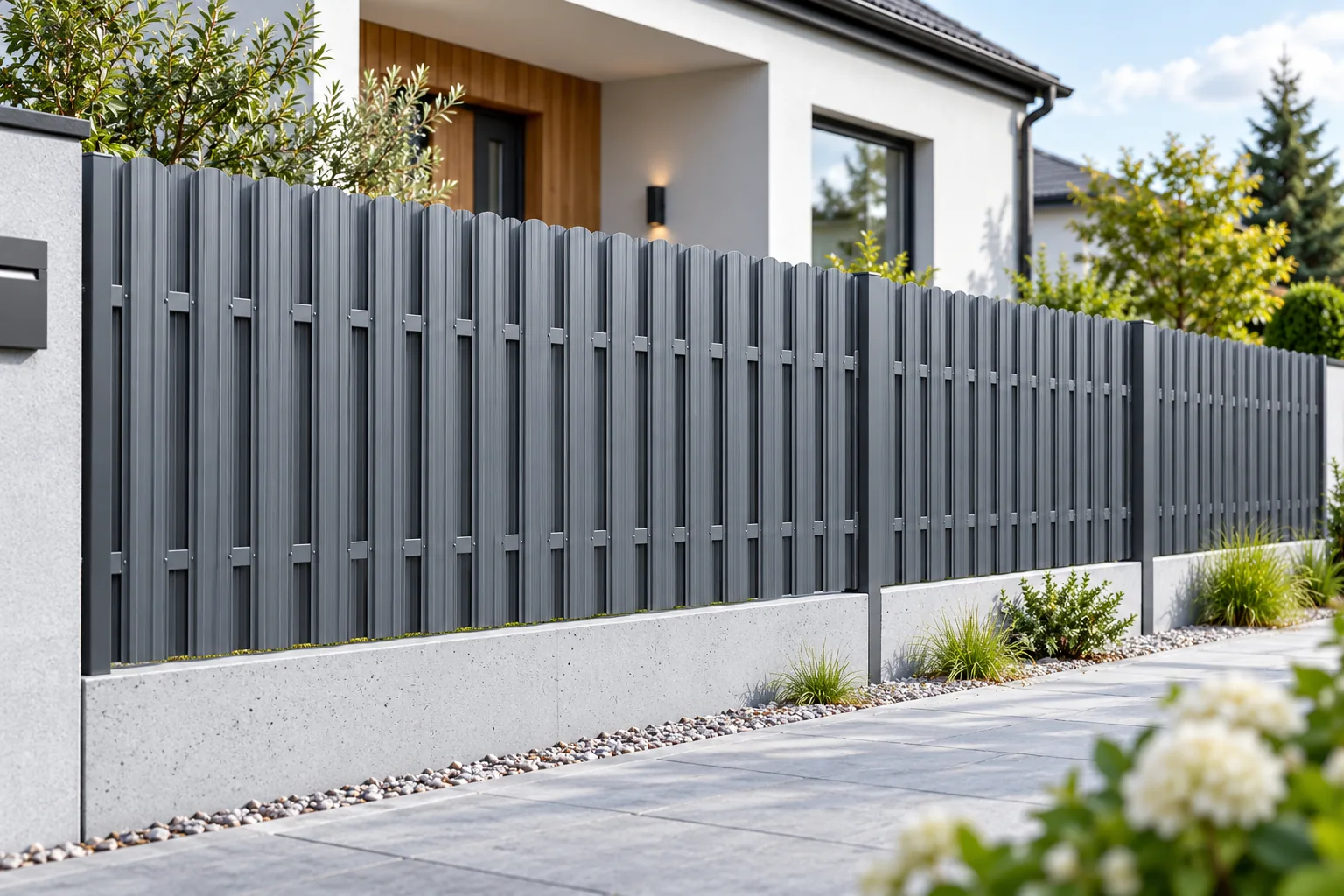
What screening do you need from the fence?
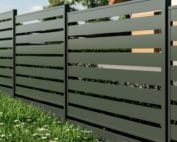
First, determine whether the fence is mainly to mark the boundary, screen the terrace, or limit the view from the street. Narrow gaps increase visual screening but change the amount of light and airflow. The same arrangement can look different from the front and at an angle. It is worth viewing a sample panel from several positions, not only in a photograph taken straight on.
At the entrance, visibility of the gate, pedestrian door and traffic on the road matters. Full screening will not always be practical around the entire perimeter. Different degrees of transparency can be considered in individual zones while maintaining a consistent profile and colour. Metal fence pickets do not automatically create an acoustic barrier. Limiting the view is not the same as significantly reducing noise from the street.
Vertical, horizontal or double-sided layout?
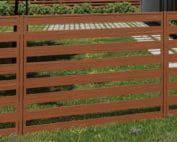
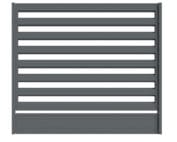
Vertical pickets emphasise the height of the panel, while horizontal ones emphasise its length. The choice also affects the method of support and installation. The element should be used in the arrangement intended for the given solution. Not every profile can be rotated and fixed to the same crossbars without additional assessment. Stiffness, length and the arrangement of fixing points matter.
In a double-sided arrangement, pickets on both sides of the crossbars can conceal the gaps. Material consumption and panel weight are then different from a single layer. The appearance of both sides of the cladding must also be checked. A decorative coating on the outside does not mean the material will be identical on the inside. In the order, the required finish for the front and back should be clearly specified.
How do you match the colour to the house?
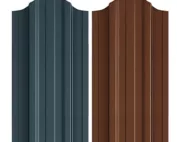
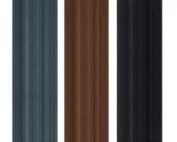
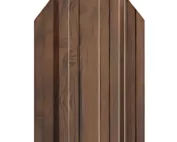
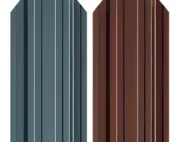
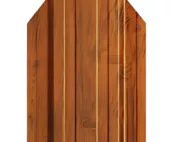
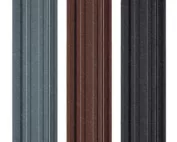
It is easiest to start with the fixed elements of the building, such as the roof, joinery and façade. The fence can repeat one of these colours or create a calm contrast. It does not have to copy everything. Over a large area, a highly glossy finish will be perceived differently from a small sample. It is worth viewing the material outdoors, both in sunlight and in shade.
The same colour code does not always produce an identical effect on different materials and coatings. Texture, gloss and production batch matter. If the front is to be executed in stages, the quantity and the possibility of maintaining a consistent finish should be established in advance. Later matching of a single picket can be more difficult than the colour name alone suggests. Keeping product data will facilitate repairs.

What must be calculated for wind and supports?
The more the panel obstructs airflow, the greater the effect of wind on its structure may be. Height, width, picket spacing and the exposure of the plot matter together. The foundation should not be selected solely according to the weight of the metal. A light, dense panel can transmit considerable forces to the posts and their connections to the ground.
With existing posts, their condition and fixing must be assessed. Replacing an open infill with a more closed one can change the loads. Dimensional compatibility between posts alone does not confirm the safety of the modification. For long or tall sections, it is worth agreeing the structural arrangement with someone who can assess the ground and forces. A gate has additional requirements related to the movement of the leaf.
How should installation and formalities be planned?
Before purchase, measure the sections, ground levels and post positions. On a sloping plot, it must be decided whether the bays will be stepped or run according to the slope. The solution affects the lengths of the pickets and the gaps at ground level. It is also worth checking the route of underground utilities before constructing the foundations. The plot boundary should be established, not assumed on the basis of an old fence.
Constructing a fence over 2.20 m in height generally requires notification. Local and safety-related requirements also remain. Exemption from some formalities does not mean arbitrary positioning or sharp ends. In an unusual situation, a listed building or a boundary dispute, the requirements should be clarified before starting work. The infill material does not change these obligations.
How should the finished metal pickets be maintained?
After installation, metal filings, foil remnants and dirt are removed. Cut areas and minor damage must be protected in accordance with the coating requirements. In subsequent seasons, the screws, connections to the crossbars and the area near the ground are checked. Accumulated wet leaves or soil should not remain in constant contact with the lower edge. A gently washed surface more easily retains a uniform appearance.
Metal pickets do not require the same oiling as wood, but they are not maintenance-free. Damage from a garden tool or an impact is worth repairing before the problem develops. When replacing a single element, check the profile and finish on both sides. A well-chosen fence should suit the everyday use of the property, not only look attractive on the day of installation.
7 branches. Materials closer to your project.