Costs and orders
When to buy first-quality panels and when to consider outlet stock
In brief
The outlet can offer savings if its dimensions and condition suit the project. However, not every cheaper batch is suitable for every wall. The most important factors are the reason for the reduction and whether the material can be inspected. First-grade and off-spec batches should be compared at the level of the finished cladding, taking waste into account. First-grade refers to a product that meets the manufacturer’s specified requirements. The outlet may include surplus stock, end-of-series runs or off-spec material. The name alone does not define the type of defect or its significance. Not all such offers should be treated as a single technical category.
What does the batch description mean and what does it not say?
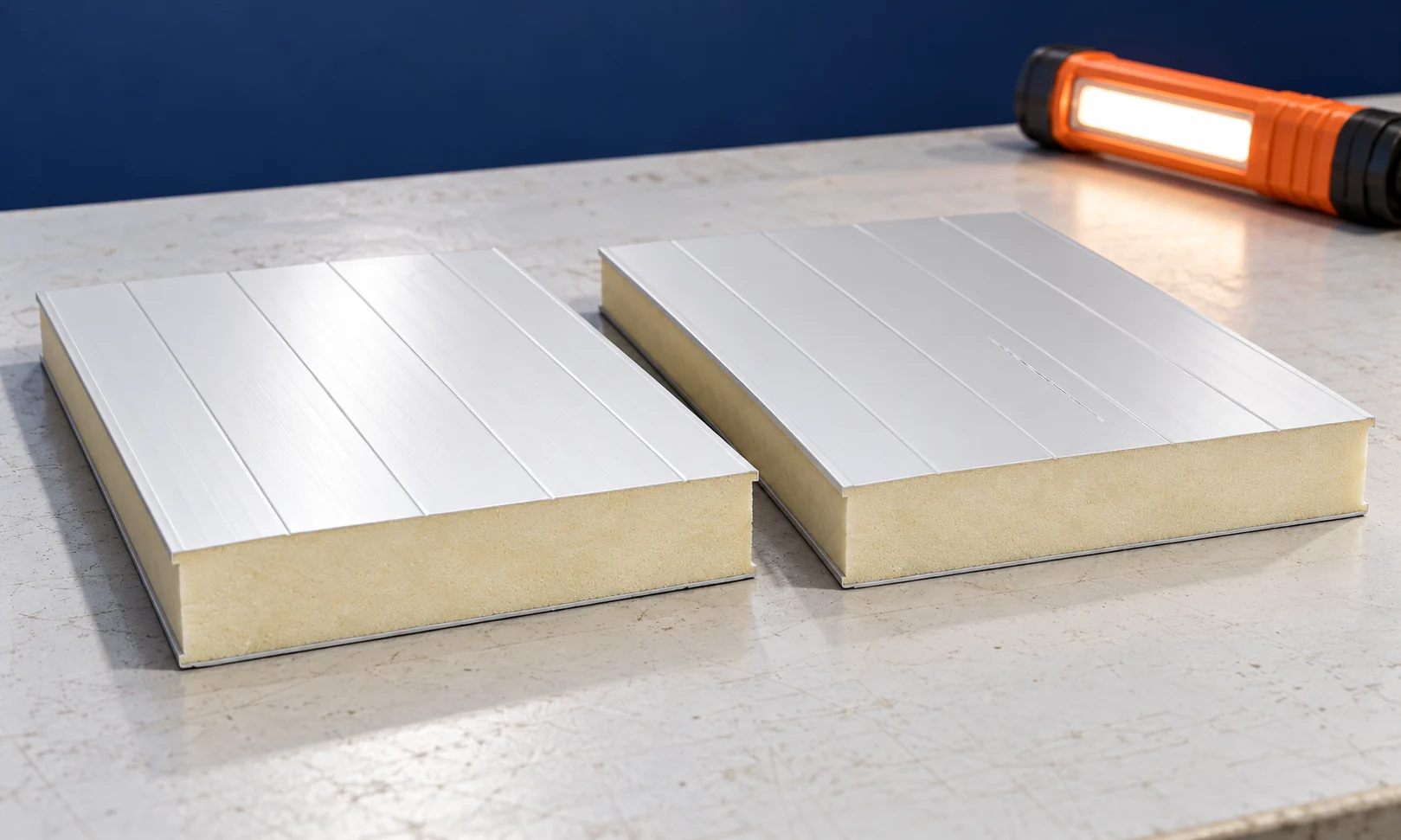
Ask for a written description, identification and the scope of documents. Establish which properties are confirmed for the supplied batch. A good appearance is not proof of load-bearing capacity or fire class. Likewise, a slight difference in shade does not have to mean core damage. A specific assessment is needed.
How do you separate an appearance defect from a jointing problem?
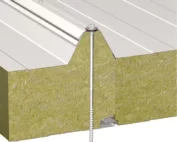
A small scratch, a colour deviation and a deformed lock require different decisions. A scratch may require coating repair, depending on its depth. A damaged joint may make tight installation difficult. It must not be assumed that every defect can be concealed with a flashing.
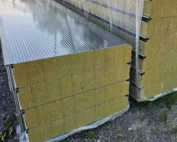
Check the ends, both facings and the edges along the entire length. Look for detachment, permanent crushing and traces of moisture. Also assess the bottom pieces in the pack. If access is limited, agree how further inspection and handling after unpacking will proceed.
How do you determine whether the lengths really fit?
Assign each available piece a place on the wall drawing. Allow for the length needed after cutting off the damaged end. A 3 m panel with a defect on the last 20 cm does not automatically yield a usable 2.8 m element. Cutting tolerance and end requirements must also be taken into account.
Check the position of windows and doors. A defect may fall within the planned cut-out, but the width and support of the remaining strips must be confirmed. Do not plan to use every offcut based on its area alone. The direction of the lock and the side of the facing also limit the possible layout.
How do you compare cost after discarding unusable metres?
Calculation example: an outlet batch has 60 m² at an assumed €27.77 net. It costs €1666.20. If, after cutting, 48 m² can be used, the material cost per usable metre will be €34.71 net. These are not offer prices, but a way of calculating.
For comparison, 50 m² of suitably selected panels at a hypothetical €34.25 gives €1712.50 net. The purchase difference is only €46.30. Additional transport or repair can offset it. The cheaper option on the label must therefore be compared with the real quantity of the finished enclosure.

Where does a predictable appearance have greater value?
A large flat surface at the entrance shows differences in shade and profiling more strongly. Narrow offcuts can in turn disrupt the rhythm of the façade. For a representative wall, it is worth assessing the material from several steps away in daylight. A small sample does not convey the full effect.
In a technical room, priorities may look different. However, requirements regarding hygiene, durability and tightness still apply. Poorer visibility of a defect does not make its technical significance disappear. The place of application should result from an assessment, not merely from the possibility of hiding the surface.
When does a limited batch make replenishment difficult?
Check whether a matching element for a possible repair can be ordered after installation. The end of a series may have an unusual lock or a discontinued colour. The reserve should be determined in specific lengths. One short offcut will not replace a damaged full panel.
Do not combine materials at random just because they have the same core and thickness. Different edges may not form a correct joint. If you plan an extension, agree the future connection separately. Purchasing a very short batch may be advantageous for a closed whole, but more difficult with staged construction.
How do you make a decision after inspection?
Choose a batch for which suitability can be confirmed and the cutting plan matched. Add up the purchase, waste, corrections and delivery. Record the accepted deviations and the conditions for reporting other non-conformities. Take photos before loading and at acceptance.
If there is no data allowing a relevant property to be assessed, do not replace it with a verbal promise. For panels responsible for fire protection or working in a difficult environment, the scope of confirmation is particularly important. A price reduction does not change the requirements placed on the finished building.
Questions before ordering
Does outlet always mean damaged panels?
No. They may also be surplus or offcuts. The reason for the reduction and the condition of the specific batch must be confirmed before purchase.
Can a faulty lock simply be tightened more?
You should not assume so. The deformation requires assessment, as it may affect tightness and the correct connection of the panels.
7 branches. Materials closer to your project.