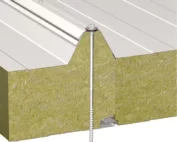
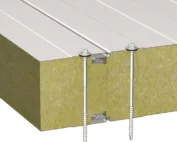
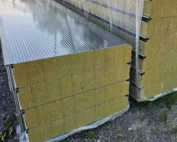
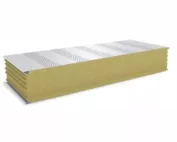
Mineral wool panels
Why do water droplets appear on an insulated wall panel?
In brief
Droplets on the internal lining do not necessarily indicate a leak from outside. Sometimes the surface is too cool relative to the air humidity. Water may appear at the joint, base or steel structure. The solution requires identifying the cause. Simply wiping the wall or adding a sealant is usually not enough. Air contains water vapour. When it meets a sufficiently cool surface, condensation may occur. The temperature and humidity inside, as well as the temperature of the lining, are significant. Therefore the same wall may be dry in a warehouse and wet in a room where the floor is frequently washed.
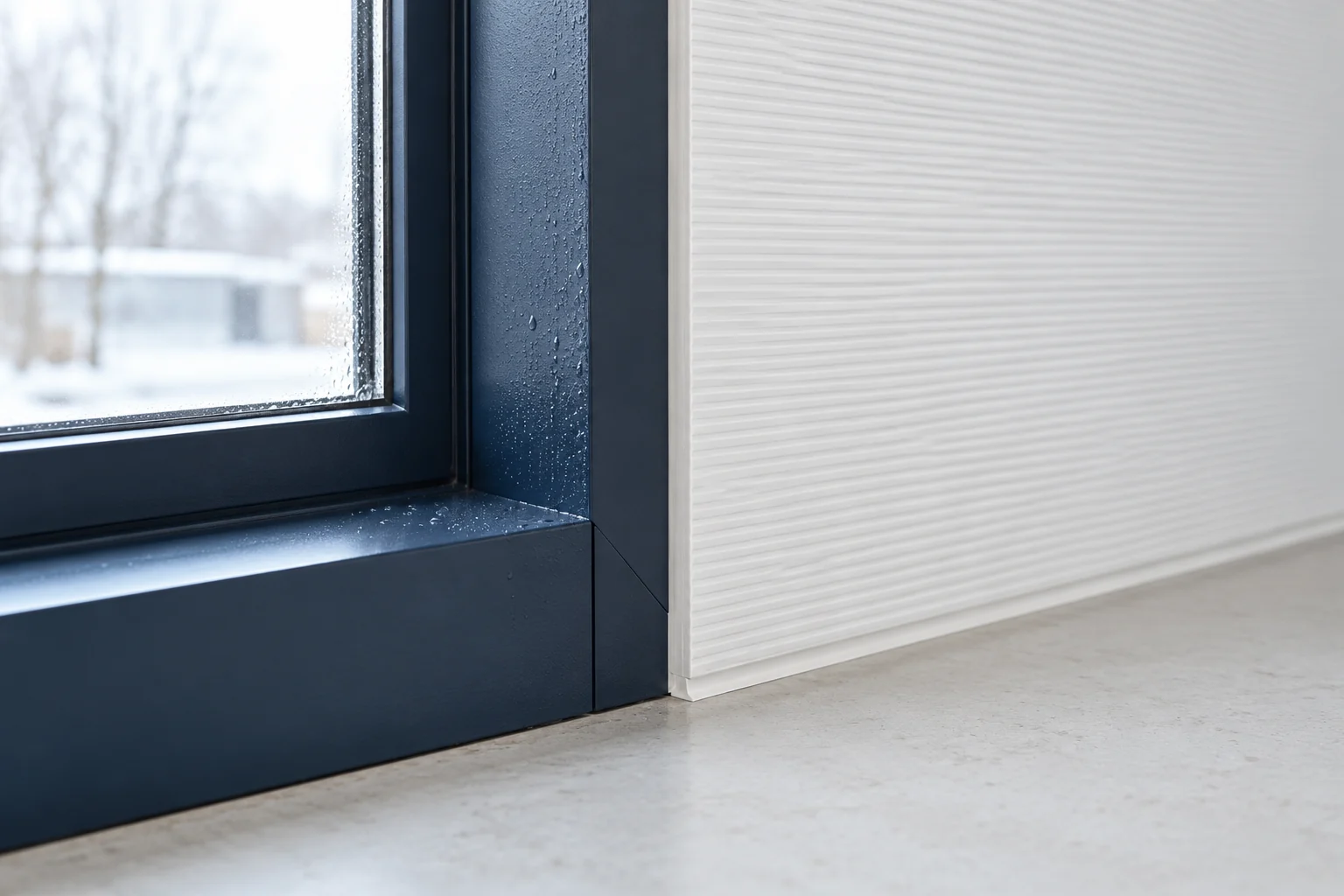
How does condensation form on a steel surface?
Condensation does not mean the material itself produces water. The source of moisture and the point of excessive cooling must be identified. The cause may be intensive use, insufficient air exchange or a thermal bridge. A combination of several phenomena is also possible. The choice of repair should follow from observation of the conditions, not from the appearance of the droplets alone.
How to distinguish condensation from a leak?
Note when the water appears. Condensation can occur without rain, for example after a cold night or when heating begins in a damp room. A leak is more often associated with precipitation and wind direction. These are not, however, infallible rules.
Check the extent of the traces. Even droplets over a larger area suggest a different phenomenon than a single stream from under a flashing. Water can also migrate along a joint. Take photographs and mark the locations on a sketch of the wall. A measurement of temperature and air humidity is useful. If both problems occur at once, each cause must be eliminated separately.
Why are joints, base and reveals particularly vulnerable?
Joints interrupt the homogeneous structure of the wall. A leak can allow moist air into cooler layers. Steel structural elements and poorly resolved flashings can increase heat flow. At these points the surface temperature is sometimes lower than in the middle of the panel.
Inspect the joint at the floor, the corners and the perimeter of the openings. Check whether the seals are continuous and on the correct side. Tape on the support does not replace sealing of the joint anywhere. Each element has its own function. Additional panel thickness can improve its middle section, but will not repair a discontinuous detail at the door.
Does steel lining replace the vapour barrier of the entire wall?
The full steel surface strongly restricts vapour transmission through the panel field itself. The joints, ends, fixings and openings remain the problem. The airtightness of the entire envelope depends on their execution. The properties of the sheet should not be equated with the properties of the wall after installation.
In buildings with elevated humidity, correct detailing of junctions is particularly important. The location and type of sealing should follow from the design documentation. Accidental sealing of the joint on the external side may not eliminate the ingress of moist air from inside. It may also hinder drying. First, the direction of moisture transport and the function of the individual layers must be established.

How can moisture be reduced in an occupied room?
Check the ventilation and the sources of vapour. A wet vehicle, washing the floor, drying materials and process operations increase humidity. Briefly opening the gate will not always ensure effective air exchange throughout the interior.
- Establish whether the supply and extract air are working as designed.
- Do not block ventilation openings with stored goods.
- Limit unnecessary sources of moisture and remove water from the floor.
- Observe the conditions after changing the way the building is used.
Raising the temperature alone may temporarily change the conditions, but it will not replace the removal of excess vapour. A balance is needed between heating, ventilation and the airtightness of the building envelope.
When is a more detailed analysis needed?
If the droplets return despite correct ventilation, it is worth checking surface temperatures and thermal bridge details. A hygrothermal analysis helps to assess the assembly under actual internal conditions. Cold stores, wet rooms and walls refurbished from the inside require particular attention.
Do not add insulation without assessing the consequences. It may shift the cold zone to another location and change the ability to dry out. If moisture in the core is suspected, an assessment of the panel’s condition is needed. The repair should remove the cause, restore the correct connections and allow the effect to be checked. Only then can the problem be regarded as solved.
Questions before ordering
Does a thicker panel always eliminate condensation?
No. It may improve the temperature of the wall field, but it will not fix a leaky joint, a thermal bridge at the plinth or excessive humidity in the room.
Is it enough to seal the wet joint from the outside?
This should not be done without identifying the cause. Moist air may be entering from inside, and sealing it at random may hinder the system from drying out.
7 branches. Materials closer to your project.