Panels with a mineral wool core
How do you choose screws and fixings for insulated wall panels with a mineral wool core?
In brief
A screw for a panel with a mineral wool core must match the panel thickness and the type of structure. Length alone is not enough. The load-bearing capacity of the connection, the drilling range and the correct pressure of the washer all matter. The fixing layout should follow from the loads and the wall detail. It cannot be correctly determined by a single figure for every façade. The panel thickness, the type of support and its actual cross-section are needed. A different solution applies to steel, a different one to timber, and fixing to masonry requires a suitable intermediate arrangement or a separately confirmed detail. The loads acting on the wall must also be known.
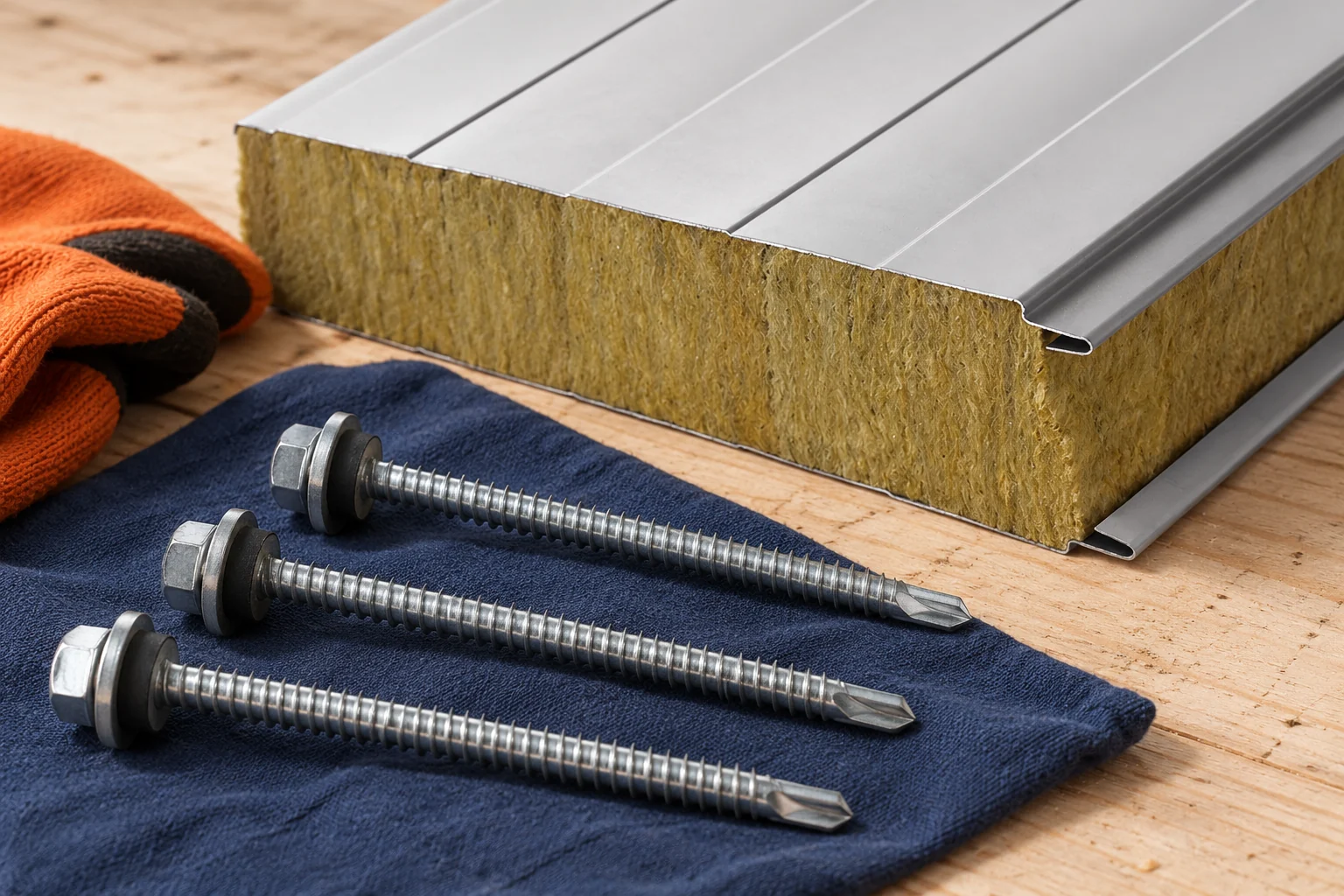
What data should you start with when selecting a fastener?
In a steel structure, the thickness of the material being drilled is important. A self-drilling tip has a defined working range. A fastener cannot be selected solely because it passes through the panel. It must anchor correctly in the support and transfer the required forces. When changing the type of purlins, the fixings must be checked again, even if the thickness of the cladding remains the same.
How do you determine the required screw length?
The length must account for the panel, the washer, any intermediate components and the required anchorage in the structure. A universal allowance added to the panel thickness should not be assumed. It depends on the fastener type and the substrate.
Also check the thread design and the intended use of the screw for sandwich panels. Not every long metal screw is a suitable substitute. In the connection, the interaction of the facings, washer and support is important. A too-short element may not achieve the required load-bearing capacity. A too-long one does not automatically improve quality and, in a tight detail, may conflict with another part of the structure or an installation.
What does the washer do and how do you avoid excessive pressure?
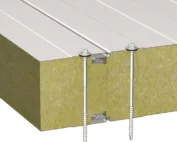
The washer distributes the pressure and works together with the seal. Its diameter and material should match the chosen solution. The screw should be driven perpendicular to the surface at the position specified in the detail. Skewing makes even pressure difficult.
Over-tightening can deform the cladding and the seal. Under-tightening will leave an incorrect connection. Tool settings and inspection of the work are therefore of great importance. Quality should not be judged by hand pressure alone. A visible depression of the sheet around the screw is not proof of a solid installation. The connection should retain the shape intended for the system.
Why does the number of fixings vary across the façade?
Wind acts differently in the middle of the wall and at its edges. Building height, surroundings and geometry are significant. The fixing layout may therefore need to be denser in certain zones. The spacing from a neighbouring building should not be copied.
Both the pull-out of the fastener from the support and the behaviour of the cladding at the washer, as well as other relevant connection mechanisms, must be checked. The support spacing and the number of screws are interrelated but do not arbitrarily replace one another. Adding a few fasteners will not remedy a panel with excessive span. The connection design should account for the entire load path to the structure.

How do you distinguish visible from concealed fixing?
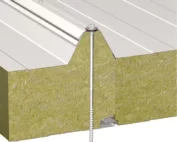
In the visible fixing version, the head and washer remain on the surface. In the concealed solution, the fastener sits within the designated part of the interlock or other detail. This is not merely an aesthetic difference. The way loads are transferred and the installation requirements change.
The panel must not be converted on site to concealed fixing by moving the screws to a hidden position. A product with the appropriate geometry and documentation is required. At corners and panel ends, check the bearing width. A narrow purlin flange may not provide space for all connections of two adjacent elements.
What should be inspected after the wall is completed?
Check the position of the fasteners, the condition of the washers and the evenness of the surface. Remove drilling swarf. Verify that no element has been omitted at flashings or openings. If a screw has missed the support, the problem requires a proper repair, not just covering the head.
- Compare the execution with the fixing zone plan.
- Check that the fasteners match the supplied panel type.
- Assess the seals independently of the washers themselves.
- Record the solution used in the acceptance documentation.
Such data will facilitate later inspections and any replacement. The fixing is part of the wall system, so an arbitrary substitute may change the properties of the entire enclosure.
Do not replace the washer with a smaller one yourself just to make it less visible. Its size matters for transferring forces and sealing, not only for the appearance of the wall.
Questions before ordering
Is it enough to buy a screw a few centimetres longer than the panel?
No. The length also depends on the substrate, the required anchorage and the intermediate components. A specific fastener must be selected for the entire connection.
Can more screws be added instead of an additional rail?
Not without checking the design. The number of fastenings and the panel span relate to different operating conditions. More fasteners do not replace the required support.
7 branches. Materials closer to your project.