Roofs and roofing
Roof renovation: when should sheets, flashings and other materials be ordered?
At a glance
It helps to separate preliminary purchasing decisions for a roof renovation from approval of production dimensions. An initial quotation allows comparison of options, but cannot replace measurements that account for structural repairs and the final roof build-up. Sheet lengths, flashing shapes and component quantities must describe the same scope of work. This guide explains how to prepare a purchasing schedule, identify measurements and coordinate decisions between the owner, roofer and supplier. It is particularly useful when the old covering is still in place and an order needs advance preparation. There is no universal waste allowance: quantities depend on the layout of the particular roof and the selected system. Approve final dimensions after resolving changes affecting geometry.
Separate estimates from production orders
Mark provisional information in the initial enquiry. An area taken from archived drawings can support a budget discussion, but should not automatically become the quantity of sheeting ordered. The supplier needs to know whether the task is pricing an option or starting manufacture.
Identify roof slopes and measurement sources
Give each roof slope a simple identifier and use it on sketches, schedules and photographs. Record the start and end points of each length measurement. A number alone does not explain whether it includes an eaves projection or an allowance for a joint.
Add a field for dimensions to be confirmed after repairs. It can identify an edge whose position will change when the supporting structure is corrected. Avoid revising measurements from memory; record the date and the person responsible for checking them again.
Compare complete packages, not individual sheets
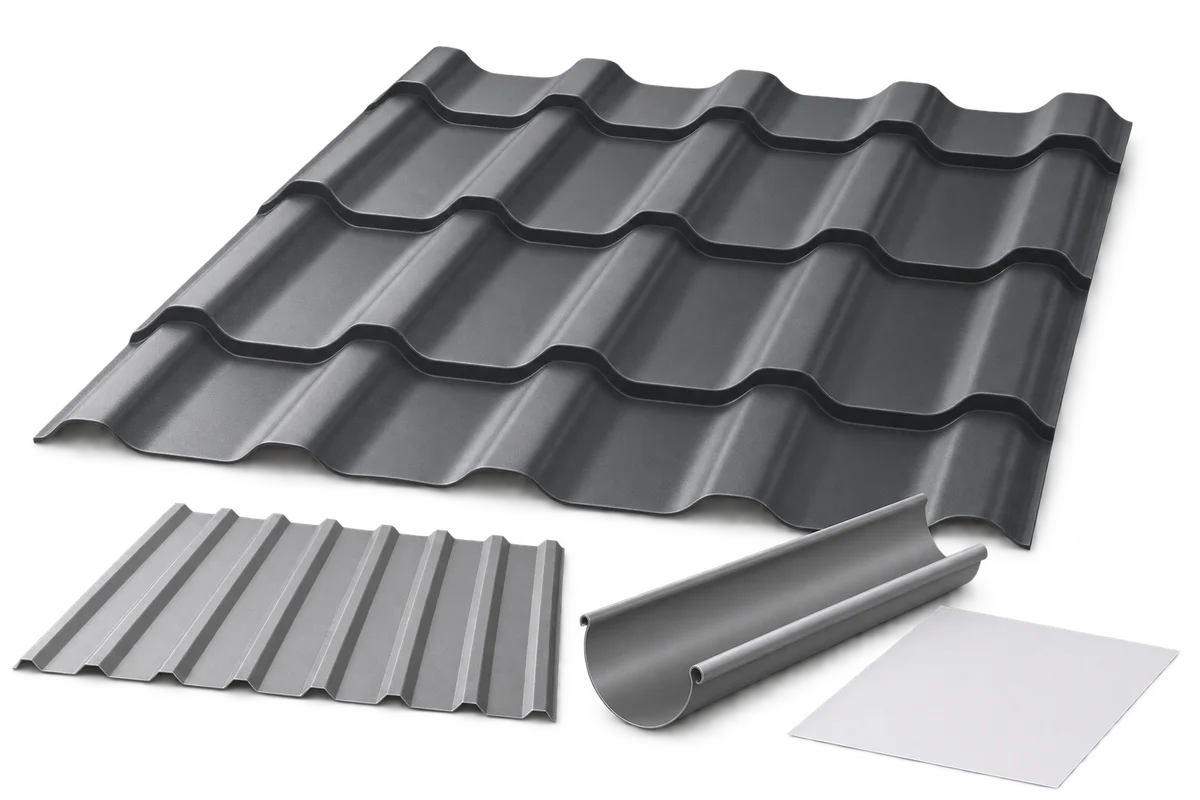
When changing the roofing profile, prepare a separate accessory schedule for it. A flashing selected for the old rib height is not automatically suitable because its colour is similar. List edge pieces, joint components, fasteners and specified sealing materials separately in the quotation.
Keep roof area, purchased material area and billing units distinct. For sheets, compare effective cover and the cutting schedule. For flashings, check each piece’s length and the number of pieces. This makes quotation differences understandable without assuming that a cheaper unit means a cheaper roof.
Agree the final build-up height
If additional insulation is planned, agree the finished section before ordering flashings. New layers can alter clearances at the eaves, verge and roof windows. Finishing dimensions refer to the completed build-up rather than only to the edge of the old sheet visible today.
Do not select screw length solely from the thickness of added insulation. The design and system instructions also determine the substrate, route through the layers and anchorage. Put the approved fastener type on the purchasing schedule instead of the generic entry “roof screws”.
Schedule deliveries by work stage
Agree with the contractor which batch is needed first and where it can be unloaded safely. Material for a later stage should not block access to ongoing work. Confirm storage conditions against the particular product’s instructions, including when delivery takes place before stripping the roof.
Quote the current drawing revision when ordering made-to-measure components. If the structure or penetration positions change, withdraw the old schedule and confirm that the supplier has received the replacement. Sending several unlabelled tables creates a risk of manufacture from superseded measurements.
Record service-dependent components separately, including penetrations, base flashings and planned equipment attachments. Agree their positions with the relevant trades. Ordering the covering before those locations are settled may lead to unplanned alterations to sheets that have already been prepared.
Approve one version of the schedule
Before final approval, review the schedule in installation order. Check that each documented detail has the materials it needs and that no item has been counted twice. Agree who supplies ancillary components and identify any quantities still based on assumptions.
Keep approved drawings, the order confirmation and subsequent changes together. At delivery, compare labels with that record and resolve discrepancies before using the materials. Purchasing records should describe the roof that is actually to be built.
7 branches. Materials closer to your project.