Roof details
Gutter material and roof covering: check the whole combination
At a glance
Choose gutter material with regard to roof runoff, connecting parts and installation products, not just façade colour. A mechanical fit does not establish material compatibility. Both direct contact and the order of surfaces along the rainwater route matter. This guide explains how to gather information about roofing, flashings and gutters before purchase. It shows why galvanised steel should not be treated as titanium zinc, and why sealant colour is not a selection criterion on its own. Rather than offering a universal approval table, it sets out how to check the proposed combination against the actual products’ documentation and suppliers’ advice.
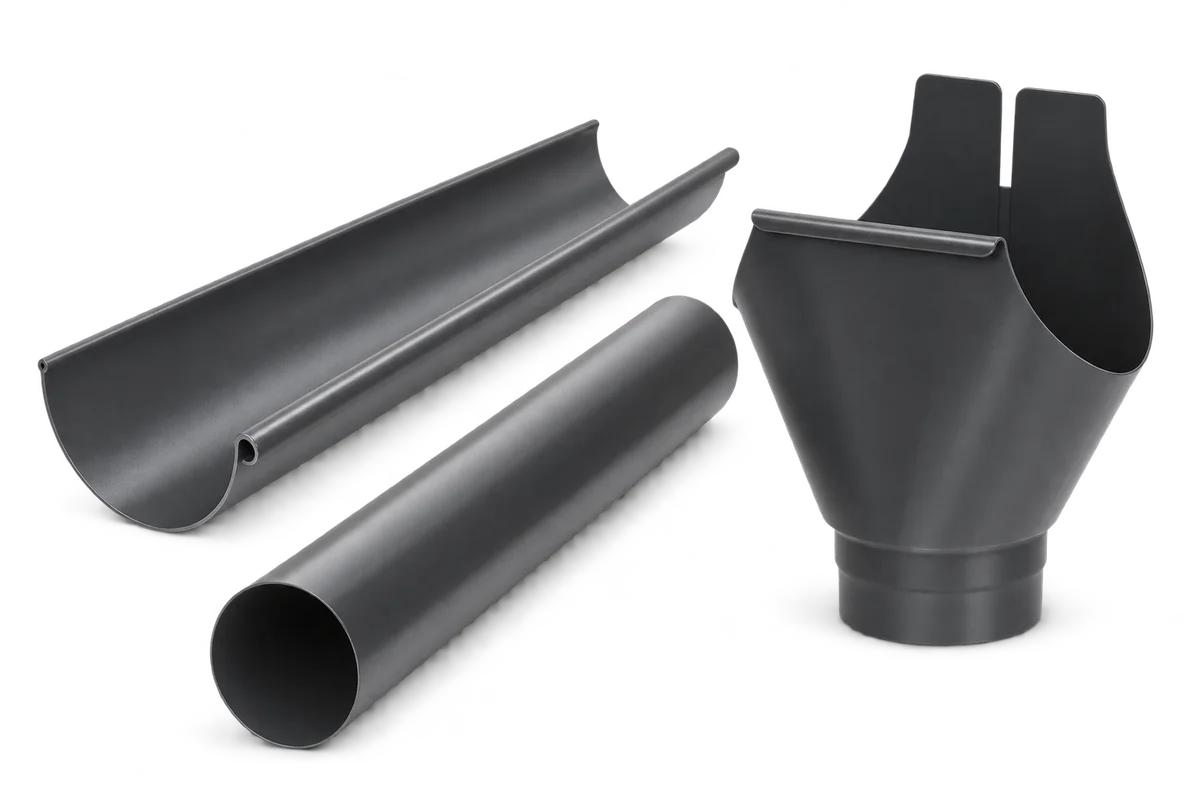
Record the material, not just the colour
List the system, base material and coating type. “Metal” is too broad, and surface appearance can mislead. For existing gutters, look for records or markings instead of relying on photographs alone. Leave any unconfirmed item open for identification.
Galvanised steel has a steel substrate protected by zinc; titanium-zinc sheet is a different product. Do not automatically transfer advice on adjacent materials, cleaning or repair between them. A similar shade does not make them interchangeable. Distinguish different organic coatings on steel too.
Trace the direction of runoff
Draw the water route from the highest flashing to the downpipe. Materials do not have to touch for compatibility to matter. Runoff from an upper surface may affect a lower component. Give the supplier the complete arrangement rather than just the name of the gutter being purchased.
Runoff from copper onto zinc is one example to avoid because of the risk of zinc corrosion. Checking only whether a gap separates the metals is therefore insufficient. This example is not a complete compatibility list; other combinations require the selected products’ documentation.
Distinguish roofing from smaller flashings
Include eaves flashings, chimney flashings and roof-window details in the material record. A small surface may sit outside the main roofing order. Identify it as carefully as the main roof covering so the record reflects the actual runoff route.
Where a bituminous covering or membrane drains onto zinc, check the specific combination’s suitability. Membranes do not all behave alike. If protection is required, establish its type, extent and maintenance from the system documentation. An arbitrary coat of paint is not a substitute for that assessment.
Check sealants and fixings
A sealant must suit the substrate, coating and joint method. “Roofing” or “universal” does not settle every application. Check its data sheet alongside the gutter instructions. Where a gasketed joint is specified, do not add another product without confirming the need and compatibility.
Select brackets, pipe clamps and fasteners as well. Suitability concerns both the contacting materials and the supporting substrate. Replacing a small part with a lookalike can change the system assumptions. Specify component references rather than leaving only “suitable bracket” in the order.
Confirm the conditions for combining parts
Before purchasing, prepare questions describing contact details and runoff direction. Seek confirmation for the actual configuration rather than a general judgement about a material. The reply should identify products and any conditions. Keep it with the order documents.
If two instructions conflict, do not select whichever paragraph is more convenient. Give the suppliers both documents and ask them to clarify the combined use. Mark the interface as unresolved until it is settled. A later alteration may involve more than the gutter itself.
Retain compatibility during later repairs
For repairs, identify the installed system and coating before buying touch-up products or a connector. Do not assume leftovers from other work are suitable. Record the repair location and cause. Restoring appearance does not establish that a material incompatibility has been resolved.
Revisit the material record when roofing or flashing above the gutter changes. The gutters may remain while their exposure changes. Rechecking avoids applying an earlier confirmation to a different configuration. Keep records aligned with the installed arrangement, not merely the original order.
7 branches. Materials closer to your project.