Sheet metal and roofing
What ensures the watertightness of a standing seam roof?
In brief
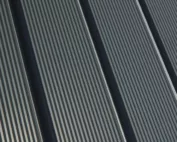
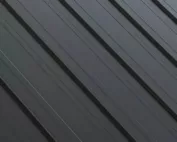
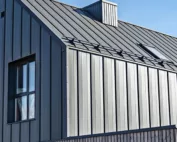
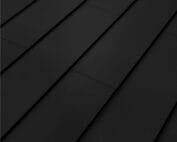
Standing seam joins adjacent sheet metal strips above the main roof slope surface. This arrangement helps to organise water runoff. However, it does not automatically guarantee the watertightness of the entire roof. The outcome is also determined by the pitch, flashings and method of fixing. The areas where the continuity of the covering is interrupted require the most attention. The flat sheet metal fields direct water towards the eaves. The longitudinal joint is located higher than their principal surface. This limits direct contact between the flowing water and part of the seam. Effectiveness depends, however, on its construction and the conditions on the roof.

How does the joint raised above the roof slope work?
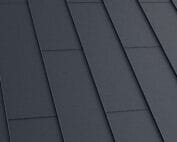
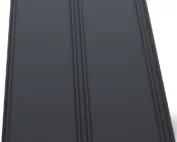
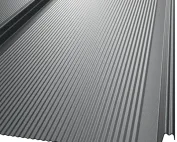
A distinction must be made between a traditional standing seam formed on site and a factory-made snap-lock panel. Both can create similar vertical lines. They do not therefore have identical requirements. Each system specifies how the strips are joined, supported and terminated. Its weathertightness cannot be assessed solely by the height of the visible seam or the appearance of a sample in the shop.
Why is there no single minimum pitch for all standing seams?
At a lower pitch, water leaves the roof surface more slowly. Ponding, wind pressure and minor installation errors become more significant. The minimum slope depends on the specific solution, material and details. Values must not be copied from another type of panel.
Also check whether the requirements apply to roof surfaces without transverse joints. A long strip from eaves to ridge behaves differently from two shorter elements joined on the slope. Roof valleys, windows and service penetrations create additional points where water can enter. With unusual geometry, the designer should confirm the entire detail. Meeting the angle value stated for the product alone does not resolve all roof connections.
How do fixings allow the sheet metal to move?
Steel sheet changes length with temperature. A long strip must have the freedom of movement provided for in the system. Fastenings should simultaneously hold the covering under wind action. These two tasks must be reconciled through correct layout and method of fixing.
Traditional solutions use appropriately selected fastening elements, while factory-made panels may have their own battens or holes. Not all systems may be treated in the same way. Accidental drilling through the flat field can create an additional point of leakage. Excessive restriction of movement, in turn, promotes deformation. The recommendations for fixed and sliding zones and for the method of tightening fasteners are what matter.
Which details most often determine watertightness?
At the eaves, the correct termination of the panel and discharge of water into the gutter must be ensured. At the ridge, the combination of protection against precipitation with the required ventilation is important. In roof valleys, an unobstructed drainage cross-section and suitable termination of the strips must be maintained.
- A chimney requires flashings matched to the direction of water flow.
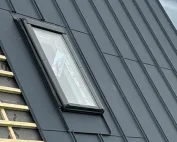
- A roof window needs a compatible collar and layer arrangement.
- Penetrations for pipes must have a solution suited to the given covering.
- Connections to the wall require correct closure from above.
These locations should not all be reduced to applying sealant. A well-designed detail first directs water along the proper path and only then uses the intended seals.

How do the substrate and divisions affect durability?
The substrate should meet the requirements of the chosen system. Evenness, support and separating layers are important. An incorrectly prepared surface can cause visible deformation and undesirable movement of the sheet. Not every system requires an identical solution beneath the panels.
It is worth drawing the divisions relative to the axis of the house and the openings. A very narrow strip at the gable can make the termination difficult to execute. On a roof with a dormer, the position of the seams relative to its sides must be checked. Such a plan limits improvised cuts. A well-matched panel rhythm is therefore a matter of aesthetics and of convenient execution of the details responsible for tightness.
How should the finished roof be inspected in subsequent years?
After installation, remove filings and check the condition of the coating. Keep documentation of the details covered during the works. During later inspections, pay attention to the patency of the roof valleys, gutters and connections at the chimney. Contaminants should not form barriers to water.
Do not introduce new penetrations through the roof without agreeing their execution. Installing an antenna or an installation can change the previously verified arrangement. Additional devices require proper support and sealing. A standing seam roof can be a very effective covering, but it is assessed as a complete building envelope. The slogan about the “tightest roof” does not replace correct design and inspection of execution.
Questions before ordering
Is standing seam roofing always more watertight than any trapezoidal steel sheet?
No single rule can be established for all roofs. What matters is the specific system, the pitch, the details and the quality of workmanship. The type of visible joint alone does not settle the comparison.
Does concealed fixing mean no holes and no risk of leakage?
No. The fixing has a specific method of execution, and the roof also includes eaves, ridges and penetrations. Each of these places requires a proper solution.
7 branches. Materials closer to your project.