Installation and details
How much does it cost to install panels with many openings, corners and short sections?
In brief
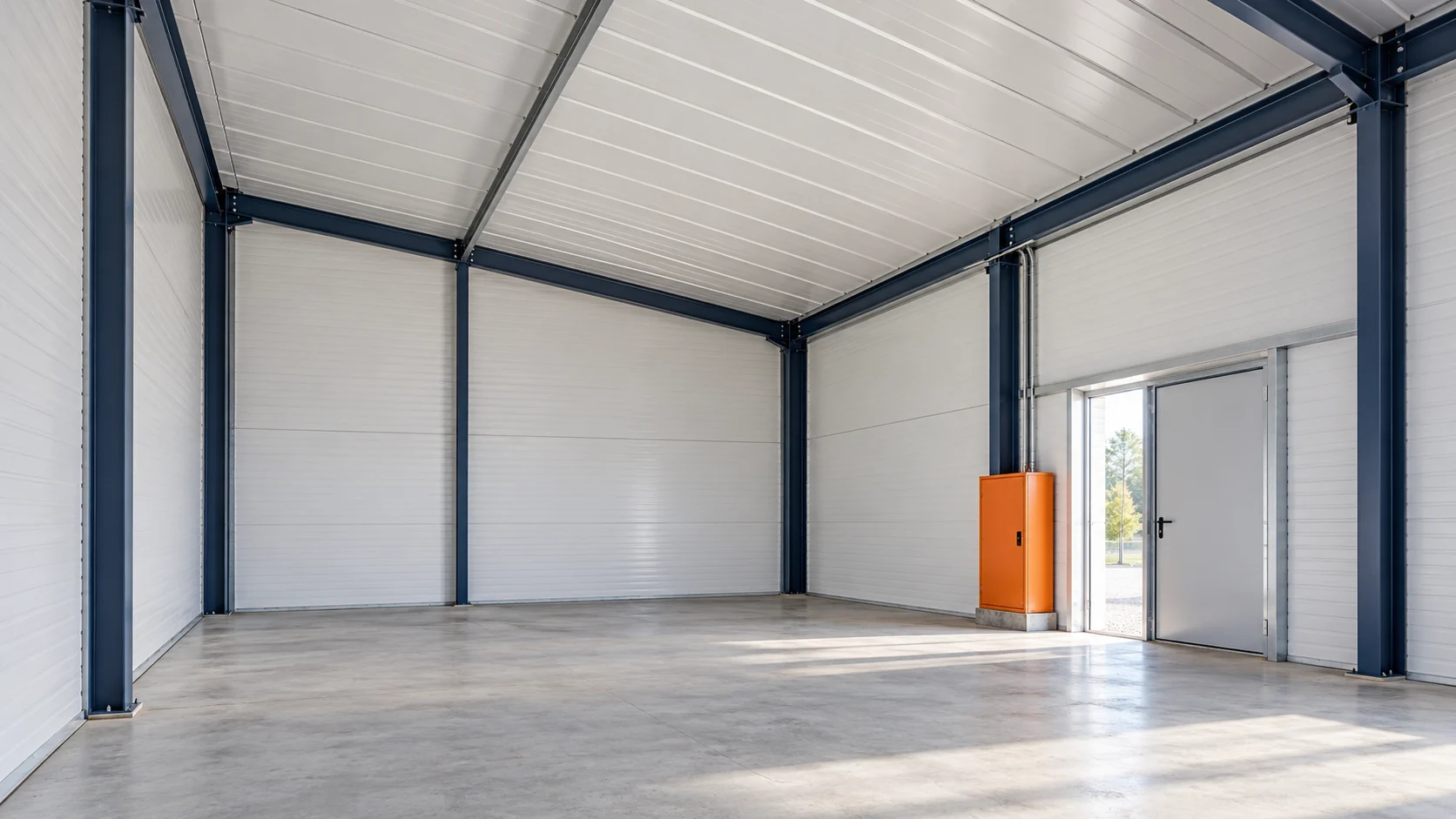
Two walls with the same surface area may require different amounts of labour. Edges, openings and the number of cuts also determine the installation price. With small areas, the share of flashings and seals increases. A quote should therefore be based on the cladding drawing and the access conditions at each installation location. A large, regular area allows the same panel laying method to be repeated. With many short sections, lengths are changed more often and terminations are prepared. Work at corners is added to this. The number of installed metres does not directly reflect the number of operations performed.
Why does surface area alone not show labour intensity?
Let us compare geometry alone. A single rectangular wall of 10 × 6 m has 60 m² of surface and a perimeter of 32 m. Three separate fields of 10 × 2 m each also give 60 m², but their combined perimeter is 72 m. This does not mean an identical price for flashings, but it shows the difference in the quantity of edges.
For a real quote, the type of termination must be added. A plinth, a corner and a junction at a window require different details. Not every metre of edge takes the same amount of time. The schedule of flashings should describe their position, cross-section and method of fixing.
How to count openings and cuts?
Mark the gates, doors, windows and service penetrations on the drawing. For each, indicate the dimensions and the type of support. Cutting the opening is only part of the task. The edges, flashings and seals that must be made around it remain.
Establish whether the contractor receives the panels in their final lengths. Cutting on site can increase the scope of work and requires preparing a work area. The tools must suit the coated surfaces. After cutting, swarf must be removed and the edges checked.
Check the width of the last strips. A very narrow element at the corner may require an additional fixing solution. Changing the layout at the cutting stage is often more favourable than a difficult trim in the finished wall. However, conformity with the support design must be maintained.
For several similar openings, prepare one approved detail and then check the actual dimensions of each field. A repetitive appearance does not guarantee identical spacing between the supports as built.
What does access to the structure change?
Installation from a prepared floor differs from work on uneven ground. Height, space for the lift and the ability to position the material matter. The quote should include equipment suited to the specific access.
Long panels require proper lifting equipment. A small pack does not necessarily mean easy installation. If an element has to be moved over an existing part of the building, organising the work may be more demanding. Establish these conditions before quoting a rate.
Check the readiness of the supports. A missing element at an opening or an uneven surface can stop the work. Repairing the structure is not always within the scope of the cladding crew. It is worth indicating who carries out the correction and how any additional visit is settled.

How to build a clear cost example?
Let us assume a hypothetical scope of 150 m² of cladding and labour at €14.35 net/m² for specified basic works. This gives €2152.50 net. Let us assume separately €416.61 for agreed works on flashings, €601.77 for equipment and €196.73 for the team’s travel.
The total cost of the example is €3367.61 net, i.e. €22.45 net/m². The amounts are neither an offer nor a market rate. They show how the indicator changes when ranges not included in the base price are added.
In a real quote, double counting must be avoided. If flashings are already covered by the labour rate per metre, they are not added a second time. Similarly, equipment may be part of one item or a separate cost. The offer should clarify this division.
How do you compare the scopes of two contractors?
Give both contractors the same drawing and set of lengths. Establish the flashing material, the number of openings and the access conditions. Without shared assumptions, a lower rate may describe a smaller scope. It is worth asking for the works excluded from the price to be indicated.
Define the rules for settling dimensional changes. Moving a gate or an additional service penetration may require new support and flashings. The cost of such a change is best agreed before execution. This allows a correction to be distinguished from an additional task.
Record what is subject to acceptance. This should include not only the panel surfaces but also the fixings, connections and the condition of the coatings. At the acceptance of covered works, check the seals. The quote is meant to lead to a finished cladding with the required properties, with a clearly defined scope of works.
Questions before ordering
Does deducting the window area always reduce the installation price?
It doesn’t have to. An opening reduces the panel area but adds work for cutting, support, flashings and sealing. The method of settlement must be agreed in the quote.
Is a single rate per metre enough to compare quotes?
Only if it covers exactly the same scope and conditions. Otherwise, extras, equipment, access and work at openings and edges must be listed separately.
7 branches. Materials closer to your project.