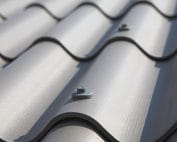
Fibre cement roofing
Fixing through the crest of the corrugation. The rule you need to check in the installation instructions
In brief
The position of the fastener affects the weathertightness and the way the covering performs. It is not chosen where it is easiest to reach with a tool. Fibre cement sheets are fixed according to the pattern specified for the product. In many roof systems the holes lie on the crests of designated corrugations. Asbestos-free fibre cement should not, however, be installed on the basis of this general rule alone. The support, the position of the hole and the required sealing set must also be determined. The valley of the corrugation directs water down the slope. The crest is a different location in terms of geometry and run-off. The fixing system uses this difference but requires proper sealing of the penetration. Placing the screw high up alone does not guarantee weathertightness.
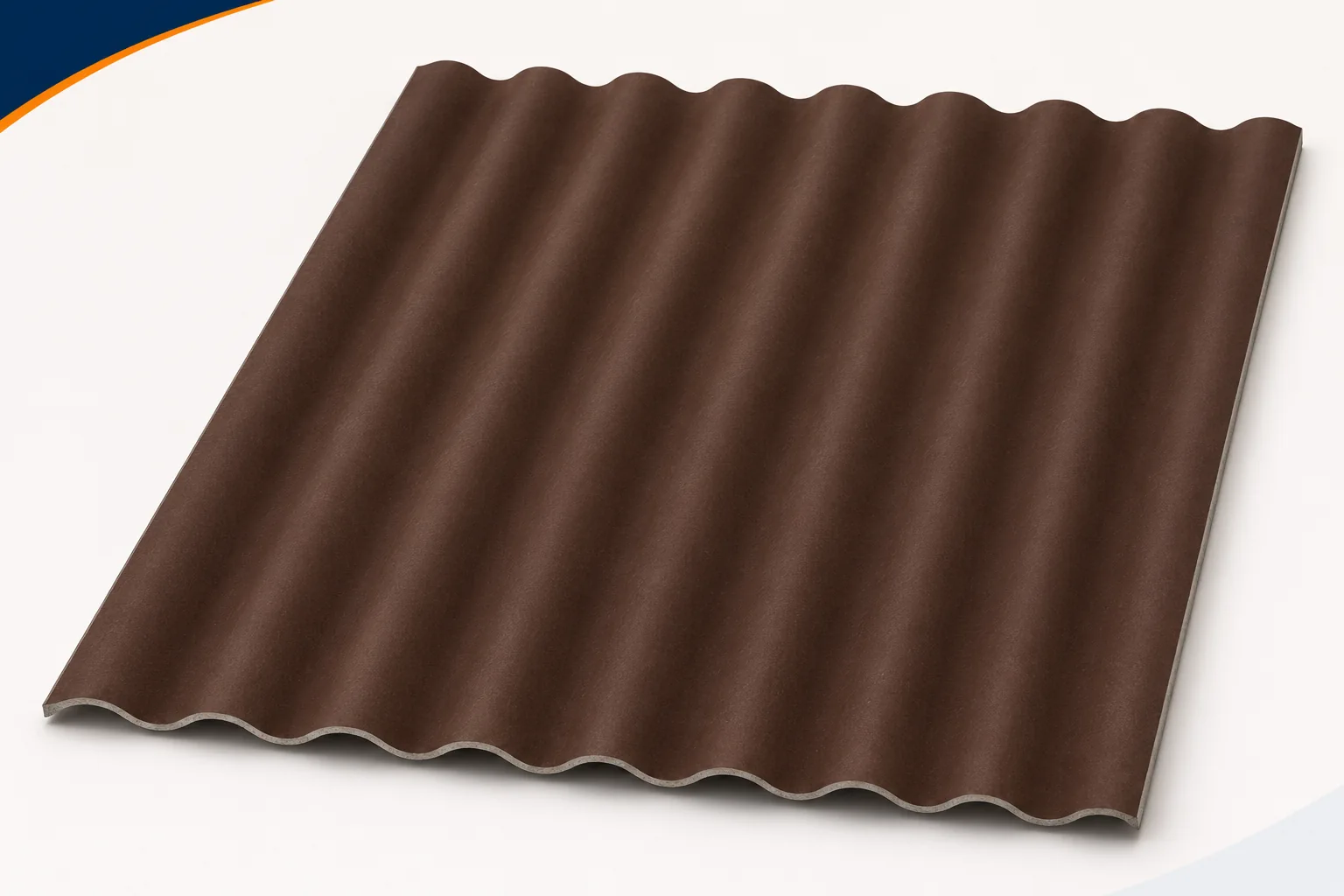
Why the crest matters for the connection
The hole, washer and pressure plate must work together. It is not permissible to move the fastening to the side of the corrugation simply because it is easier to hit the purlin at that point. This produces a different contact angle of the seal and a different force distribution. In the event of a discrepancy, the substructure and the panel layout must be checked instead of improvising new fixing points.
The corrugation number comes from the instructions
The diagram shows which crests to use and from which side to count them. Fibre-cement panels of different widths may have a different hole arrangement. Two numbers remembered from a previous build are not an adequate instruction for a new profile. The direction of overlap also matters. With a factory-prepared panel, the position of the holes and the cut corners dictates a specific orientation. The installer should identify this before the material is laid on the roof. It is worth starting with a check of the first sheets against the documentation. Repeating incorrect numbering across many rows leads to damage that cannot be remedied by simply replacing the screws.
There must be proper support under the hole
The screw transfers loads to the batten or purlin. It is not enough for it to pass through the correct crest. It must have the correct position relative to the support and the required anchorage. Fibre-cement panels must not hang on a fastener at a point where the substructure has been omitted. On a roof made of larger sheets, a row of fastenings on an intermediate support may be necessary. Such a row is not an option depending on the installer’s convenience. Before laying begins, the line of supports must be compared with the sheet plan. If the positions diverge, the cause is determined. Drilling diagonally to a distant purlin creates a faulty detail instead of correcting the spacing.
The screw-in angle affects the seal compression
The fastener should work in the direction intended for the connection. A tilted screw presses the washer unevenly. One part of it may be crushed, the other may not be in contact. The problem is sometimes invisible from the ground but becomes apparent during rain. Asbestos-free fibre cement should not be forced to fit a crooked fastening. The cause must be corrected in accordance with the installation instructions. The choice of tool and bit helps maintain control over the work. Any torque setting on the screwdriver should not be regarded as universal. Different fasteners and substrates may require a different method of achieving the correct pressure.
The roof edge requires its own inspection
The zones at the eaves, corners and side edges are sometimes more heavily loaded by wind suction. The design may provide for additional fixing points. This does not mean that holes may be placed randomly, close to the very edge of the sheet. Fibre-cement panels have specified distances and permissible drilling locations. An edge that is too close may promote the breaking out of a fragment. The installer should receive a clear division of the roof into zones and a fastening plan. Saving a few fasteners in the most exposed location has different consequences than omitting a purely decorative element. After a storm, it is precisely these sections that deserve particularly careful inspection.
Mounting brackets for installations are considered separately
The screw fastening the covering and the element transferring the load of the installation do not have to perform the same function. Photovoltaics, cables or other equipment require a separate solution. Fibre-cement panels should not take on additional pressures from a frame without a designated path for transferring forces to the structure. Passing through the crest may be part of such a detail, but in itself does not make it correct. The load-bearing capacity, sealing, clearance and access for maintenance must be determined. When adding an installation, the condition of the existing panel is also checked. Drilling further holes in a weakened sheet does not replace an assessment of its suitability.
What to check before access to the fastenings is lost
Acceptance should cover the conformity of hole positions, the support, the direction of the screws and the condition of the washers. It is worth catching cracks at the ridges and any contamination left after drilling. Fibre-cement sheets are inspected from a safe position, without standing directly on the sheets. Photographs of successive stages are helpful, especially of sections later covered by flashings. If the seal is visibly squeezed out or the fastener stands proud, it is not enough to consider that it ‘holds firmly’. Such a detail requires assessment and correction. Correct fixing combines retention of the sheet, tightness and the ability of the material to move within a single connection.
Select asbestos-free fibre cement together with a fixing plan. The profile designation, the type of supports and the building location allow the required set of parts to be prepared.
7 branches. Materials closer to your project.