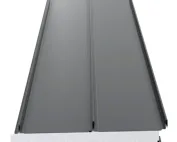
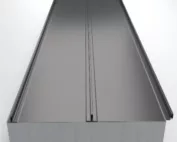
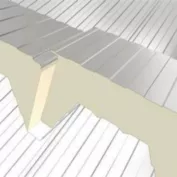
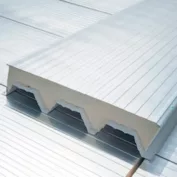
Installation and details
How should you cut insulated wall panels to preserve the edges and coating?
In brief
It is best to order panels in the required length. When on-site cutting is necessary, use a tool that complies with the panel guidelines and limit heating of the sheet. Support and prompt removal of swarf are equally important. A well-executed cut should fit the planned flashing and edge support. Check the dimension after installation, not just the distance between two visible elements. Clearances, space for flashings and the required bearing may be needed. For a roof panel, also allow for the direction of fall and the eaves or lap detail. Do not cut the whole batch according to the first unconfirmed piece.
What should be established before marking the cutting line?
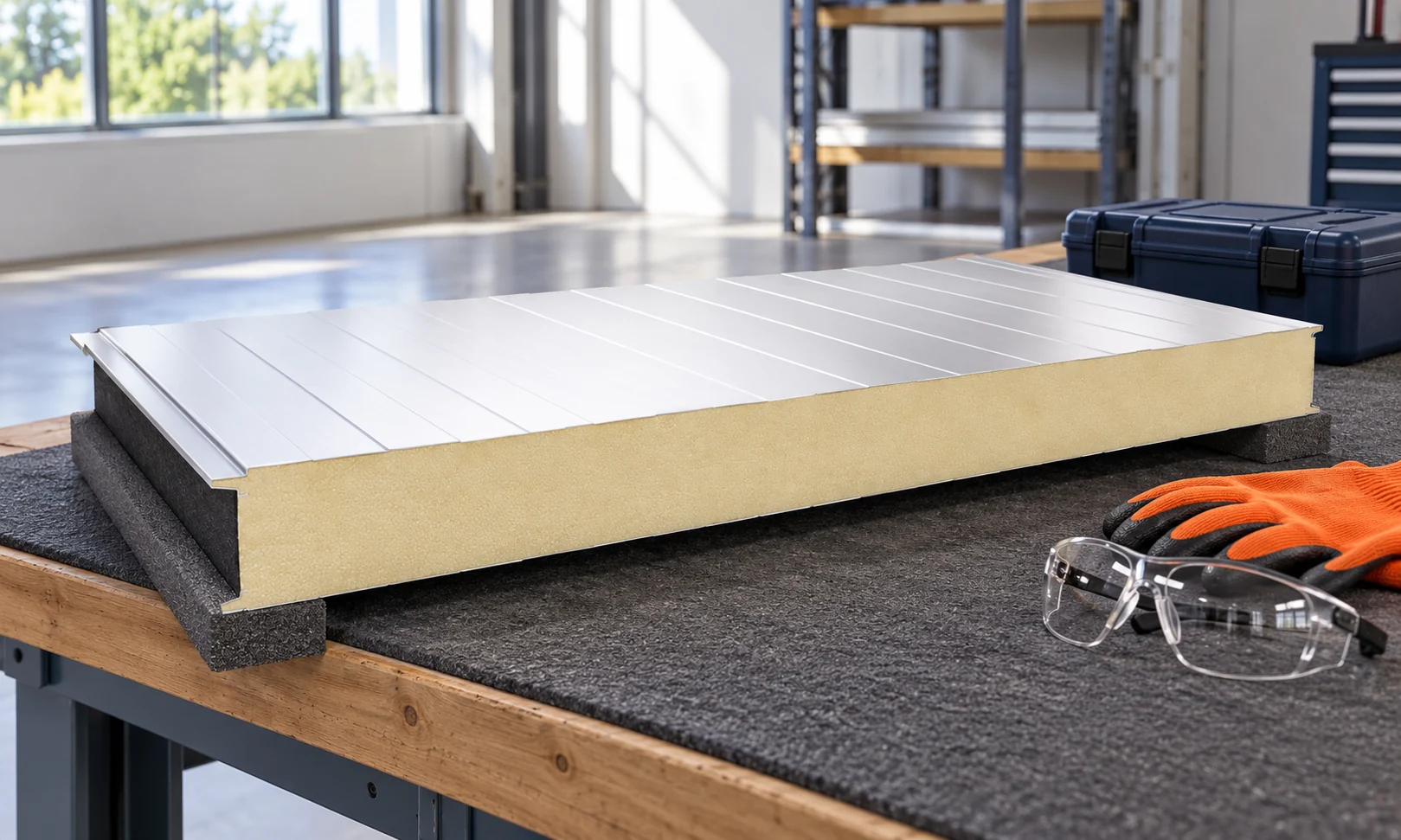
Mark the external side and the position of the interlock. The cut-off piece cannot always be rotated and used elsewhere. The edge geometry may be directional. Before cutting, also check whether the opening or shortening of the panel is consistent with the support layout and the assumed load-bearing capacity.
Which tool should be chosen for the panel and flashing?
The guidelines for a specific panel may specify a saw with a fine-toothed blade. The tool must suit the thickness and construction of the material. The cutting method for thin flashings is selected separately, where suitable shears are used. There is no single accessory suitable for every task.
| Element | What to check |
|---|---|
| The entire insulated panel | Permitted tool, length and type of blade |
| Thin sheet metal fabrication | Shears suited to the profile and coating |
| Cutting out an opening | Support, cutting sequence and edge protection |
An angle grinder and methods that strongly heat the edge are not the right choice. Temperature and hot particles can damage the sheet’s protection. This is a problem that later covering the cut line with a trim does not solve.
How should the panel be supported and damage limited?
Prepare a stable workbench of adequate length. The supports should protect the coating from scratching. Also plan support for the piece being cut off. If it drops in the final phase, it can tear or deform the edge. The weight of a long panel must be taken into account before starting work.
Do not drag the panel over a dirty surface and do not set it down on sharp swarf. Keep access for guiding the tool without a forced posture. Use protection appropriate to cutting metal and the given core. With mineral wool, dust and fibre control is also required in accordance with the work requirements.
Check the condition of the tool before the first cut. A blunt or unsuitable blade can increase vibration and worsen the edge. If in doubt, carry out a trial on a piece intended for waste.

How should an opening be made without weakening the wall?
A large opening for a window or door requires planned framing. The panel alone does not automatically retain its original load-bearing capacity after cutting. Supports and fixings around the opening should follow from the design. This also applies to the narrow strips remaining above or beside the passage.
Service penetrations also need sealing and edge protection. Do not leave the core exposed where it is vulnerable to water. The type of flashing must match the panel and the service conditions. Where fire resistance is required, the correct detail for the entire penetration must be maintained.
Do not cut openings ‘just in case’ without an agreed position for the equipment. Enlarging them later can take up the space needed for fixing and a sealed perimeter.
Why is cleaning off swarf part of cutting?
Metal particles left on the coating can corrode and cause stains. They must be removed promptly by a method that does not scratch the surface. Check not only the cut line but also the recesses of the profile and adjacent panels. Wind can carry swarf beyond the work area.
After work, inspect the facings in good light. Damage to the coating requires assessment and repair by an approved method. Do not rub off dirt with a hard brush or an arbitrary product. Especially on a roof, left-over particles can later be difficult to spot and remove.
How should you receive the finished cut piece before installation?
Check the dimension, squareness and condition of the bond between core and facing. The edge should not hinder correct support or the execution of flashings. Assess whether the adjacent joint has been damaged during work. A questionable component is better identified at the workstation than after lifting onto the roof.
Mark the place of use and secure the panel for transport. Do not lay offcuts haphazardly on the ground. Narrow pieces are more prone to incorrect support. Final acceptance covers both the panel itself and its connection to the structure, sealing and flashings.
Questions before ordering
Does cooling the cut area allow the use of an angle grinder?
This must not replace the approved method. The risk includes damage to the coating and hot particles, not just the temperature felt by hand.
Can every short offcut be reused?
No. It must have the correct dimension, the right edges and support. Saving material must not force a non-compliant joint.
7 branches. Materials closer to your project.