Coatings and colours
How to choose a roof colour that works with the façade
In brief
First establish which elements of the house will remain unchanged, and match the roof colour to them. During renovation, brick, stone, windows or fencing may outlast more than one coat of paint, so they set the palette. Also check gloss, texture and the sheet profile, as well as local requirements for the building’s appearance. Before ordering, view a sample in daylight and at an angle close to the roof pitch. Make the final decision after comparing all permanent elements, not just a catalogue swatch.
Which element should you start with when choosing colours?
If you are renovating a house, some colours are already fixed. Brick, stone, windows or fencing may remain longer than new paint on the wall. It is worth starting with these elements and only then choosing the roof to match. With a new building, the whole set can be prepared at the same time. This avoids a situation in which each material looks good on its own but together they form a random whole.
The roof has different visibility depending on the pitch and the surroundings of the house. A steep, large roof slope can strongly dominate the building form. A low roof viewed from close up has a weaker effect, but its flashings and gutters are visible. The choice is therefore best based on the view from the street and garden, not only on a flat elevation drawing. What matters are the places from which the house will be viewed most often.
How do you combine the roof with a light or dark façade?
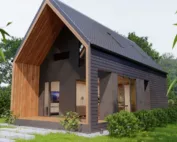
Light walls allow the line of a dark roof to be clearly shown. Such contrast works well with simple building forms, but it is not the only correct choice. A roof in a warmer shade may harmonise better with brick and wood. Cool greys are worth setting against a sample of render, because its delicate beige or cream becomes more visible next to graphite.
A dark elevation requires careful placement of accents. A roof in a similar colour can calm the building form, while lighter details give it clear edges. The same shade does not have to be repeated exactly on all surfaces. It is worth deciding which element is to be the main one. Several strong colours of similar importance quickly begin to compete with one another.
Why do matt and gloss change how a colour is perceived?
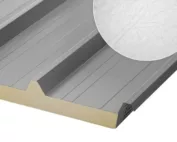
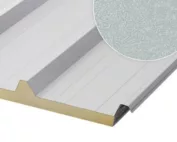
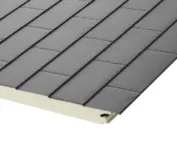
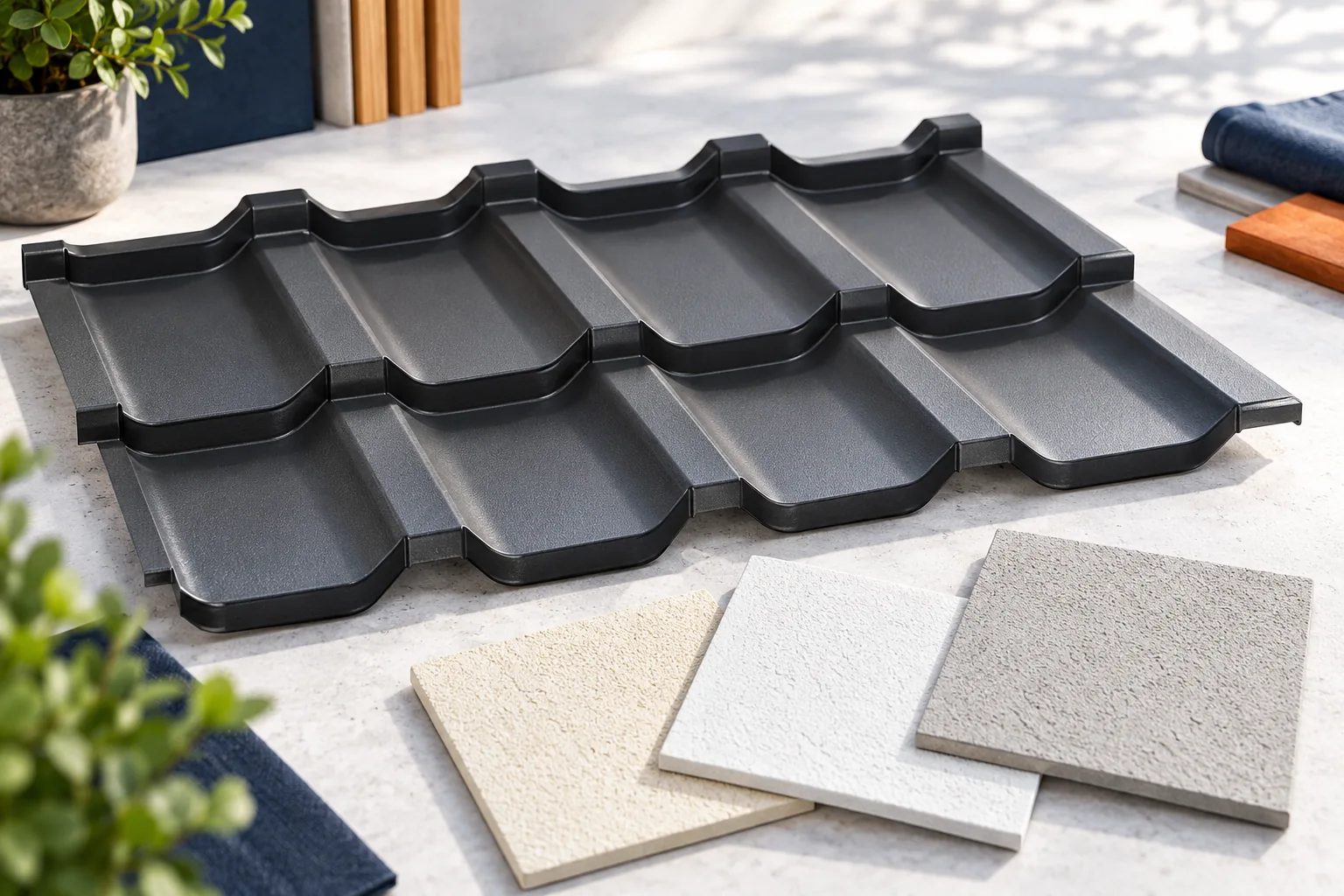
The same colour name can produce a different effect on a smooth, matt and textured surface. Gloss shows reflections of the sky and surroundings more strongly. Matt reduces clear reflections but still changes appearance with the lighting. The embossing of trapezoidal steel sheet creates additional shadows. On T18 or T35 they fall differently than on a profile with the transverse rhythm of roof tiles.
A colour sample should therefore correspond to the chosen coating. The colour number alone does not guarantee an identical appearance of elements made from different materials and technologies. This also applies to matching the roof with a gutter or a window sill. A small difference is often barely visible on distant surfaces, but in direct contact it can be clearly disturbing.

How should you view samples before ordering?
Samples are best placed outside, next to the planned façade and window and door joinery. View them in sun and shade. Place a piece of steel sheet at an angle close to the roof pitch. A material held vertically may reflect light quite differently from a roof. A photograph of a larger completed project is also helpful, provided it shows a similar profile and the same coating.
A phone screen is not a reliable colour reference for ordering. Display brightness, photo processing and time of day all change how a colour is perceived. To agree details with the seller, you need the colour designation and the type of coating. On a large roof area it is worth confirming that the delivery will be consistent. Sourcing missing sheets later can reveal differences in shade or gloss level between batches.
How should gutters, flashings and fencing be treated?
Gutters can be colour-matched either to the roofing or to the façade. The first option emphasises the roof edge, the second can calm the appearance of the pipes on the wall. Flashings for the roof valley, chimney and edges are usually best planned together with the roofing. An accidentally chosen light strip on a dark roof area will be far more visible than a similar difference on a small sample.
Metal fence panels and the gate do not have to be an exact copy of the roof. They can repeat the colour of the joinery or simply belong to the same restrained palette. It is worth limiting the number of different metal shades in the immediate surroundings. Consistent use of two or three colours often gives greater coherence than trying to match every element to a separate part of the house.
What should be checked beyond appearance alone?
A local plan or other binding provisions may restrict the colour scheme and the form of the roof. It is worth checking these before ordering the material. A separate matter is selecting the coating for the environment and the warranty conditions. An attractive shade does not replace the protection needed in the presence of moisture, dirt or a nearby aggressive environment.
A dark surface may heat up more in the sun, but the comfort of the attic depends on the entire roof, the windows and ventilation. It should not be promised that the interior will be cool simply by changing the colour of the steel sheet. The most sensible approach is to finalise the choice only after checking a sample, the technical requirements and the compatibility of all the details being ordered. The colour then becomes part of a well-considered design.
7 branches. Materials closer to your project.