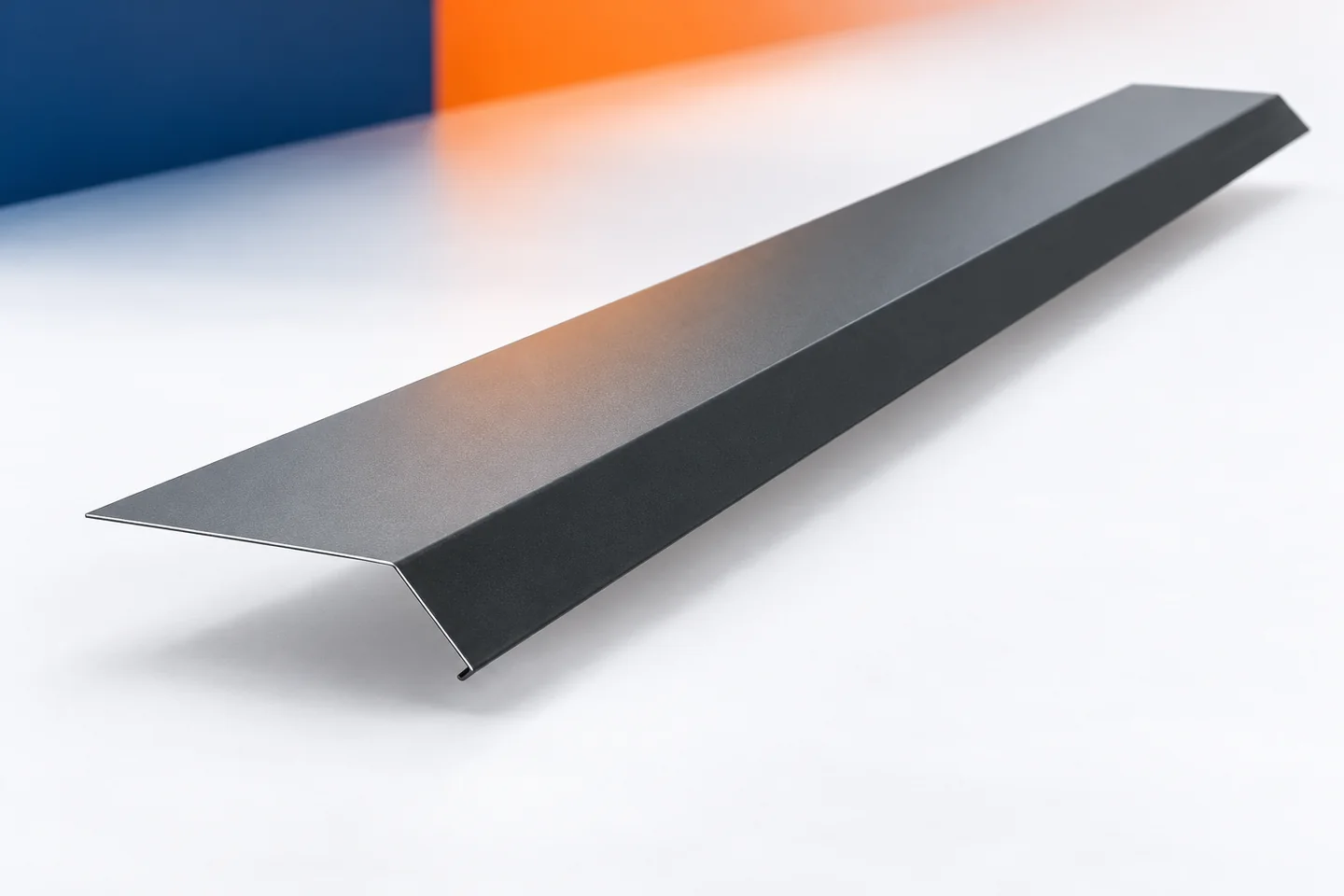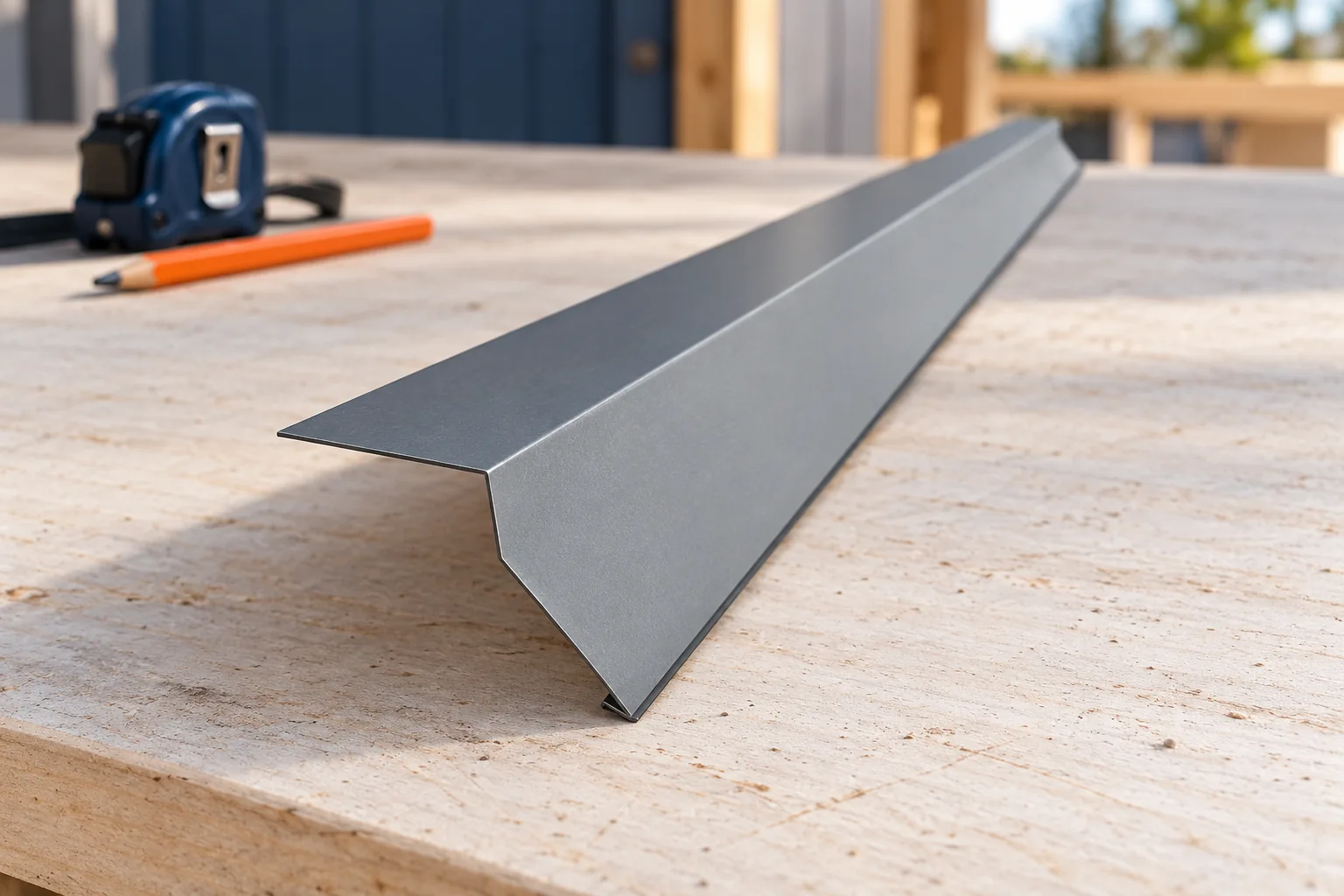
How an eaves flashing directs water from the roof into the gutter

The eaves gutter flashing serves to collect water flowing down the roof slope and direct it into the gutter, while also shielding the eaves zone. At handover, it is worth checking not only the continuity of the flashing and its laps, but above all whether water from the covering actually reaches the gutter rather than passing behind it or under the covering. Equally important is preserving the required ventilation beneath the metal sheet. The shape of the flashing should follow the specific eaves detail, not merely the width of the available sheet.

2026-11-14T22:28:27+01:00

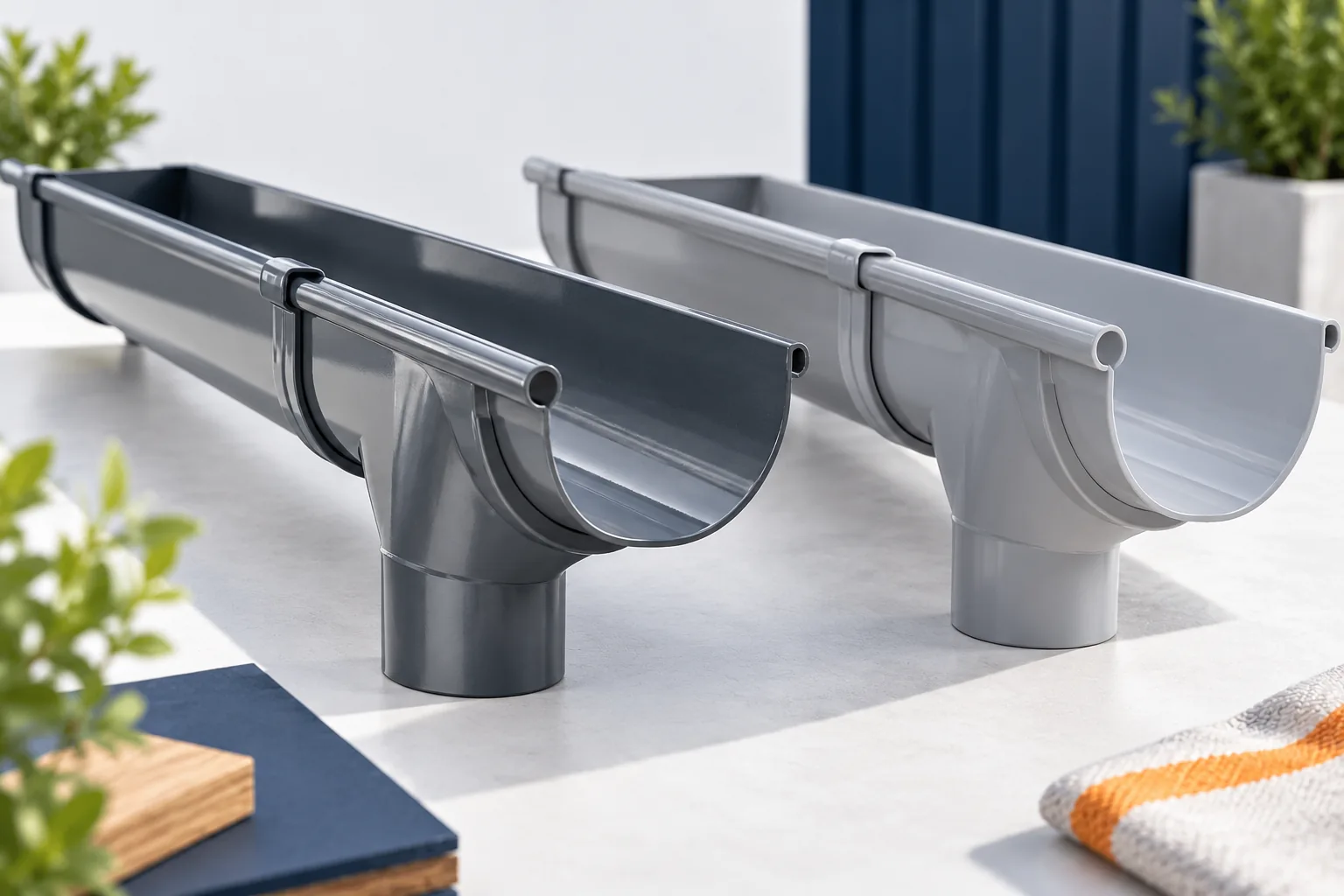
Steel or plastic gutters: what to compare before buying

Before choosing steel or PVC, sketch which roof slopes drain into each outlet. A roof valley can concentrate much of the runoff at one point. Use the sketch to compare gutter sizes and downpipe positions in the two systems. Then check how the steel surface is protected, how the PVC system accommodates thermal movement and whether the eaves will be accessible for cleaning. Include fittings, brackets, joints and outlets in the quotation. The price of a straight gutter length tells you little when the other components and installation requirements differ.

2026-11-14T18:54:53+01:00

Roofs without overhangs: design, advantages and detailing challenges

A roof without eaves is a system in which the slope ends at the façade rather than projecting beyond the wall. Before choosing this variant, check above all the roof-edge cross-section: the junction of covering, insulation and drainage. This detail determines whether water reaches the gutter rather than the wall or the space behind the insulation. It is also worth establishing how ventilation under the covering will work and whether service access to the gutter is provided. A visualisation alone will not show these details, so the design should clearly define the solution for each layer.

2026-11-14T22:26:39+01:00

Is clearing the leaves enough to clean your gutters?

Clearing leaves is only the first step in cleaning a gutter. Look underneath for silt, dust and seeds, especially near the outlet. Follow the route the water takes through the bends and downpipe to its discharge point at ground level. A gutter can look clean and still overflow if the fall is incorrect, a bracket is bent or the outlet is partly blocked. If the same spot clogs each season, finding the reason for the blockage matters as much as clearing it.

2026-11-15T02:34:52+01:00

Measuring the eaves before ordering gutter aprons

Measuring the eaves should show not only their length but also the space between the covering and the gutter. Gutter aprons must fit this cross-section and direct water in the intended direction. When ordering, it is worth separating straight sections, corners and ends. An accurate sketch makes quoting easier and reduces the number of reworks. It is also needed when we plan to use a popular catalogue profile. Before measuring, the type of covering and the method of fixing the gutter must be established. Its position relative to the end of the roof slope is important. The gutter apron should correspond to the arrangement that will actually be installed. A measurement taken before changing the gutter may become outdated.

2026-11-15T02:36:42+01:00
Back to top