

Technology and applications
Izoprofil.pl explores how building materials work together. Sandwich panels, PIR insulation and trapezoidal sheets depend on their supports, joints, fixings and drainage. The guides explain how product properties affect use on roofs, walls and insulation assemblies. They help you read the documentation, identify limits and prepare questions for your designer or contractor. You can also look up detailing, common faults and preparing materials for installation. Use the technical issue on your project to choose an article, then check the instructions for your specific product. Similar-looking components may have different requirements.
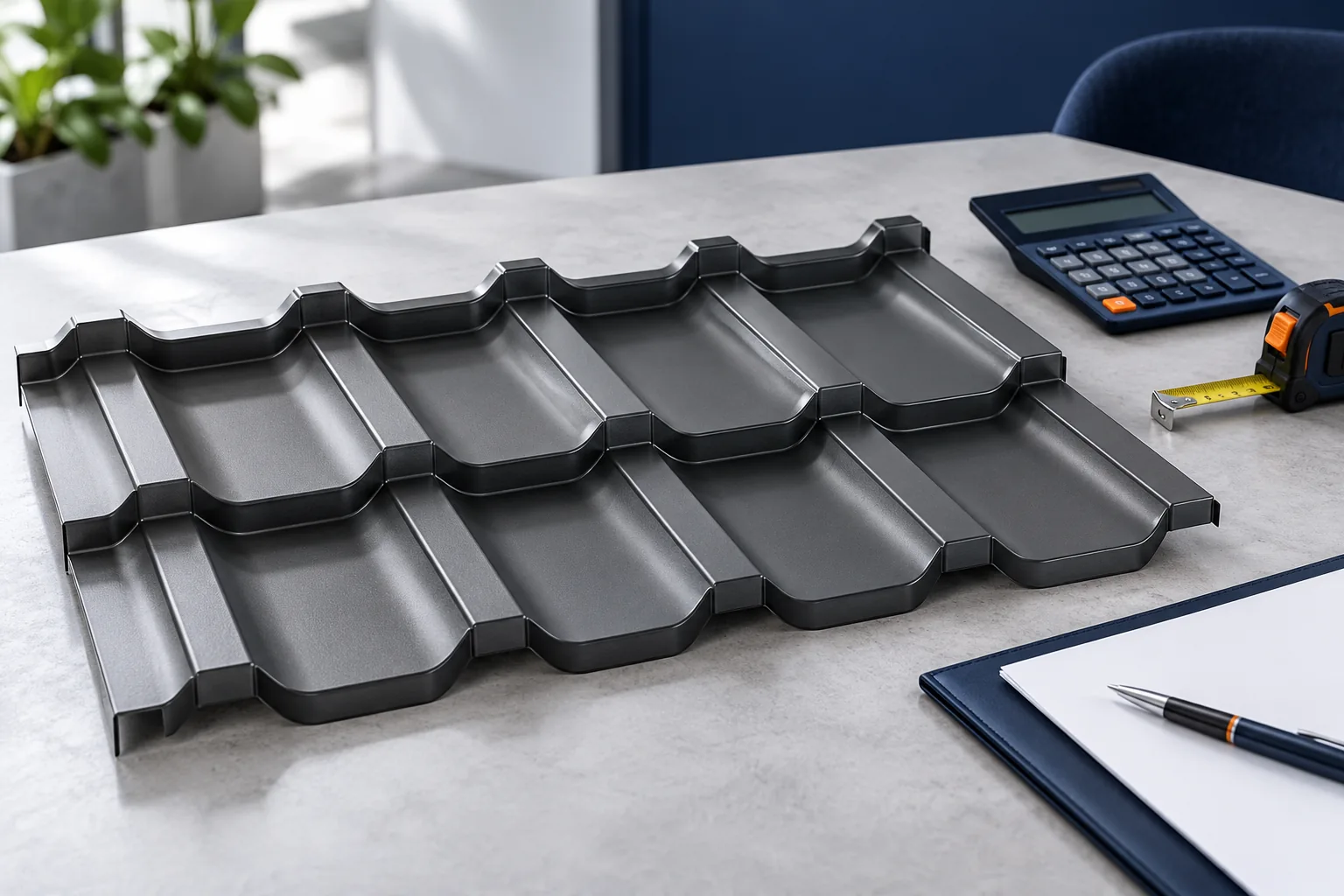
What do made-to-length and modular tile-effect metal sheets cost?
Start a price comparison by checking what the quoted square metre represents. The total area of a tile-effect metal sheet differs from the area it covers after overlaps. For made-to-length sheets, the cutting plan affects the order. For modular sheets, you also have to round up to whole units. Compare the same steel thickness and coating. A catalogue example dated 28 October 2026 shows how to turn a unit price into a material cost. For a specific roof, also allow for offcuts, flashings, accessories and installation.
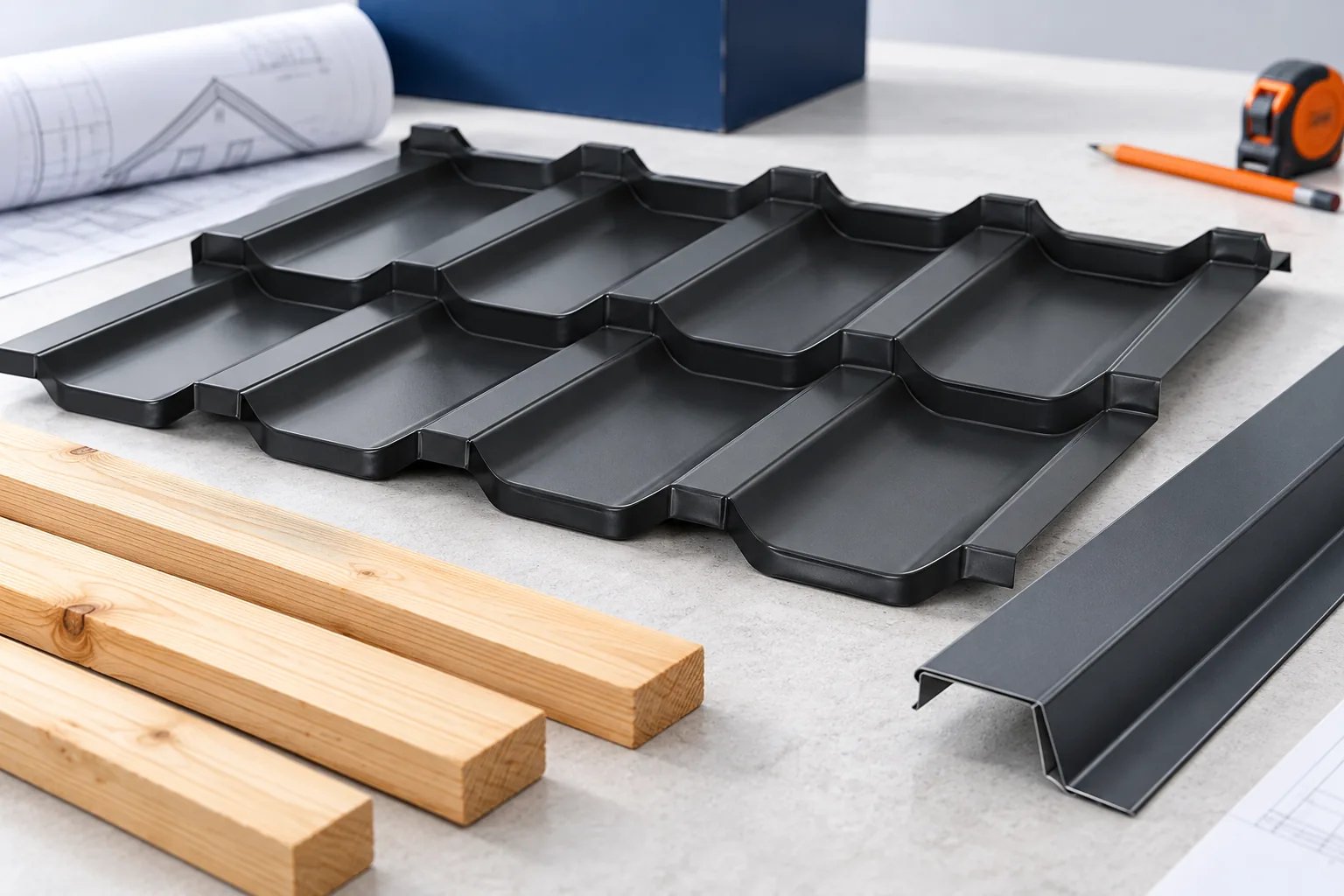
What goes into a complete roof and how do you budget for it?
A complete roof consists of the structure, water protection, covering and all the details where it terminates. In a house with a heated attic, insulation and an airtight layer on the interior side are added. The area of the metal sheet alone is not enough to place an order. You need a list of components with quantities, matching accessories and the scope of installation. This makes it easier to assess what is missing from a quote. The visible roof slope is only the top of the layer build-up. Beneath it are the supporting elements and the solution that drains water which may get under the covering. In a typical roof with tile-effect metal roofing there are battens and counter-battens. The space under the sheet also serves ventilation. The system must provide an air inlet and outlet without accidental obstructions.
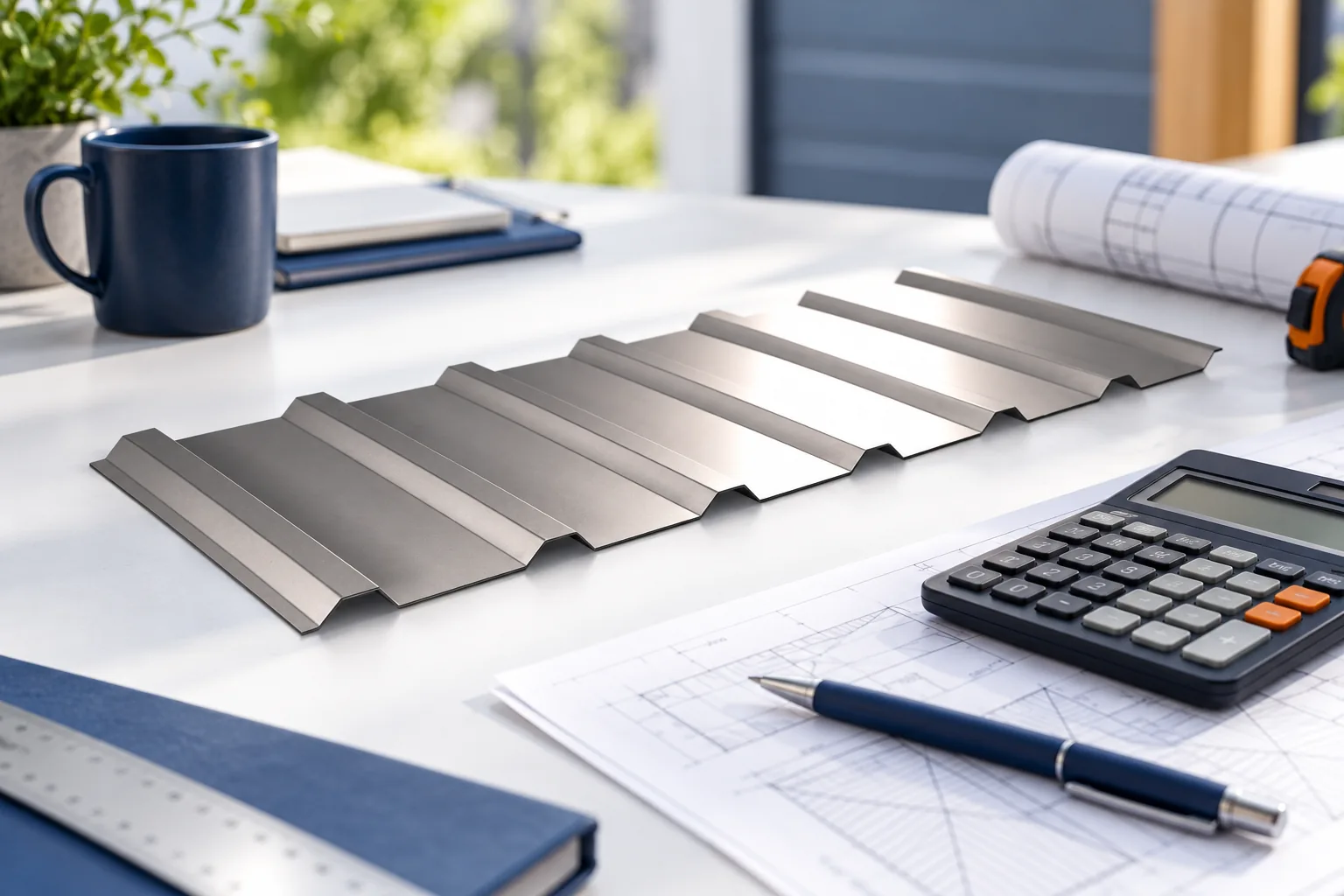
How to keep roofing costs down for a house, garage, patio or gazebo
Keeping the roof shape simple and avoiding waste can save more than omitting layers the building needs. An open shelter, a heated garage and a house with a loft make different demands on a roof. Set those requirements before you price the covering. A cheap profile may cost more overall if the slope, loads or support spacing call for extra battens or a revised design. Compare quotes on the area actually covered and ask for the total including flashings, fixings, delivery and the full scope of work.
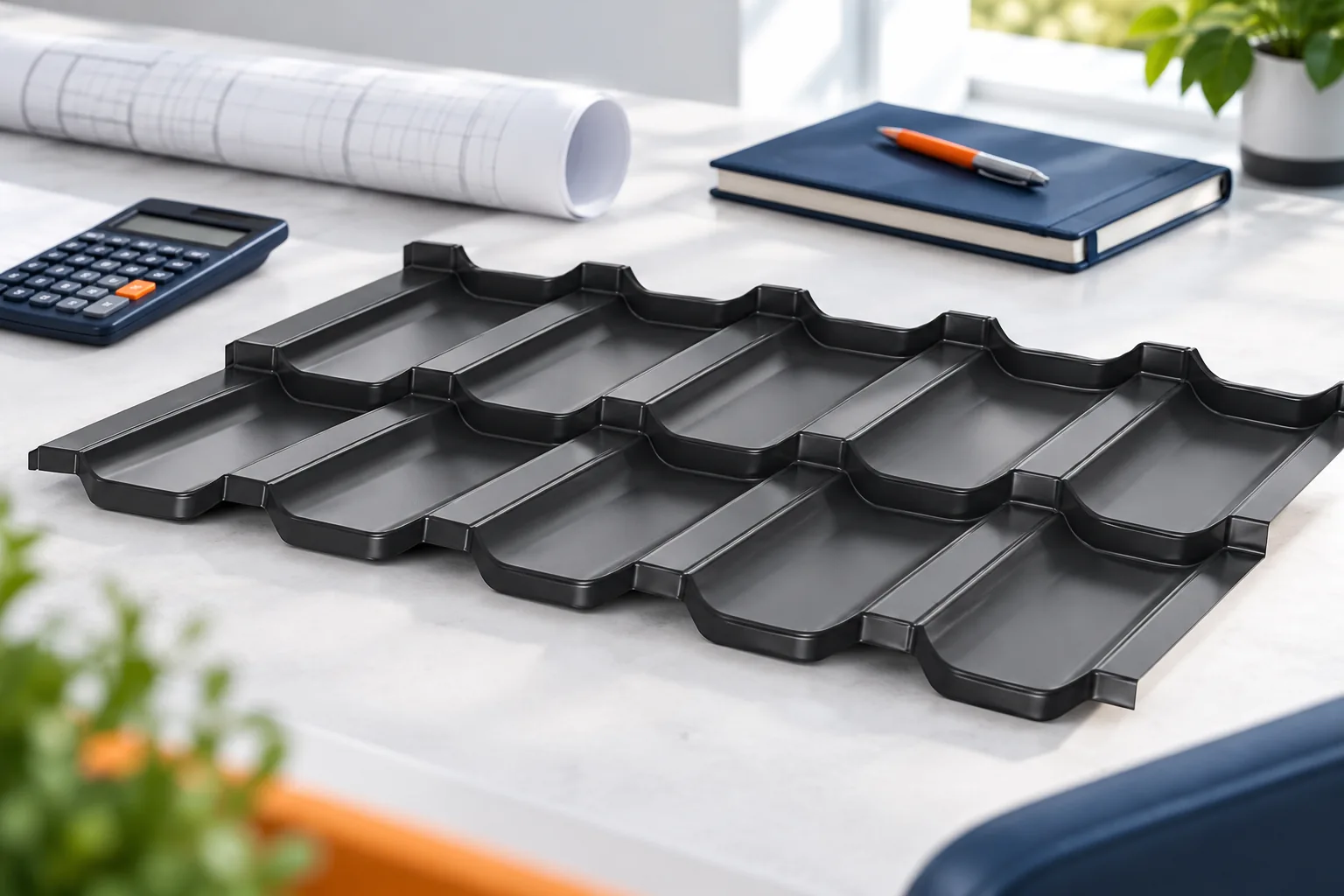
Estimating roof costs from the structure to the last flashing
You can only calculate the roof cost once all layers and works have been itemised. The price of the metal sheet per square metre is just one element of the calculation. You also need to add the structure, insulation, flashings, drainage, transport and installation. To compare quotes, you need the same quantities and scope of works. Below we show where to get the data and how to spot items that are easily overlooked. The building footprint does not correspond to the roof area. The roof slopes are pitched, extend beyond the walls and may have dormers. For a simple roof, you calculate each plane separately. You need its actual length and width. The dimensions from the design must be compared with the completed roof truss before ordering sheets cut to size.
Metal and other roof coverings: how to compare complete quotations
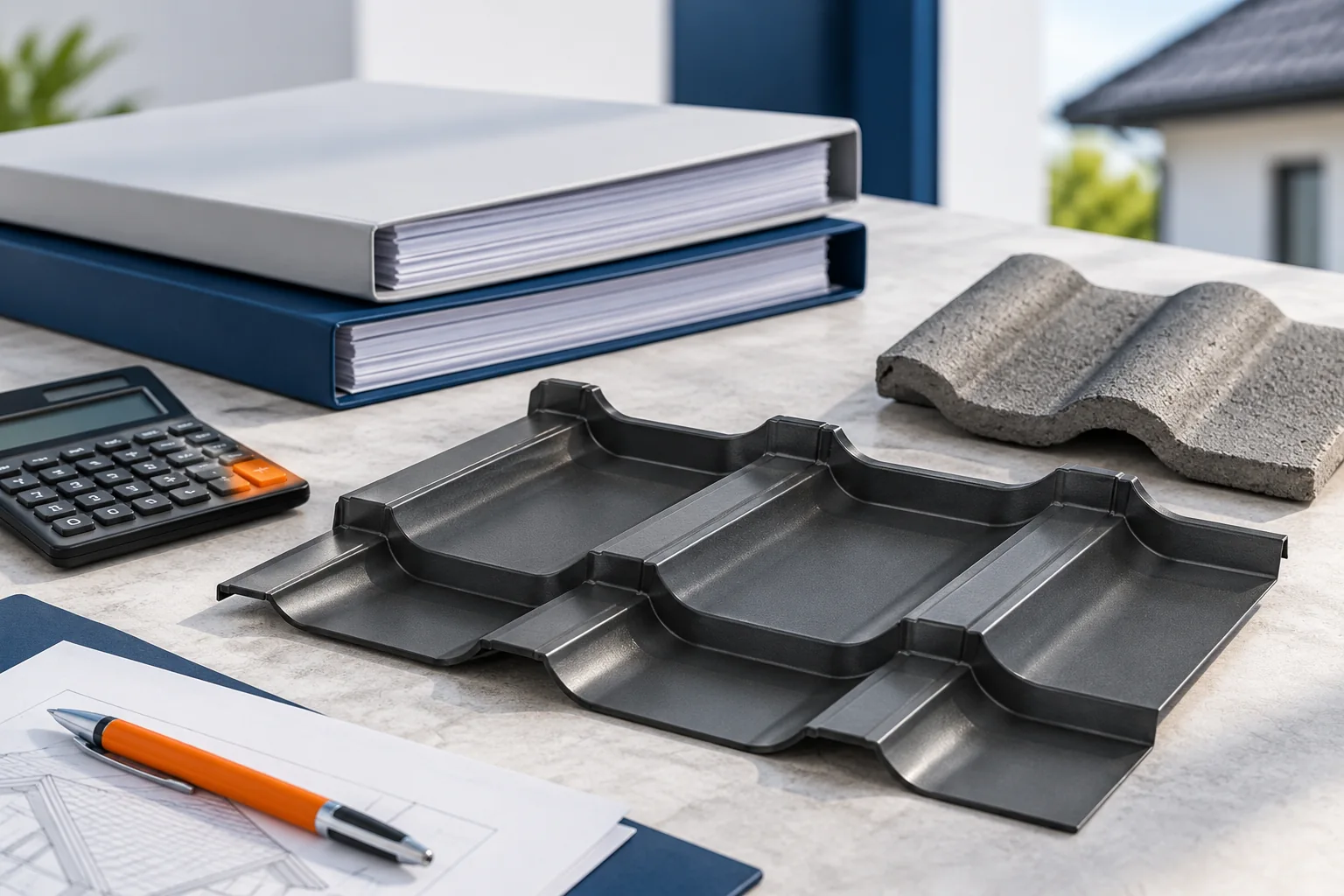
Compare the cost of a roof as a complete system, not the price of the covering per metre. Before you set offers side by side, establish a common roof standard: the same plan, pitches, dimensions and list of openings, plus the scope of insulation, drainage and accessories. Check whether the quotes cover the same layers and works – if one includes only the covering while the other also covers removal and the substructure, their totals are not comparable. Pay attention to the unit of measurement and how waste is calculated, because a lower price per metre does not always mean cheaper covering.
Matt or gloss tile-effect metal roofing: what should you compare?
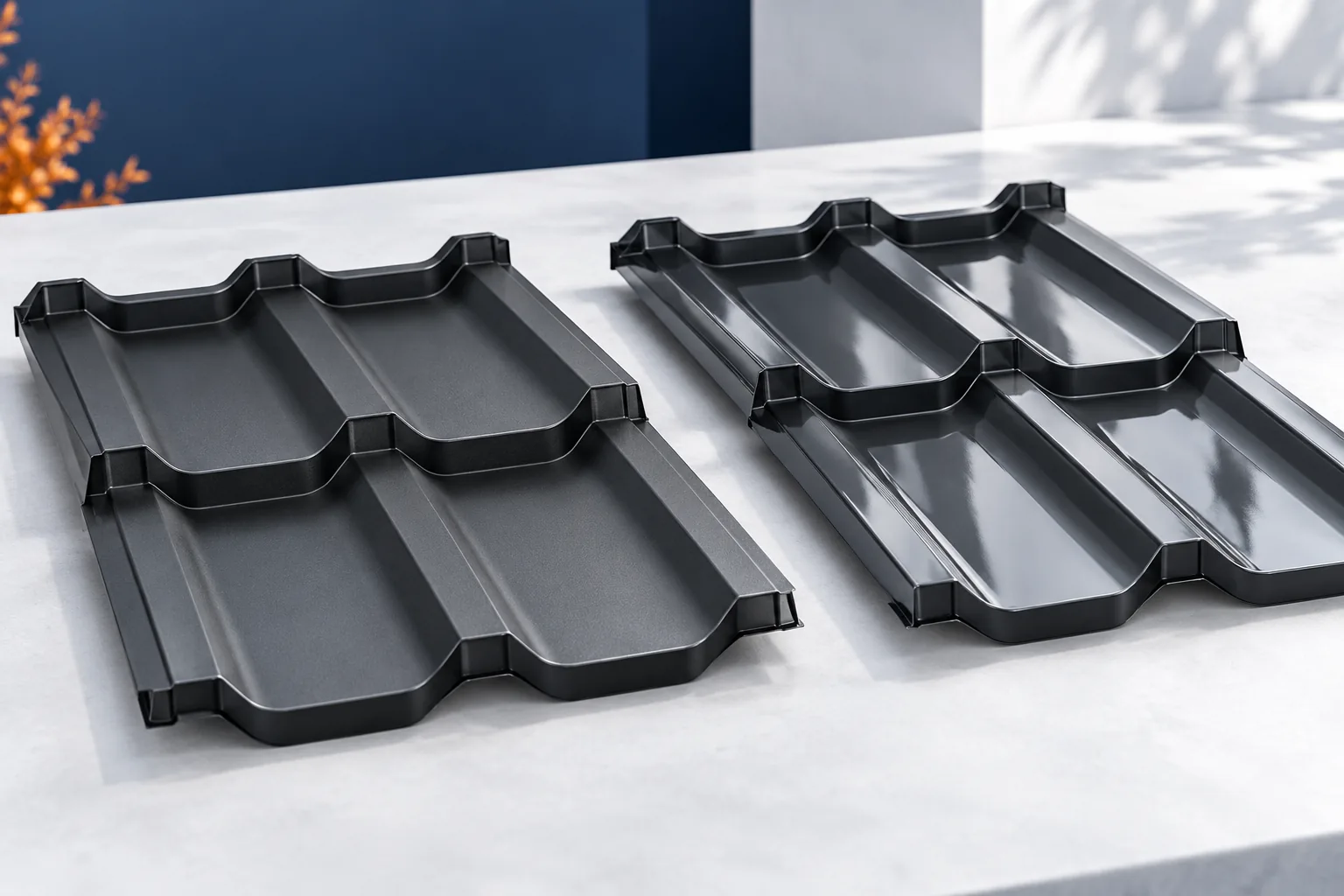
Matt and gloss change how the colour and the pattern of the tile-effect metal roofing are perceived. However, they do not on their own determine its durability. Two matt coatings can differ in composition, thickness and scope of protection. When choosing, it is worth separating appearance from technical parameters. The best comparison includes samples viewed outdoors, the coating documentation, the warranty conditions and the price of a complete covering in the same format. A glossy surface reflects directional light more clearly. A matt finish diffuses it differently and usually gives a calmer perception of the roof slope. The effect also depends on the texture and the shape of the pressings. In sunlight the difference can be large, while under full cloud cover it is less visible.