

Technology and applications
Izoprofil.pl explores how building materials work together. Sandwich panels, PIR insulation and trapezoidal sheets depend on their supports, joints, fixings and drainage. The guides explain how product properties affect use on roofs, walls and insulation assemblies. They help you read the documentation, identify limits and prepare questions for your designer or contractor. You can also look up detailing, common faults and preparing materials for installation. Use the technical issue on your project to choose an article, then check the instructions for your specific product. Similar-looking components may have different requirements.
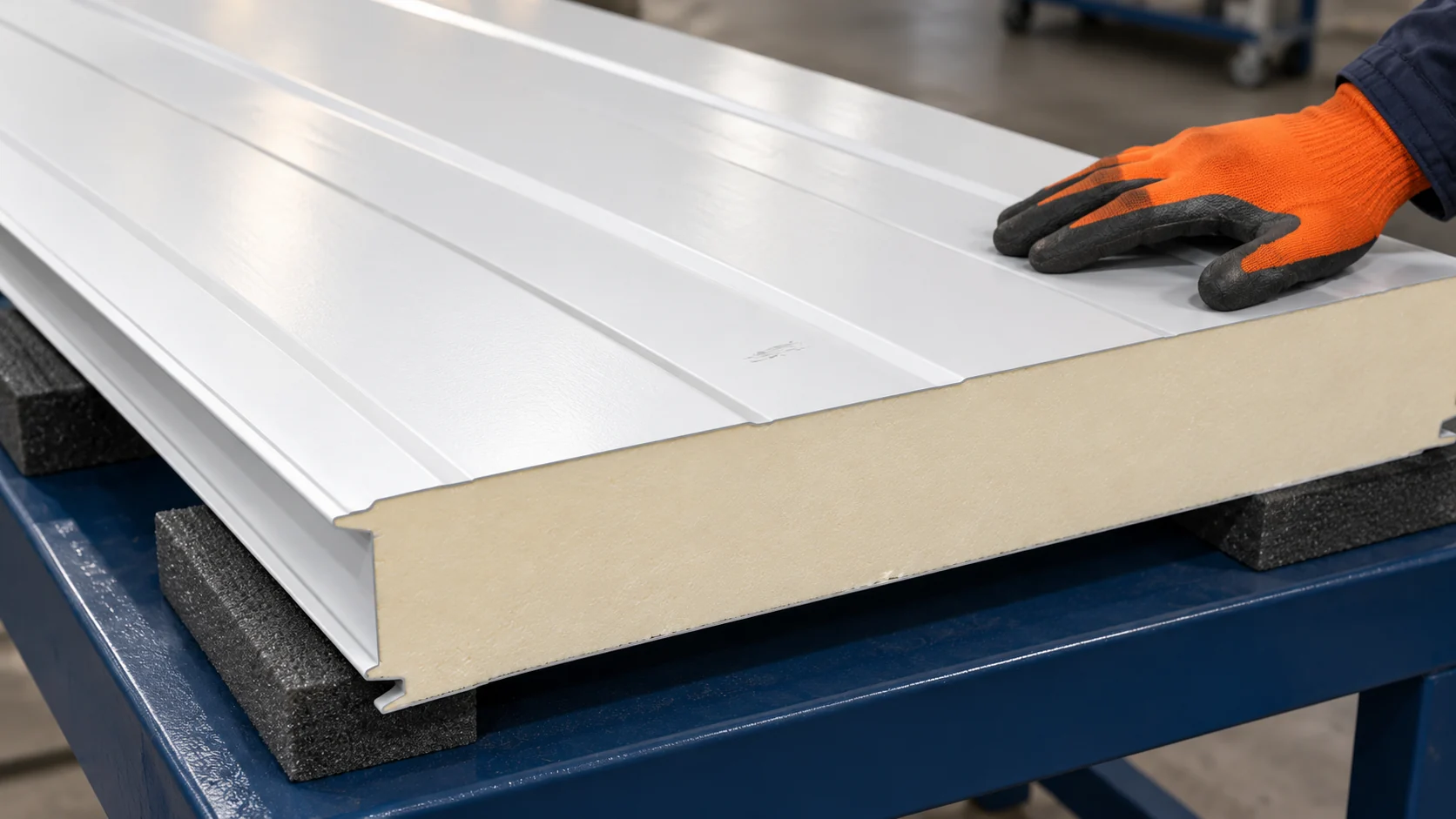
Buying 100 mm second-quality wall panels: what to check
A 100 mm second-grade wall panel may be suitable for the planned wall, but the reason for the price reduction must first be established. A scratch in the coating is a different problem from a damaged joint or a detached metal sheet. Cost-effectiveness is determined by the usable dimensions of the entire batch, the ability to connect the elements, and the confirmed properties of the material. This is a trade term that does not describe a single class of defects common to all offers. It may relate to shade, surface, dimension or damage. Ask for a clear description of the reason for the price reduction. The phrase “minor blemishes” is too general if the material is to form a visible façade or a partition with a specified fire resistance.
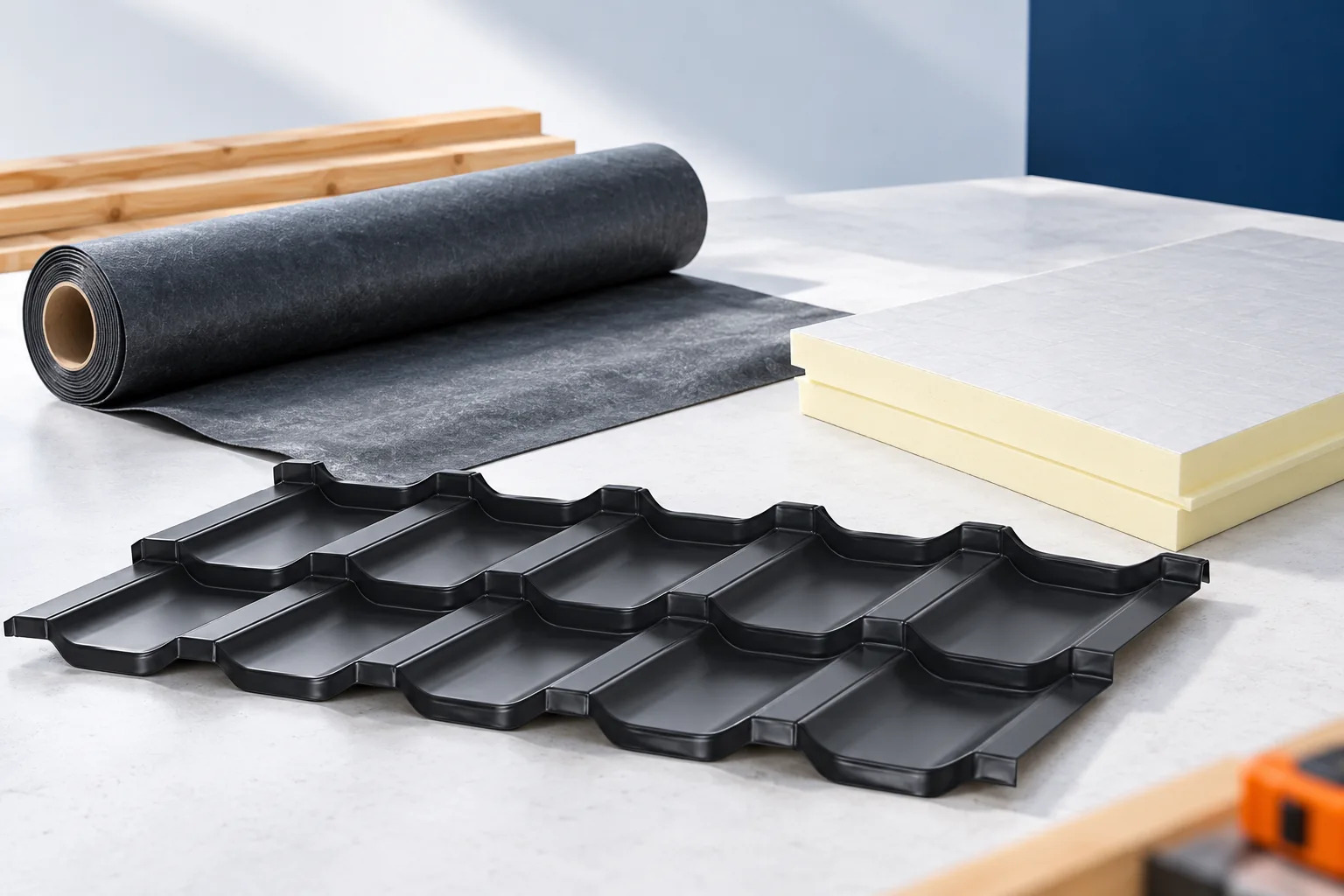
Layers beneath a roof covering and what each one does
The full roof build-up is determined not by a single material but by the arrangement of layers under the covering, which provide support, protection against water, reduced heat loss and moisture control. Before buying, establish the complete cross-section with the function of each layer and the detailing at the eaves, ridge and openings, rather than selecting materials separately. Check that the instructions permit their combined use and whether a layer correct under one product will suit every product. Remember that the membrane does not replace the vapour barrier, and the anti-condensation fleece is not insulation.
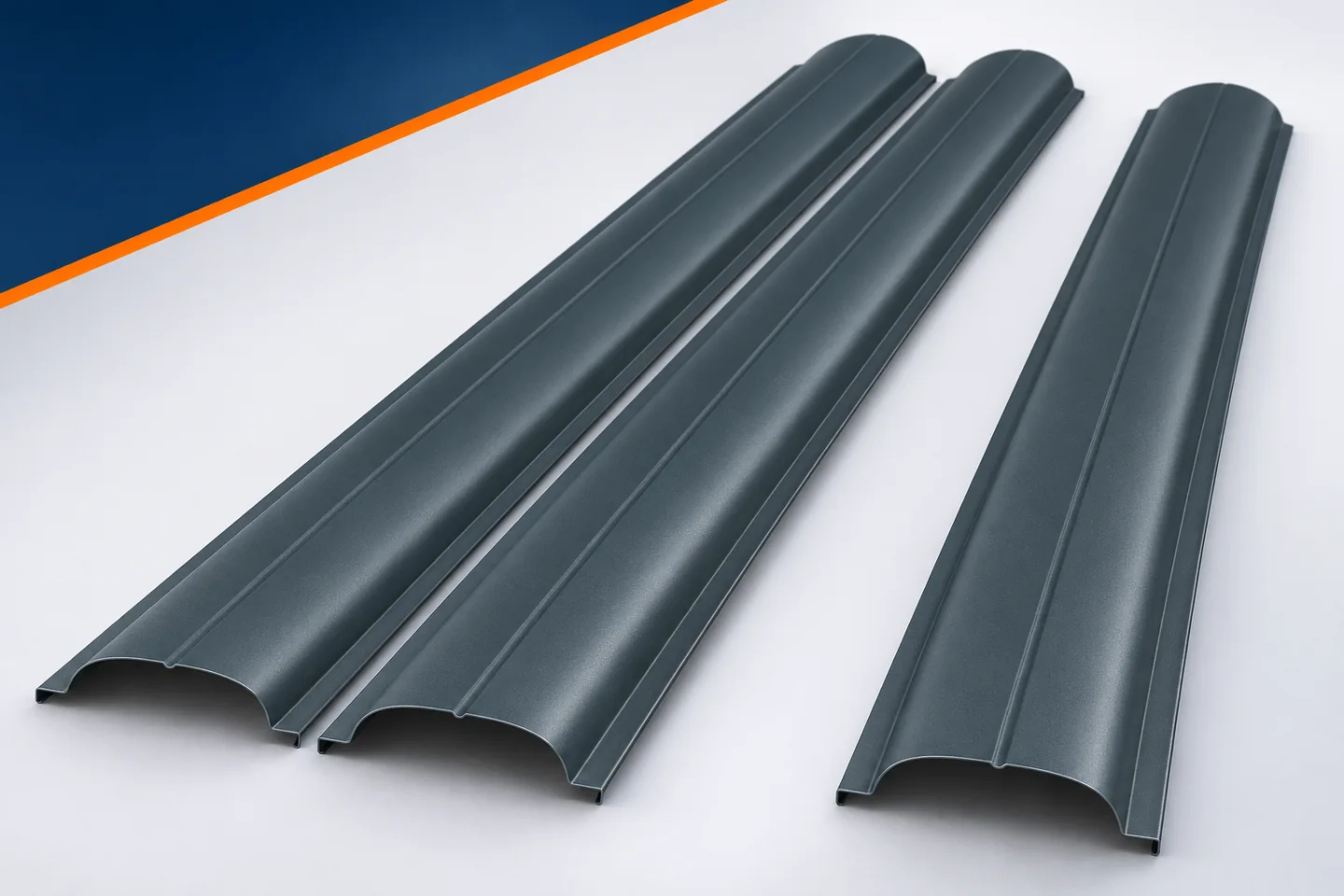
Receiving metal fence pickets. How to check the delivery before installation?
Delivery of the pickets is a good moment for a calm inspection of the material. After installation it is harder to assess where a scratch or a length error came from. It is therefore worth checking the goods before they go onto the panels. Metal pickets should correspond to the agreed specification, and not just to a general idea of the fence colour. Receiving includes quantity, geometry, ends and surface condition. Equally important is preparing a safe unloading place so that the material is not damaged during the checking itself. Before the delivery arrives, have the list of lengths and variants to hand. With several types of pickets it is difficult to rely on memory alone. Marking of panels and material groups will help to assign the packages quickly. Also check the acceptance conditions agreed with the supplier. Receiving should be possible without haste and without accidentally moving elements over a hard surface.
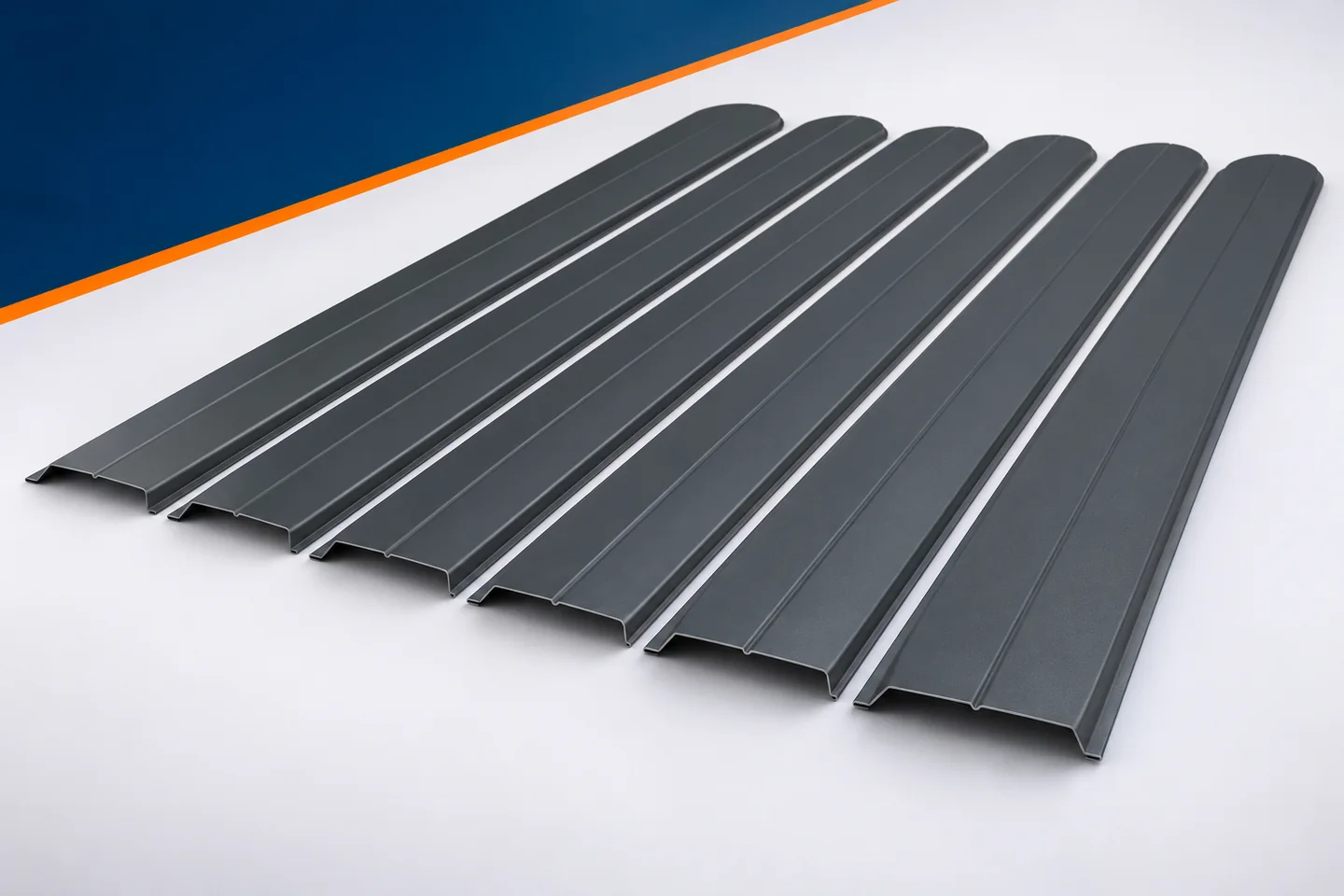
Wood-effect steel fence pickets: assessing the finish before buying
Wood-effect fence pickets combine a decorative finish with the structure of profiled steel sheet. They suit people who want a warm wood pattern without using timber pickets. The product should nevertheless be assessed realistically. Sheet metal does not have the same texture and geometry as a wooden board. Its appearance depends on the print scale, gloss, cross-section and repetition of the elements. A sample should show these features before the finish is repeated along the whole boundary. A small flat swatch shows only part of the colour and surface pattern. It does not reveal how the pattern looks across a rib. The folds in steel pickets change the lighting of the finish: some areas look brighter while others remain shaded. A sample of the finished picket is therefore more useful than a picture of the finish alone.
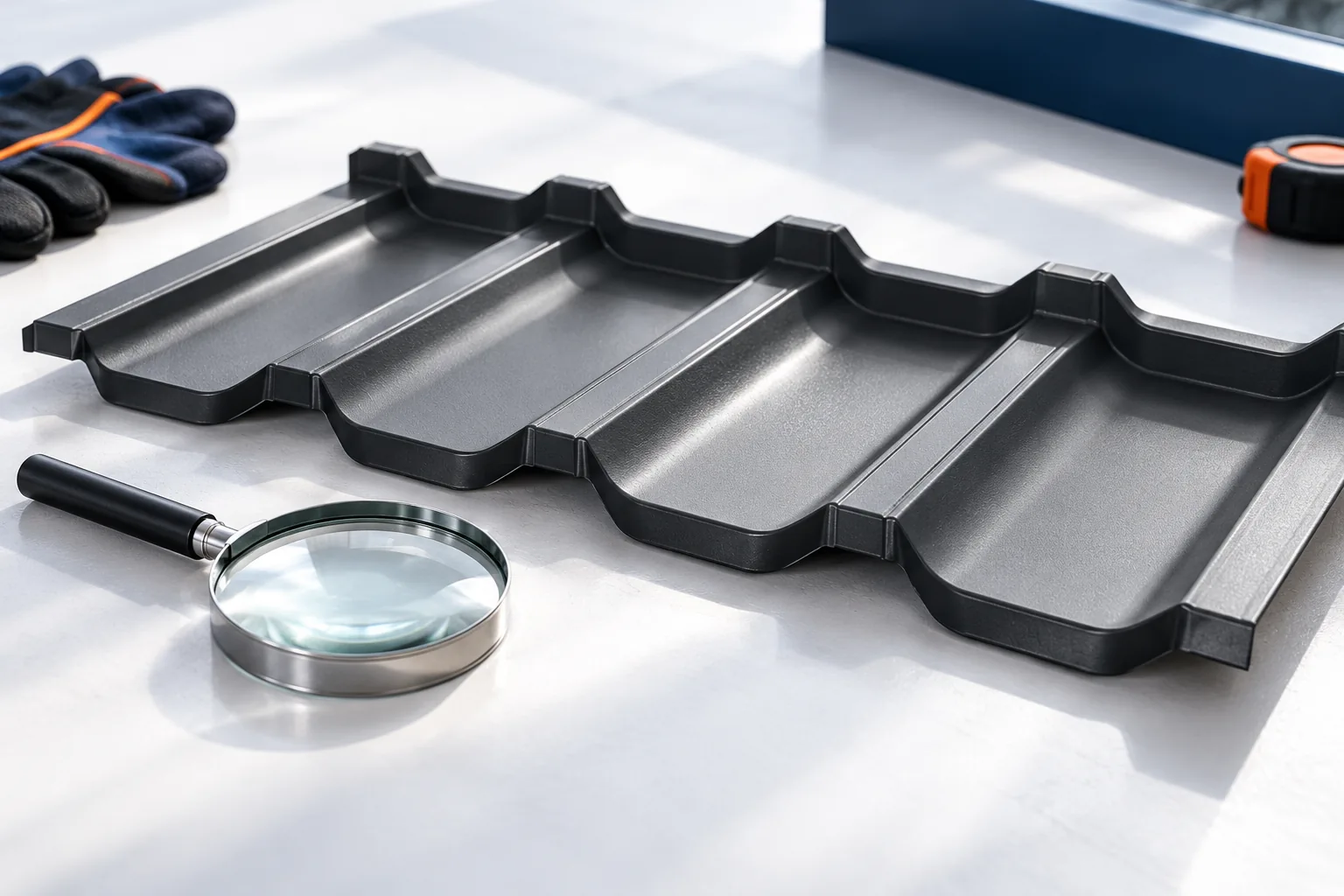
How to check the quality of tile-effect metal roofing before you buy
Judge the quality of a metal roofing tile by the consistency of several elements, not by a single impression. Before buying, check whether the product data sheet identifies the profile, states the steel thickness and grade, and gives overall dimensions, coverage area and pressing parameters. Inspect how sheets join in their intended laying direction and compare the conditions of use, including the minimum roof pitch. Similar-looking samples do not prove the same construction. Also consider delivery and installation, because well-made material can be damaged before it is laid on the roof.
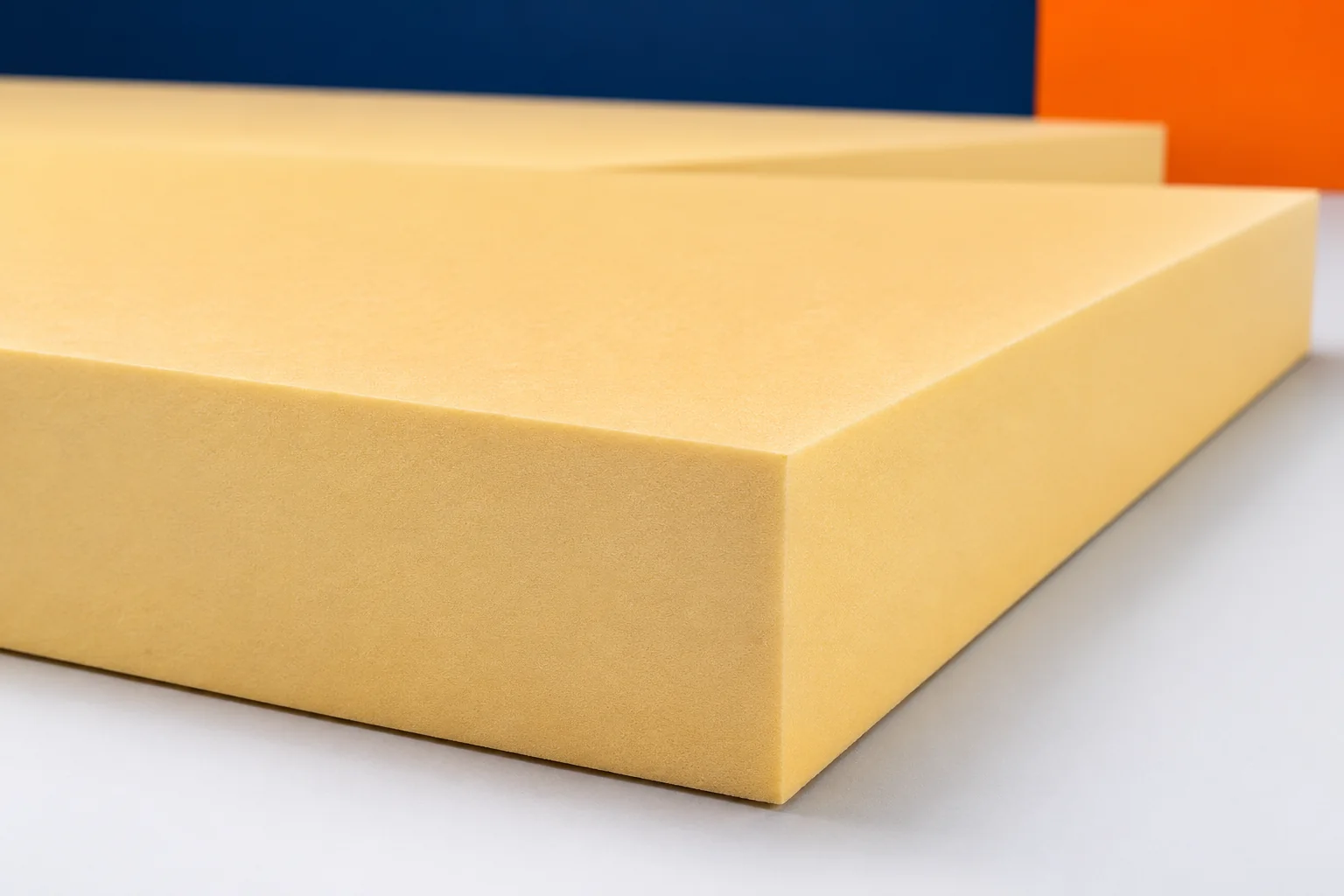
XPS in a ground-bearing floor: what a correctly selected layer achieves
A floor on the ground separates the interior of the house from the cooler substrate. Insulation matched to it limits the flow of heat and works together with the layer we will walk on. XPS can be useful where low water absorption and resistance to pressure also matter. Extruded polystyrene can be laid in precisely fitting boards, which makes it easier to create a continuous layer. However, its thickness and position are determined by the entire floor build-up. The thermal resistance of a board depends on its thickness and its thermal conductivity. For XPS, both figures can be found in the product documentation. A lower lambda at the same thickness means greater resistance, and increasing the thickness at the same lambda also raises it.