Installation and details
How to spot panel installation errors before they are covered up?
In brief
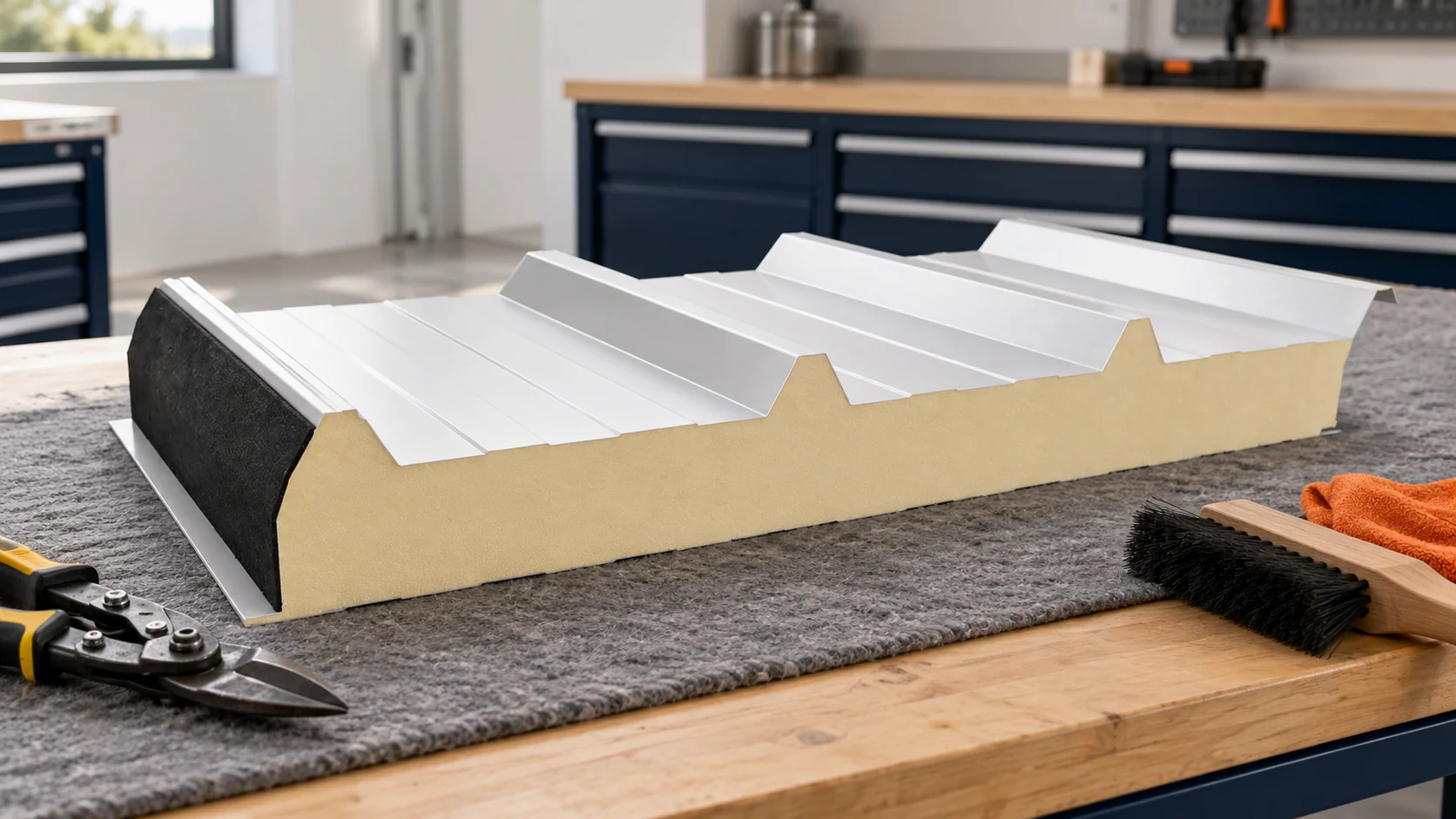
Some errors are visible immediately, but others disappear under the next panel or flashing. Inspection should therefore accompany installation. It is worth checking geometry, support, seals and the condition of coatings in a set order. A final look at a neat façade will not tell you everything about the quality of hidden joints. The cause may be taking the dimension of the structural axis instead of the length resulting from the detail. Another problem is omitting the plinth, eaves or corner thickness. Before ordering, it is worth comparing the plan, section and actual measurement. Each shows a different part of the geometry.
Incorrect measurement: the panel fits on paper but not on site
Also check the units and the direction of the undercut. The number 6000 entered in the metres column requires clarification, not assumption. For the first sheet, compare the entire detail. Do not repeat the cut on the remaining pieces until you have confirmed that the dimension and side have been correctly adopted.
Bent supports: attempting a repair with screws
The panel should not level out random deviations in the frame. Tightening too much can deform the cladding and change the connection conditions. Before installation, check the plane and the width of the supports. Compare them with the selection assumptions.
If a discrepancy appears, first determine how to correct the structure. Do not insert any loose shims that are not part of the solution. At the corner, check both walls at the same time. An error in one plane may only become apparent when closing the connection with the other.
Damage during handling: the edge loses its proper shape
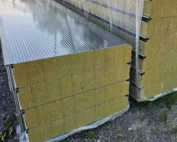
Dragging over the steel profile can scratch the coating. Improper lifting can deform a long panel or damage the edge. The equipment and grip points should match the material. The seam should not be treated as an arbitrary handle for carrying.
Inspect the sheet before seating it, especially the ends and connections. A damaged element should not be hidden in a hard-to-reach place without assessment. If the seam does not close properly, more force does not resolve the problem. The cause needs to be determined.
Incomplete sealing: the flashing masks a gap
A flashing does not always replace the proper sealing beneath it. Crossings of joints at the plinth, corner and roof are particularly important. In these places, the continuity of the layers specified in the detail must be maintained. The visible sealant line alone may be insufficient.
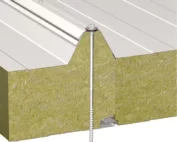
Check the connection before it is covered. The tape on the support and the seal in the interlock may serve different purposes. Do not swap them arbitrarily. Also check the surface preparation. Dirt or moisture can impair the material’s performance, even if the correct type has been used.

Incorrect fastening: the right screw in the wrong place
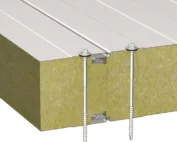
The fastener must reach the intended support and have the correct anchorage. The head alone on the surface does not confirm this condition. The number and position of fixings are determined by the design. They should not be replaced by an average number of screws per m² found for another hall.
Check the pressure and condition of the washer. Over-tightening can damage the cladding, while too little will not ensure correct performance. In case of error, do not drill further holes without determining the repair. Every unnecessary hole requires appropriate treatment.
Incorrect cutting and left-over swarf: the problem shows up later
Tools intended for such material are used for panels. An angle grinder and hot cutting can impair the sheet’s protection. Flashings can be cut with suitable shears, in accordance with their requirements. The tool must match what is actually being cut.
After drilling and cutting, remove metal swarf. Do not leave it on the coating or in the gutter. Check the edges and how the core is closed. In a demanding environment, additional protection in accordance with the solution may be needed. Do not replace it with random paint.
Acceptance too late: no access to important places
Divide the inspection into stages: structure, first connections, openings and the finished enclosure. Photos should show the actual places that will be hidden. Record the conformity of materials and explained deviations. This way, acceptance is not limited to colour and simple lines.
Finally, check water drainage, the condition of surfaces and removal of film within the required time. Establish rules for later inspections. New equipment or a penetration after acceptance also requires assessment. A well-executed enclosure can be compromised by an unagreed change during use.
Questions before ordering
Does a straight facade line confirm correct sealing?
No. Some layers are invisible after installation. They must be inspected before being covered and considered together with the detail.
Can every defect at the panel end be hidden under a flashing?
No. The effect of the damage on the joint and properties must first be assessed. A flashing does not automatically repair a deformed interlock or core.
7 branches. Materials closer to your project.