Selecting sandwich panels
Will 40 mm second-quality insulated roof panels suit your roof?
In brief
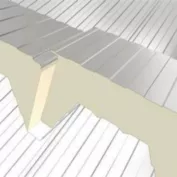
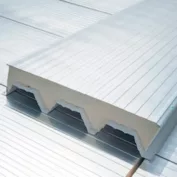
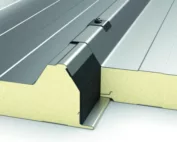
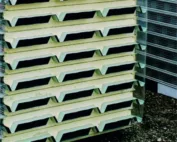
For a 40 mm second-grade roof panel, first check the intended use, the condition of the joints and the usable lengths. A thin core does not mean that any support spacing is acceptable. A reduced price does not remove the requirements for slope and tightness. Buying makes sense when the specific components suit the project and the extent of their defects is known. In roof panels, the nominal core thickness and the overall height may differ. The upper steel sheet has a profile that increases the external dimension of the component. Check the cross-section of the actual panel. Measuring at the top of the trapezoidal profile without knowing the designation can lead to an incorrect comparison of two offers.
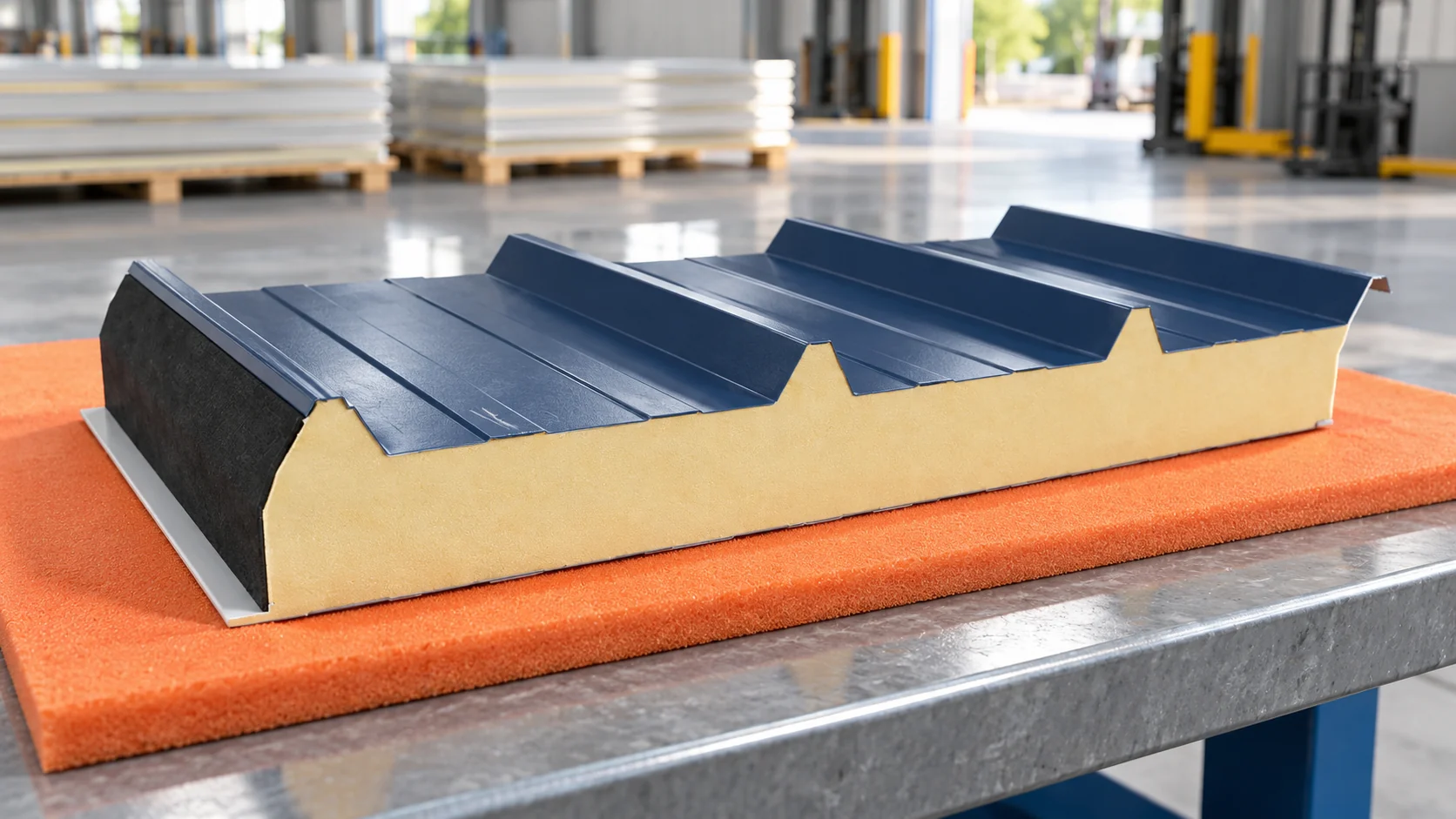
Does 40 mm describe the entire panel height?
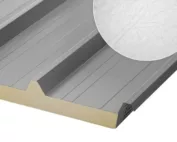
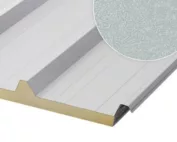
Also establish the type of lower facing. A panel with steel sheet on the underside and a variant with a different facing are not automatically interchangeable. Besides geometry, the intended use, durability and the way loads are transferred also matter. The note “roofing 40” is too short to describe an order. Data is needed on the core, both surfaces, the cover width and the profile of the upper steel sheet.
Where can a thin core be a limitation?
Begin the assessment with the interior temperature and humidity. A roof over an open shelter has different requirements from the roof of a heated workshop. In the latter case, the thermal requirements of the entire building envelope must be checked. Do not assume that the presence of any layer of foam means sufficient insulation for a heated building.
The risk of condensation also depends on the tightness of the joints, the surface temperature and the ventilation conditions. The name of the core alone does not solve it. If you plan to heat the building later, take this into account before purchase. Adding insulation in the future may require a moisture analysis, changes to details and additional structure. A cheap panel is not always a good first stage of such a conversion.
Which defects matter on the roof slope?
Inspect the valleys of the profile, the crests of the ribs, the edges and the overlap surfaces. A crease in the water drainage path can have different consequences from a minor mark outside that area. Damage to the side joint makes it difficult to achieve proper tightness. Do not treat silicone sealing of an incidental gap as equivalent to repairing the panel geometry.
Check the adhesion of the facing to the core and the condition of the ends. If the marks suggest strong crushing or delamination, an assessment of suitability by a competent person is needed. A damaged element must not be assigned the parameters of a new panel solely on the basis of its name. Describe aesthetic defects separately. On a slope that is barely visible they may matter less, but the anti-corrosion protection must still be assessed.
Can lengths from a clearance sale be adapted?
Draw the roof slope with the direction of flow and the supports. Compare the lengths of the batch with the required dimension including the eaves and the finish of the upper edge. A shorter panel does not become suitable just because you attach an arbitrary section to it. A transverse joint requires a designated detail, support and a matching undercut.
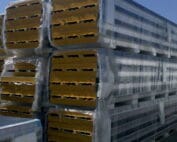
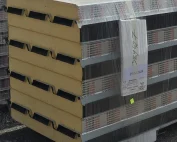
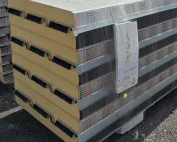
For example, a roof slope requiring a 5.8 m element will not be covered without a joint by a 5.5 m sheet. Conversely, a 6.1 m section may require controlled shortening. Check which end can be cut and where the prepared lap is located. These determinations affect waste and labour. Do not compare the price per square metre before you know how much material you will actually use.

How do you check the spacing of supports and fixings?
The selection is based on data for the complete panel, its facings and the structural scheme. It takes into account the building loads, including wind and snow. A long element in stock does not mean it can work without intermediate supports. Also, the number of screws is not determined solely by dividing the roof area.
Edge zones, support width and the type of structure are important. The installation parameters must come from a selection appropriate for this project. With second grade, an additional question arises: does the identified defect limit the assumed properties? If there is no reliable batch identification, calculations should not be based on data from a randomly similar product.
When does a lower price actually deliver savings?
Compare the cost of the entire roof after taking the cutting plan into account. To the purchase of panels add transport, lifting, flashings, sealing and fixings. With a batch of varying lengths, the number of joints and laying time may increase. Enter the value of unused sections into the calculation honestly, without assuming their later sale.
Before deciding, prepare two material lists: one for the discounted batch and one for new made-to-measure panels. Use the same scope of work and the same tax basis for prices in both. If the cheaper variant meets the technical conditions and has a reasonable cutting plan, it can be assessed financially. If it does not meet the requirements, the discount percentage does not solve the problem. Then you must choose a different material or change the design in an agreed manner.
Questions before ordering
Can every scratch be hidden under the lap?
No. The lap has a defined geometry and width. Its dimension should not be arbitrarily increased just to cover a defect.
Is a 40 mm sheet by definition a temporary material?
No. Durability and intended use result from the entire solution. Thickness alone determines neither the service life nor the suitability for a given building.
7 branches. Materials closer to your project.