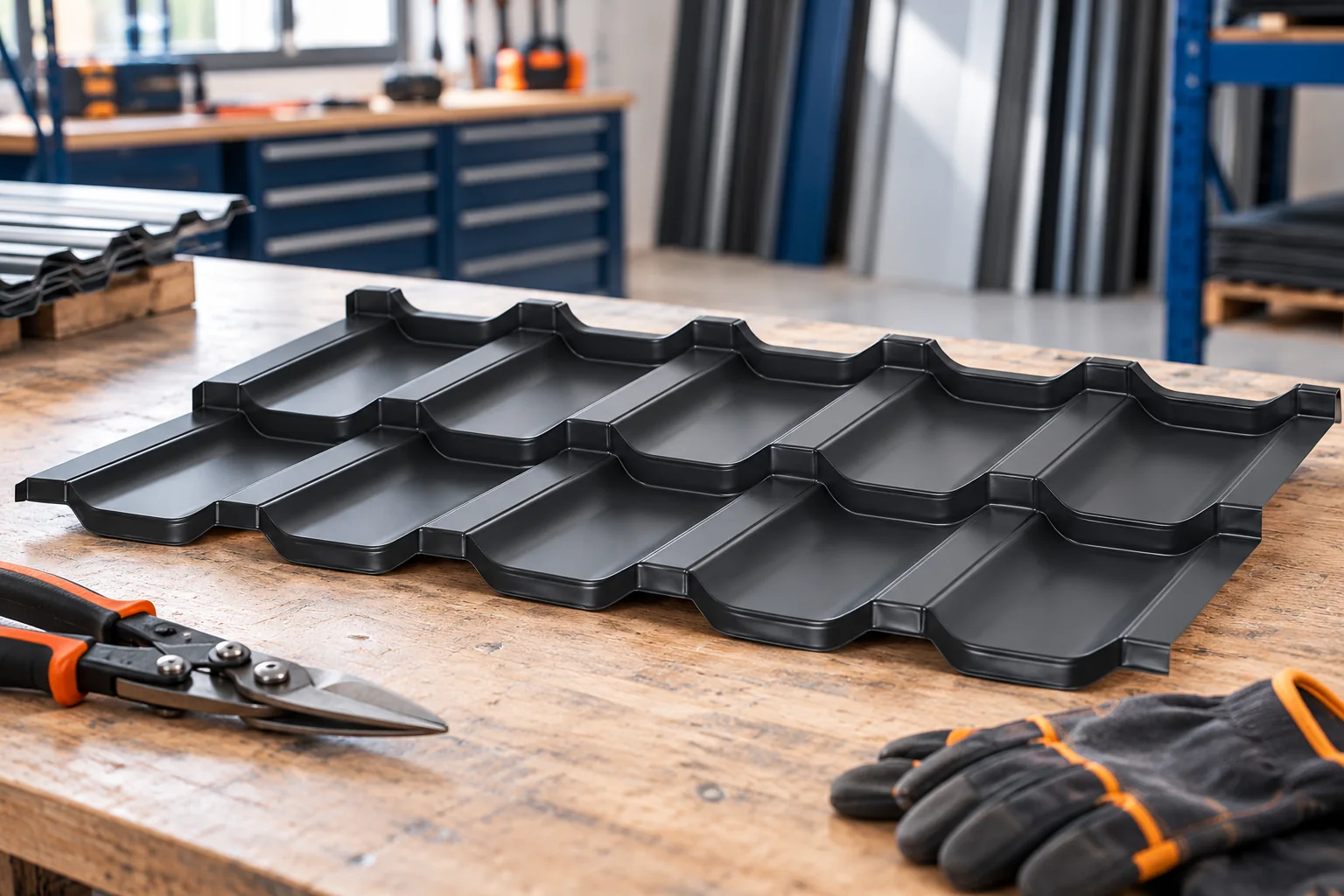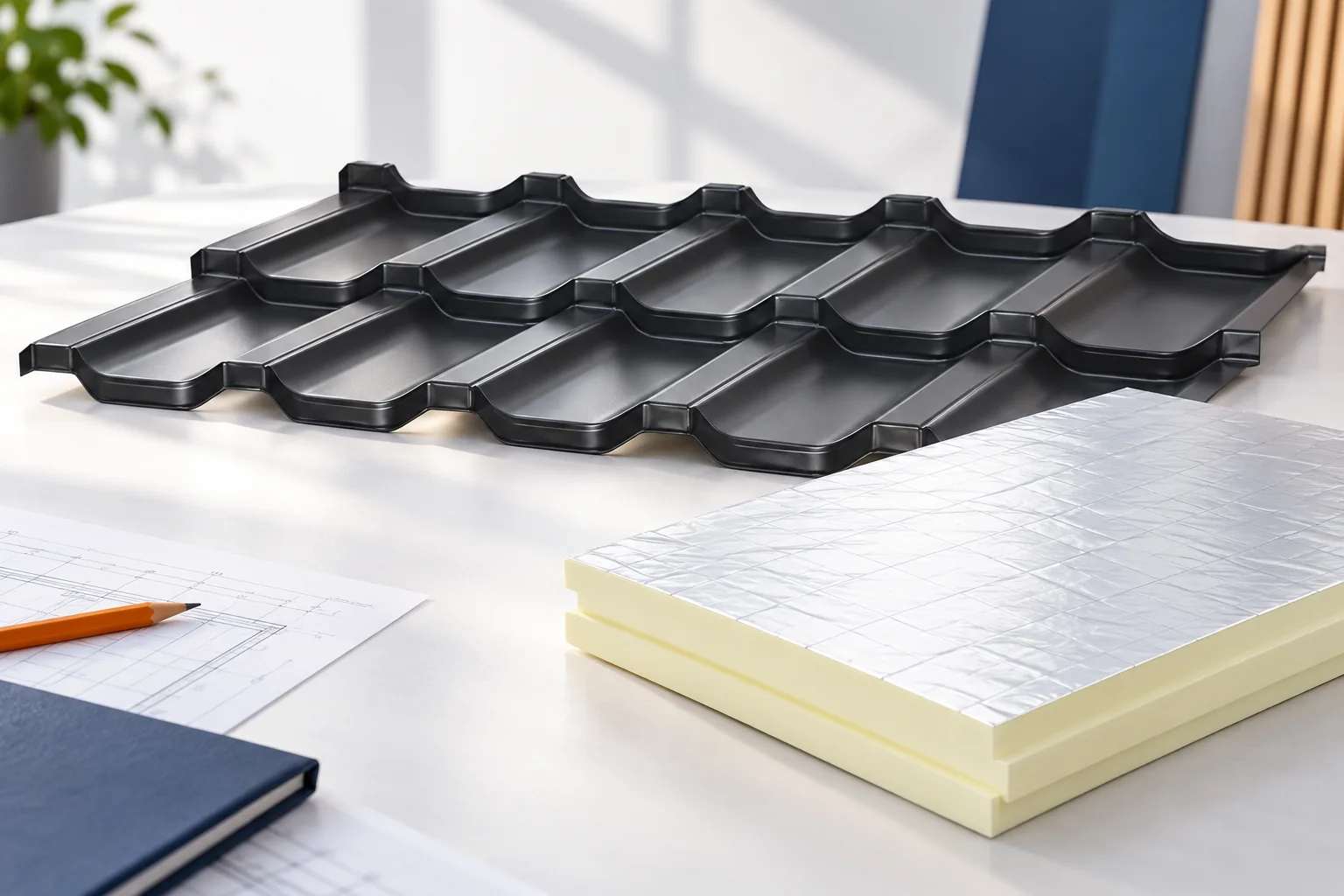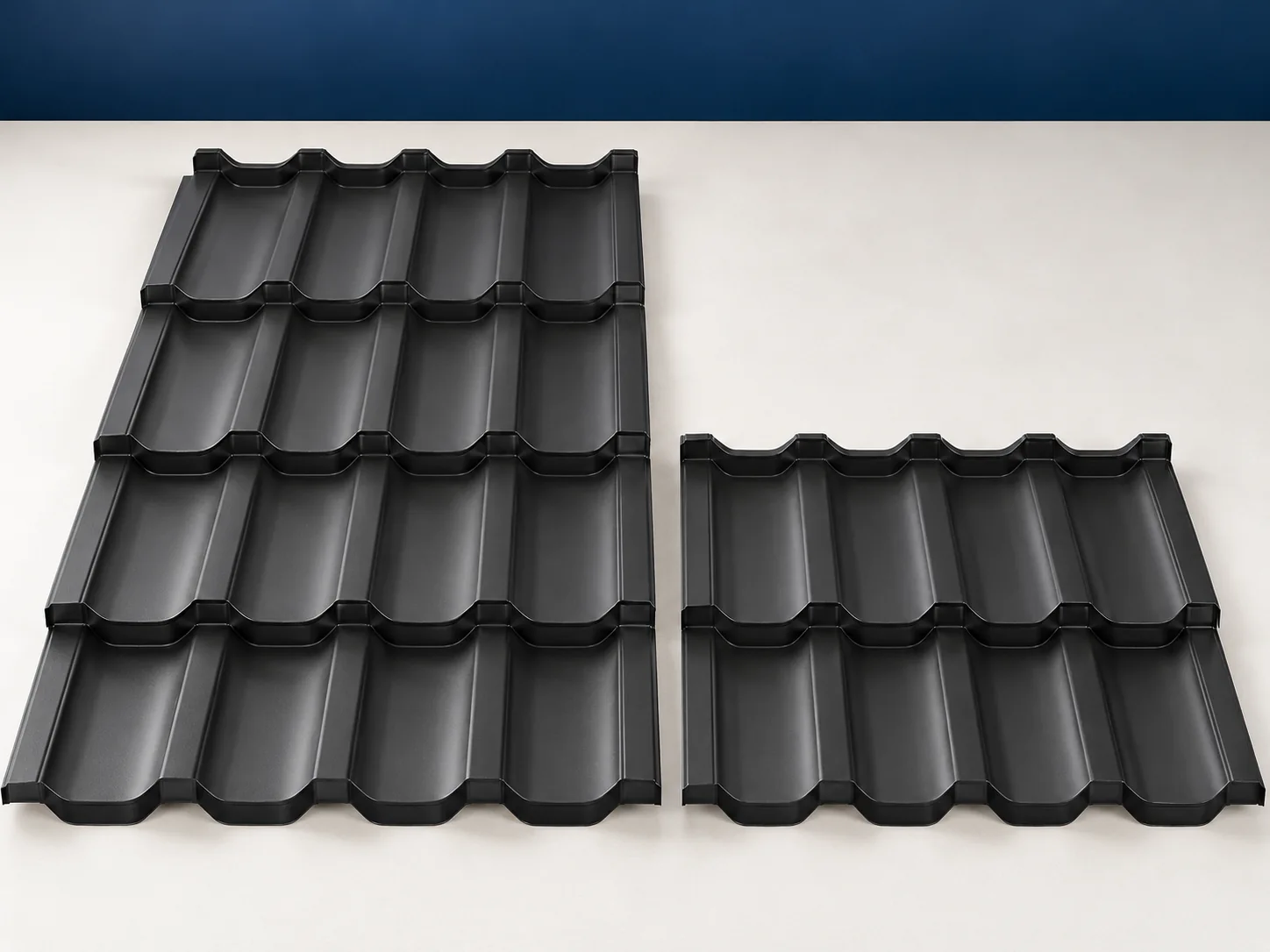
Cut-to-length sheets or modular metal roof tiles for your roof?

The format of the roofing sheet should be matched to the specific roof, not to a general rule. First check whether the slopes are simple and even, or rather full of valleys, dormers and short sections, as this determines the number of cuts and joints. The second step is delivery conditions: a long sheet needs space for unloading and lifting onto the roof, while modules are easier to distribute and store. Compare the cutting plan, transport, accessories and labour for the whole roof, not the price per piece.
By |2026-11-15T02:34:26+01:002024-04-17|Technology and applications|Comments Off on Cut-to-length sheets or modular metal roof tiles for your roof?

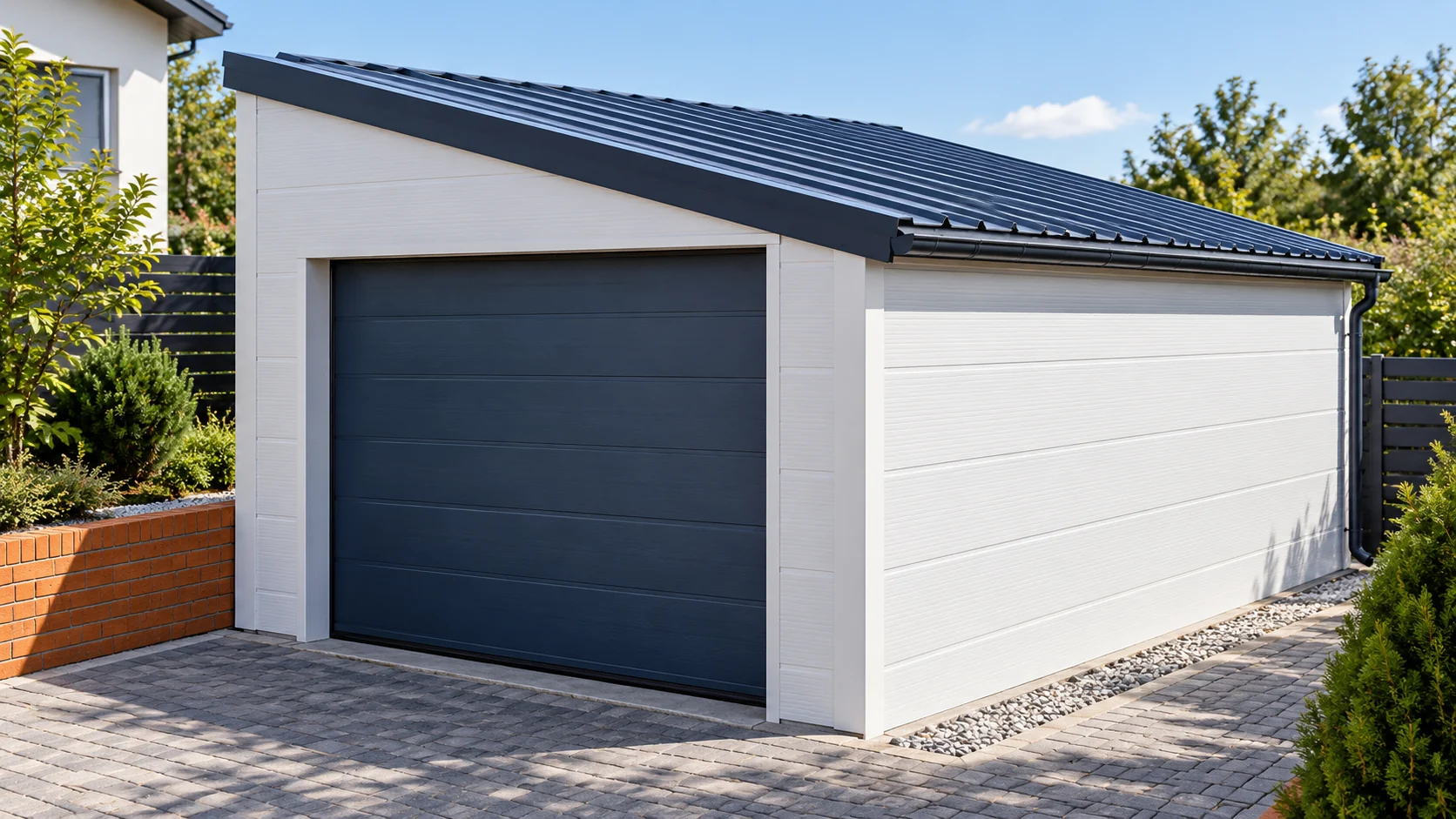
How do you choose the roof panel thickness for the way the garage is used?

The garage roof thickness depends on temperature, humidity and construction. There is no single panel suitable for every garage. A thin panel may not suit planned heating, while a thicker one still requires checking the supports. Pitch and available height above the door also matter. Selection should be made before ordering the frame. This is the first question that organises the choice. In an unheated building the thermal requirements differ from those of a workshop used all winter. Requirements arising from the design and function are added. The name garage alone does not determine the permissible thermal transmittance.

By |2026-11-14T12:01:26+01:002024-04-15|Technology and applications|Comments Off on How do you choose the roof panel thickness for the way the garage is used?

What ensures the watertightness of a standing seam roof?

Standing seam joins adjacent sheet metal strips above the main roof slope surface. This arrangement helps to organise water runoff. However, it does not automatically guarantee the watertightness of the entire roof. The outcome is also determined by the pitch, flashings and method of fixing. The areas where the continuity of the covering is interrupted require the most attention. The flat sheet metal fields direct water towards the eaves. The longitudinal joint is located higher than their principal surface. This limits direct contact between the flowing water and part of the seam. Effectiveness depends, however, on its construction and the conditions on the roof.

By |2026-11-14T09:31:37+01:002024-03-22|Technology and applications|Comments Off on What ensures the watertightness of a standing seam roof?

Choosing a practical roofing course

Good roofing training should let you carry out and check important details yourself. A display of a finished roof is not enough. Before signing up, establish which system the course covers, how much time is set aside for practical work and whether mistakes are discussed. Exercises linked to the current instructions, real material and safe working conditions provide the greatest value. First determine what you want to learn. Installing modular tile-effect metal roofing requires different exercises than building a hall cladding from insulated sandwich panels. The details of low trapezoidal steel sheet and high structural sheet also differ. General training can organise the basics, but it does not replace learning the seams, fasteners and installation sequence of a specific system.

By |2026-11-14T15:40:21+01:002024-03-14|Technology and applications|Comments Off on Choosing a practical roofing course

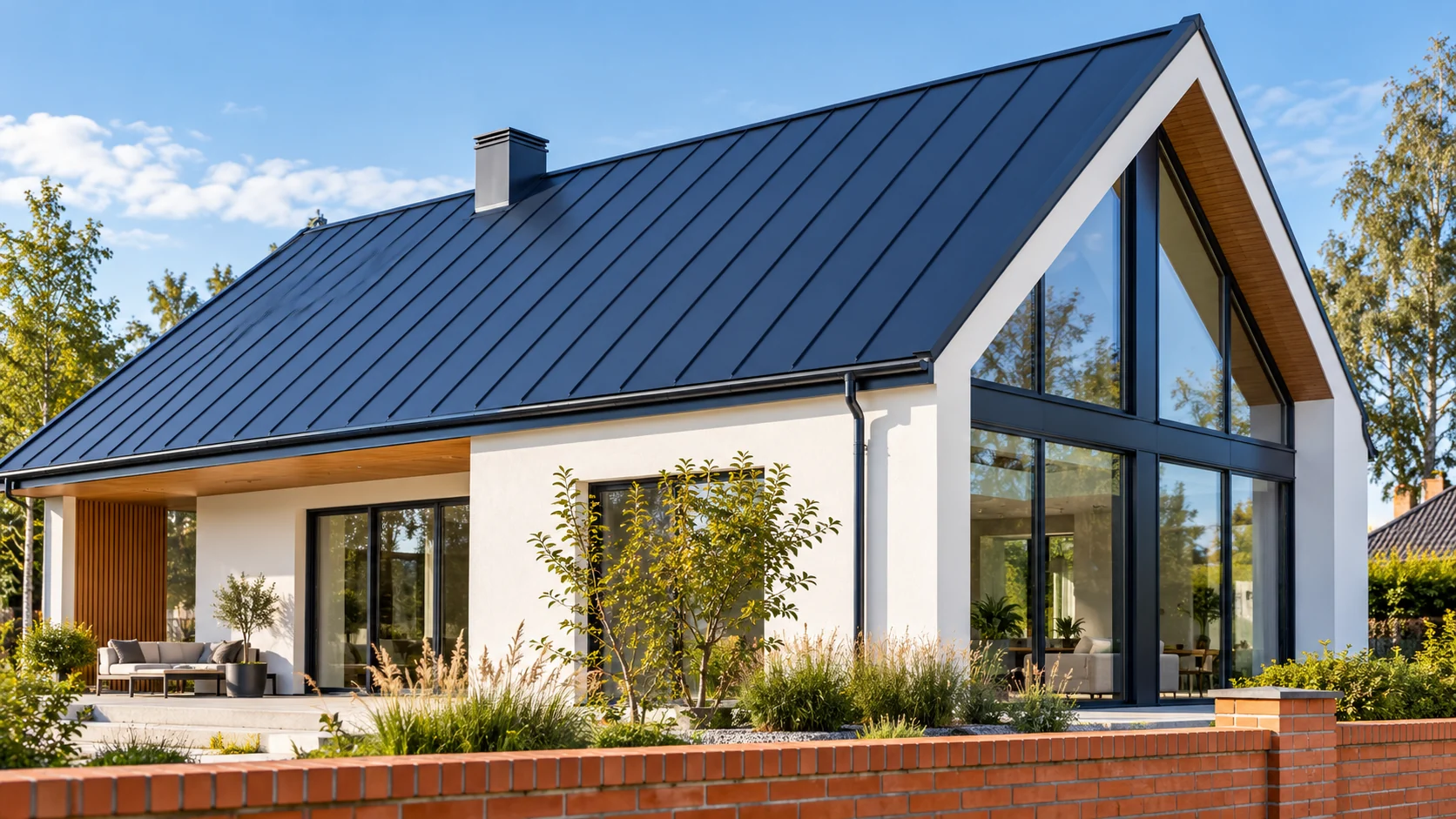
Choosing a covering for a pitched gable roof

Choosing a covering for a gable roof starts with measuring both slopes. Even when they look symmetrical from the street, their dimensions, exposure to sunlight and roof openings may differ. Check the pitch and condition of the supporting structure before choosing the sheet format. A regular layout can reduce offcuts, provided the sheets suit the measured roof. For a meaningful comparison, ask for estimates that also cover the ridge, eaves and verges. The price per metre of sheet alone gives an incomplete picture of the finished roof.

By |2026-11-14T18:53:55+01:002024-03-14|Technology and applications|Comments Off on Choosing a covering for a pitched gable roof

What to check on a metal roof after winter

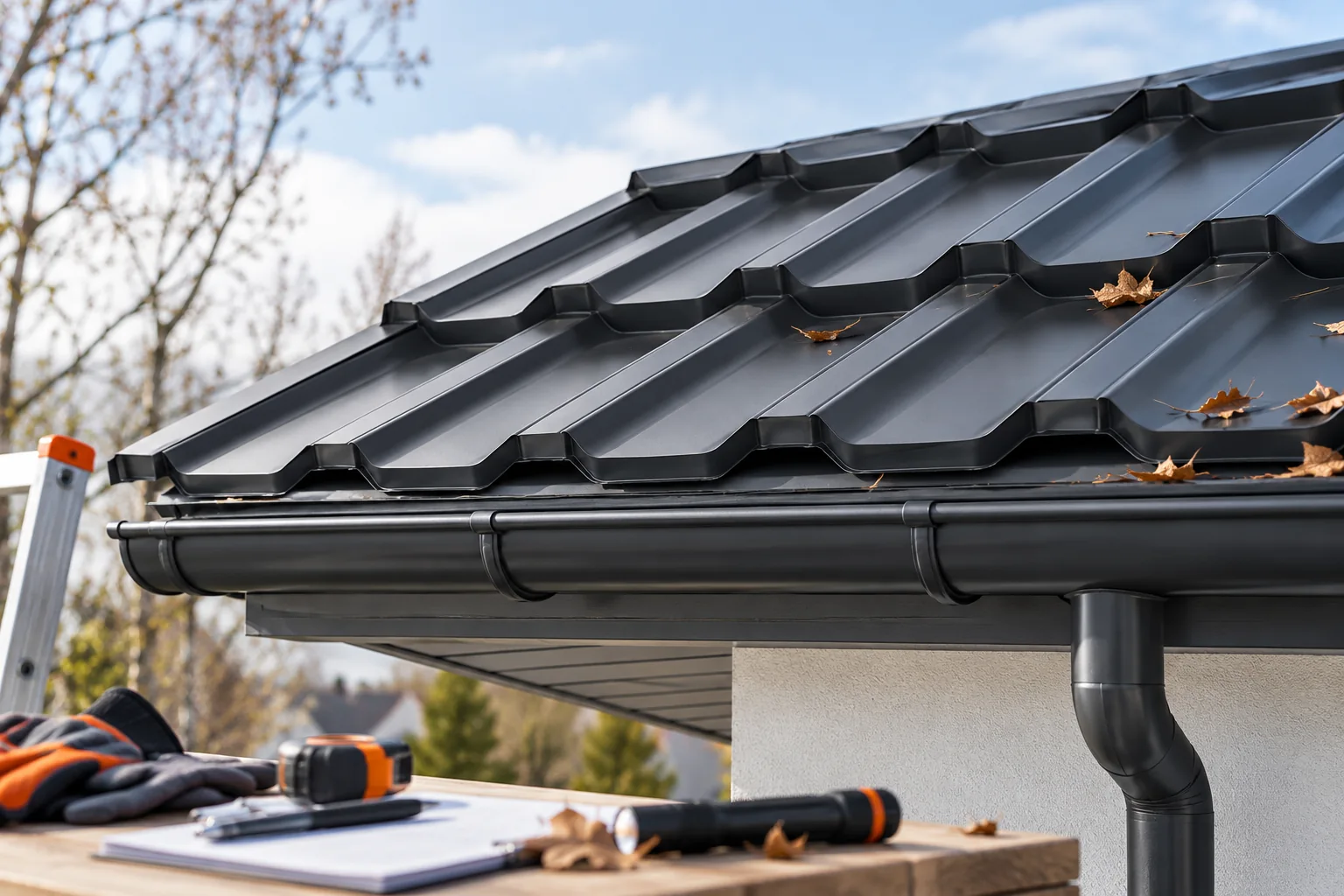
Start a post-winter roof inspection by following the route rainwater takes. From the ground, look for gutters that sag and flashings that have moved. From the loft, check for damp patches. A stain can point to a problem some distance away, so establish where water is entering or backing up before arranging a repair. Have defects dealt with before the next period of heavy rain. Leave any inspection that requires going onto the roof to someone equipped and trained to work at height.

By |2026-11-14T18:53:50+01:002024-03-03|Technology and applications|Comments Off on What to check on a metal roof after winter

Corrugated fibre cement roofing at a wall: planning the flashing

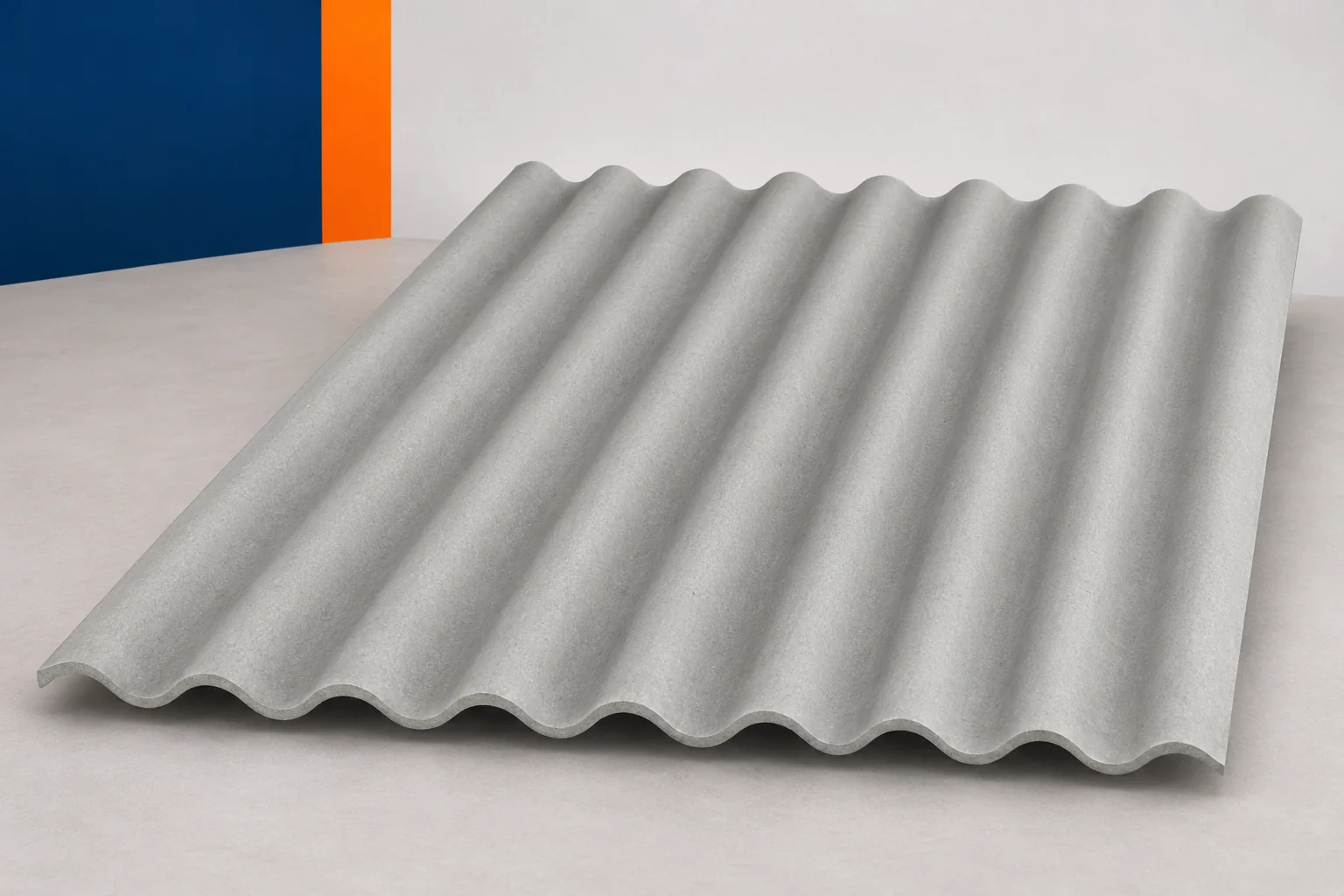
The junction of the roof slope with the wall requires more attention than a simple overlap of two sheets. Water runs off different surfaces here, and wind can force it under the flashing. Fibre cement sheets should end at a planned position, with adequate support and protection. Asbestos-free fibre cement will not seal such a junction with the corrugation alone. A detail is needed that takes into account the shape of the wall, the direction of fall and the layers of the roof and façade. The wall may run along the roof slope or be located above its upper edge. These situations have a different direction of run-off and require a different flashing geometry. At the side, water moves along the junction. At the top closure, the ends of the corrugations and any air outlet must be protected.

By |2026-11-16T00:08:40+01:002024-02-26|Technology and applications|Comments Off on Corrugated fibre cement roofing at a wall: planning the flashing

What to check on your roof in autumn

An autumn roof inspection should begin by identifying which elements are most exposed to standing water and debris. Check above all that gutters, valleys and outlets are clear, and assess the condition of flashings at chimneys and walls. Do not rely on a ground-level view alone – inspect the roof from accessible, safe positions, noting displaced flashings, unevenness and loose items. Photographs from the previous season are helpful for spotting changes. Bear in mind that the scope of the inspection should match the roofing and the building's conditions.

By |2026-11-15T02:34:46+01:002024-02-18|Technology and applications|Comments Off on What to check on your roof in autumn

Replacing a roof with BIPV: reducing the risk of rain entering the house

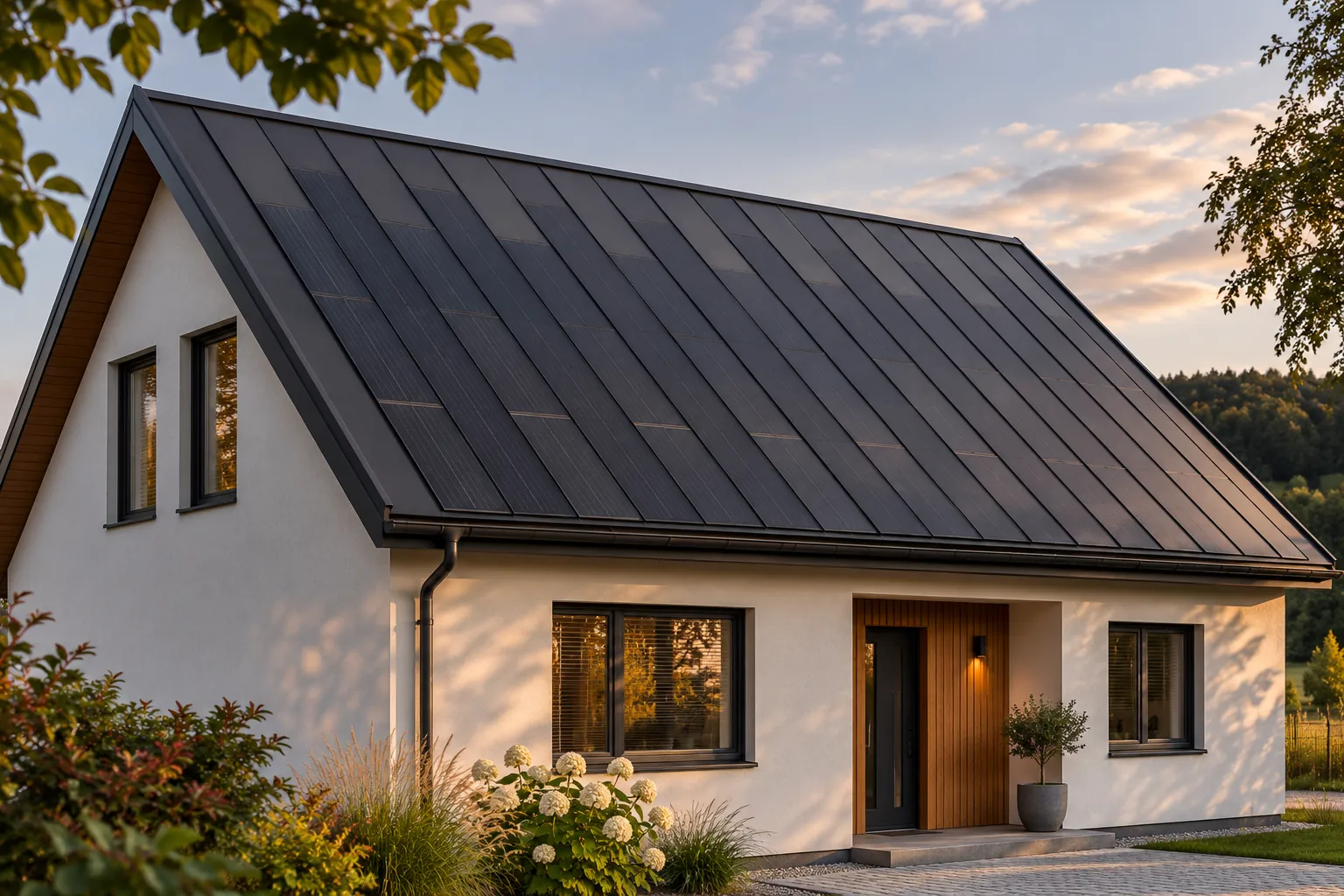
When replacing a roof with a photovoltaic one, the most important thing is to keep control over the exposed surface. The house must not be left without planned protection simply because materials are due to arrive in a few days. BIPV allows the covering and the energy part to be coordinated, but it requires a prepared schedule. The scope of each stage should match the weather, the capacity of the crews and how quickly the building can be effectively protected. Before the old covering is removed, the availability of materials, crews and equipment must be confirmed. Accessories and parts needed to complete the open zone are also important. A missing flashing or other component can prevent the slope from being closed, even though most of the panels are already on site.

By |2026-11-15T17:19:42+01:002024-02-12|Technology and applications|Comments Off on Replacing a roof with BIPV: reducing the risk of rain entering the house

What role can metal roofing play in an energy-efficient home?

Metal roofing can work well with the roof of an energy-efficient home, but on its own it does not provide thermal insulation. Heat loss is determined by the layers of the building envelope, their continuity and airtightness. PIR boards help achieve high thermal resistance with a smaller thickness. At the same time, thermal bridges, moisture and connections must be resolved. The low weight of the roofing is a structural advantage, not proof of low energy consumption. Tile-effect metal roofing or trapezoidal steel sheet protect the roof from precipitation and form its outer surface. Steel conducts heat well, so a thin sheet is not a thermal insulation layer. In a typical solution, the insulation is located below. Its position and thickness must result from the design of the entire building envelope, not from a declaration concerning the colour or profile of the sheet.

By |2026-11-14T15:40:39+01:002024-01-22|Technology and applications|Comments Off on What role can metal roofing play in an energy-efficient home?
Back to top