

Technology and applications
Izoprofil.pl explores how building materials work together. Sandwich panels, PIR insulation and trapezoidal sheets depend on their supports, joints, fixings and drainage. The guides explain how product properties affect use on roofs, walls and insulation assemblies. They help you read the documentation, identify limits and prepare questions for your designer or contractor. You can also look up detailing, common faults and preparing materials for installation. Use the technical issue on your project to choose an article, then check the instructions for your specific product. Similar-looking components may have different requirements.
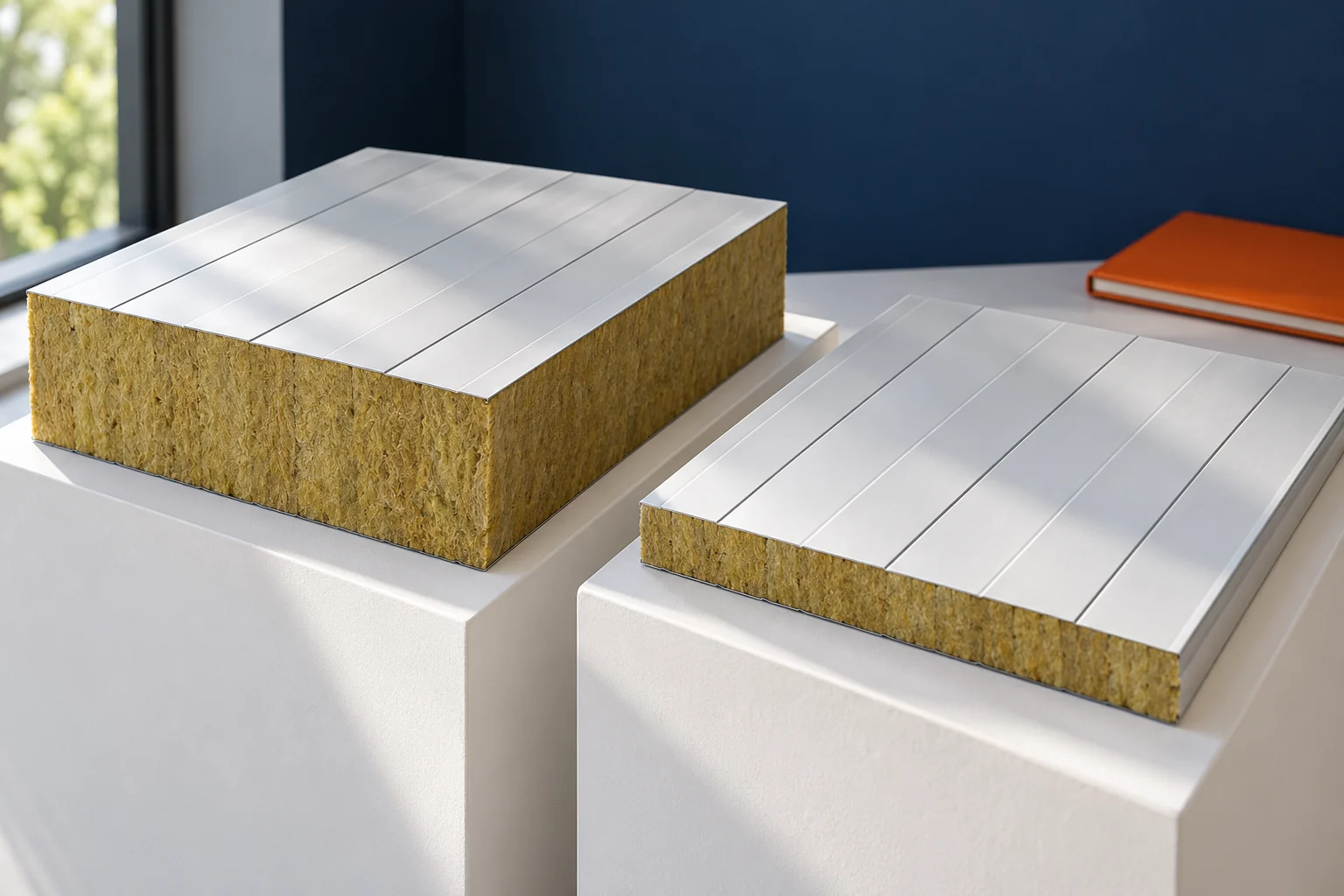
How to read the U-value and lambda of an insulated wall panel with mineral wool?
Lambda describes the insulation material, while the U-value indicates heat transfer through the building component. These values cannot be compared directly. For a mineral wool panel, it is best to start with the declared U-value for a specific thickness. Then you need to check what the calculation covers and how the panel connects to the rest of the building. Lambda, written as λ, has the unit W/(m·K). The lower the value for a material, the greater the thermal resistance of a layer of the same thickness. In a simple case, the resistance R is calculated as the thickness in metres divided by lambda. Its unit is m²·K/W.
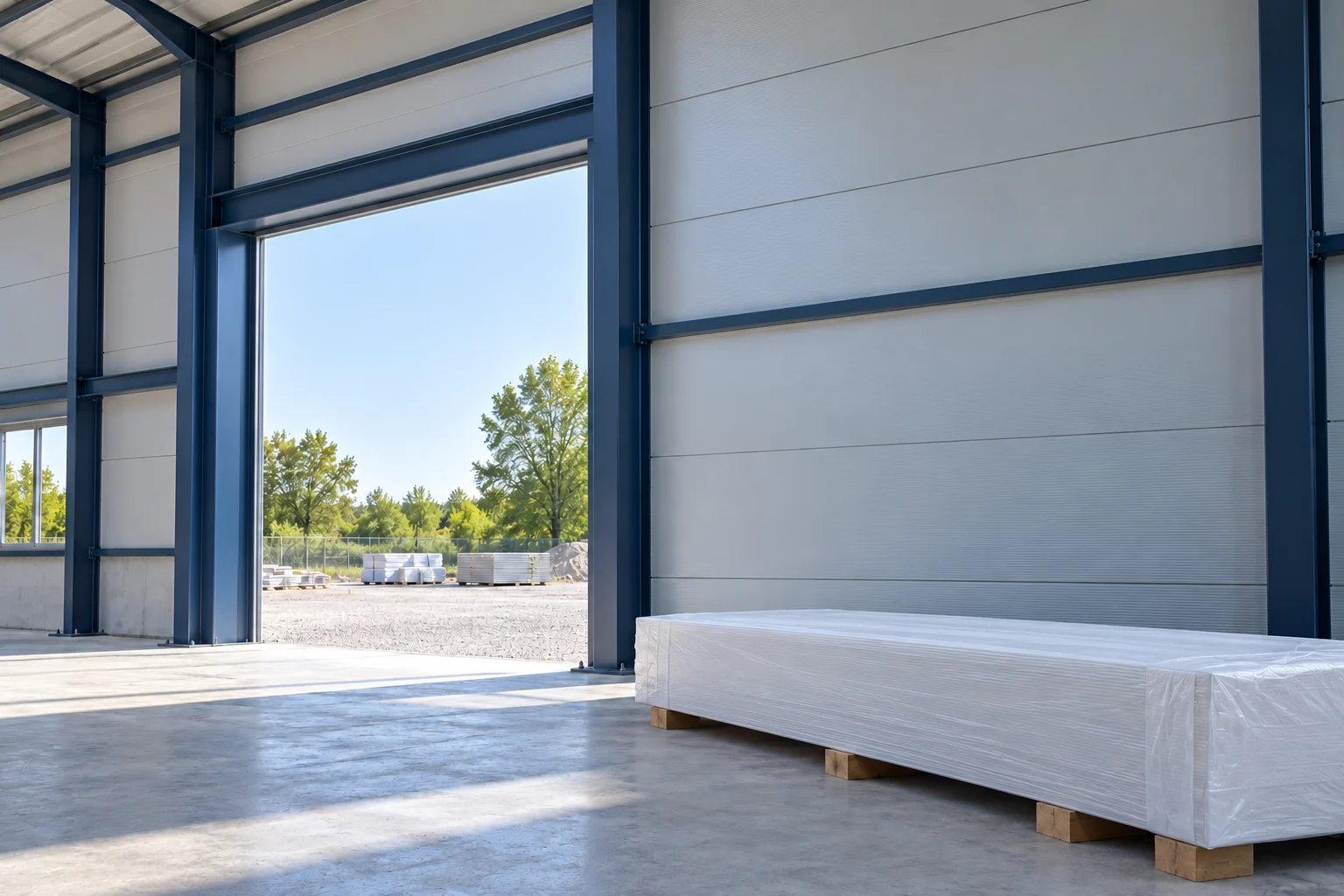
How should the supporting structure for insulated wall panels with a mineral wool core be laid out?
The supporting structure for a mineral wool panel should follow from the panel layout and the loads. It is not enough to size the columns to the hall dimensions and then fit any cladding to them. Spans, support widths and openings must be coordinated. On a small building, a well-planned grid reduces the number of cut pieces and additional profiles. With vertical panels, supports often run horizontally. With horizontal panels, vertical support lines matter. This is a general relationship, and the exact layout follows from the design. The panel may act as a single-span or multi-span system, which affects the selection.
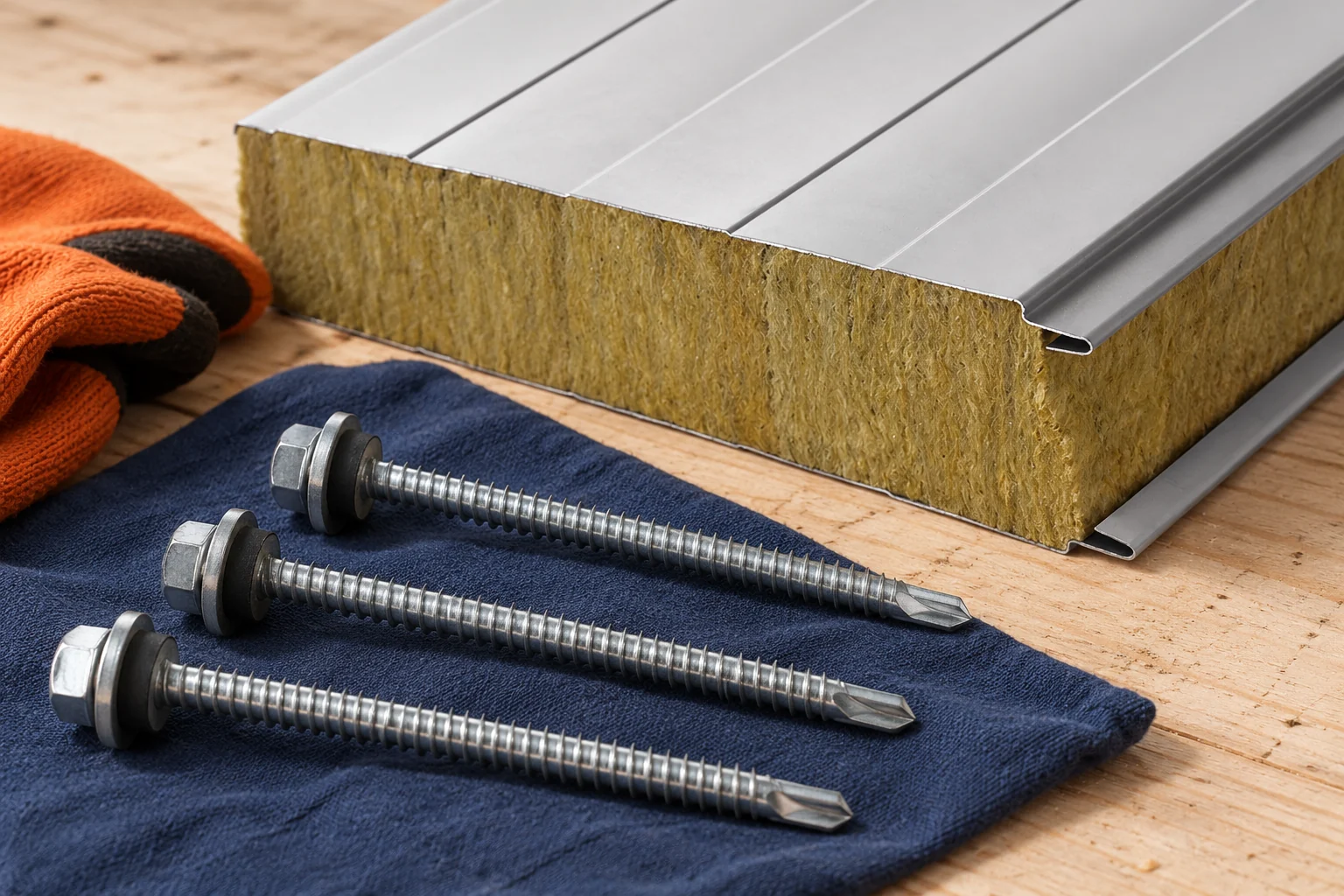
How do you choose screws and fixings for insulated wall panels with a mineral wool core?
A screw for a panel with a mineral wool core must match the panel thickness and the type of structure. Length alone is not enough. The load-bearing capacity of the connection, the drilling range and the correct pressure of the washer all matter. The fixing layout should follow from the loads and the wall detail. It cannot be correctly determined by a single figure for every façade. The panel thickness, the type of support and its actual cross-section are needed. A different solution applies to steel, a different one to timber, and fixing to masonry requires a suitable intermediate arrangement or a separately confirmed detail. The loads acting on the wall must also be known.

Checking sandwich panel thickness against the design specification
Panel thickness is one of the data needed to assess the building envelope. It does not by itself confirm thermal compliance, load-bearing capacity or fire resistance. The building requirements and the parameters of the specific panel must be known. Joints and moisture are checked separately. In this way, the choice of material follows from the project, not from a single table of centimetres. The project defines what the wall or roof is to achieve. The panel documentation describes the properties of a specific configuration. These are two different levels of information. A product may have correctly declared parameters and yet not meet the needs of a given application.
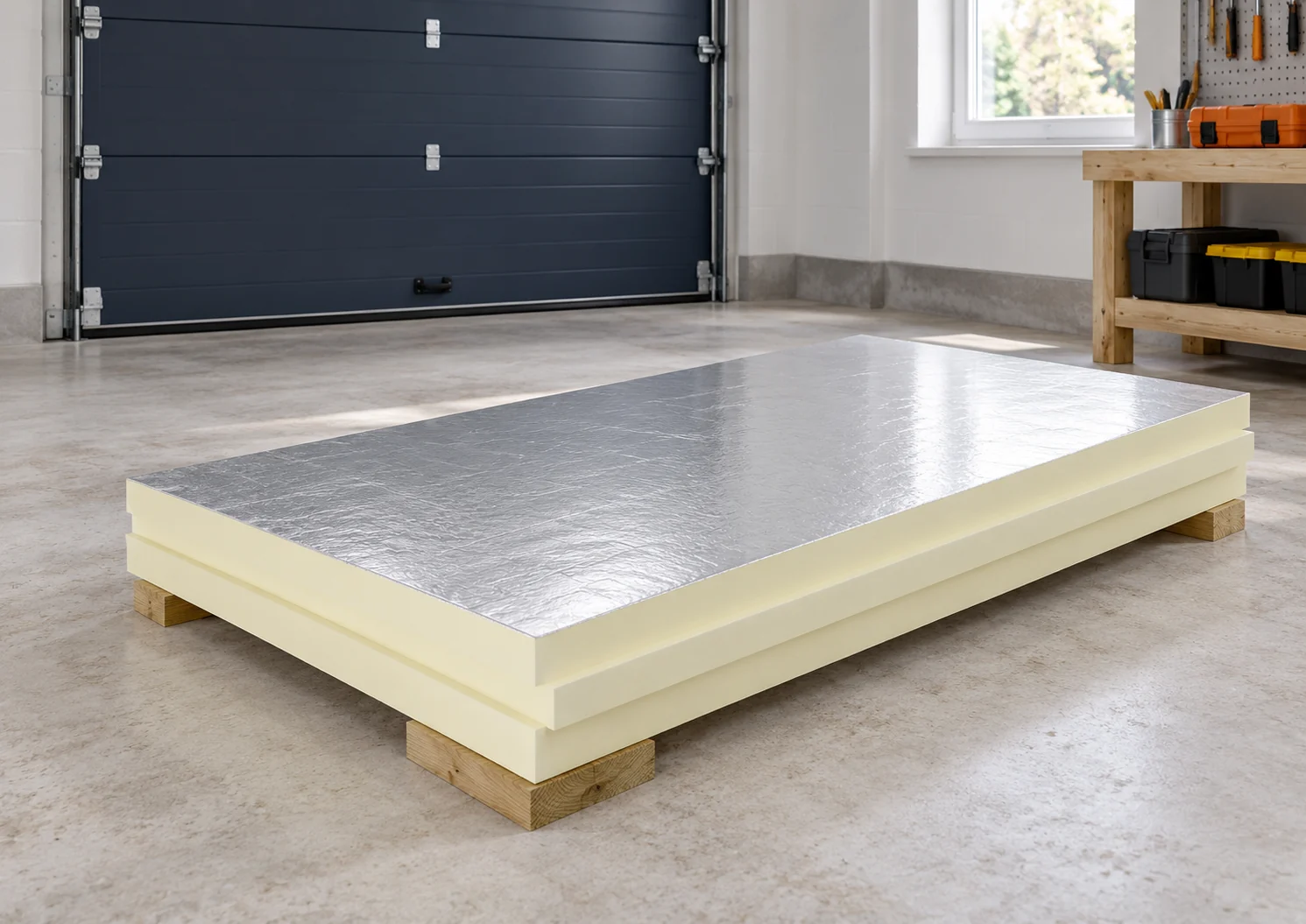
How to cheaply insulate a garage or small house without wasted savings?
Inexpensive insulation starts with determining how the building will be used. A cold storage room has different needs from a workshop heated on Saturdays, and both differ from a small house used throughout the winter. Savings are worth seeking in good cutting plans and simple details. Insulation that is too thin or ventilation that is omitted can quickly undo the effect. Note the planned temperature and heating hours. In a garage without a heat source, insulation alone will not maintain a constant residential temperature. It can slow the rate of cooling and heating, but the result also depends on the door, roof, floor and air exchange. Do not buy thickness based on the name “garage” alone.
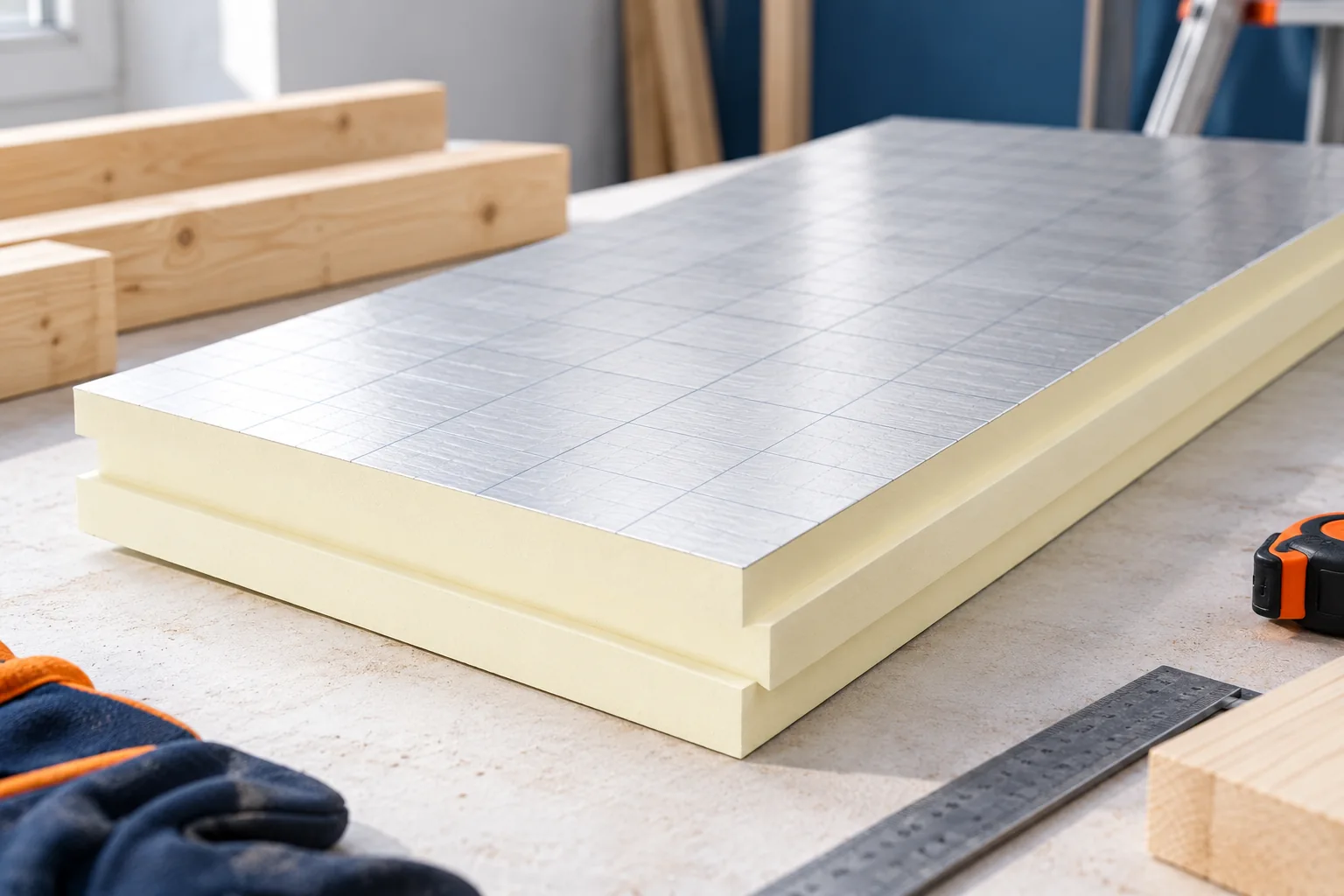
Planning roof insulation with rigid PIR boards
The key decision when insulating a roof with PIR boards is choosing the whole layer build-up, not just the insulation thickness. Before buying, check that the substrate is dry and loadbearing and whether the existing layers need replacing. Also settle how you will detail the junctions at the eaves, wall plate and openings, as these determine airtightness. A board with a thin aluminium facing remains an insulation material, not a roof sandwich panel. Without a detailing plan, even low lambda will not guarantee the expected performance.