

Technology and applications
Izoprofil.pl explores how building materials work together. Sandwich panels, PIR insulation and trapezoidal sheets depend on their supports, joints, fixings and drainage. The guides explain how product properties affect use on roofs, walls and insulation assemblies. They help you read the documentation, identify limits and prepare questions for your designer or contractor. You can also look up detailing, common faults and preparing materials for installation. Use the technical issue on your project to choose an article, then check the instructions for your specific product. Similar-looking components may have different requirements.
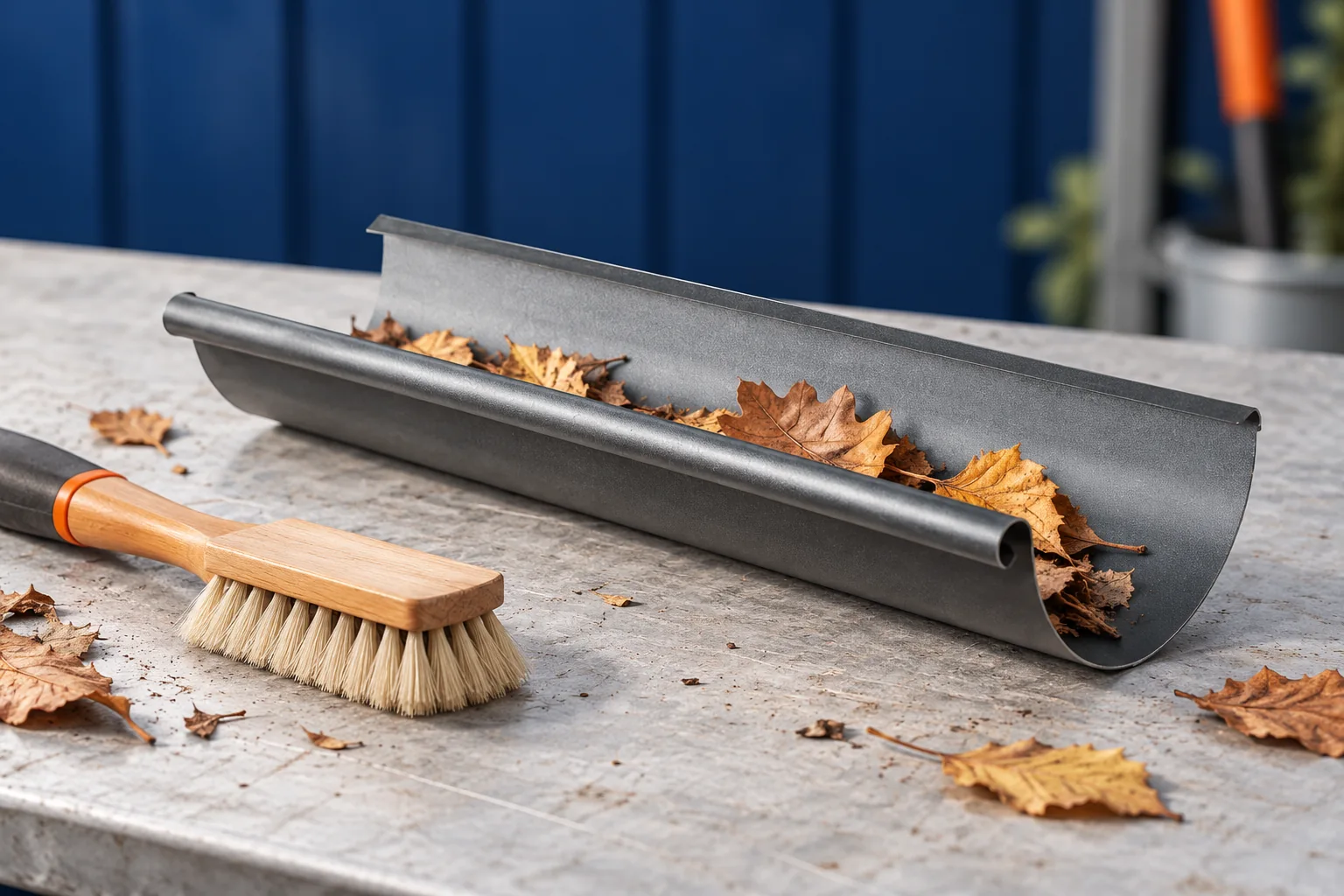
Is clearing the leaves enough to clean your gutters?
Clearing leaves is only the first step in cleaning a gutter. Look underneath for silt, dust and seeds, especially near the outlet. Follow the route the water takes through the bends and downpipe to its discharge point at ground level. A gutter can look clean and still overflow if the fall is incorrect, a bracket is bent or the outlet is partly blocked. If the same spot clogs each season, finding the reason for the blockage matters as much as clearing it.
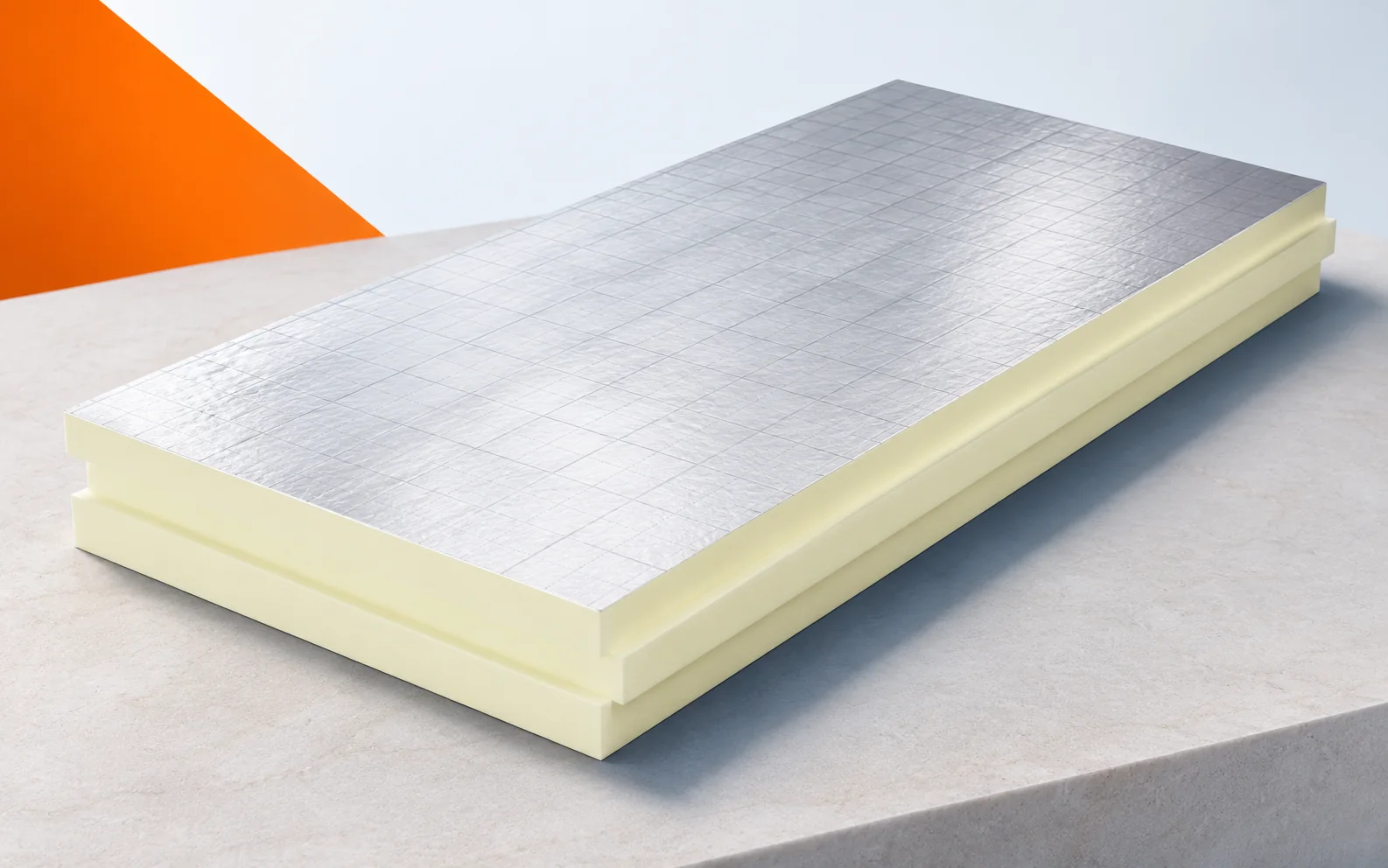
Replacing XPS with PIR during renovation: what to check
During a renovation, the choice between PIR and XPS also depends on the condition of the existing layers. Saving thickness can matter, but it should not obscure moisture and loads. PIR boards are worth considering once the old build-up has been investigated. This allows the new material to address the building's actual problem. Polyurethane insulation does not have to offer an economic advantage everywhere. Where there is plenty of space, other requirements and the cost of the entire build-up may play a greater role. Where space is limited, a thinner layer can reduce the scope of reconstruction. The real benefit must be costed, not just the slogan. In a floor being modernised, there is often no room to raise the level significantly.
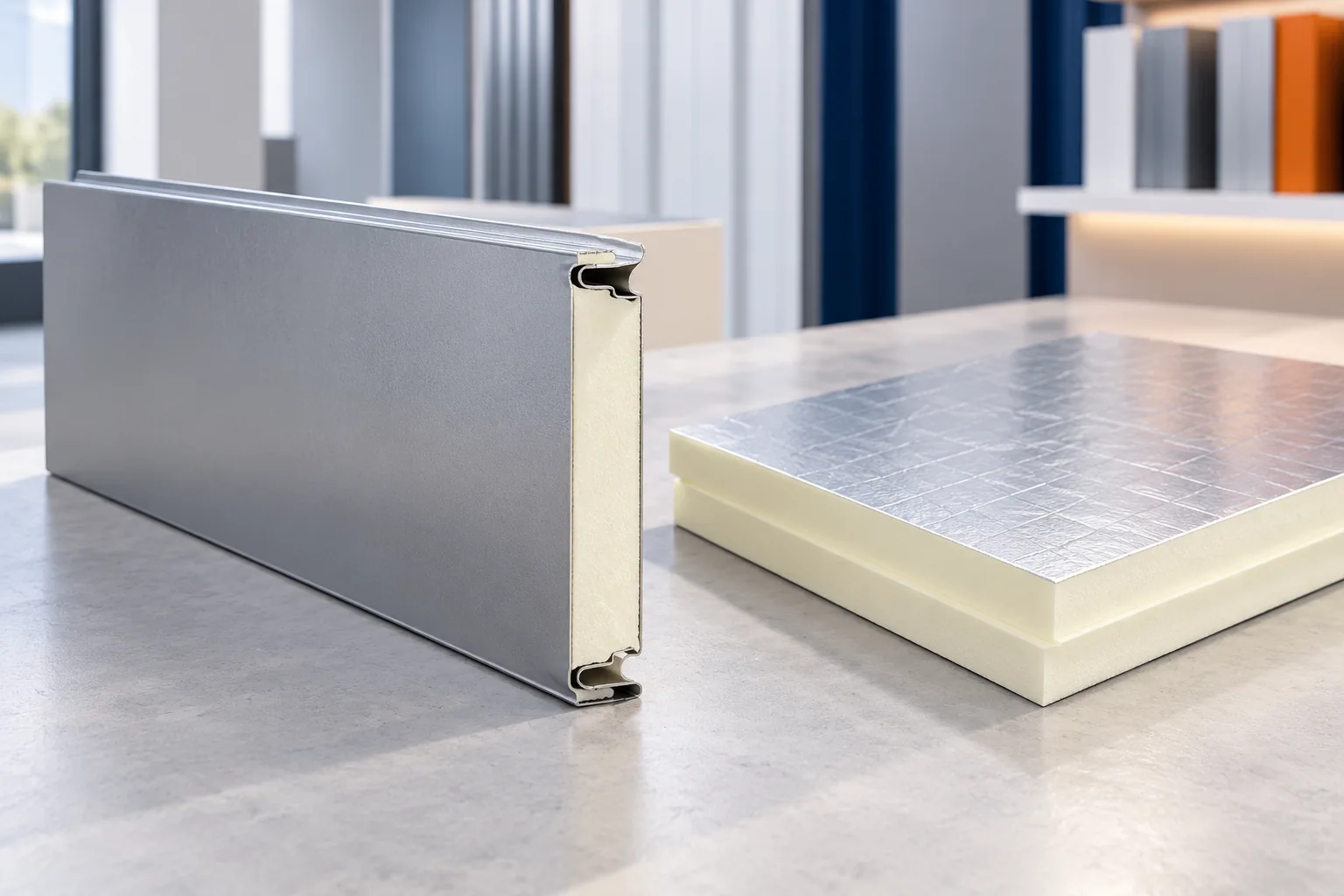
Where do sandwich panels and PIR insulation fit into modern construction?
An insulated panel can close a wall or roof while reducing heat loss. A separate PIR board is used to insulate a building element that has its own structure and covering. These materials make construction easier, but they are not interchangeable. The choice is determined by the building's function, the support layout, moisture and fire requirements. The greatest benefit comes from selecting the whole solution before ordering materials. An insulated panel has two metal facings bonded to an insulating core. The components work together when carrying loads. As a result, the finished panel can form the envelope of a hall, workshop or warehouse. It still requires designed supports, however. The term self-supporting does not mean it will replace columns, purlins and the entire building structure.
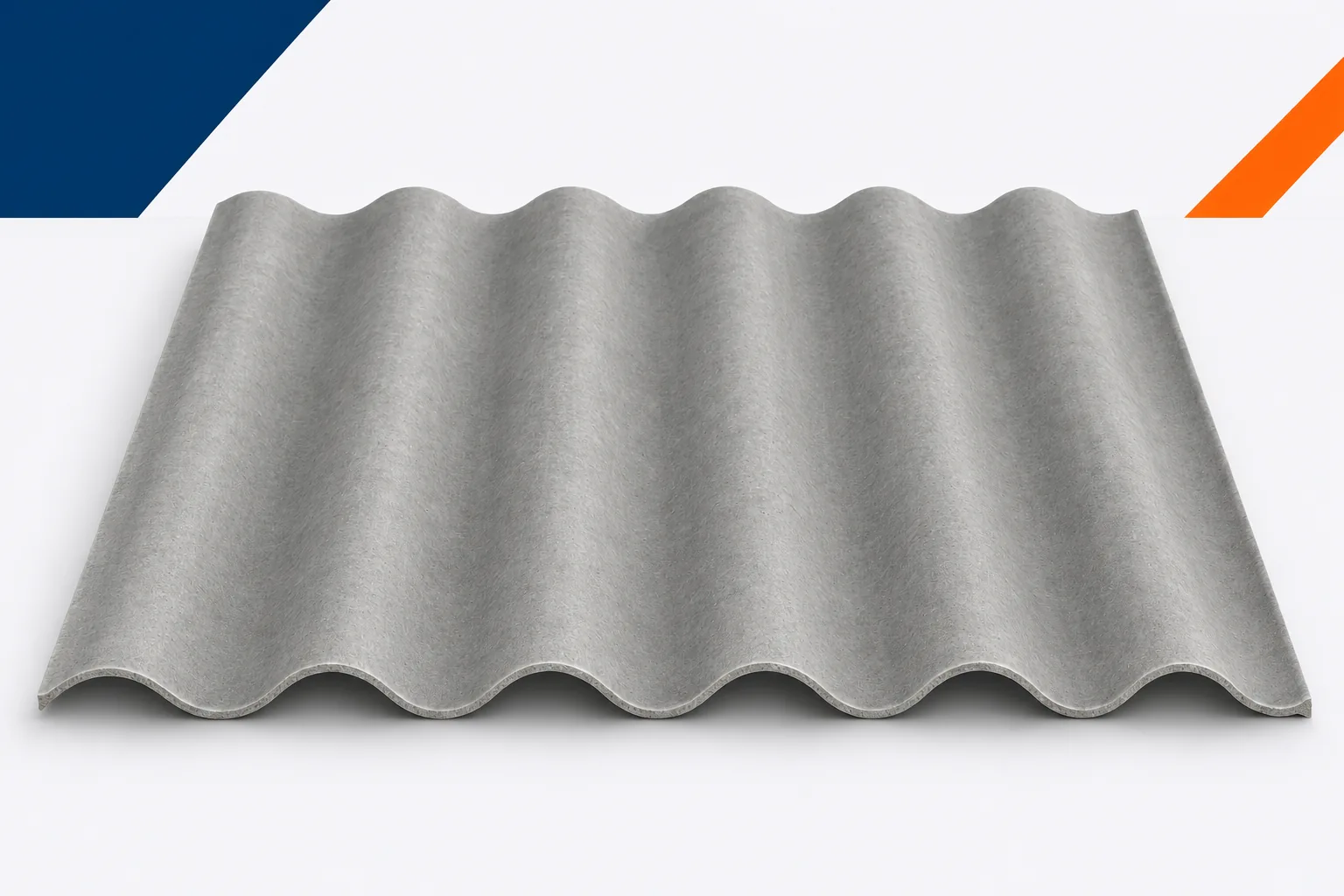
Roof valleys in fibre cement roofing: why they need a separate detail
The valley is one of those places where a simple roof stops being simple. Water flows into it from the adjacent roof slopes, and the diagonal cuts change the shape of the sheets. Fibre cement sheets must be planned here with account taken of the support and the drainage. Asbestos-free fibre cement should not be cut at the valley only when there is no room left for the next row. A separate detail makes it possible to assess the tightness, the fixings and the later possibility of cleaning. An ordinary corrugation trough carries precipitation away from a narrow strip of roof. Water from many such strips on both sides reaches the valley. The size of the flow depends on the geometry of the roof slopes and on the rain conditions.
How to assess the environmental impact of a metal roof
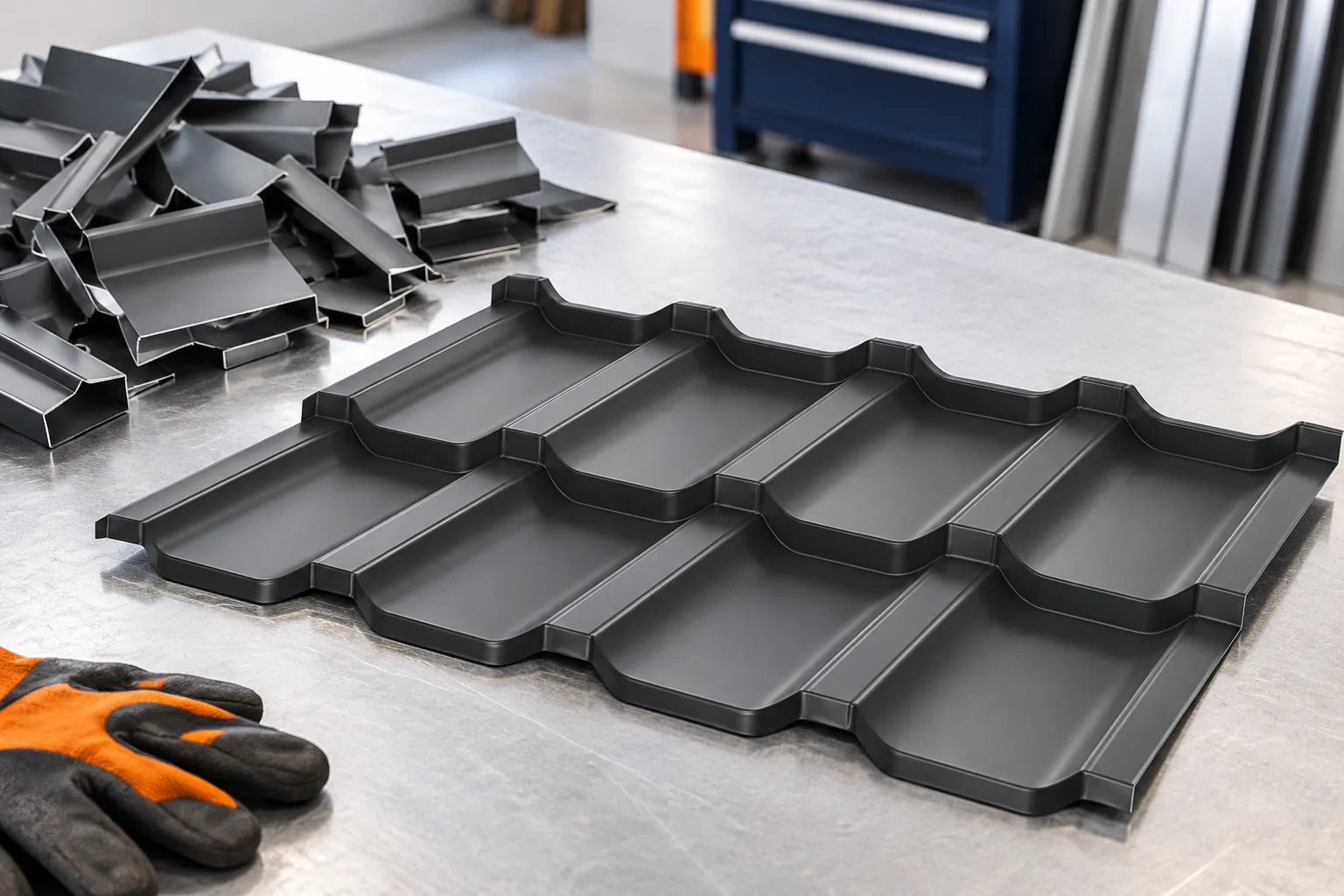
A metal roof can be a sensible environmental choice if it is well specified, durable and uses material sparingly. When assessing an EPD, the first thing to check is whether the declared unit and material variant match the actual roof build-up, not just the thin sheet. It is equally important to establish which life-cycle stages the calculations include. Only on that basis can solutions with the same function be compared, bearing in mind that heat loss depends on the whole assembly rather than the covering alone.
PIR in wall renovation: reveals, old render and internal insulation
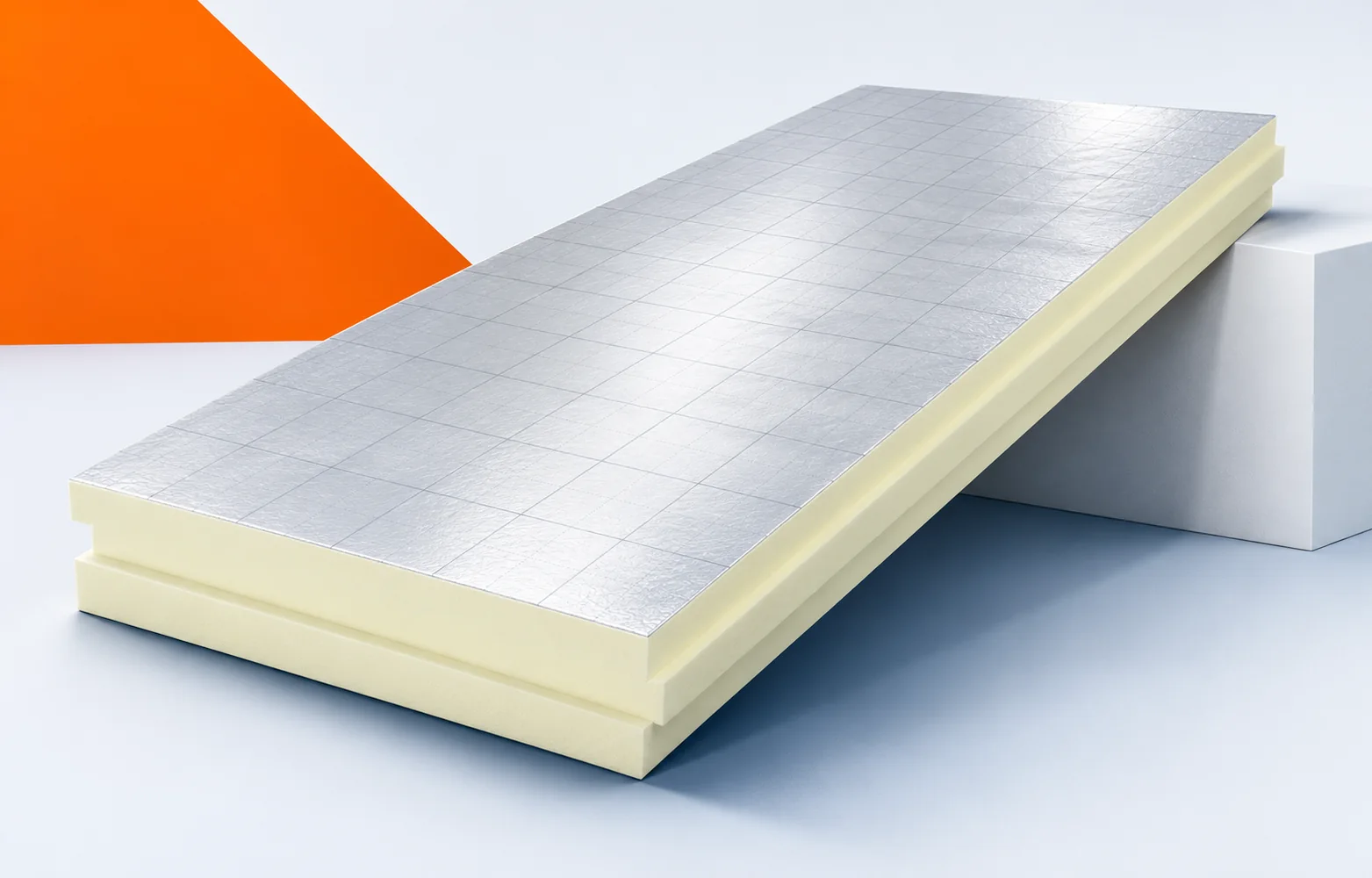
Façade renovation often reveals limitations at windows, the plinth and the roof. A thin PIR board can help resolve selected details. First, however, the substrate and moisture must be assessed, and then a finishing system suited to the board being ordered must be selected. PIR boards can form a continuous layer of thermal insulation on the outer side of the wall. This position helps reduce thermal bridges associated with structural elements. An uninsulated ring beam can remain a weak point despite a good layer in the field. The new scope should include a continuous connection over the full height of the wall. When renewing a façade, it is worth checking the places that were not previously insulated. This may be the ring beam, the strip near the roof or the space behind services.