How to assess a composite-faced panel for a humid livestock building?

In a cattle shed, pig house and poultry house, moisture and chemical compounds act from the inside. The choice of facing is therefore just as important as the insulation thickness. A panel with glass-fibre-reinforced composite can be a solution. Its suitability must, however, be confirmed for the specific conditions, cleaning agents and method of installation. In one roof solution, profiled steel is present on the outside and a composite of polyester resin and glass fibre on the inside. Between them is a PUR or PIR core. The glass fibre reinforces the inner facing. It does not mean that the entire core is made of mineral wool.
2026-11-14T12:00:13+01:00

What is a 60 mm mineral wool wall panel sufficient for, and what about the 40 mm variant?

The 60 mm mineral wool wall panel is available in selected systems but is not a universal solution for every building envelope. Its small thickness has thermal and structural implications. The 40 mm panel offer requires separate verification. It must not be assumed that it has the same core and properties as a thicker product of similar appearance. The value refers to the specific panel dimension stated in its documentation. It is necessary to check how the manufacturer describes the thickness and profiling of the facings. An arbitrary point at the joint should not be measured and used as a basis for comparing different products.

2026-11-14T09:32:39+01:00

Where is it worth using walls made of mineral wool panels?

Wall panels with mineral wool are considered where fire protection and efficient installation of the enclosure are important. They can form the walls of halls, workshops or pavilions. However, suitability depends on the specific configuration. The building requirements, spans, connections and openings must be checked, not just the type of core. A mineral core behaves differently in fire than cores made of organic foams. This is an important starting point, but not a complete assessment of the wall. Reaction to fire describes the product's contribution to fire development. Fire resistance concerns the behaviour of the entire element over a specified period.

2026-11-14T09:32:02+01:00

How to buy insulated wall panels with a mineral wool core from an outlet without losing out on offcuts

A cheaper mineral wool panel can be a good buy if its condition and dimensions suit the project. Savings are not determined by the price per metre alone. Offcuts, batch completeness and the type of defect matter. Before reserving, it is worth drawing the wall layout and checking every element that is to go into the cladding. The reason for the downgraded commercial grade may be a visual defect, an unusual length or another feature indicated by the seller. There is no single common scope of permissible defects for the whole market. The term “outlet” also does not automatically describe the technical condition.

2026-11-14T09:31:56+01:00

Roof insulation: comparing PIR, EPS, XPS and mineral wool

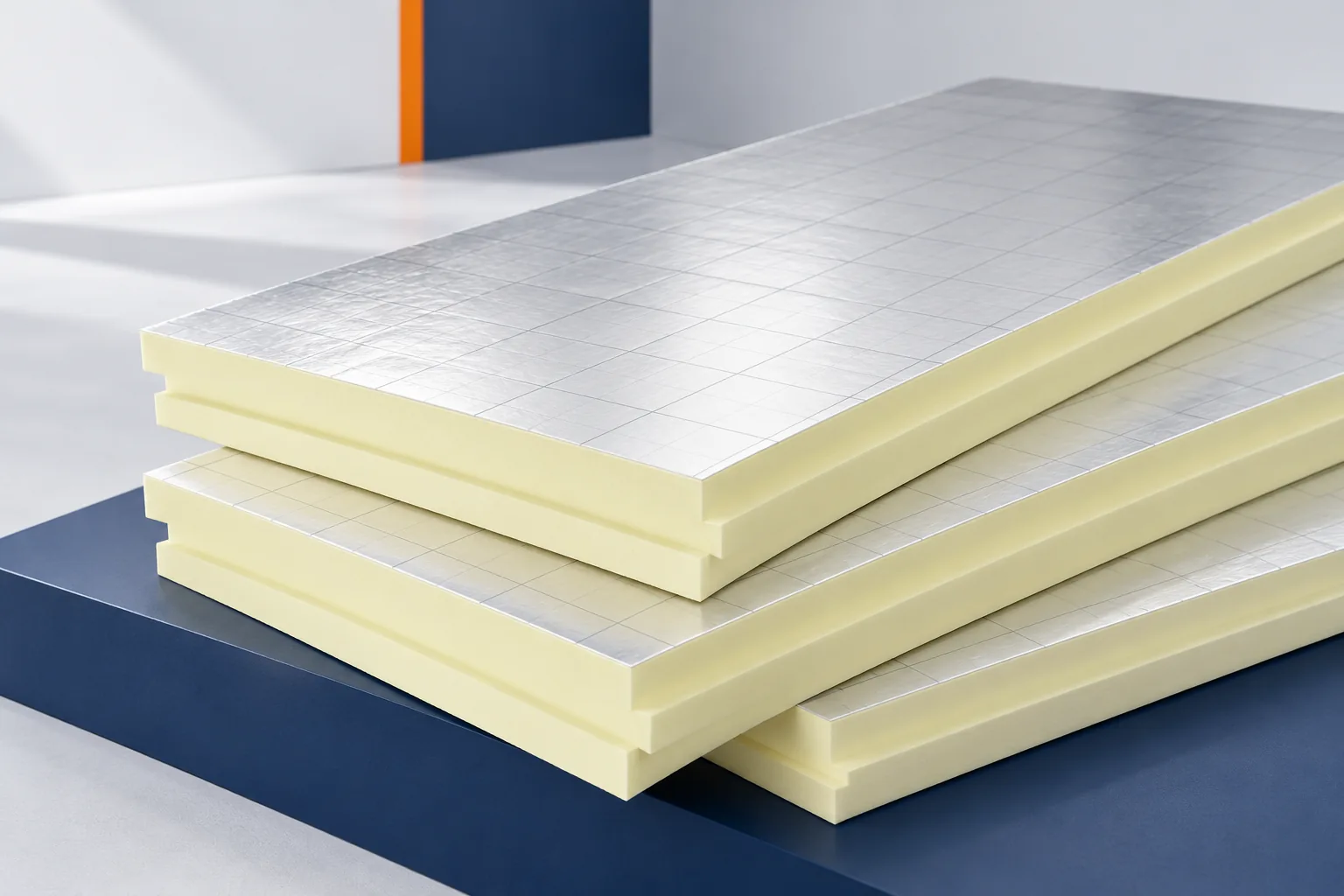
The choice of roof insulation depends primarily on the available thickness and the required thermal resistance, not on the material name alone. Check whether a layer with the necessary lambda can fit in the given space and whether the product has declared mechanical and fire properties for the specific assembly. PIR can achieve high thermal resistance with a relatively thin layer, but it does not replace XPS in areas of prolonged water exposure. EPS comes in many variants, while mineral wool stands out for fire and acoustics. Compare complete options, not just board prices.

2026-11-14T22:29:21+01:00

What does a mineral wool panel offer and what constraints does it impose on site?

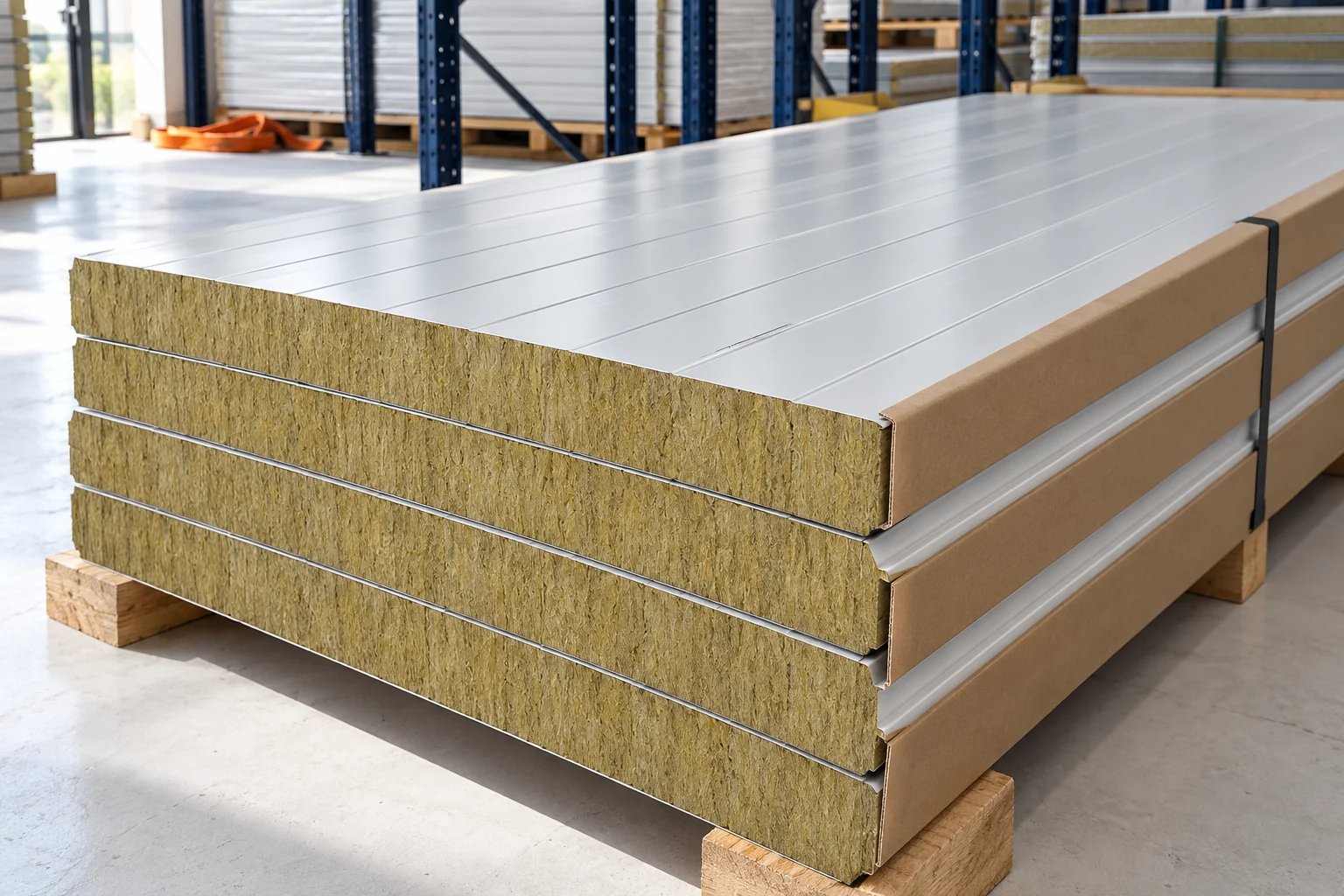
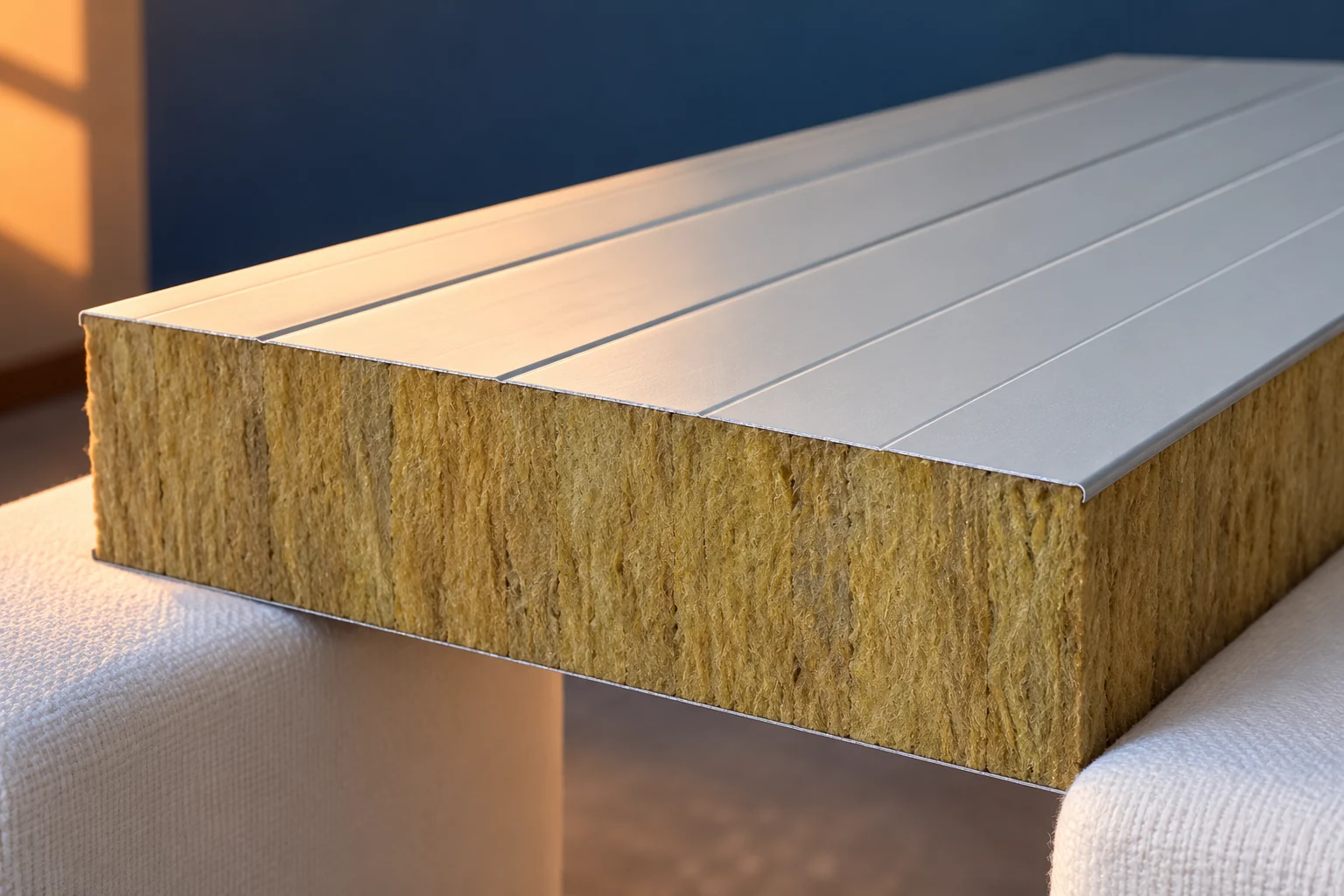
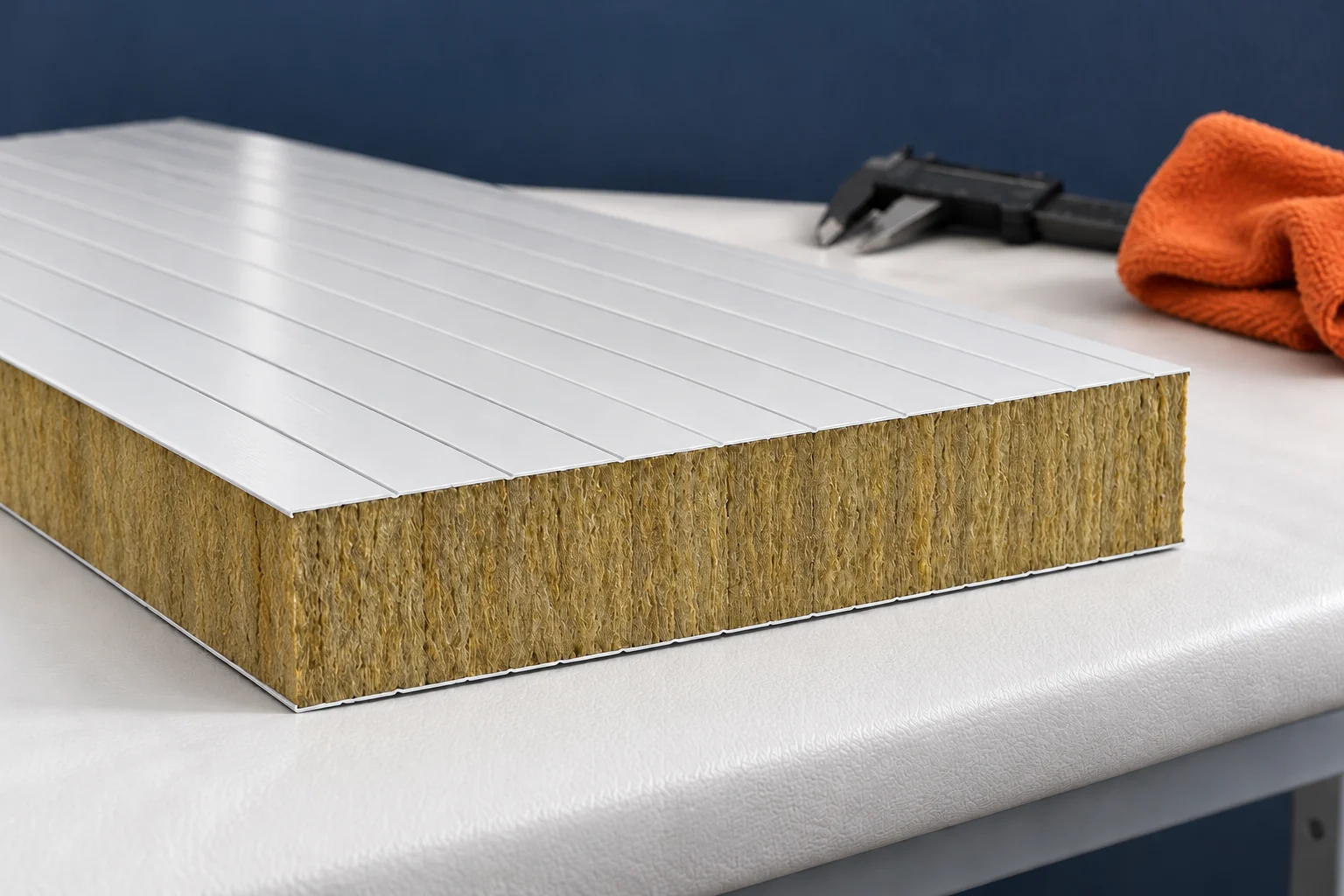
A mineral wool panel combines steel facings with a mineral core. It can be a good choice for specific fire and acoustic requirements. However, it demands attention to weight, transport and protection against moisture. It is worth assessing it against the whole wall, because one favourable parameter does not determine suitability for the building. The facings and core work together as a single element. The panel can form a finished internal and external surface together with the insulation layer. The large format reduces the number of separate operations carried out on site. This is particularly convenient with a regular structural grid.

2026-11-14T09:32:04+01:00

How do you compare the price of insulated wall panels with a mineral wool core per metre of finished wall?

The price per metre of a panel with mineral wool is only one cost item for the wall. You need to add material purchased beyond the usable surface area, flashings and fixings. The weight of the delivery and the method of installation also matter. Two quotes should be compared on the same elevation drawing and with identical technical requirements. The thickness and type of core, the thicknesses of the facings, the coatings, the colour and the method of fixing all matter. Modules and length ranges may also differ. The quote should clearly state the configuration to which it applies.

2026-11-14T09:32:36+01:00

How to plan a wall made of insulated wall panels with a mineral wool core, from dimensions to handover?

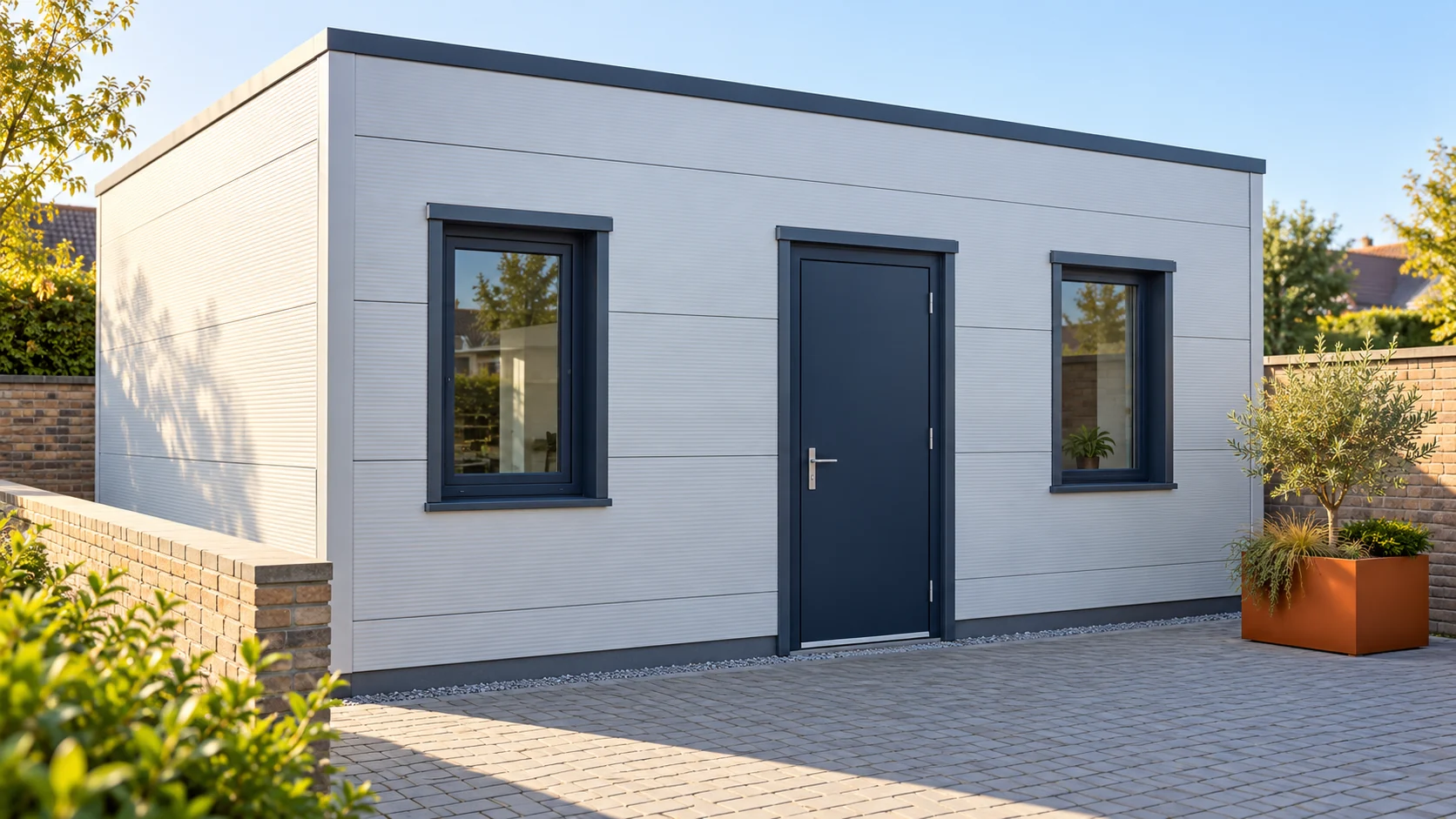
A wall made of panels with mineral wool is built efficiently when its divisions and details have been agreed in advance. Thermal, fire and load-bearing requirements must be combined with the building's dimensions. Most problems arise at openings and edges. A good plan therefore covers the entire system, from the foundation to the connection with the roof. Determine the pattern of use, temperature and humidity. Establish the fire and acoustic requirements. This information allows you to select the panel group that is worth comparing further. Do not start with a random thickness available on promotion.

2026-11-14T09:32:59+01:00

What needs to be checked before choosing an insulated wall panel with 100 mm mineral wool?

A 100 mm panel with mineral wool can appear in many projects, but there is no single common set of parameters. Cores, facings and joints vary. Before purchase, it is worth checking the entire wall solution. Particularly important are the support spacing, openings and the thermal and fire requirements adopted for the building. In an example wall family, a 100 mm panel has a mass of approximately 19.8 kg/m² and a Uc of approximately 0.41 W/(m²·K). Another version of the same thickness may weigh approximately 17.8 kg/m² and have a Uc of approximately 0.40. The data must be linked to the exact facings and product construction.

2026-11-14T09:32:40+01:00

When is it worth choosing wall panels with 150 or 200 mm mineral wool?

Panels with 150 and 200 mm mineral wool can reduce heat loss more than thinner variants of the same family. However, greater thickness changes the weight, reveals and the way the panels connect to the plinth. It also does not automatically mean the highest fire class. The choice should be based on the requirements of the entire wall and the installation conditions. For a specific insulated wall panel with a mineral wool core, a Uc of around 0.27 W/(m²·K) at 150 mm and 0.20 W/(m²·K) at 200 mm can be found. These are data for a specific configuration. A different joint, facings or core family may give different values.

2026-11-14T09:32:37+01:00
Back to top