

Technology and applications
Izoprofil.pl explores how building materials work together. Sandwich panels, PIR insulation and trapezoidal sheets depend on their supports, joints, fixings and drainage. The guides explain how product properties affect use on roofs, walls and insulation assemblies. They help you read the documentation, identify limits and prepare questions for your designer or contractor. You can also look up detailing, common faults and preparing materials for installation. Use the technical issue on your project to choose an article, then check the instructions for your specific product. Similar-looking components may have different requirements.
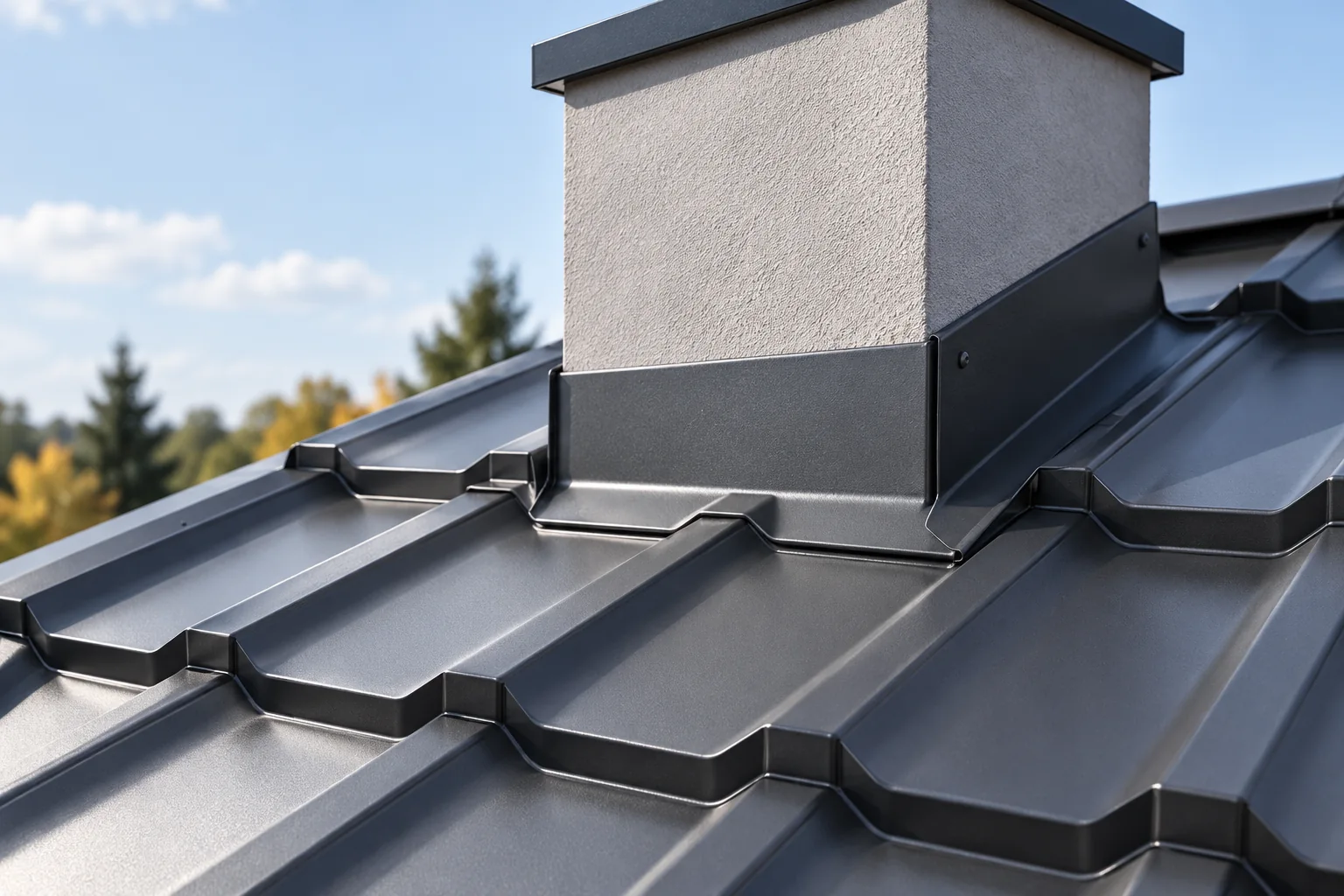
What is chimney flashing and how does it shed water?
Chimney flashing is designed to intercept water running down the roof slope and guide it safely around the chimney before discharging it onto the covering. Before installation, establish not only the chimney dimensions and roof pitch but also the condition of its finish and the roof area above the obstruction – these determine the shape of the detail. Check that water has a clear path along the sides and that no section forms a pocket trapping debris. Sealant alone at the top edge will not replace correct geometry.
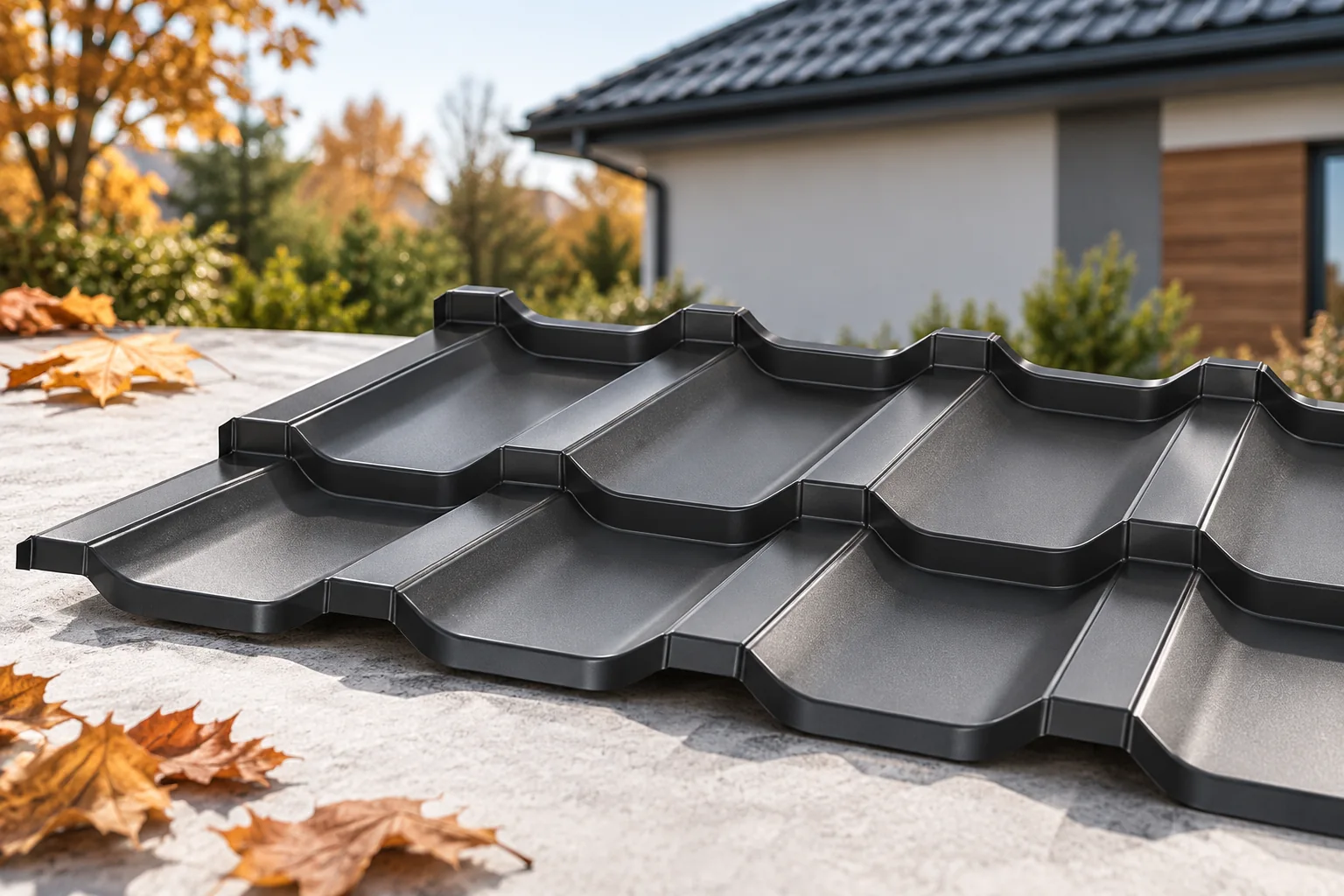
How long can tile-effect steel roofing last?
The service life of tile-effect metal roofing cannot be pinned down with a single figure that applies to every roof. What matters is the steel, the anti-corrosion protection, the coating, the home's surroundings and the quality of installation. The warranty is also not the date on which the covering is due to be replaced. A well-chosen material requires inspections and minor repairs. The owner has the greatest influence on removing dirt, checking water drainage and reacting quickly to damage. Two sheets in the same colour may have different surface protection. They differ in the type of coating, its thickness and the permissible environment of use. Colour does not describe these features. The term "matt sheet" likewise says mainly something about appearance. Resistance to service conditions is demonstrated by the data for the specific variant and the conditions of its use.
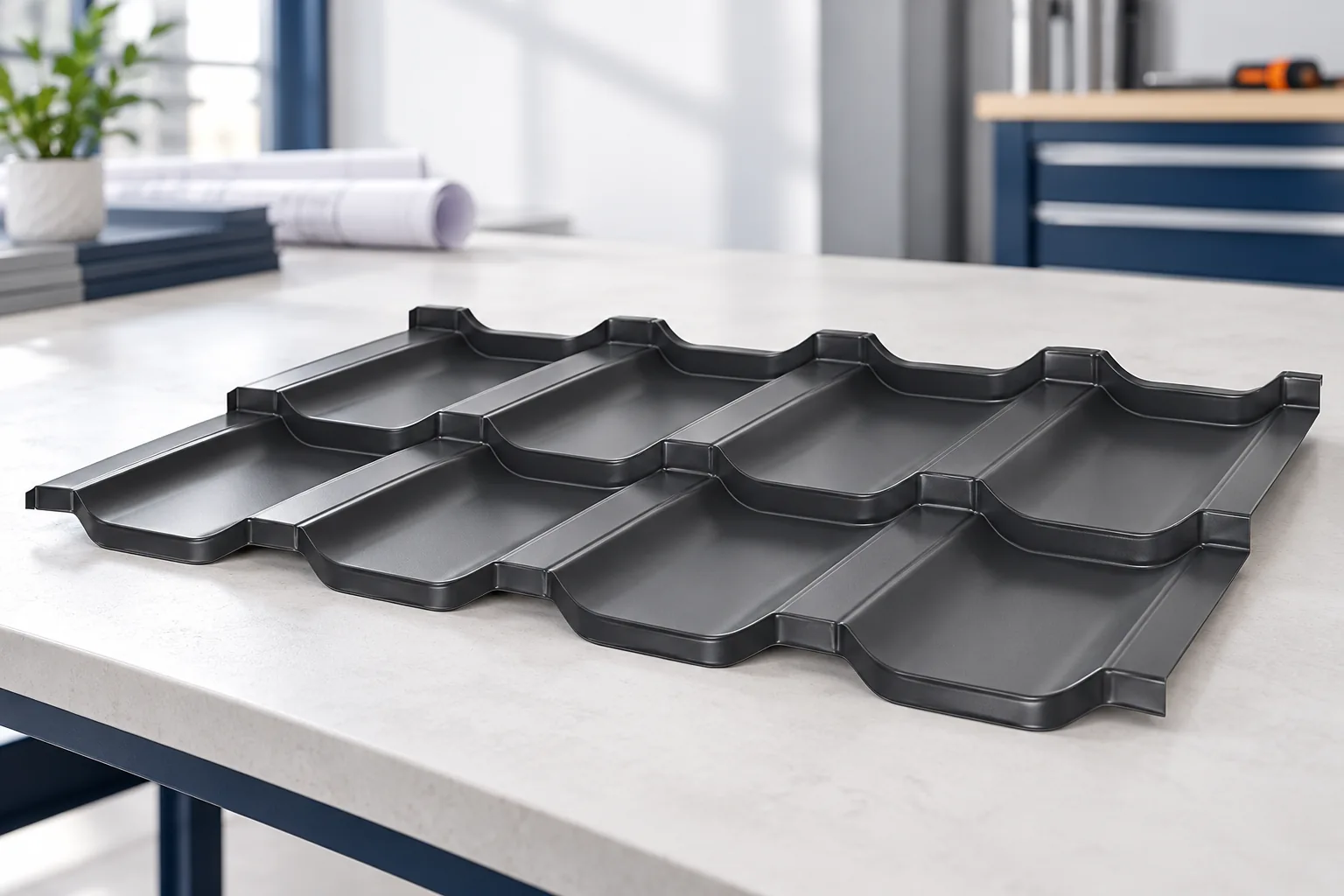
When is a lightweight roof covering worth considering?
A lightweight sheet metal roof covering can make renovation easier and reduce the weight of the outer roof layer. However, it does not mean that the assessment of the structure can be dispensed with. All layers, snow, wind and additional equipment must be taken into account. Low weight also brings benefits in transport, but long sheets still require careful handling. The choice should be based on the entire roof system, not just the kilograms of a single material. The weight depends on the steel thickness, profile and coating. For an example of tile-effect metal roofing cut to size, the data sheet gives approximately 4.7 kg/m². This is the value for a specific product, not for every roof sheet. A high structural sheet or thicker trapezoidal steel sheet may have a different weight.
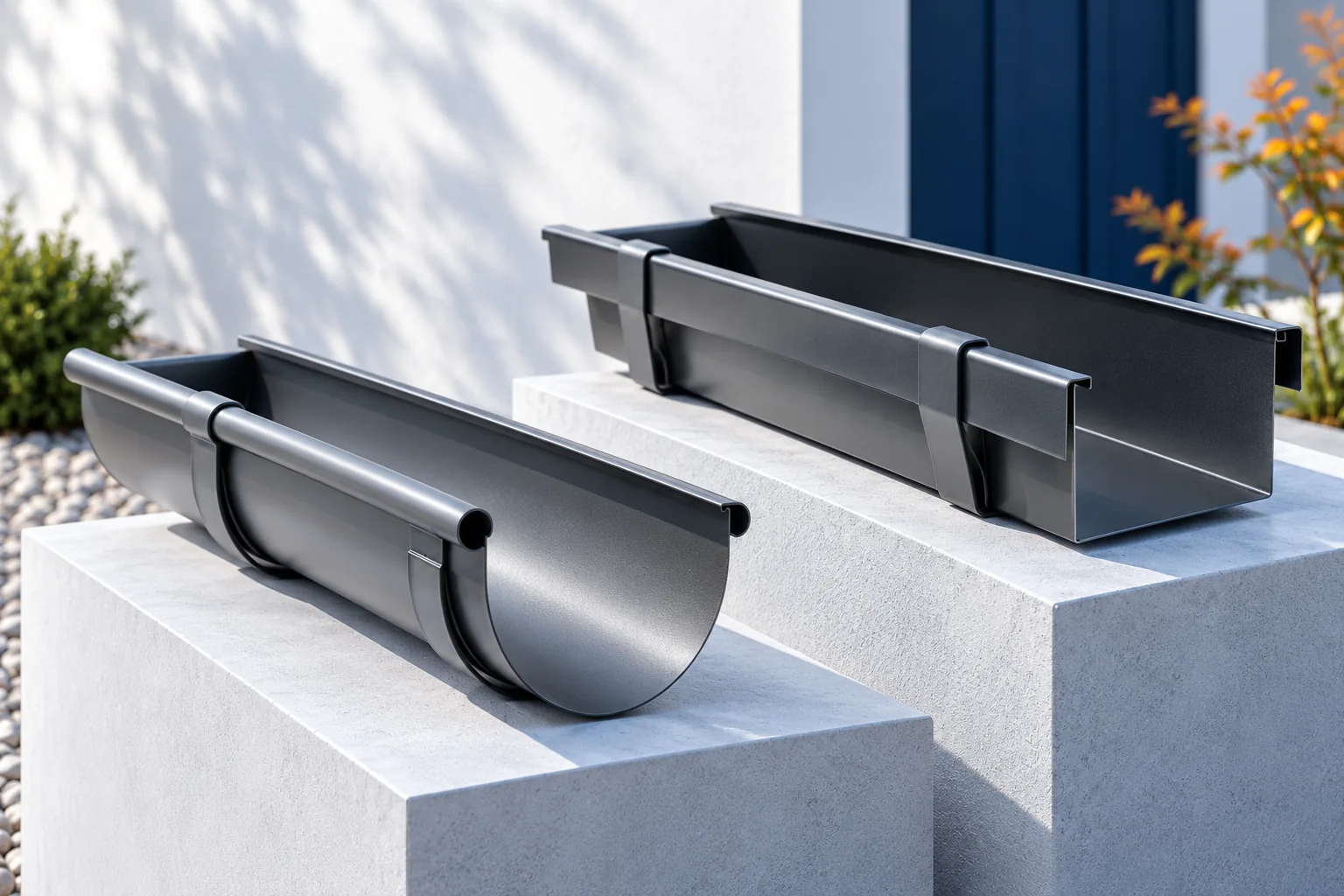
Box or half-round gutters: how to compare the two shapes
The choice between a square and a half-round gutter depends primarily on comparing the cross-section, outlet layout and installation rules of the specific system, not on shape alone. Check whether the available tables or calculations apply to your variant, whether the instructions cover that exact product, and whether cleaning access has been provided for. Compare the complete set with pipes, bends and corners, because a short section shows neither the proportions nor the costs of the whole drainage system.
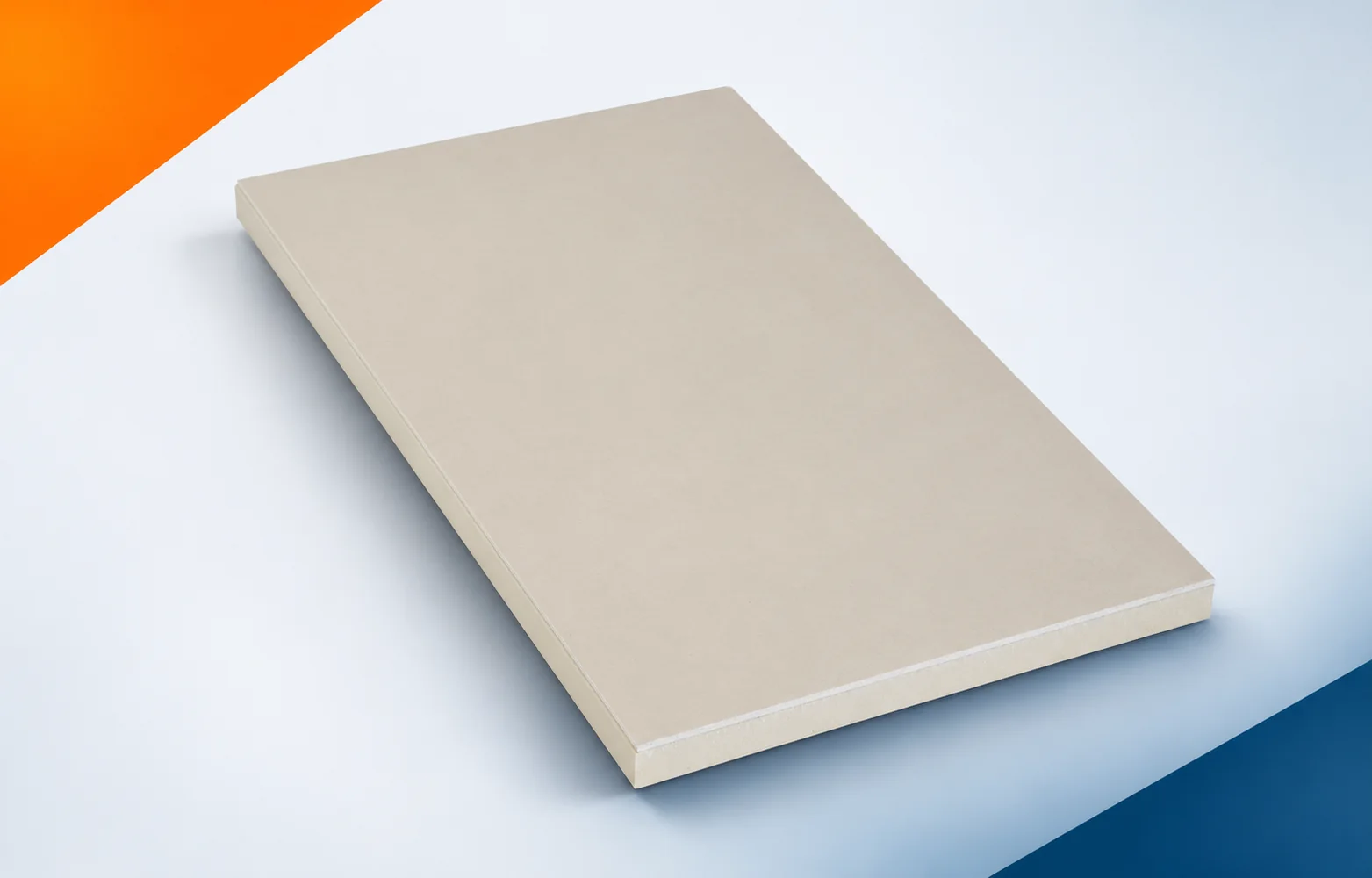
A cold wall in a building under renovation: when to consider Eurothane G
A cold wall requires the cause to be established before it is covered. Eurothane G can improve thermal resistance, but it does not eliminate a leak or rising damp. During renovation, the condition of the masonry must first be assessed, and only then should the internal build-up be selected. Recticel Eurothane G consists of a PIR board faced on both sides with a gas-tight facing and 12.5 mm plasterboard. It is intended for suitable internal insulation applications. During the pre-renovation inspection, check the internal wall lining that combines PIR Eurothane G with 12.5 mm plasterboard. The masonry beneath Eurothane G must be prepared in accordance with its condition and the requirements of the new construction before the scope of demolition is determined and the old partition is prepared.
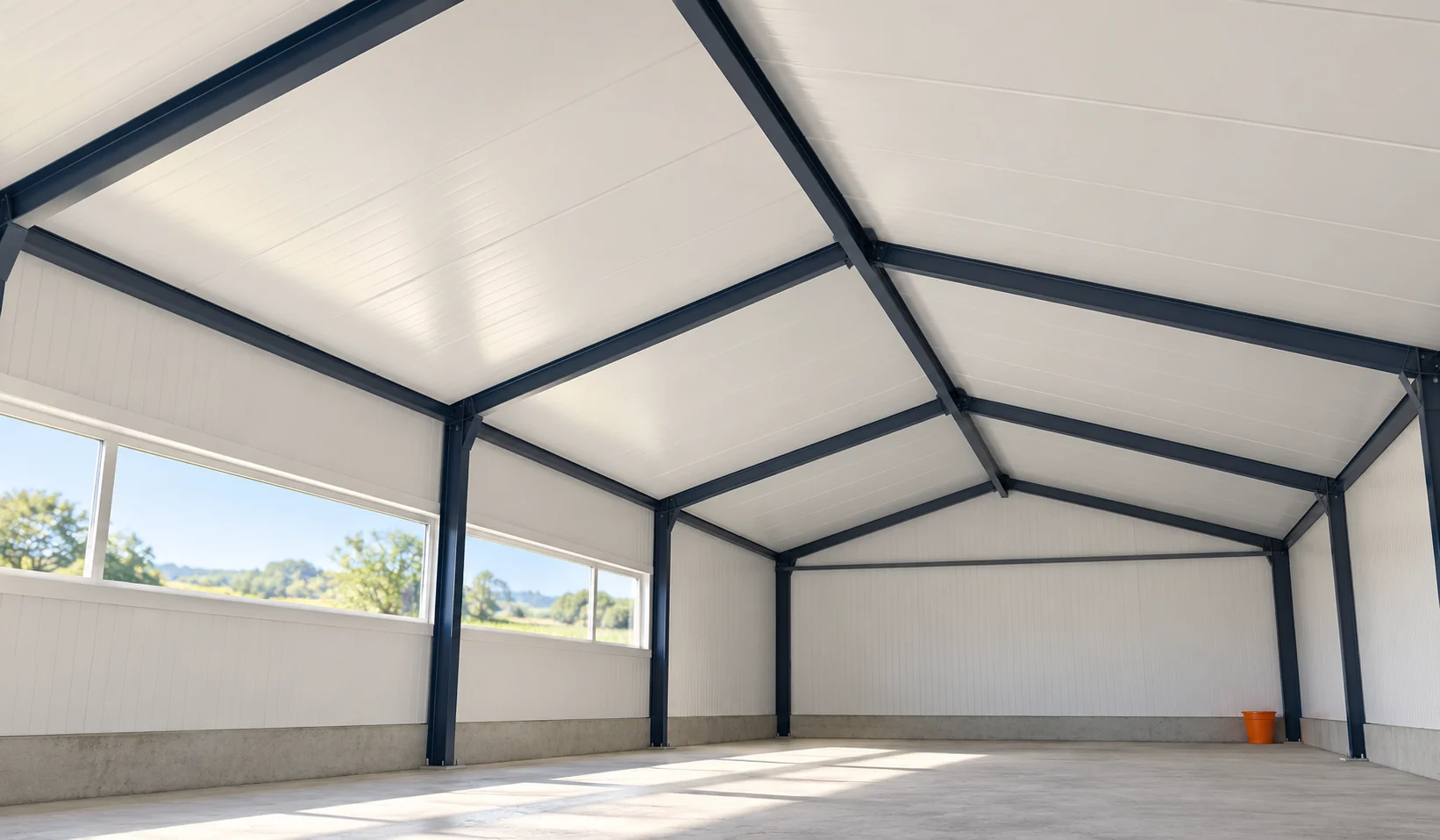
How to assess a composite-faced panel for a humid livestock building?
In a cattle shed, pig house and poultry house, moisture and chemical compounds act from the inside. The choice of facing is therefore just as important as the insulation thickness. A panel with glass-fibre-reinforced composite can be a solution. Its suitability must, however, be confirmed for the specific conditions, cleaning agents and method of installation. In one roof solution, profiled steel is present on the outside and a composite of polyester resin and glass fibre on the inside. Between them is a PUR or PIR core. The glass fibre reinforces the inner facing. It does not mean that the entire core is made of mineral wool.