About PiVi

This author has not yet filled in any details.
So far PiVi has created 1503 blog entries.

Replacing a roof with BIPV: reducing the risk of rain entering the house

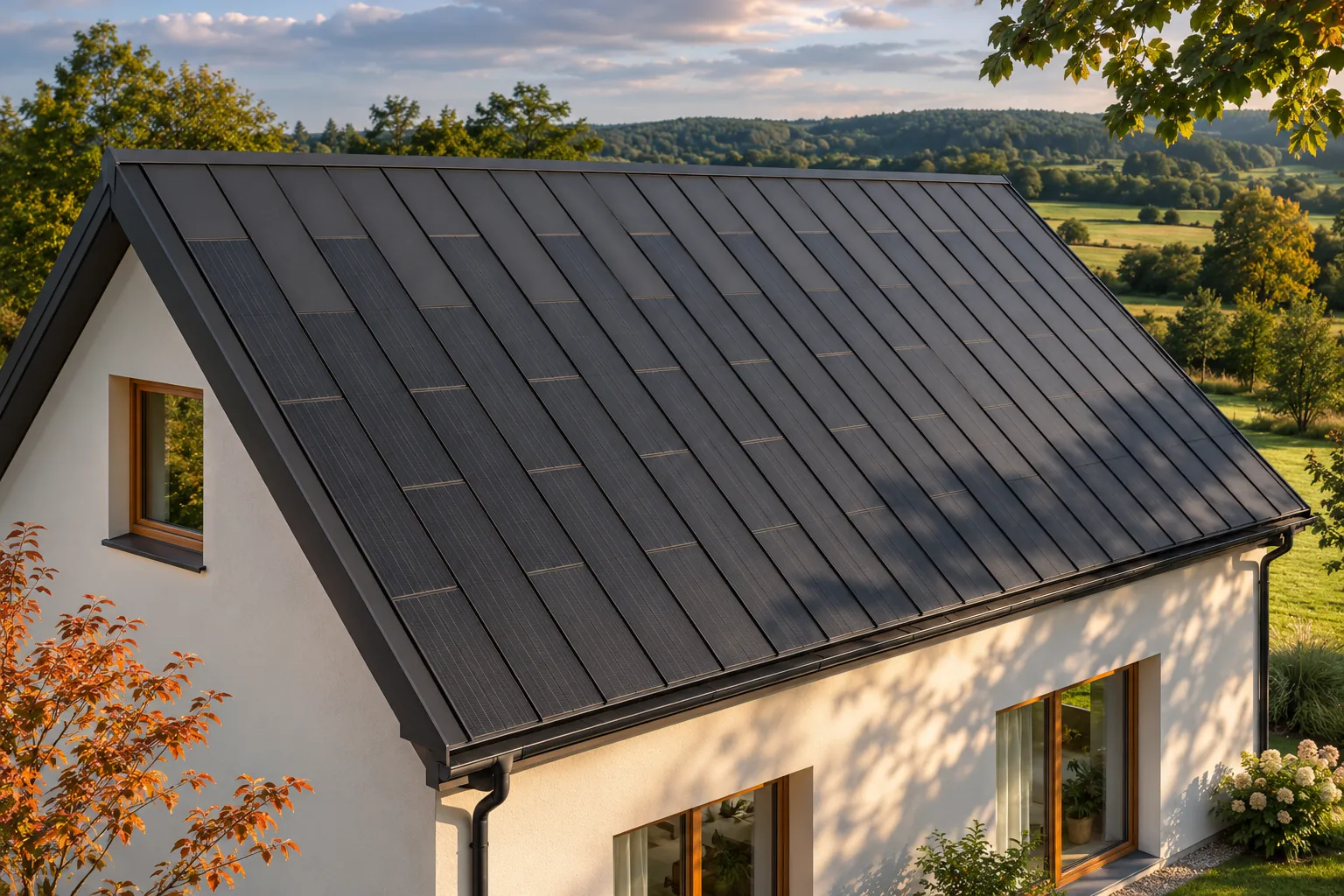
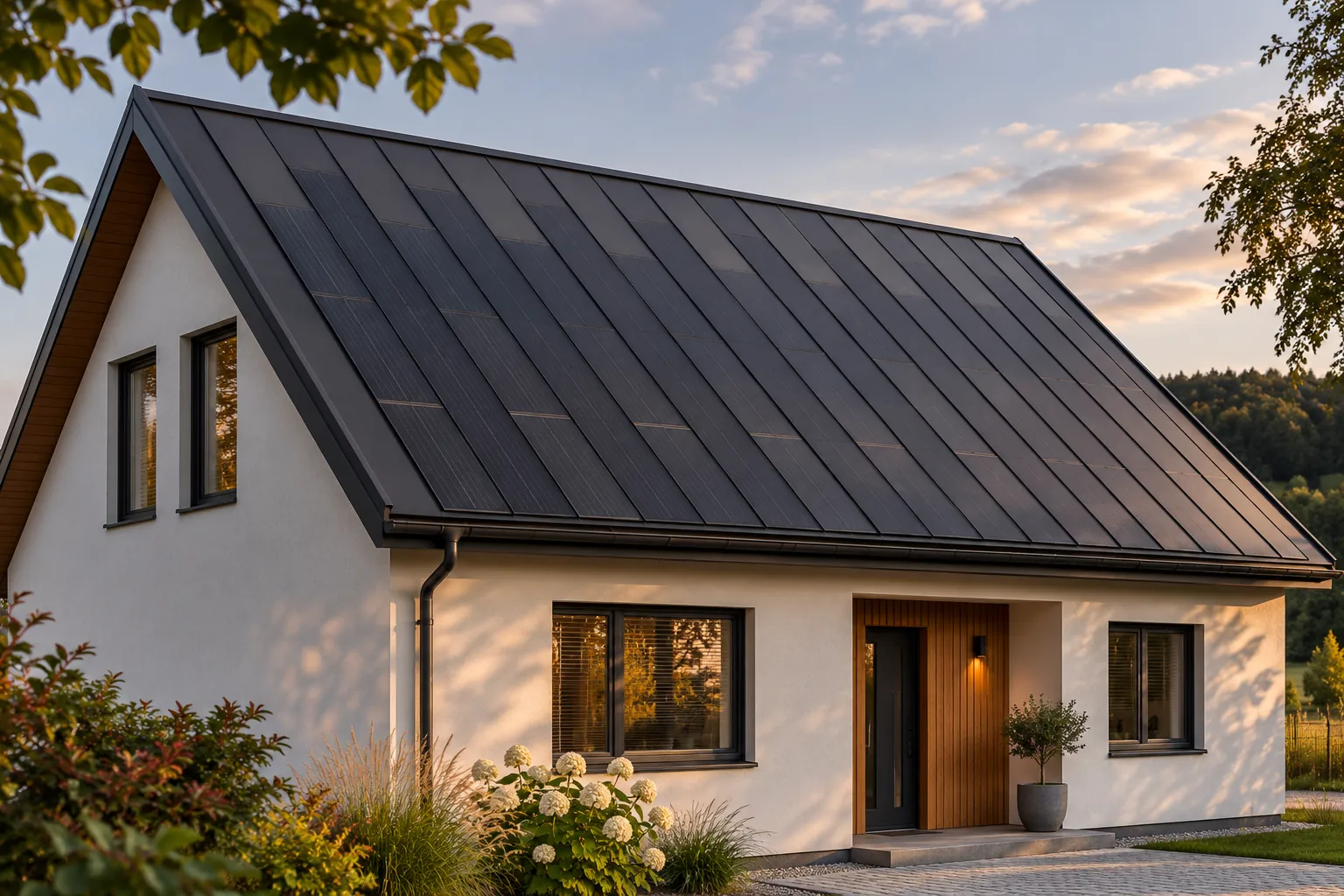
When replacing a roof with a photovoltaic one, the most important thing is to keep control over the exposed surface. The house must not be left without planned protection simply because materials are due to arrive in a few days. BIPV allows the covering and the energy part to be coordinated, but it requires a prepared schedule. The scope of each stage should match the weather, the capacity of the crews and how quickly the building can be effectively protected. Before the old covering is removed, the availability of materials, crews and equipment must be confirmed. Accessories and parts needed to complete the open zone are also important. A missing flashing or other component can prevent the slope from being closed, even though most of the panels are already on site.
By |2026-11-15T17:19:42+01:002024-02-12|Technology and applications|Comments Off on Replacing a roof with BIPV: reducing the risk of rain entering the house

Matt or gloss on metal fence slats? Appearance is only part of the choice

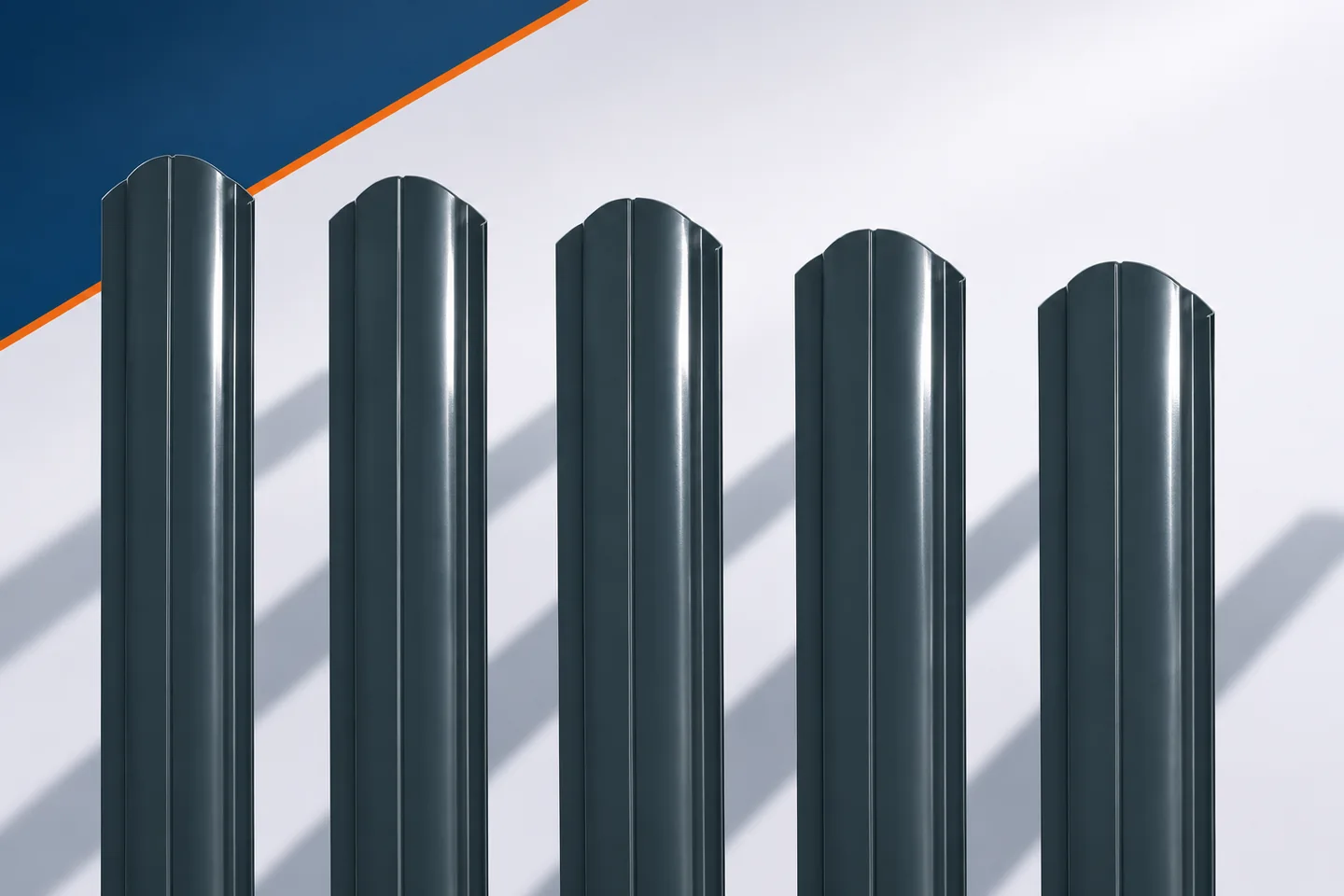
Matt and gloss can distinctly change the appearance of the same profile. One surface shows reflections more strongly, the other creates a calmer impression. This does not, however, result in a simple division into worse and better fence slats. Visual finish must be distinguished from the parameters of the coating system. Metal fence slats can have different protection despite a similar degree of gloss. The right choice combines an assessment of the sample with information about the material and the conditions of its use. On a glossy surface, distinct reflections are easier to notice. Embossings can then stand out more strongly from adjacent fields. Matt gives less intense reflections and can emphasise the overall rhythm of the fence. The effect depends, however, on the angle of light and the colour. It is not worth assessing it solely on a photograph taken under controlled conditions.

By |2026-11-15T17:18:40+01:002024-02-09|Technology and applications|Comments Off on Matt or gloss on metal fence slats? Appearance is only part of the choice

How concealed gutters work and where they make sense

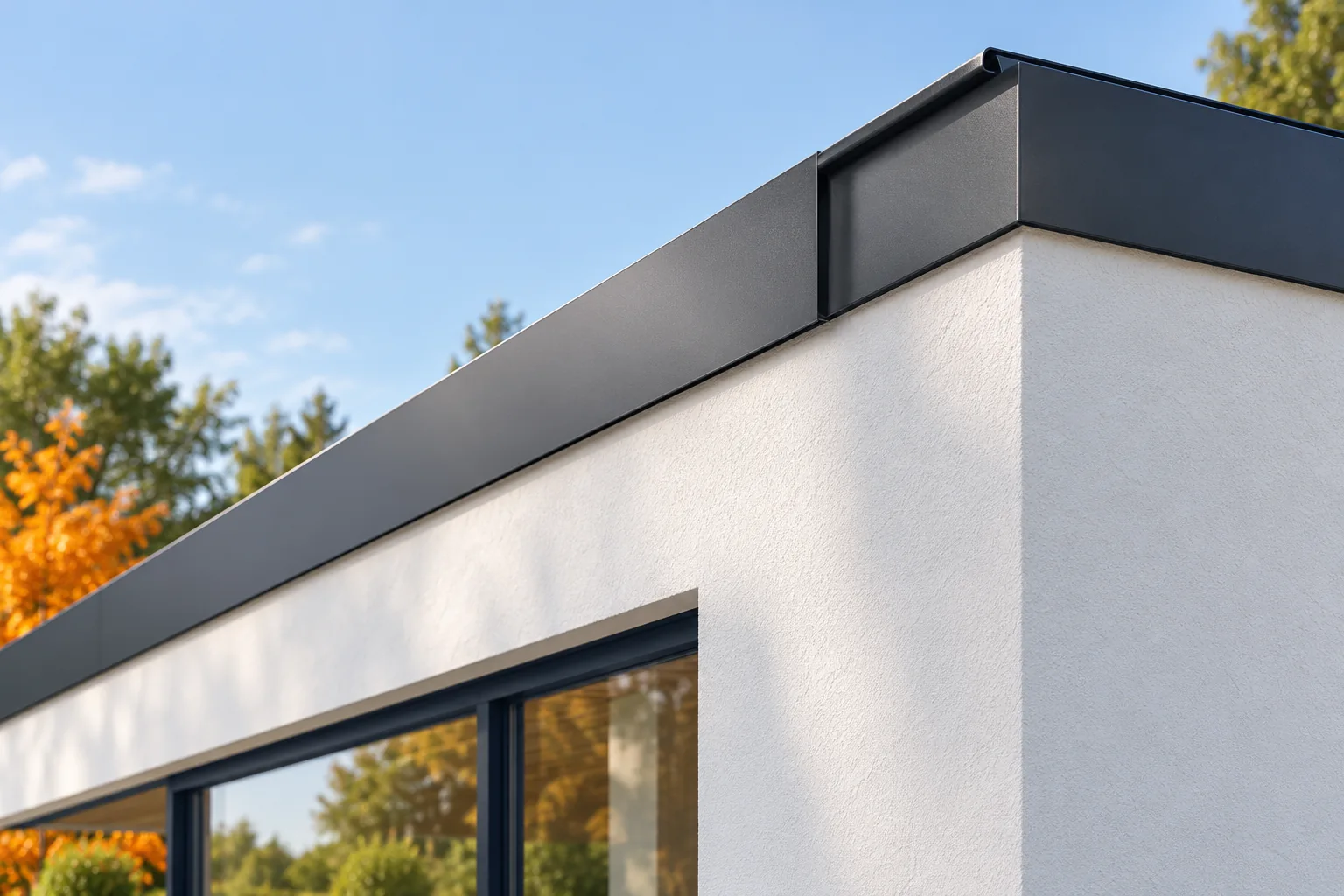
A hidden gutter system works like any roof drainage, but some components are concealed by a cover or cladding. Check whether the path from the roof slope to the outlet is clear, the connections are tight, and service access remains realistic once the façade is finished. It offers the most benefit where the detail can be designed together with the roof and wall, rather than adapted afterwards. Also consider how water behaves if the outlet becomes blocked. The concealed installation still needs inspection and cleaning, so the ability to open access components is essential.

By |2026-11-14T18:54:14+01:002024-01-27|Technology and applications|Comments Off on How concealed gutters work and where they make sense

Estimating the cost of a panel-built house: the envelope and the complete building

A house made of panels requires more than just buying walls and a roof. You need foundations, structure, joinery, services and finishing. The panels must also meet the requirements for a residential building. Therefore, it is worth dividing the budget into clear scopes. This will allow you to see the cost of the enclosure without treating it as the price of a finished house. First, determine the usable floor area, the room layout and the finishing standard. Decide whether the price is to cover a weathertight shell, completed services or a ready-to-move-in interior. These stages do not have the same scope. The floor area on the plan alone does not explain the difference.

By |2026-11-14T12:01:10+01:002024-01-23|Technology and applications|Comments Off on Estimating the cost of a panel-built house: the envelope and the complete building

What role can metal roofing play in an energy-efficient home?

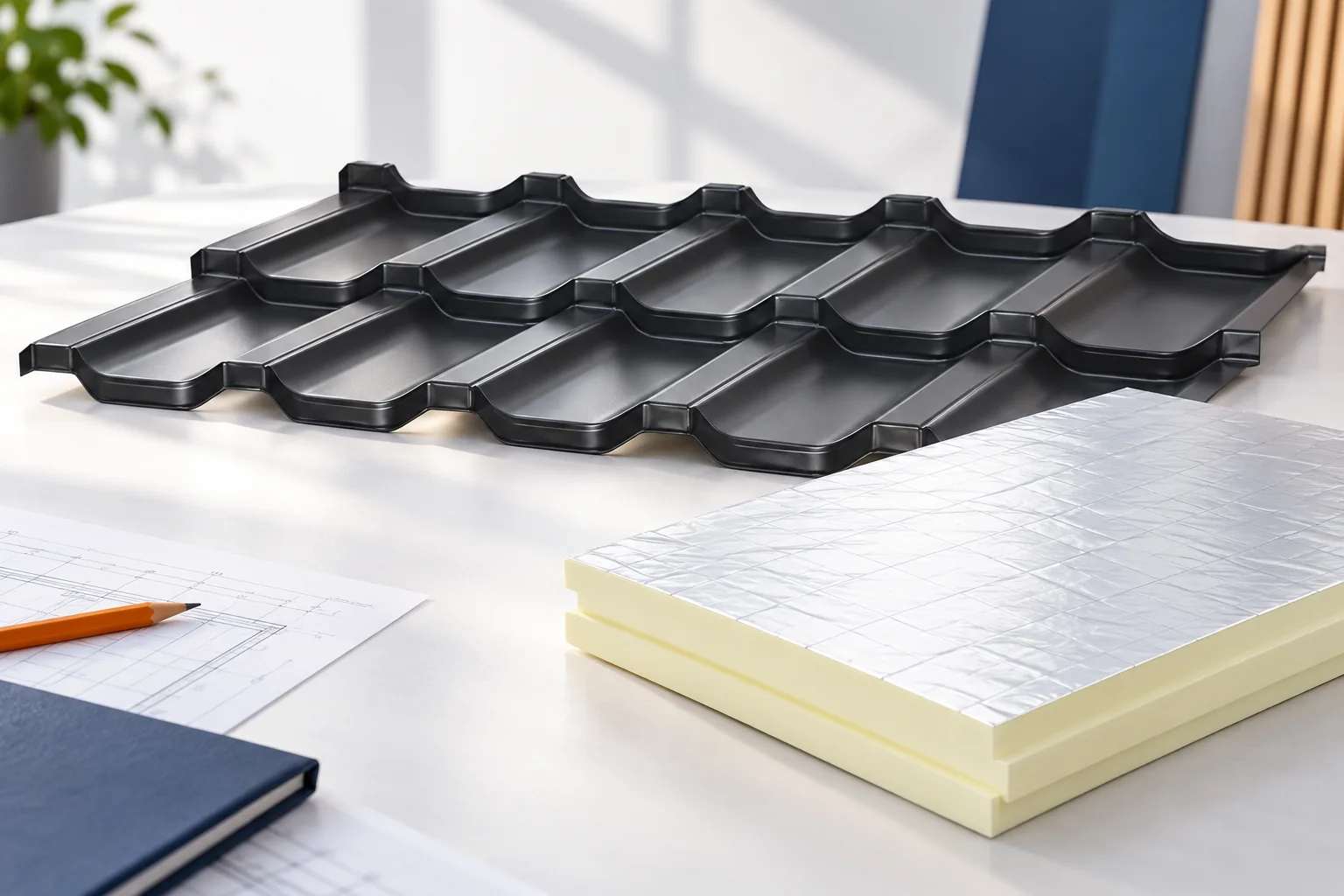
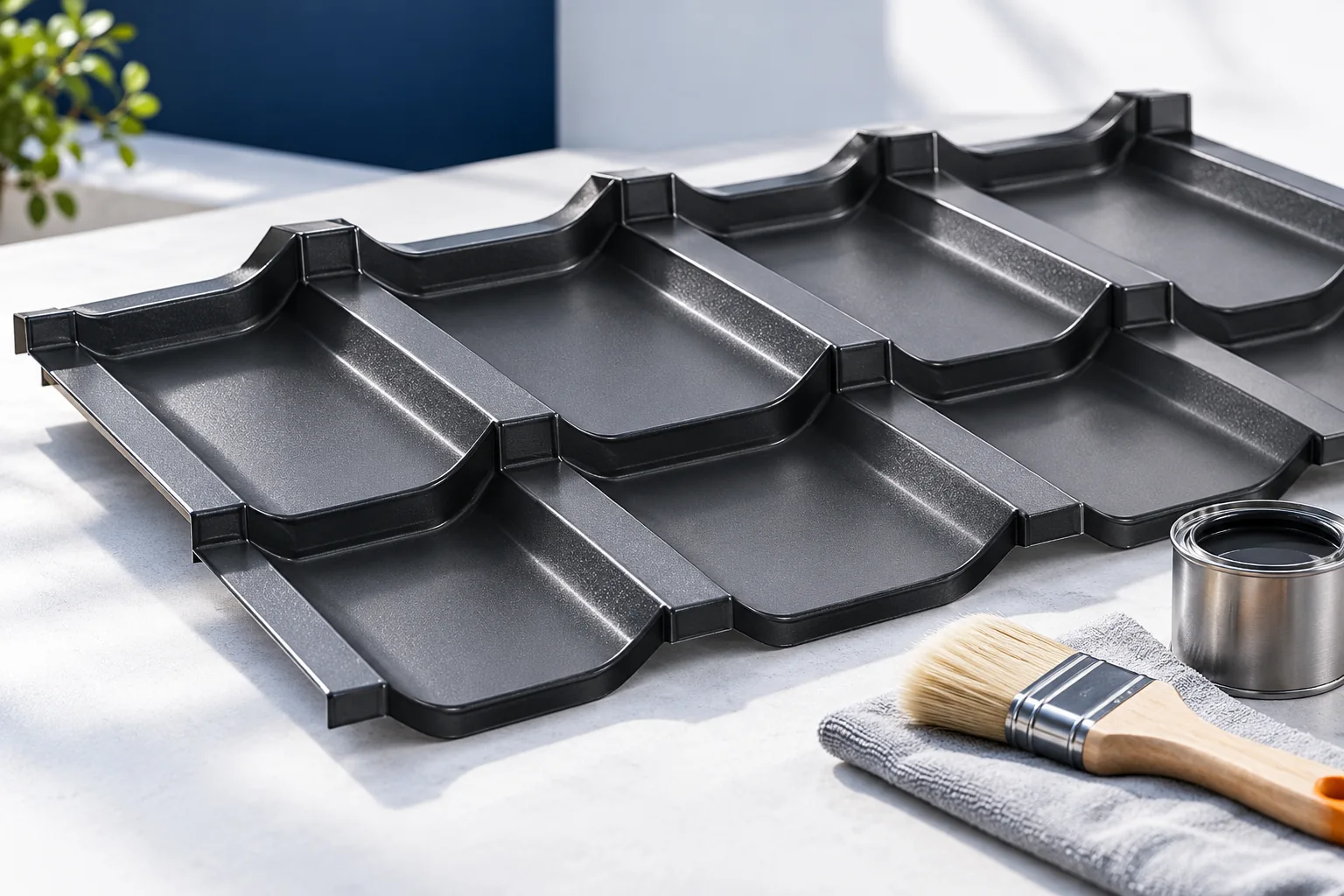
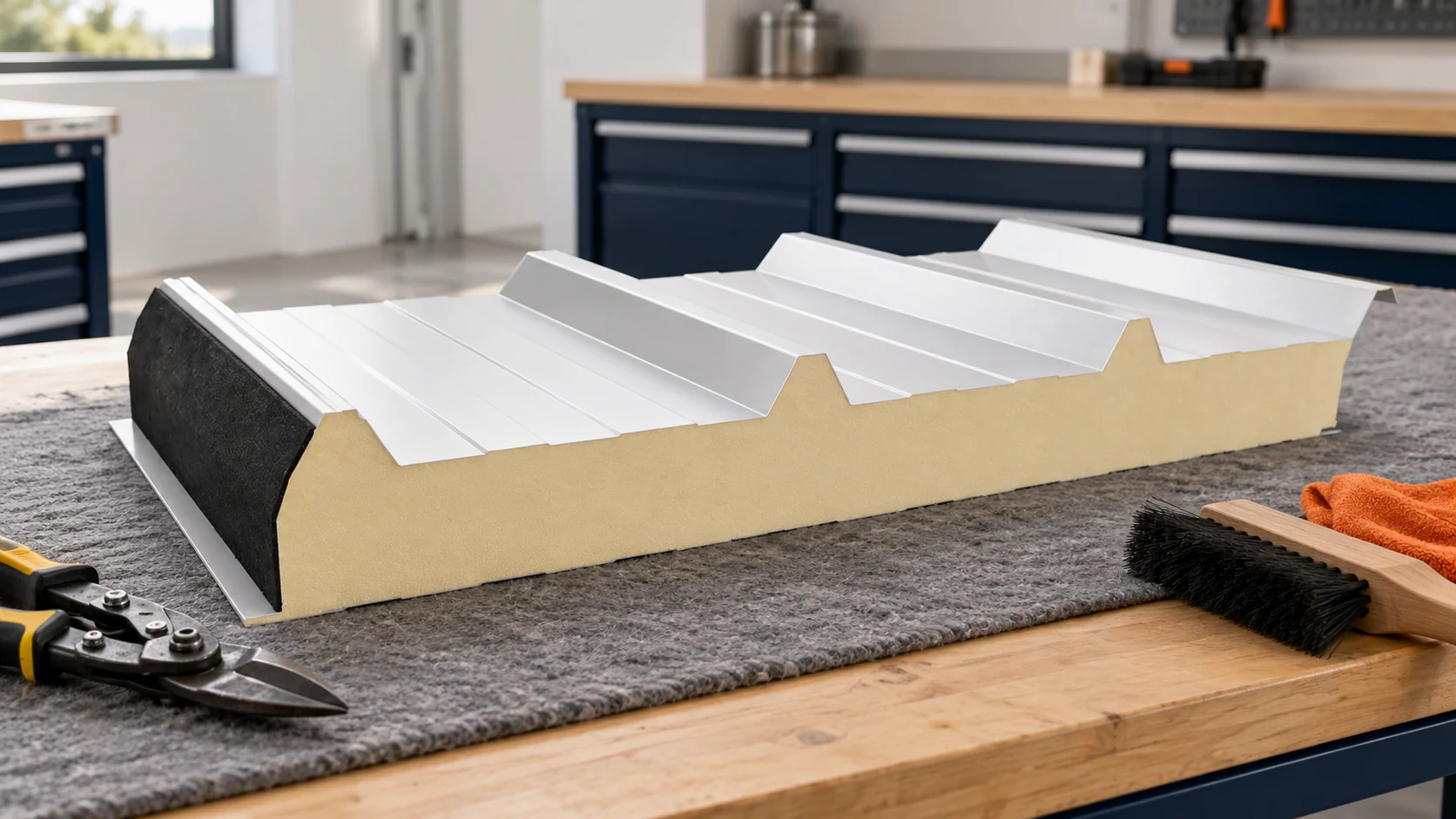
Metal roofing can work well with the roof of an energy-efficient home, but on its own it does not provide thermal insulation. Heat loss is determined by the layers of the building envelope, their continuity and airtightness. PIR boards help achieve high thermal resistance with a smaller thickness. At the same time, thermal bridges, moisture and connections must be resolved. The low weight of the roofing is a structural advantage, not proof of low energy consumption. Tile-effect metal roofing or trapezoidal steel sheet protect the roof from precipitation and form its outer surface. Steel conducts heat well, so a thin sheet is not a thermal insulation layer. In a typical solution, the insulation is located below. Its position and thickness must result from the design of the entire building envelope, not from a declaration concerning the colour or profile of the sheet.

By |2026-11-14T15:40:39+01:002024-01-22|Technology and applications|Comments Off on What role can metal roofing play in an energy-efficient home?

How does single standing seam, double standing seam and snap-lock panel differ?

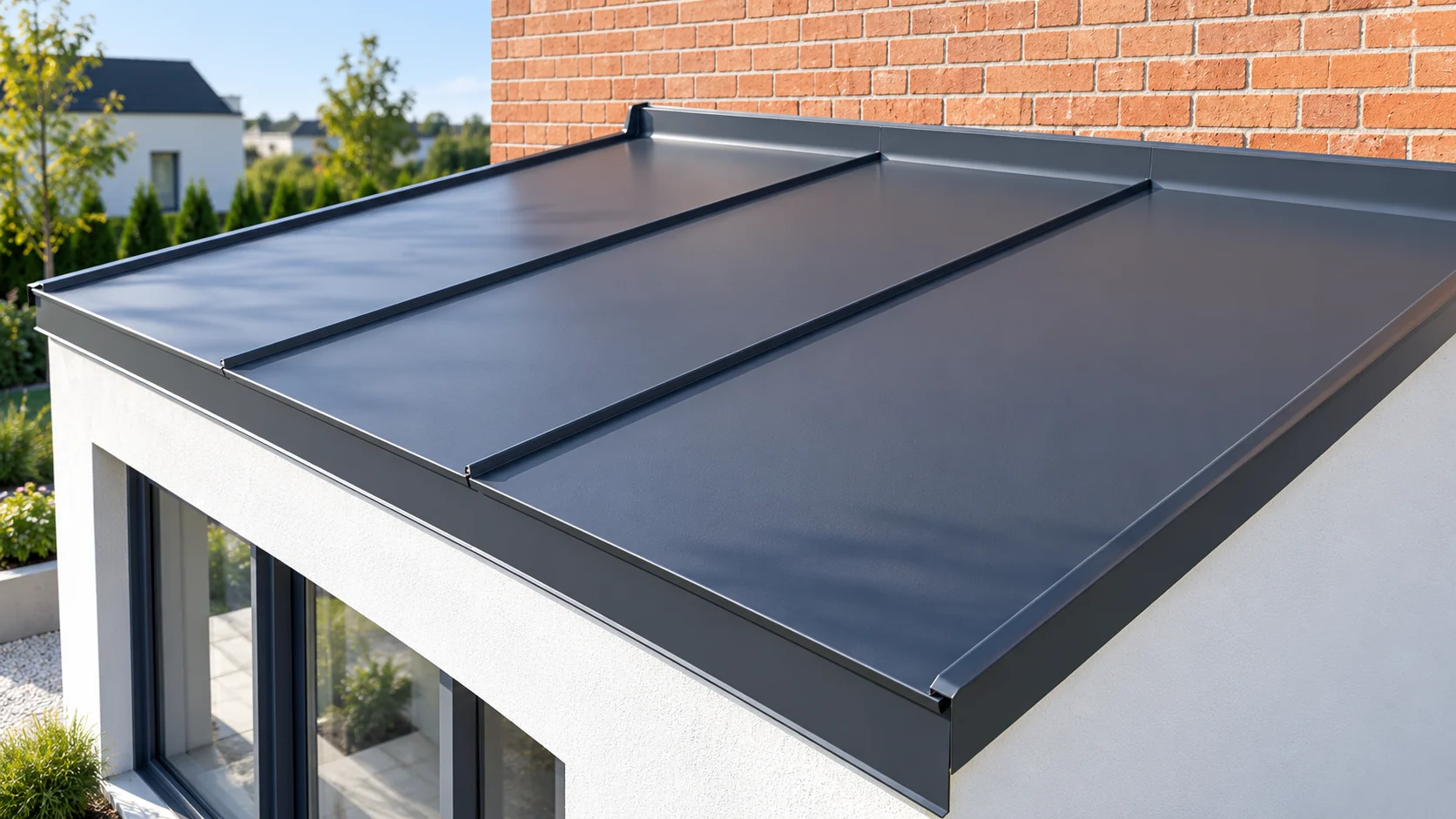
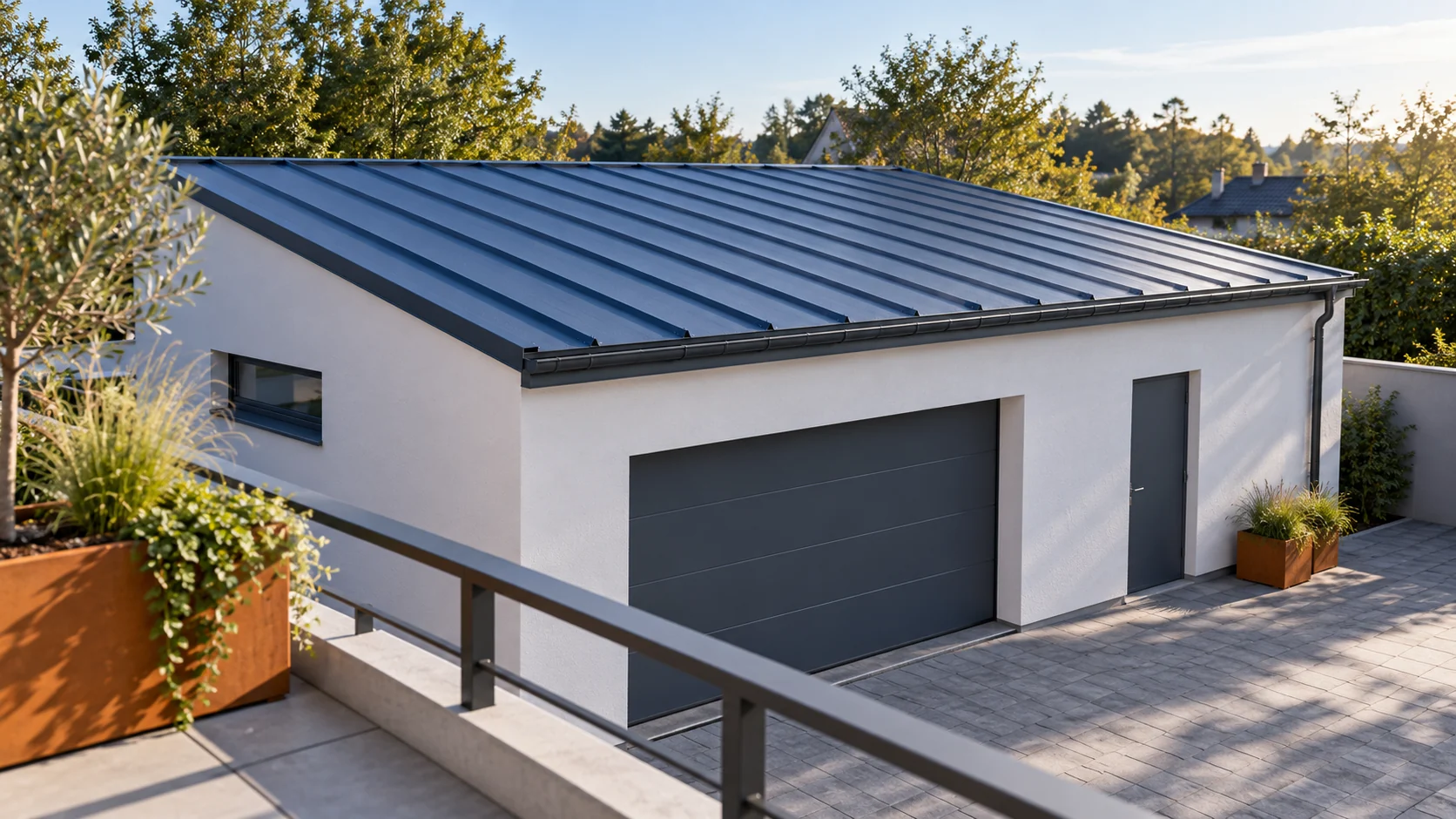
Similar vertical lines on a roof do not mean the same method of joining. A traditional standing seam is formed by folding the edges of the sheet metal. A snap-lock panel has a factory-prepared lock. These solutions differ in installation, details and substrate requirements. The choice must be linked to the roof geometry, not just the appearance. In traditional covering, adjacent strips of sheet metal are joined by appropriately folding their edges. Depending on the solution, a single or double standing seam is formed. The double closure has a more complex joining path. However, it does not mean unconditional tightness of every roof slope.

By |2026-11-14T09:31:14+01:002024-01-13|Technology and applications|Comments Off on How does single standing seam, double standing seam and snap-lock panel differ?

Choosing the roof pitch before ordering insulated panels

The roof pitch must be determined together with the panel type and the layout of its joints. Percentages do not mean the same as degrees. The length of the roof slope, the support heights and the method of water drainage are also needed for the order. The term 'mono-pitch roof' alone is not enough to correctly select the material and prepare the flashings. Pitch in percent describes the ratio of the height difference to the horizontal distance. It is not divided by the panel length measured along the slope. First, determine two points on the same line of water flow. Record their elevations and the horizontal distance. Measuring the edge of the flashing alone can be misleading, because its top line does not have to coincide with the plane of the covering.

By |2026-11-14T15:38:30+01:002024-01-08|Technology and applications|Comments Off on Choosing the roof pitch before ordering insulated panels

How should you prepare the route for PV cables in a finished house?

In a finished house, the route for the cables from the photovoltaic roof should be planned before renovation work begins. What matters is installation safety, the tightness of the building envelope and limiting later chasing. Integrated roofing offers an opportunity to coordinate the roofing work with the electrical work. Cables can be routed through agreed locations before the roof is closed. First, however, the entire connection path must be established, right through to the relevant devices and the distribution board. The shortest distance is not always the best installation route. The conditions for routing the cables, the penetrations through building components and the ability to inspect them must be taken into account. Temperature, moisture and the risk of mechanical damage also matter. The designer should assess the entire route, not just a straight line from the roof slope to the technical room.

By |2026-11-15T17:19:49+01:002024-01-05|Technology and applications|Comments Off on How should you prepare the route for PV cables in a finished house?

Preventing corrosion on metal roofing, from cut edges to repairs

Protecting a metal roof against corrosion depends above all on whether the chosen coating suits the actual conditions around the building and beneath the covering. It is worth checking the coating's intended use, how edges and fixings are protected, and whether water can drain freely, rather than relying solely on the thickness of the coloured layer or the length of the guarantee. Moisture, contamination and lingering metal filings increase the risk. Regular inspection of details and prompt repair of minor damage using a method permitted for the given surface help catch problems at an early stage.

By |2026-11-15T02:33:42+01:002024-01-02|Technology and applications|Comments Off on Preventing corrosion on metal roofing, from cut edges to repairs

How to spot panel installation errors before they are covered up?

Some errors are visible immediately, but others disappear under the next panel or flashing. Inspection should therefore accompany installation. It is worth checking geometry, support, seals and the condition of coatings in a set order. A final look at a neat façade will not tell you everything about the quality of hidden joints. The cause may be taking the dimension of the structural axis instead of the length resulting from the detail. Another problem is omitting the plinth, eaves or corner thickness. Before ordering, it is worth comparing the plan, section and actual measurement. Each shows a different part of the geometry.

By |2026-11-14T12:01:27+01:002023-12-22|Technology and applications|Comments Off on How to spot panel installation errors before they are covered up?
Back to top