Corrugated fibre cement roofing at a wall: planning the flashing

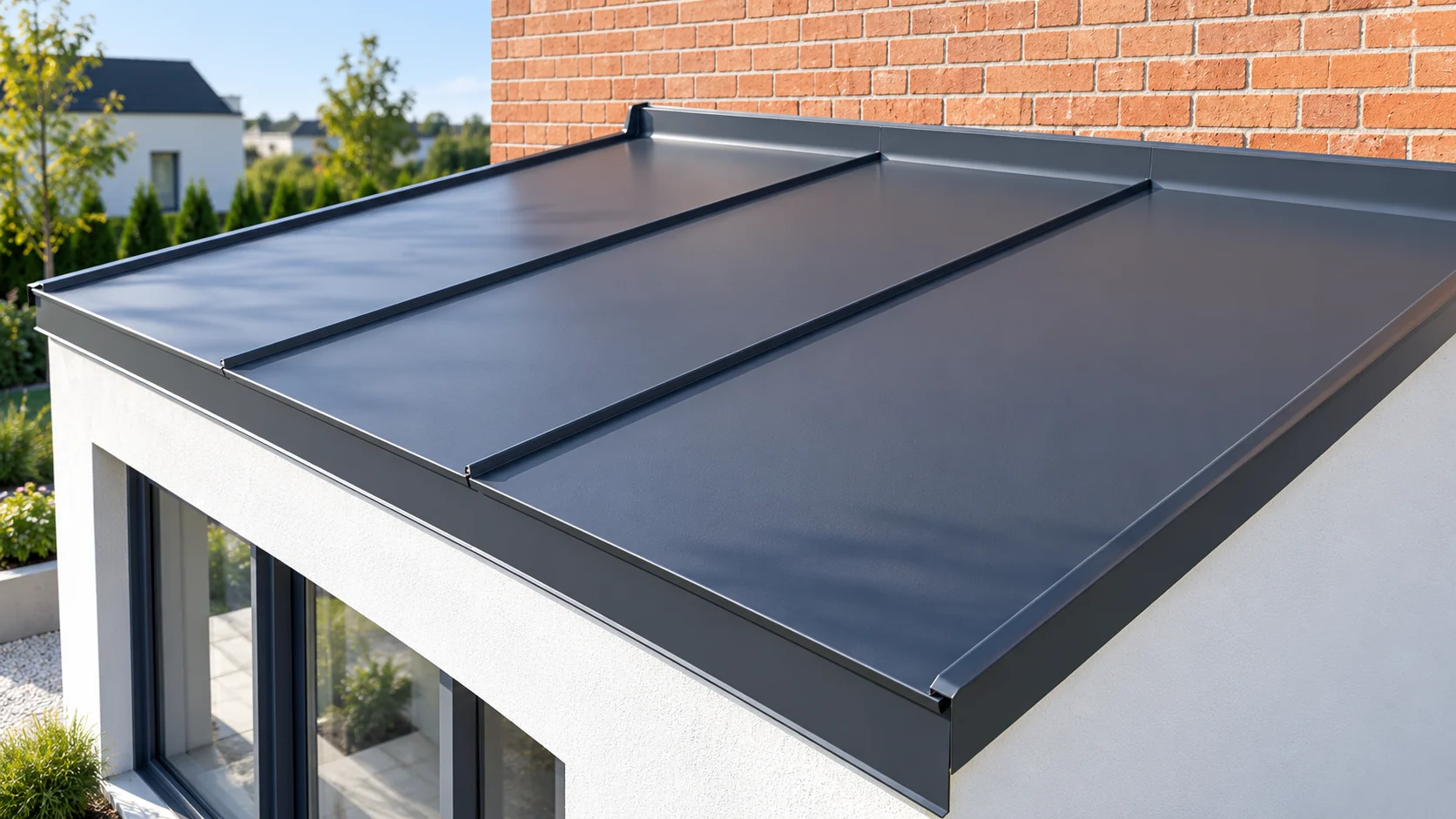
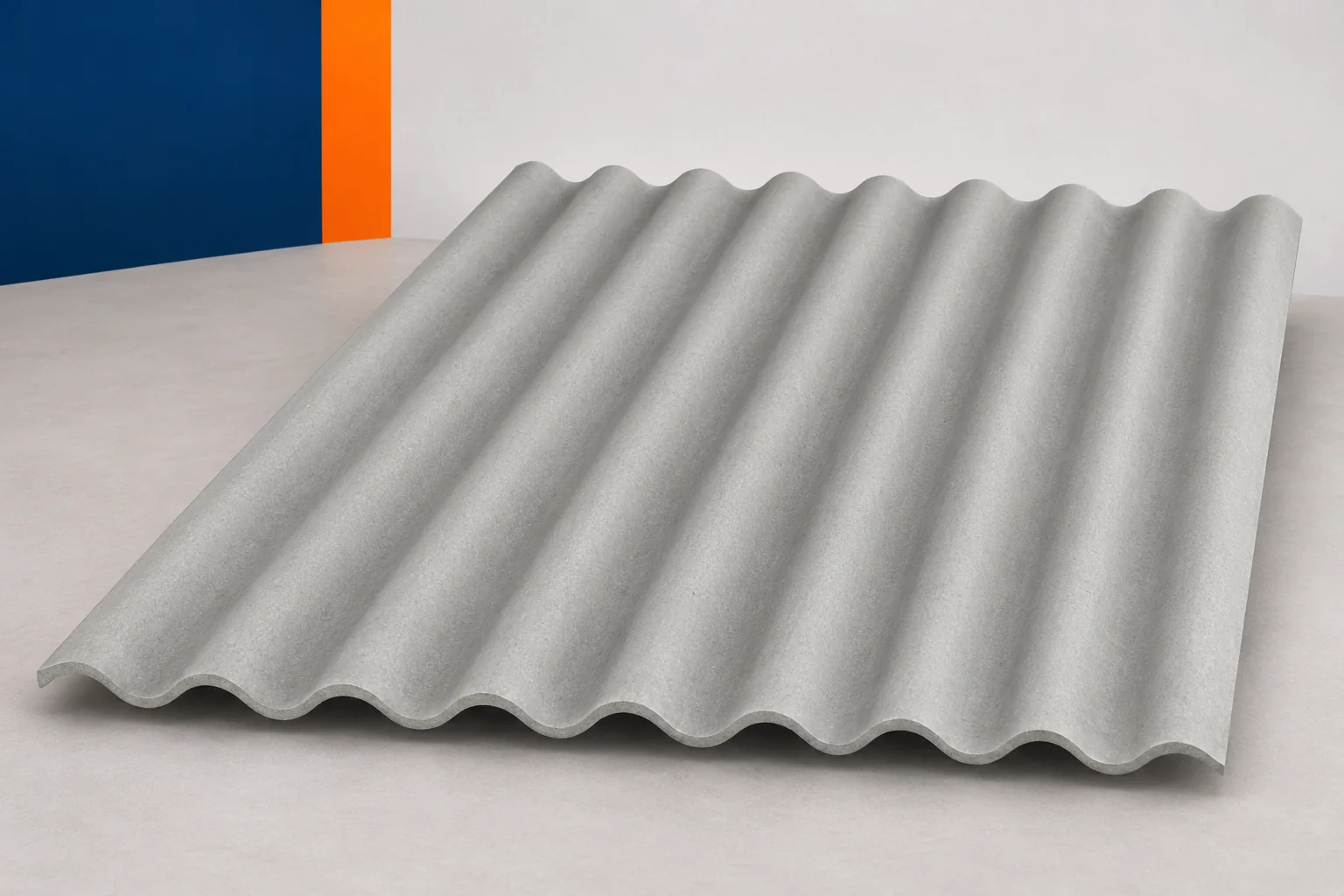
The junction of the roof slope with the wall requires more attention than a simple overlap of two sheets. Water runs off different surfaces here, and wind can force it under the flashing. Fibre cement sheets should end at a planned position, with adequate support and protection. Asbestos-free fibre cement will not seal such a junction with the corrugation alone. A detail is needed that takes into account the shape of the wall, the direction of fall and the layers of the roof and façade. The wall may run along the roof slope or be located above its upper edge. These situations have a different direction of run-off and require a different flashing geometry. At the side, water moves along the junction. At the top closure, the ends of the corrugations and any air outlet must be protected.
By |2026-11-16T00:08:40+01:002024-02-26|Technology and applications|Comments Off on Corrugated fibre cement roofing at a wall: planning the flashing

What to check on your roof in autumn

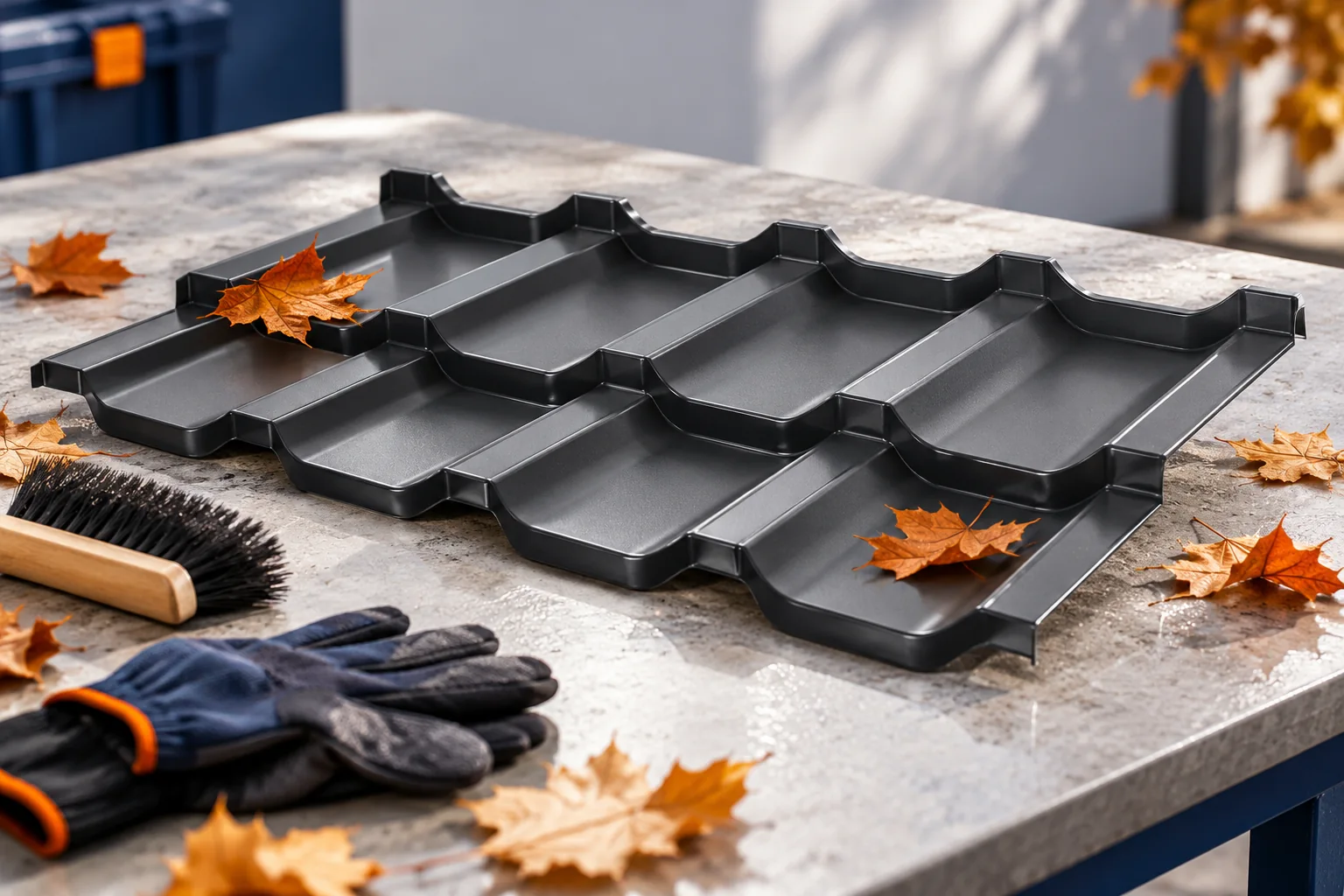
An autumn roof inspection should begin by identifying which elements are most exposed to standing water and debris. Check above all that gutters, valleys and outlets are clear, and assess the condition of flashings at chimneys and walls. Do not rely on a ground-level view alone – inspect the roof from accessible, safe positions, noting displaced flashings, unevenness and loose items. Photographs from the previous season are helpful for spotting changes. Bear in mind that the scope of the inspection should match the roofing and the building's conditions.

By |2026-11-15T02:34:46+01:002024-02-18|Technology and applications|Comments Off on What to check on your roof in autumn

What role can metal roofing play in an energy-efficient home?

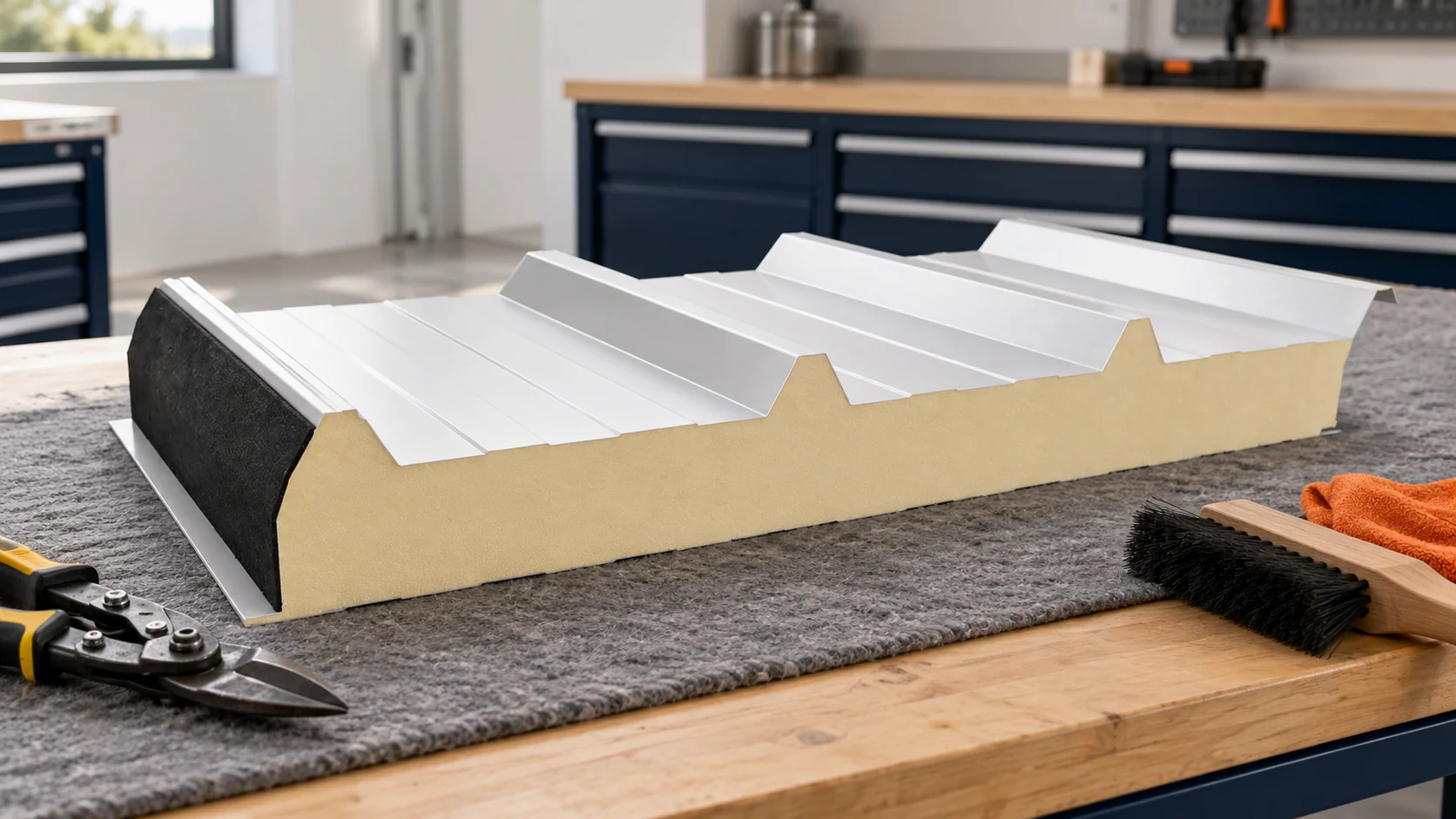
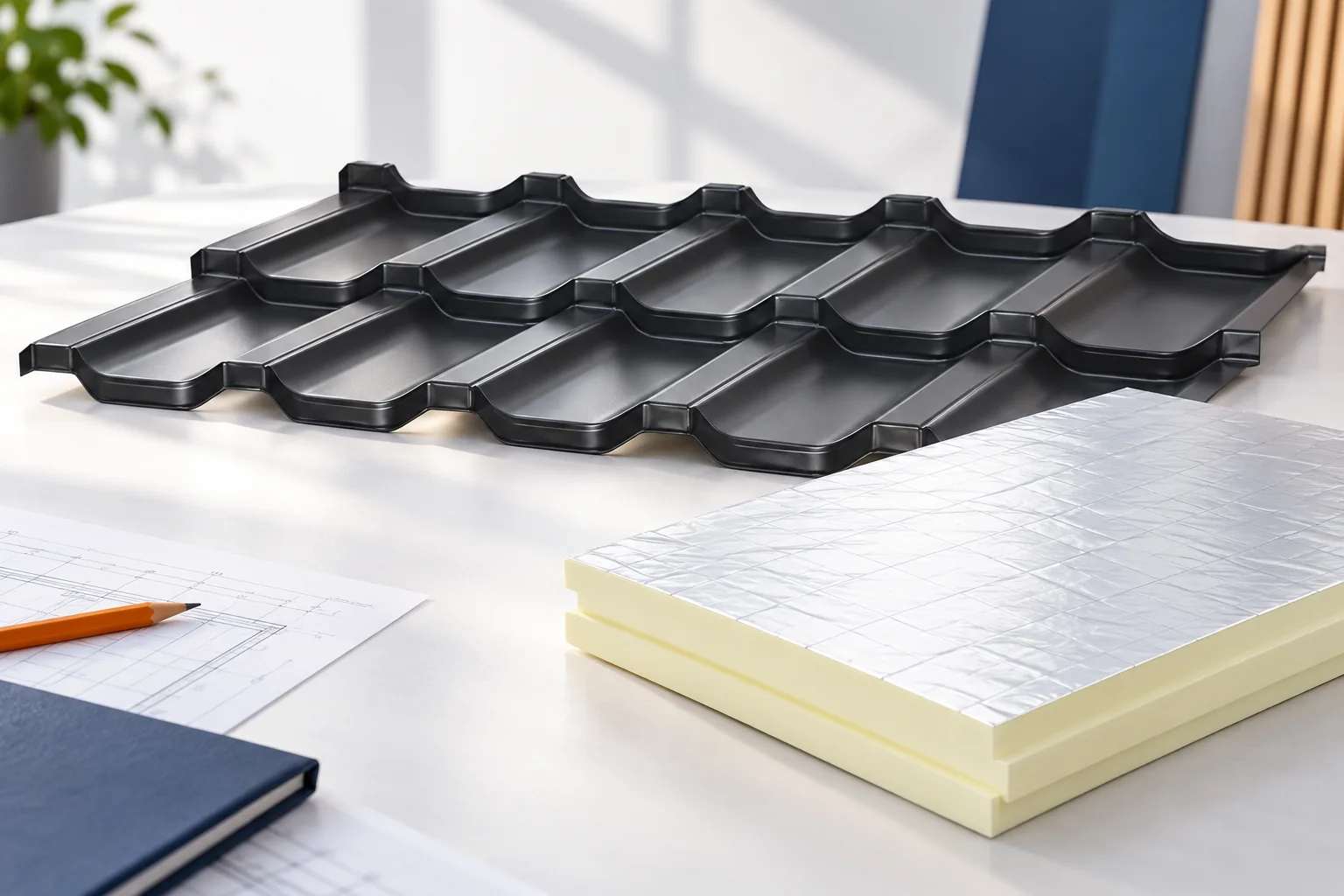
Metal roofing can work well with the roof of an energy-efficient home, but on its own it does not provide thermal insulation. Heat loss is determined by the layers of the building envelope, their continuity and airtightness. PIR boards help achieve high thermal resistance with a smaller thickness. At the same time, thermal bridges, moisture and connections must be resolved. The low weight of the roofing is a structural advantage, not proof of low energy consumption. Tile-effect metal roofing or trapezoidal steel sheet protect the roof from precipitation and form its outer surface. Steel conducts heat well, so a thin sheet is not a thermal insulation layer. In a typical solution, the insulation is located below. Its position and thickness must result from the design of the entire building envelope, not from a declaration concerning the colour or profile of the sheet.

By |2026-11-14T15:40:39+01:002024-01-22|Technology and applications|Comments Off on What role can metal roofing play in an energy-efficient home?

How does single standing seam, double standing seam and snap-lock panel differ?

Similar vertical lines on a roof do not mean the same method of joining. A traditional standing seam is formed by folding the edges of the sheet metal. A snap-lock panel has a factory-prepared lock. These solutions differ in installation, details and substrate requirements. The choice must be linked to the roof geometry, not just the appearance. In traditional covering, adjacent strips of sheet metal are joined by appropriately folding their edges. Depending on the solution, a single or double standing seam is formed. The double closure has a more complex joining path. However, it does not mean unconditional tightness of every roof slope.

By |2026-11-14T09:31:14+01:002024-01-13|Technology and applications|Comments Off on How does single standing seam, double standing seam and snap-lock panel differ?

Preventing corrosion on metal roofing, from cut edges to repairs

Protecting a metal roof against corrosion depends above all on whether the chosen coating suits the actual conditions around the building and beneath the covering. It is worth checking the coating's intended use, how edges and fixings are protected, and whether water can drain freely, rather than relying solely on the thickness of the coloured layer or the length of the guarantee. Moisture, contamination and lingering metal filings increase the risk. Regular inspection of details and prompt repair of minor damage using a method permitted for the given surface help catch problems at an early stage.

By |2026-11-15T02:33:42+01:002024-01-02|Technology and applications|Comments Off on Preventing corrosion on metal roofing, from cut edges to repairs

How to spot panel installation errors before they are covered up?

Some errors are visible immediately, but others disappear under the next panel or flashing. Inspection should therefore accompany installation. It is worth checking geometry, support, seals and the condition of coatings in a set order. A final look at a neat façade will not tell you everything about the quality of hidden joints. The cause may be taking the dimension of the structural axis instead of the length resulting from the detail. Another problem is omitting the plinth, eaves or corner thickness. Before ordering, it is worth comparing the plan, section and actual measurement. Each shows a different part of the geometry.

By |2026-11-14T12:01:27+01:002023-12-22|Technology and applications|Comments Off on How to spot panel installation errors before they are covered up?

Profiled tile-effect metal roofing: characteristics and applications

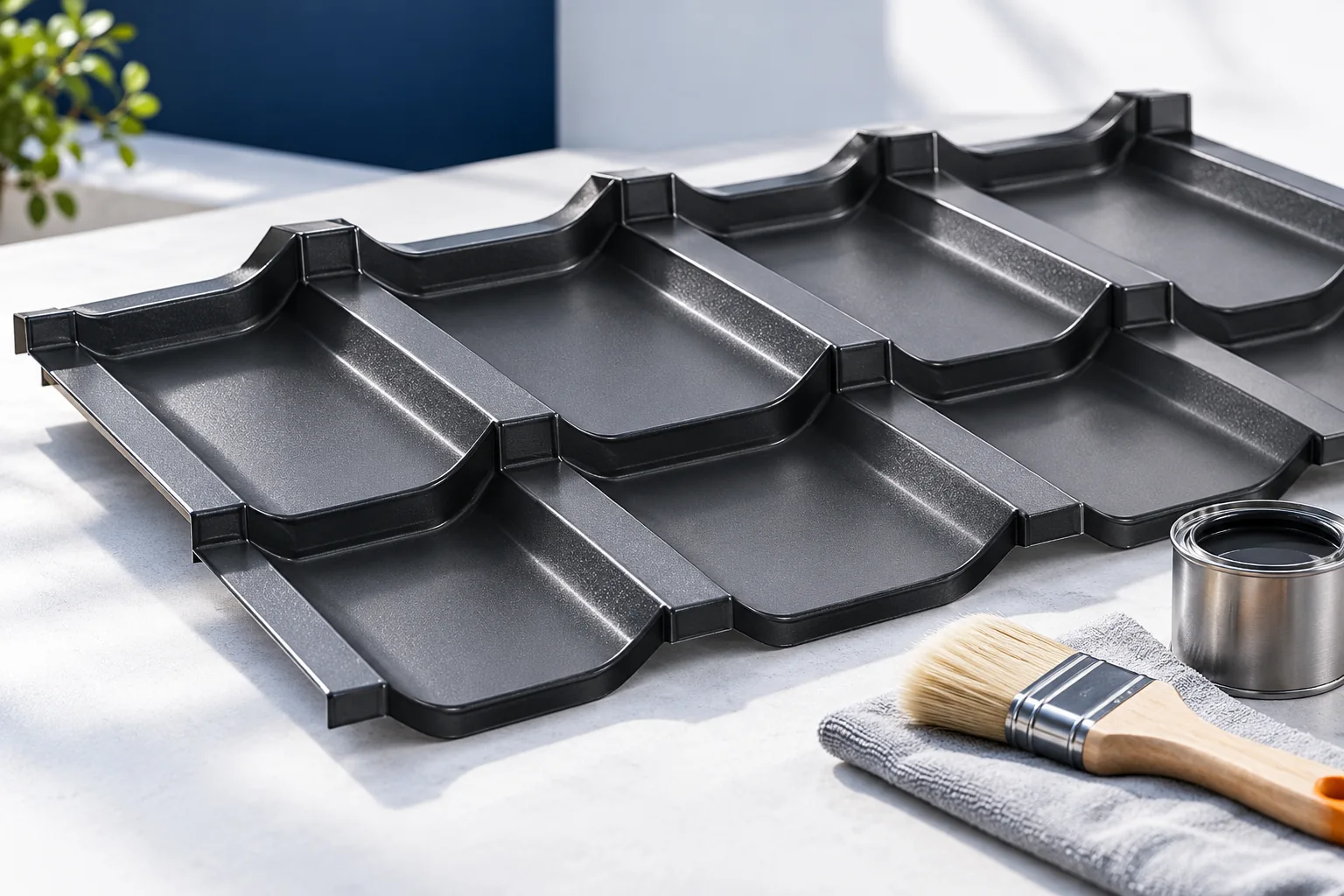
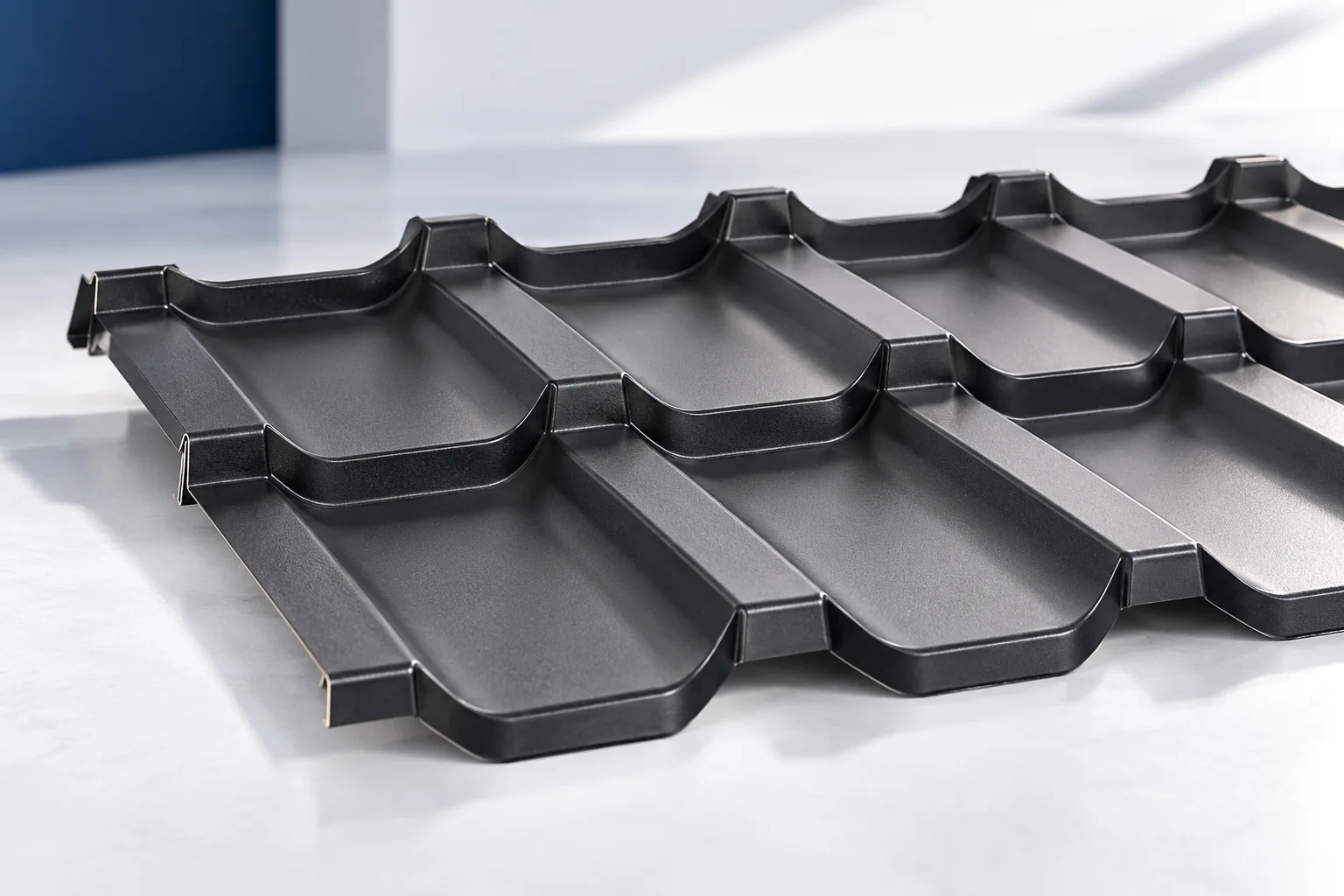
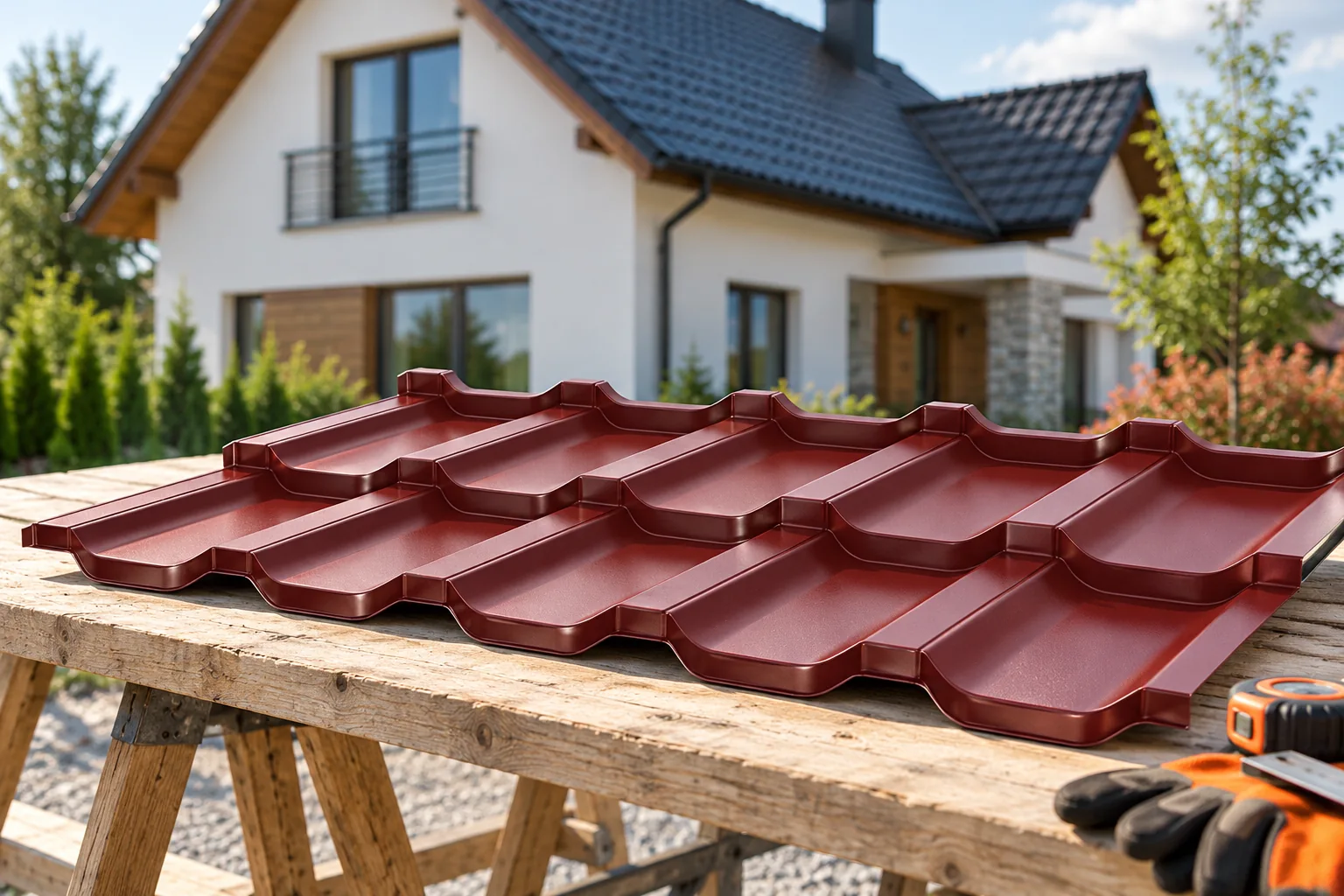
The suitability of profiled metal roof tiles depends on the steel parameters, coating and installation instructions for the specific solution, not on the wave shape alone. Before buying, it is worth checking the cross-section and side view to distinguish wave height from step height. You should also confirm the minimum roof pitch required for the given profile and assess the number of obstacles, such as valleys, chimneys and windows, which may influence the choice of sheet format.

By |2026-11-14T18:56:39+01:002023-12-15|Technology and applications|Comments Off on Profiled tile-effect metal roofing: characteristics and applications

Choosing trapezoidal steel sheets for a façade

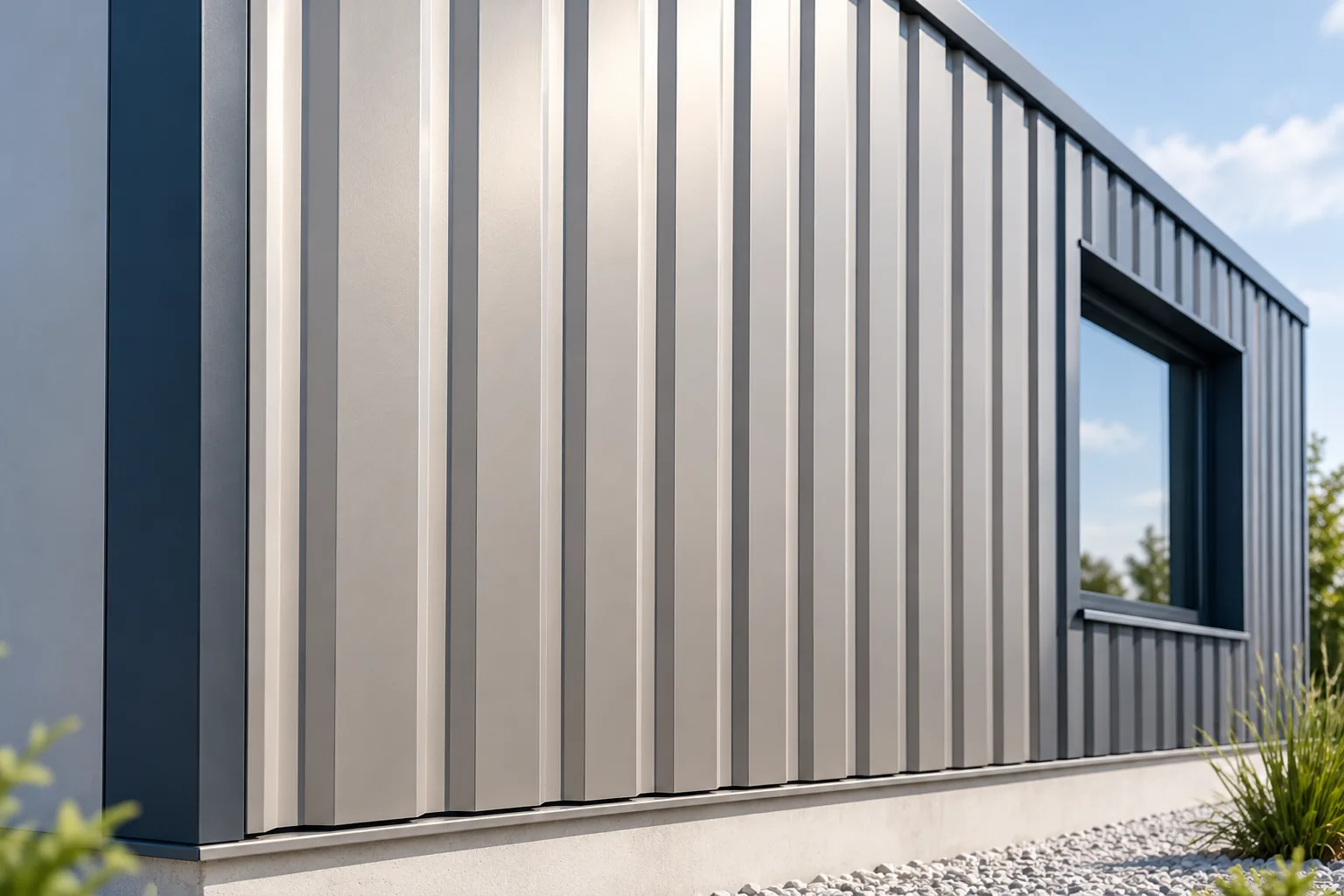
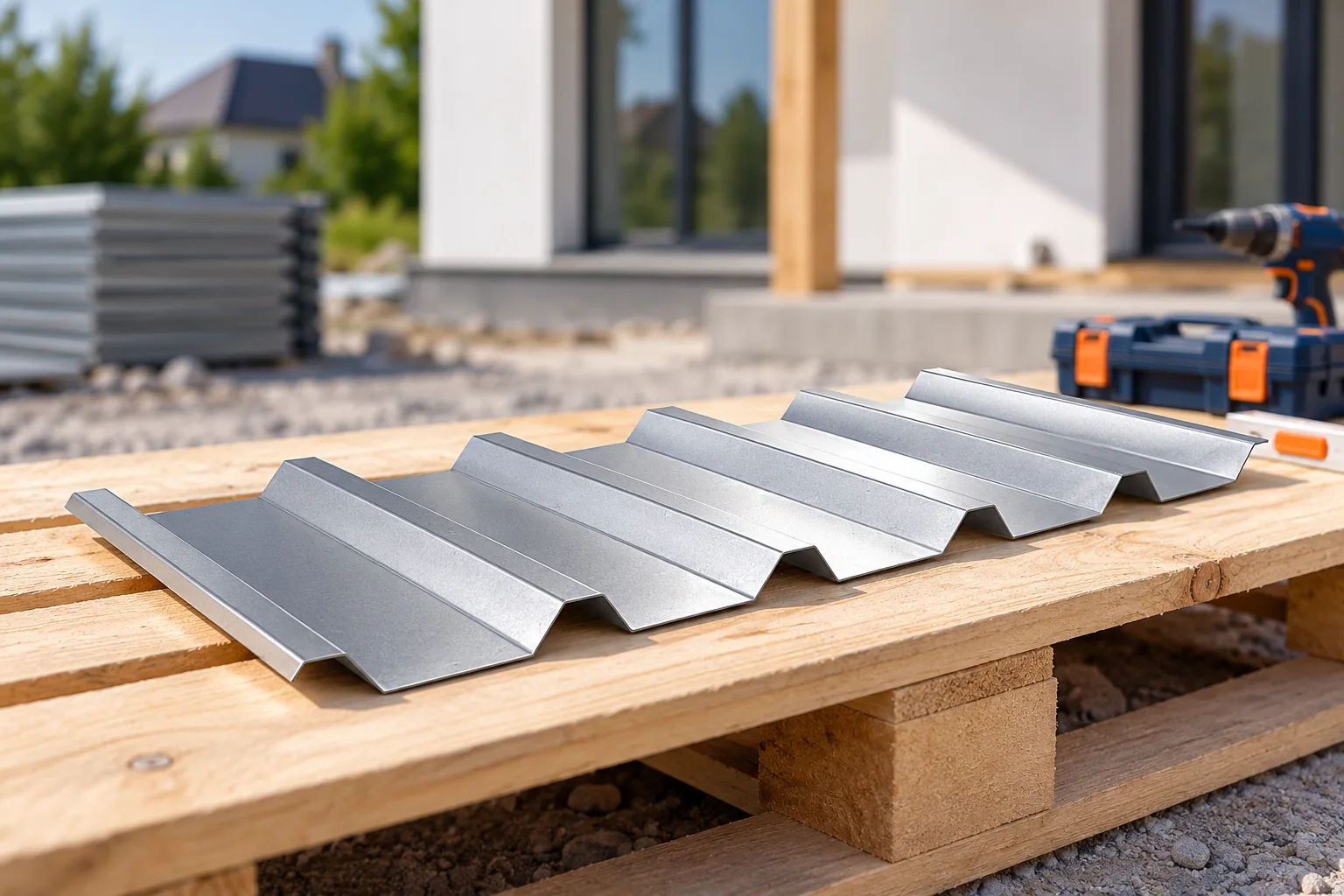
First decide whether the trapezoidal sheet is only a screen for a ventilated façade or part of another designed wall assembly — this determines the subframe and details. Check the steel thickness, coating, cover width and sheet orientation, not just the rib height. Inspect the cross-section and confirm that the coated side faces the exterior. Assess the profile choice on a larger section of wall, with windows and corners, because a small sample does not show the proportions.

By |2026-11-14T18:55:10+01:002023-11-30|Technology and applications|Comments Off on Choosing trapezoidal steel sheets for a façade

Made-to-length tile-effect metal roofing for traditional houses

Base the choice of cut-to-size metal roofing on the building's form rather than on a catalogue pattern alone. Begin by checking whether long sheets will genuinely simplify covering straightforward slopes or instead force numerous cuts at dormers and breaks. The final effect depends on the rhythm of the profiles, the colour and the edge finish, so compare a sample with the actual boarding, joinery and flashing in daylight. Before ordering, confirm on the built structure the lengths of slopes, eaves, ridges and hips, and analyse the cutting plan against a modular variant.

By |2026-11-14T18:54:30+01:002023-11-24|Technology and applications|Comments Off on Made-to-length tile-effect metal roofing for traditional houses

Roofing options after removing old asbestos cement sheets

Begin by establishing whether the old sheets actually contain asbestos, rather than judging them by colour and shape. If documents are missing, agree the identification method with the relevant authority and a contractor; do not take samples by breaking or drilling yourself. At the same time, assess the condition of the roof structure and the geometry of the slopes, since some problems only become visible once the sheets are removed. The choice of new covering — trapezoidal sheet or metal tile — depends on pitch, structure and building function. Also plan the safe removal of the old material and check with the municipality whether asbestos support covers only dismantling, transport and disposal.

By |2026-11-14T18:54:50+01:002023-11-19|Technology and applications|Comments Off on Roofing options after removing old asbestos cement sheets
Back to top