Roofing panels and sheets: what to check before choosing a covering

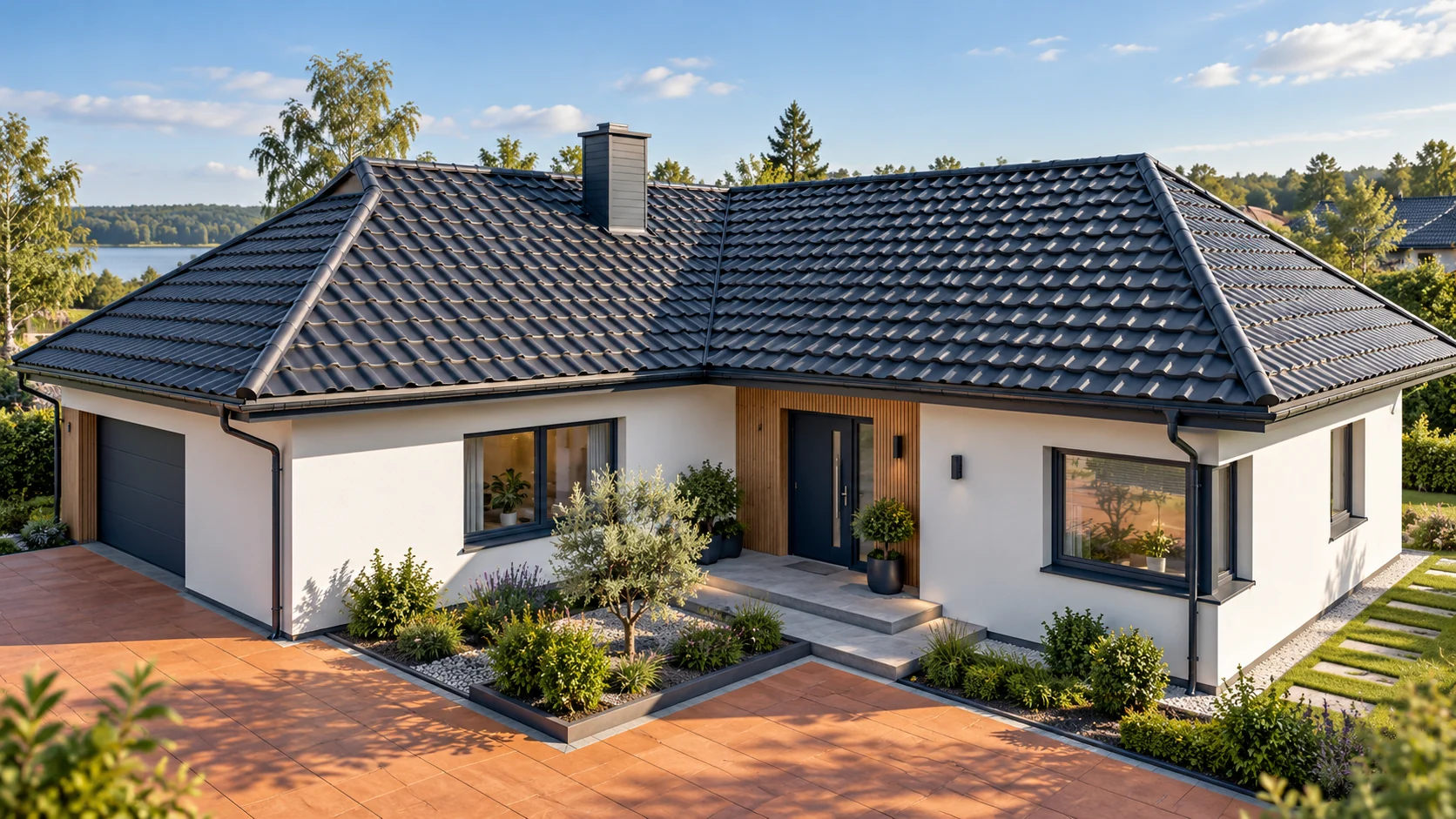
Before choosing panel or sheet roofing, first establish the roof pitch, the method of support and whether the building will be heated, and only then compare products. Check the coverage width, the minimum pitch for the specific product and all the layers beneath the covering. A trade name can be misleading: a panel may mean a small module of tile-effect sheeting, a long metal sheet or a sandwich panel, so state the full category, profile shape and intended roof build-up in your enquiry.
2026-11-14T22:27:44+01:00

When should you choose long tile-effect metal roofing sheets and when small modules?

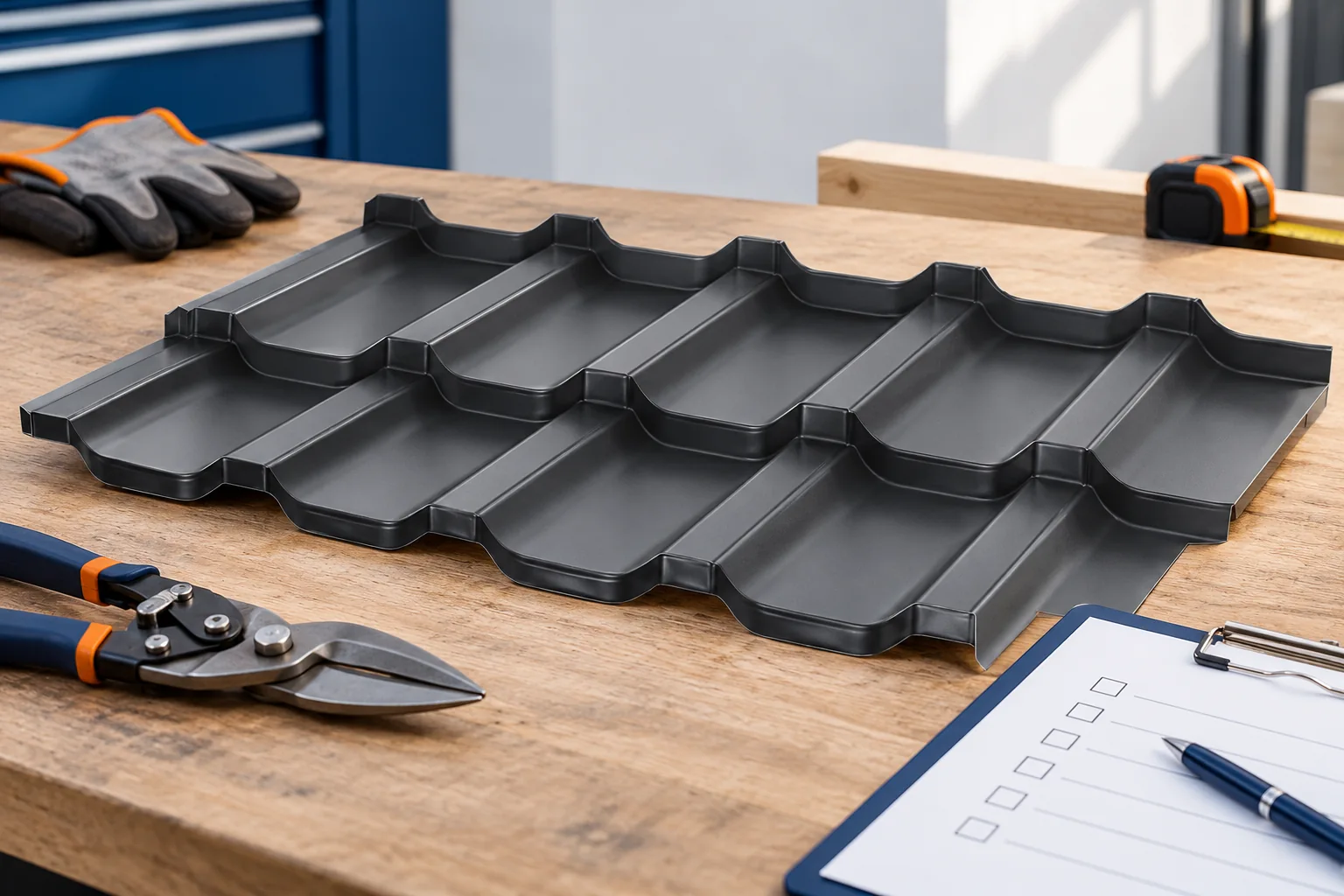
The choice between a made-to-measure sheet and a module starts with the roof drawing. On a wide rectangle, long elements can simplify the layout. With numerous slopes, small modules make cutting and handling easier. There is no single winner for every roof shape. It is worth comparing two covering plans for the same roof slope. Most often it concerns selecting the sheet length within a given profile. The width and rhythm of the profiling remain determined by the product. A made-to-measure order therefore does not mean any rectangle with any arrangement of waves. The length must take into account the module, the ends and the production rules.

2026-11-14T09:31:16+01:00

Cut-to-length sheets or modular metal roof tiles for your roof?

The format of the roofing sheet should be matched to the specific roof, not to a general rule. First check whether the slopes are simple and even, or rather full of valleys, dormers and short sections, as this determines the number of cuts and joints. The second step is delivery conditions: a long sheet needs space for unloading and lifting onto the roof, while modules are easier to distribute and store. Compare the cutting plan, transport, accessories and labour for the whole roof, not the price per piece.

2026-11-15T02:34:26+01:00

Choosing a practical roofing course

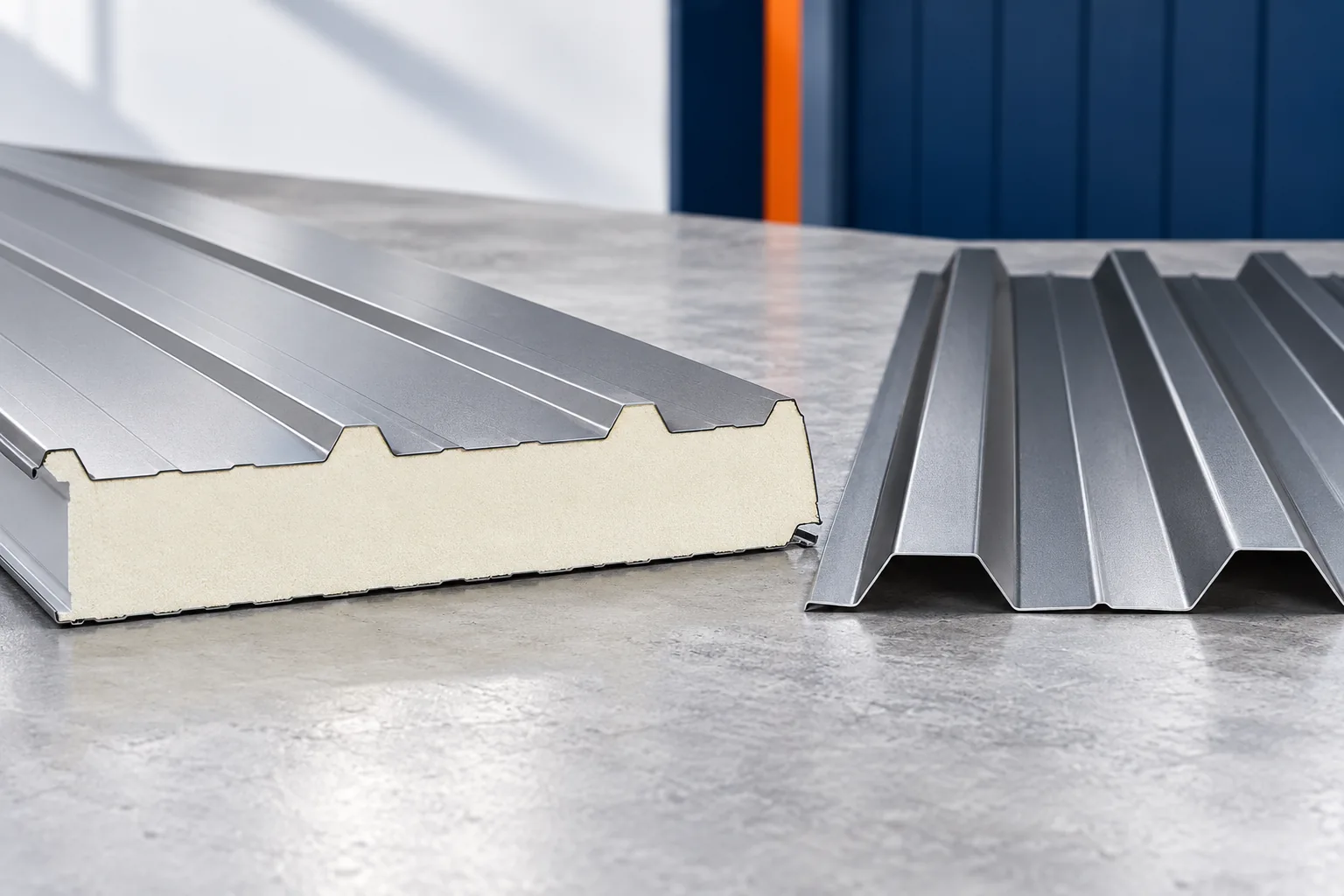
Good roofing training should let you carry out and check important details yourself. A display of a finished roof is not enough. Before signing up, establish which system the course covers, how much time is set aside for practical work and whether mistakes are discussed. Exercises linked to the current instructions, real material and safe working conditions provide the greatest value. First determine what you want to learn. Installing modular tile-effect metal roofing requires different exercises than building a hall cladding from insulated sandwich panels. The details of low trapezoidal steel sheet and high structural sheet also differ. General training can organise the basics, but it does not replace learning the seams, fasteners and installation sequence of a specific system.

2026-11-14T15:40:21+01:00

Choosing a covering for a pitched gable roof

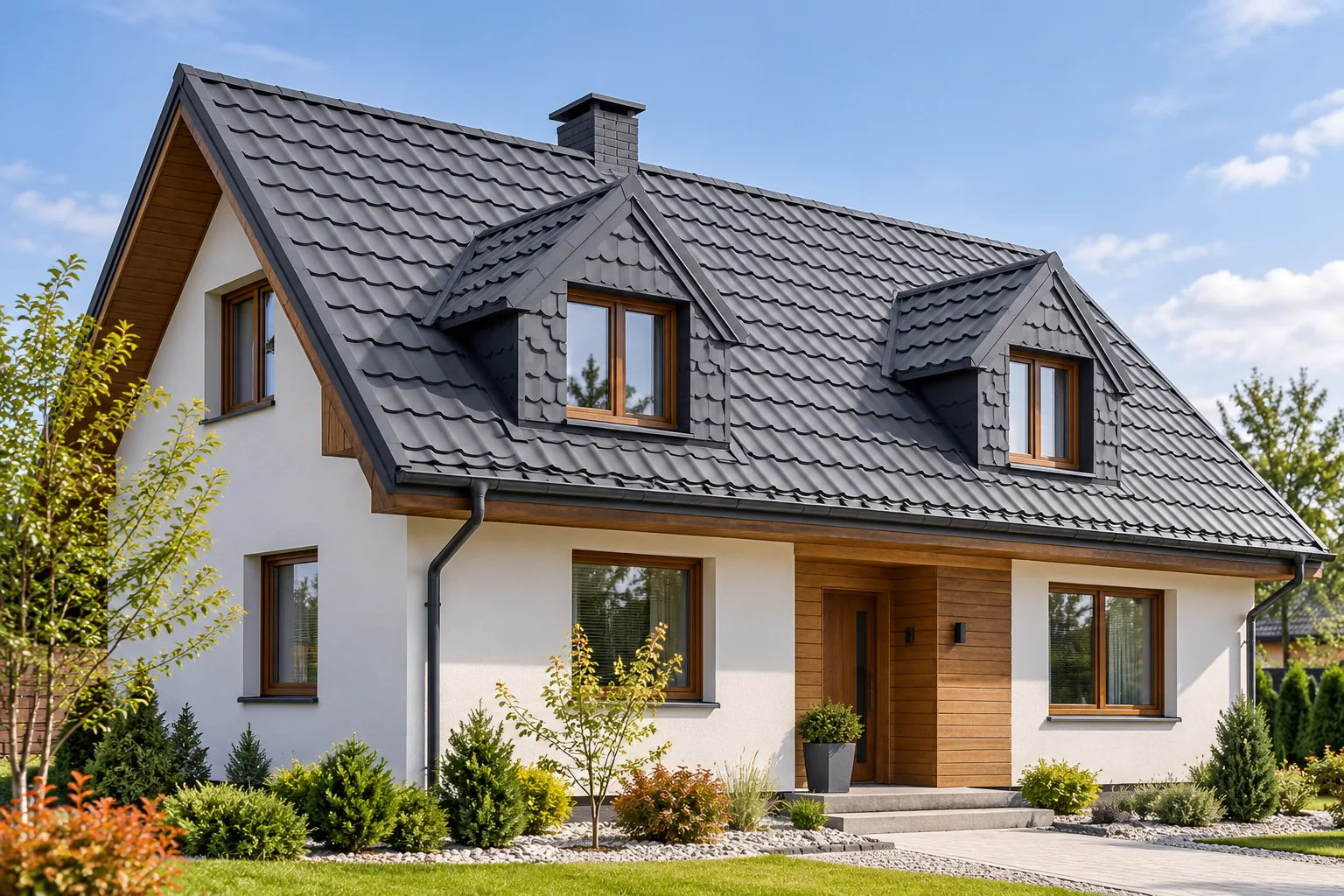
Choosing a covering for a gable roof starts with measuring both slopes. Even when they look symmetrical from the street, their dimensions, exposure to sunlight and roof openings may differ. Check the pitch and condition of the supporting structure before choosing the sheet format. A regular layout can reduce offcuts, provided the sheets suit the measured roof. For a meaningful comparison, ask for estimates that also cover the ridge, eaves and verges. The price per metre of sheet alone gives an incomplete picture of the finished roof.

2026-11-14T18:53:55+01:00

How the profile of cut-to-length and modular roof sheets affects the finished roof

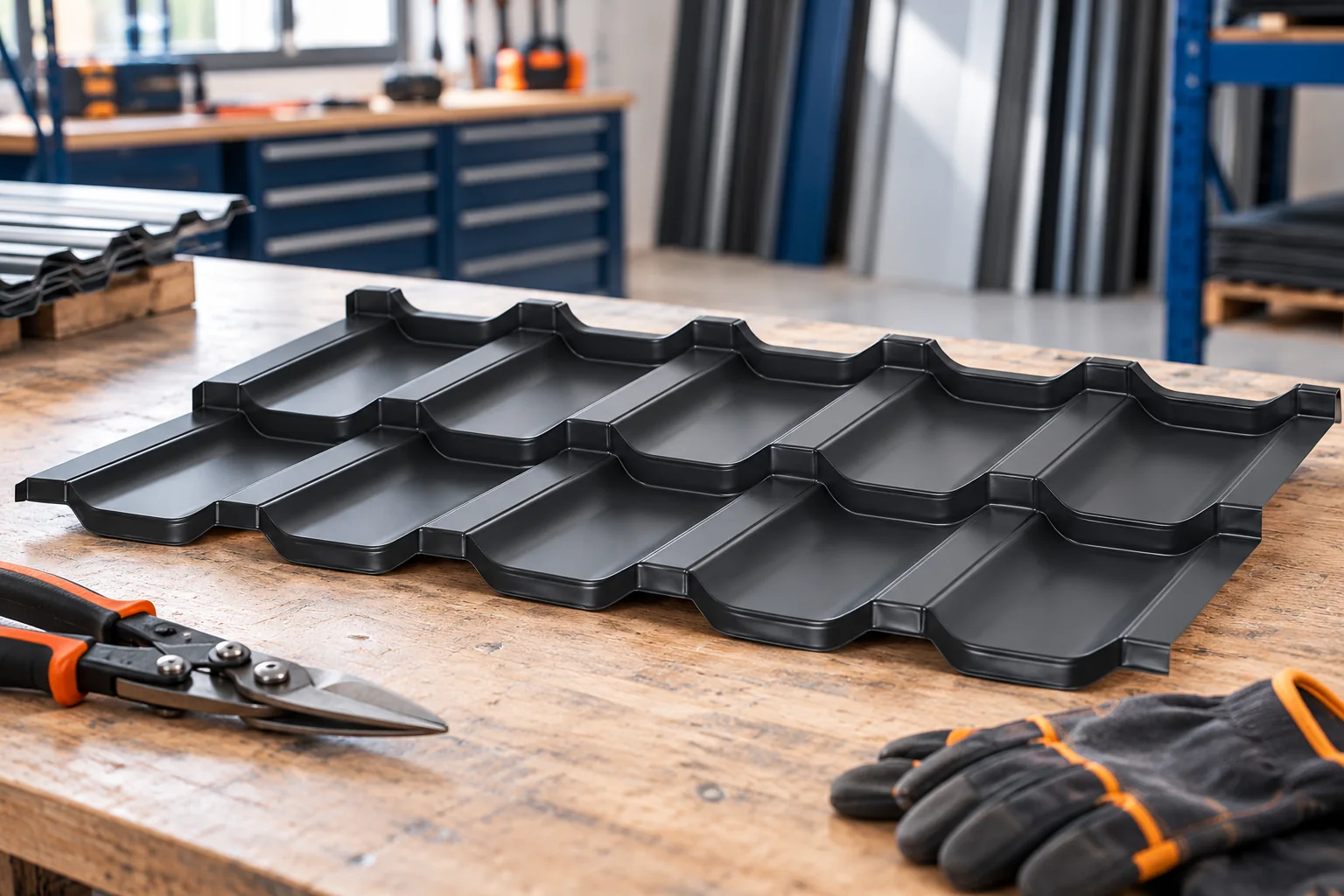
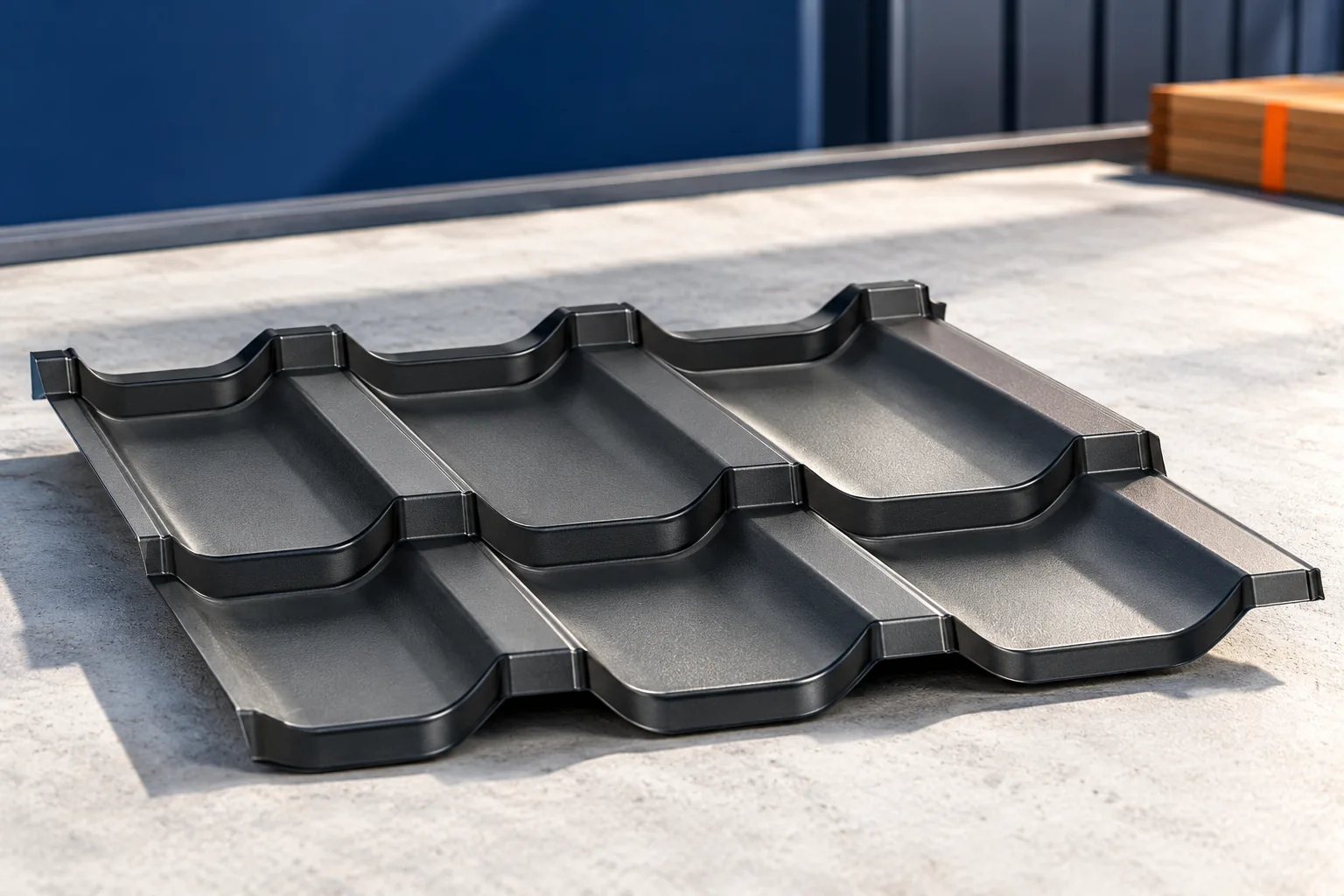
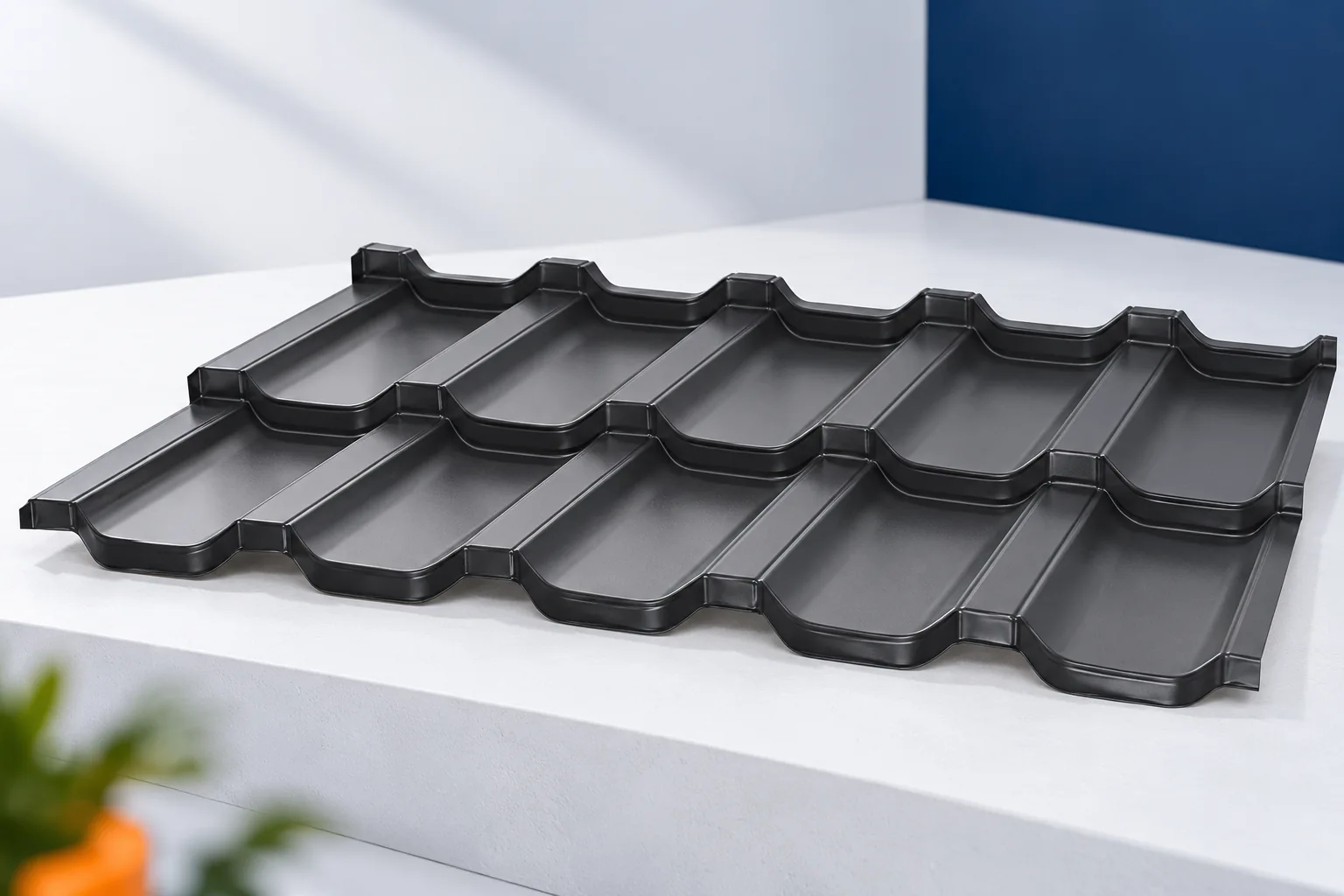
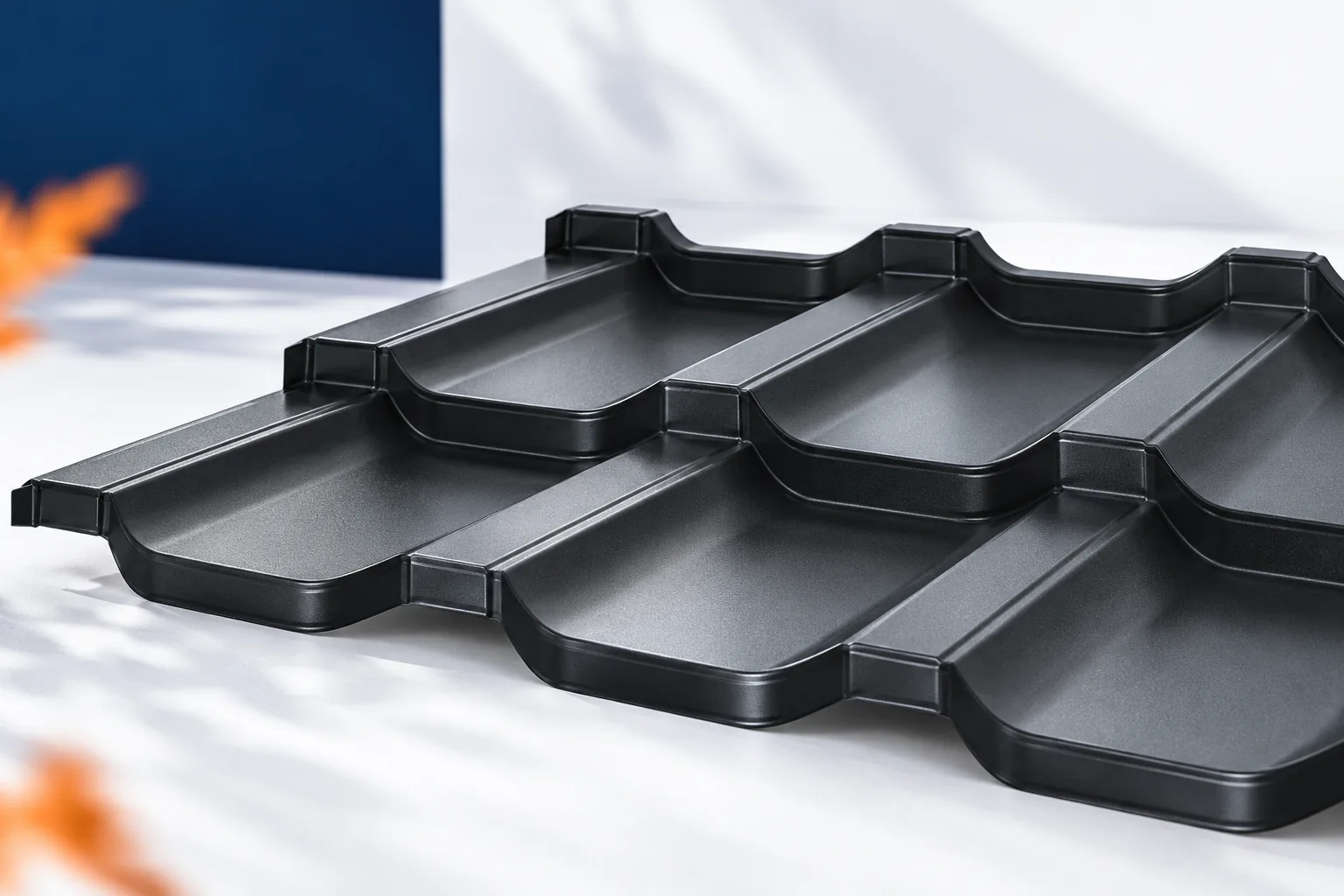
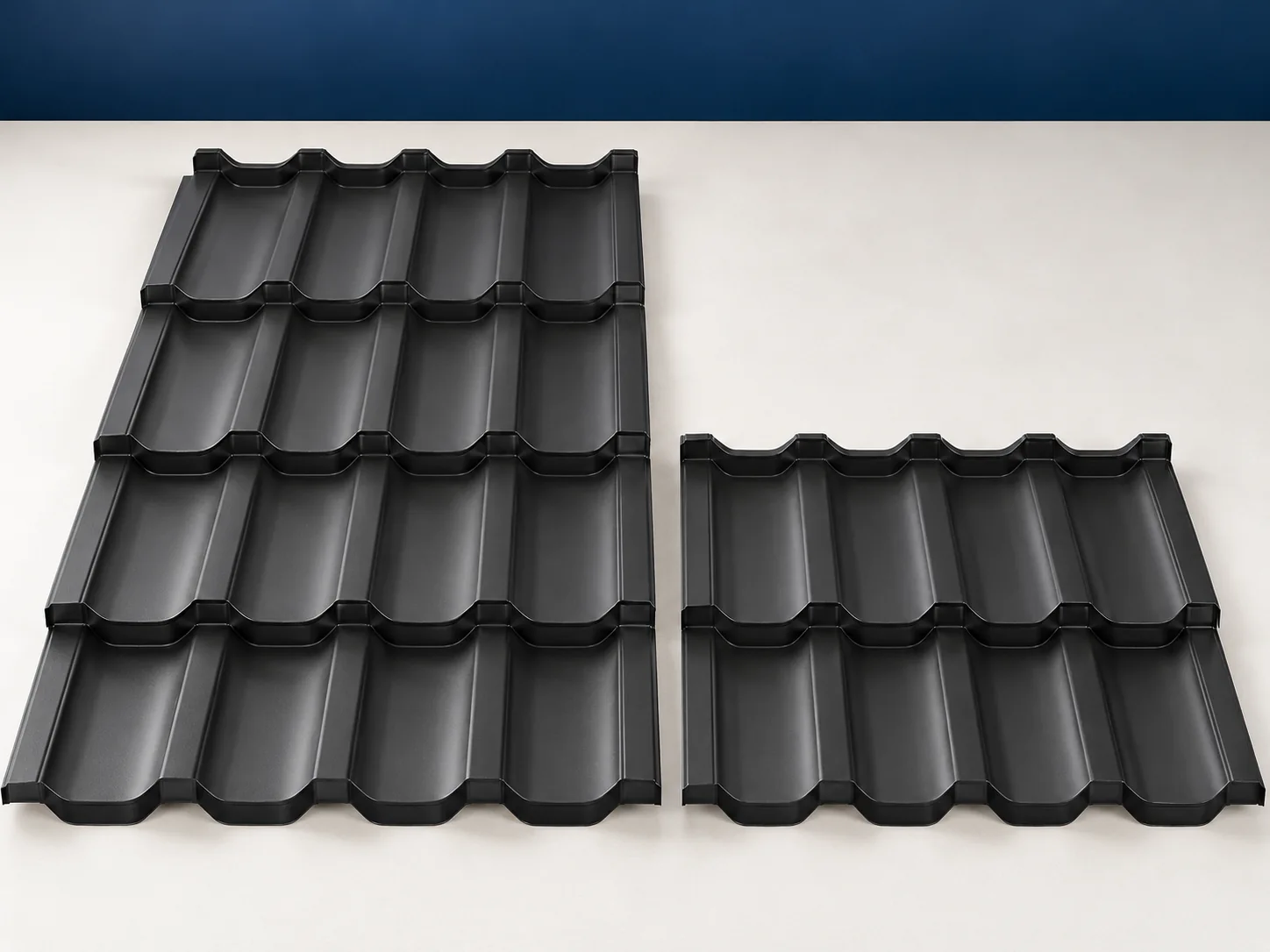
The appearance of tile-effect metal roofing depends mainly on the shape of the wave, the height of the transverse pressing and the rhythm of the divisions. The method of delivery in long sheets or small panels is a separate feature. Cut and modular coverings can suit both a calm, traditional building form and a simple modern house. It is best to assess a larger fragment of the covering in daylight, from a similar distance as the finished roof. The profile has a division along the roof slope and a division across the sheet. The waves run lengthwise, and the transverse rhythm is formed by the steps of the pressing. The height of the wave itself need not equal the total height of the finished panel. When comparing technical data sheets, the drawing must be checked.

2026-11-14T15:40:57+01:00

Modular tile-effect metal roofing: uses, benefits and installation

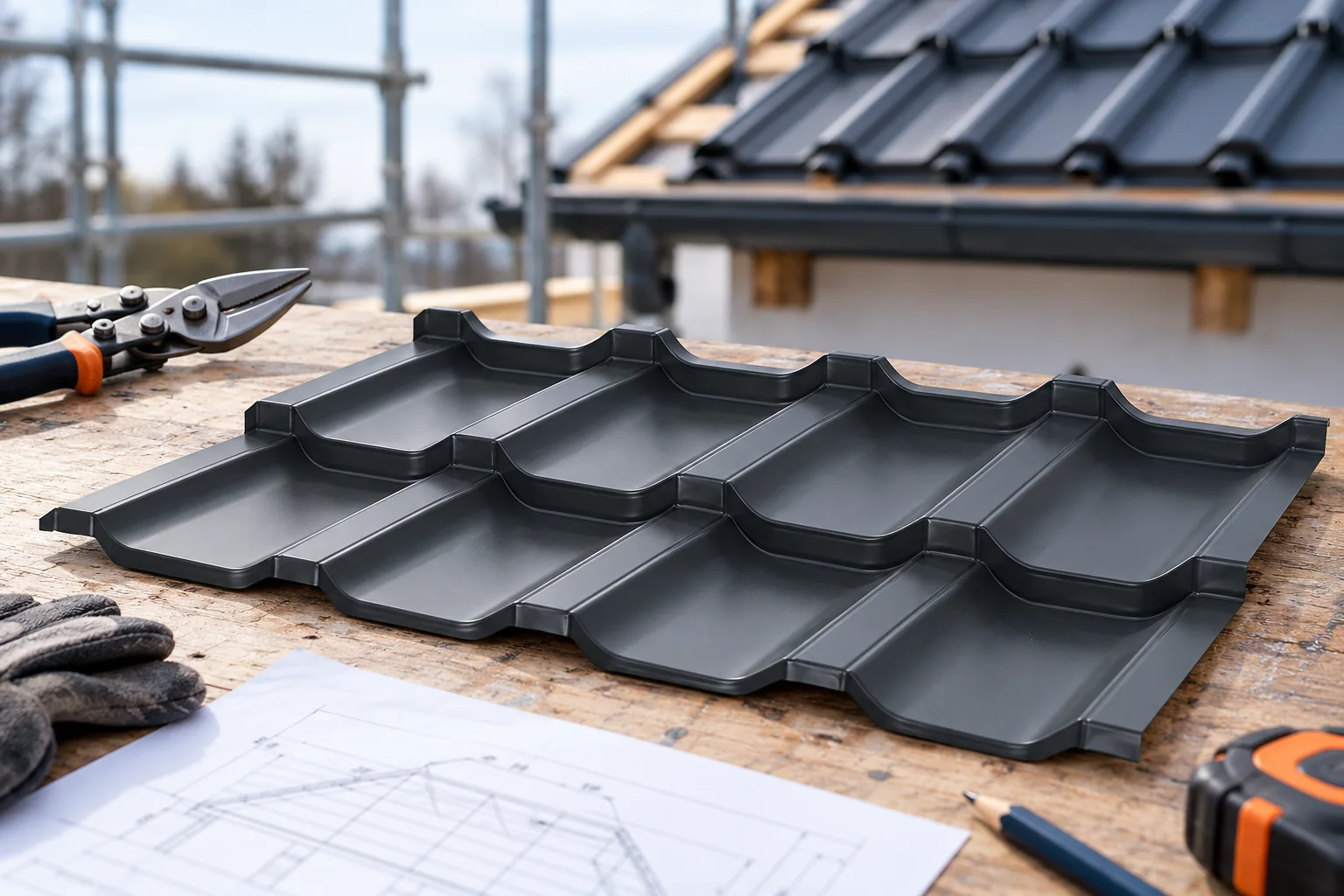
Modular metal roofing is a system of repeatable panels joined on the roof slope, useful where handling ease and a well-planned layout matter. Before buying, however, check not only the covering area and minimum pitch but also the coating and the complete set of accessories. The quality of the roof depends on the whole system, not on the sheet size alone. A key variable is how the module matches the roof geometry – this determines waste and cutting options. The panel format is fixed for a specific product, so the name alone does not identify the parts.

2026-11-14T18:54:17+01:00

What a pronounced stepped profile changes in modular tile-effect roofing

The distinct appearance of modular metal roofing tiles comes primarily from the profile geometry, not from wave height alone. When choosing, check the effective cover width, the number of modules per sheet and the permitted roof pitch — these parameters determine the roof layout and the product's suitability. A high profile does not replace correct support or fixing, so compare a sample with the technical drawing rather than relying on a photograph alone. Also remember that the same profile looks different on a cloudy day and in strong sunlight.

2026-11-14T18:56:34+01:00

Choosing a roofer and agreeing who is responsible for each part of the job

When choosing a roofer, check above all their experience with the specific covering and roof geometry, not just the overall number of projects. Ask for examples of details such as the valley, eaves and chimney junction, and for documentation of the layers before they are covered. In the contract, allocate responsibility for measurement, materials and installation, and set out the stages of inspection and the rules for settling additional work. Remember that installing modular metal tiles differs from a roof made of sandwich panels, so familiarity with one system does not guarantee proficiency in the other.

2026-11-15T02:34:49+01:00

Five roofing faults to look for before handover

The key decision before accepting a metal roof is whether the inspection will cover layers that will soon disappear beneath the covering. It is worth checking the geometry of the substrate, the batten spacing, the method of fixing, the condition of the coating, the continuity of ventilation and the routes for water drainage. Most problems stem from faults that are visible before work is completed, so photographs and stage-by-stage inspections offer more than a view of the finished slope from the ground. Documentation of the stages helps catch errors before correcting them becomes expensive.

2026-11-14T22:28:44+01:00
Back to top