Flat roof coverings: how to choose the right build-up

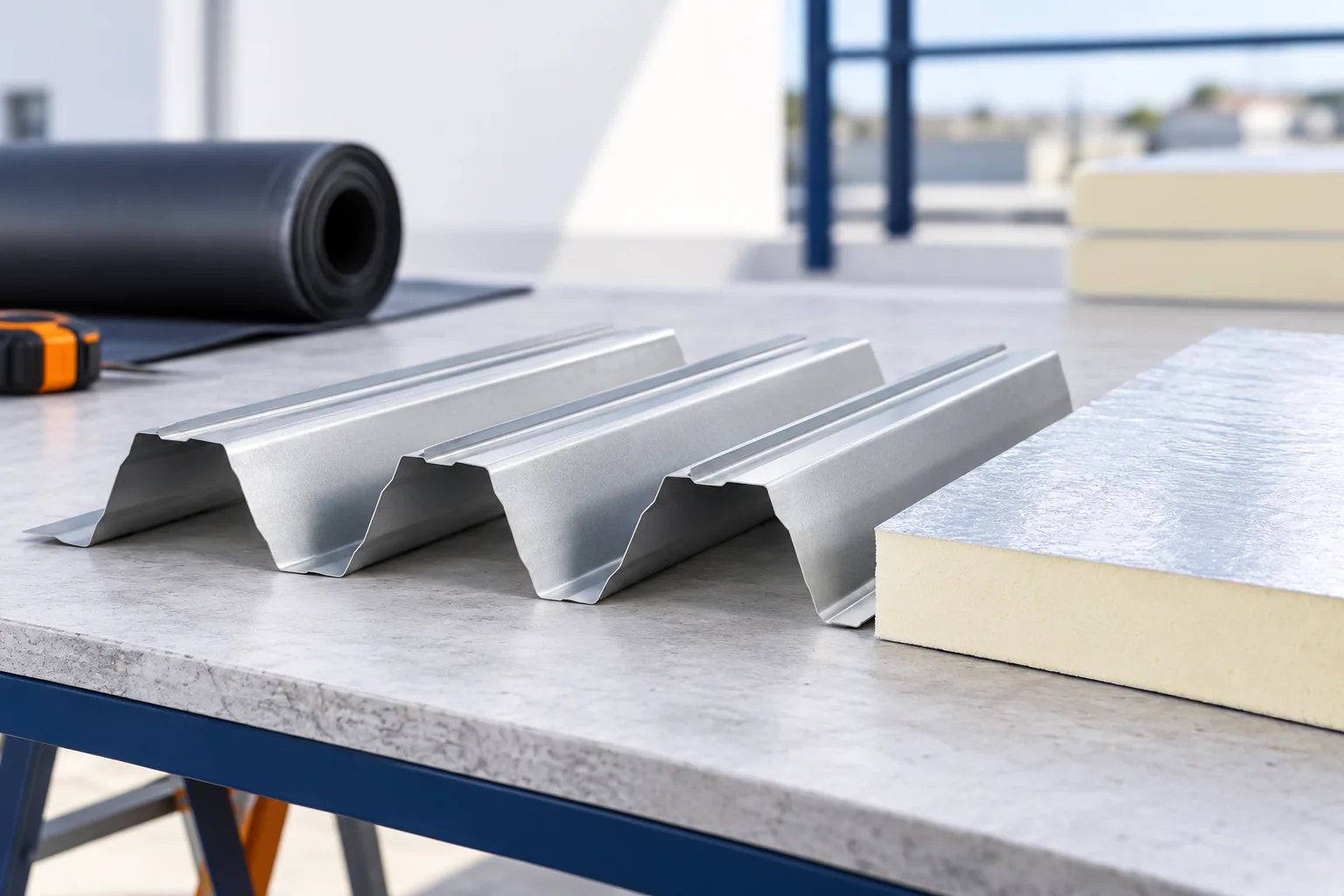
The choice of flat roof covering depends primarily on the geometry of the falls and the layout of the drains, not on the waterproofing material alone. Before laying the layers, check whether the design provides for the water flow path, substrate deflections and levels at parapets and service penetrations. Only then should the structural steel deck, PIR insulation and bitumen felt or membrane be selected as one system. A sandwich panel requires its own minimum slope, so it cannot replace an arbitrarily level assembly.
By |2026-11-14T18:52:57+01:002023-10-19|Technology and applications|Comments Off on Flat roof coverings: how to choose the right build-up

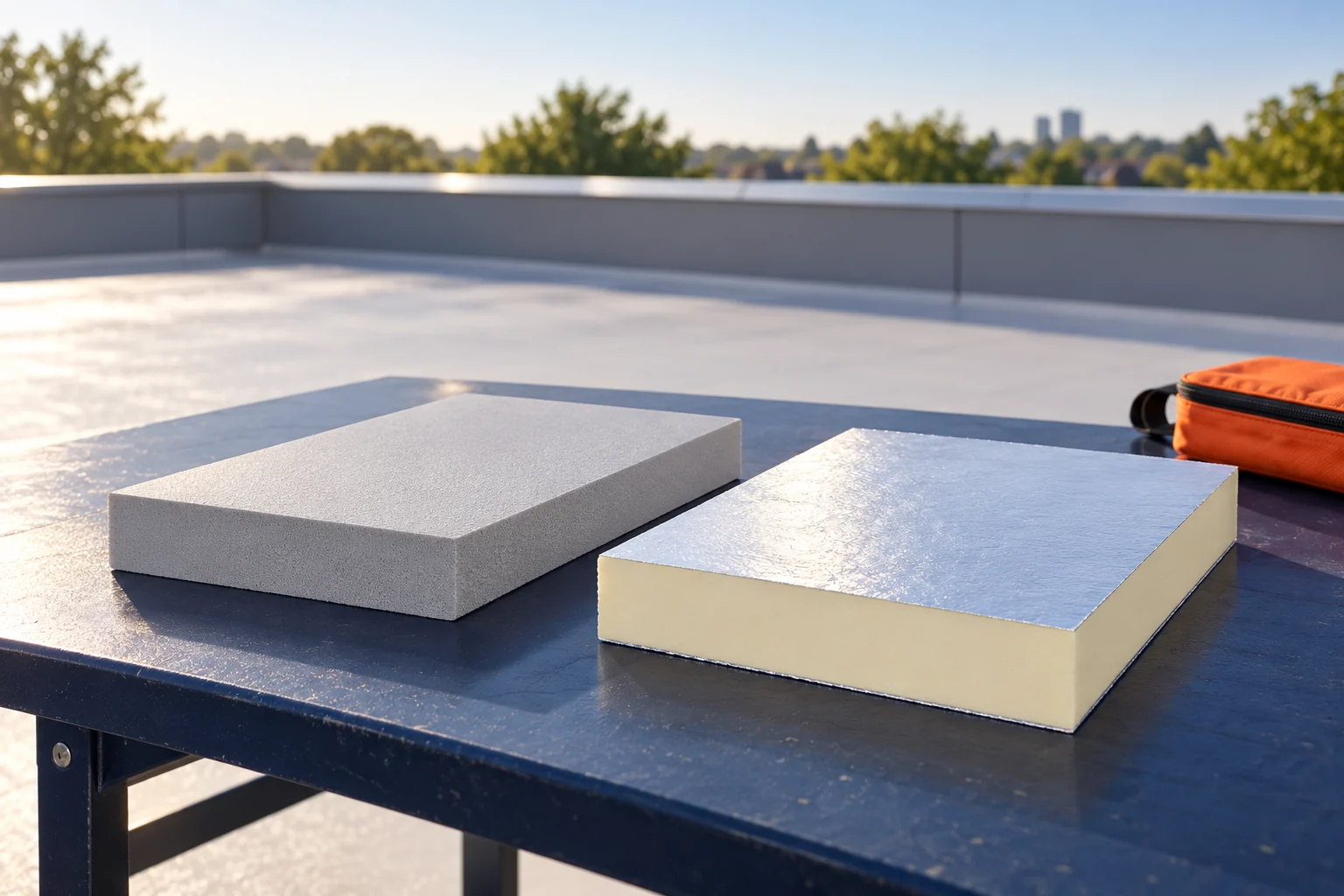
PIR or XPS for a flat roof: how to decide based on the layer build-up?

On a flat roof, the layer build-up is chosen first, and only then the insulation. PIR placed beneath the waterproof covering performs differently from XPS in an inverted roof. Moisture, load and the method of fixing all matter. A lower lambda alone does not confirm that the material is suitable as a substitute in an existing solution. In a classic roof, the insulation sits beneath the waterproof layer. In an inverted roof, the thermal insulation lies above the waterproofing. That is the fundamental difference in service conditions. A material in the upper position must be suitable for contact with water and for the intended method of draining precipitation.

By |2026-11-14T09:33:52+01:002023-07-20|Technology and applications|Comments Off on PIR or XPS for a flat roof: how to decide based on the layer build-up?

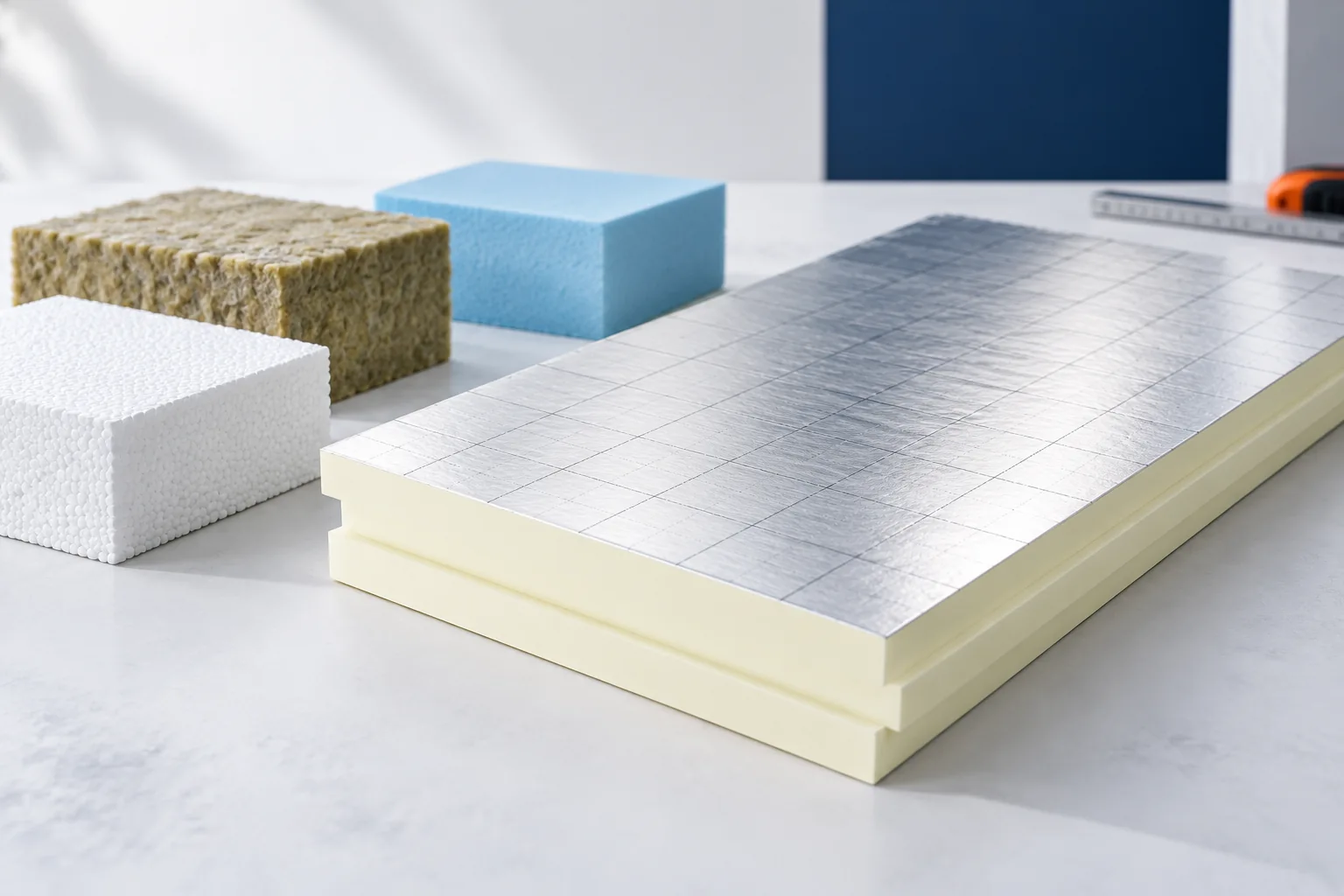
Comparing PIR, EPS, XPS and mineral wool for roof insulation

Begin comparing roof insulation with the required thermal resistance, not with board thickness. Check whether the chosen variant meets the project's fire, moisture and mechanical requirements. PIR with a lower lambda may need a thinner layer than EPS, XPS or mineral wool, which can matter where space is limited. For each product, establish the declared lambda and calculate R as thickness in metres divided by lambda. Only then compare the cost of the whole roof, including thermal bridges, fixings and flashings. Leave final thicknesses to the designer.

By |2026-11-15T02:34:51+01:002023-06-22|Technology and applications|Comments Off on Comparing PIR, EPS, XPS and mineral wool for roof insulation

How do I prepare a quick thermal calculation for a wall and check for moisture?

A quick calculator helps compare insulation thicknesses. However, it will not identify damp masonry or a poorly detailed reveal. For the result to be useful, the actual wall and its operating conditions must be described. Heat loss, surface temperature and the risk of moisture within the construction are checked separately. Record the layer build-up from inside to outside. For each layer, give the thickness and thermal properties. In an existing building, do not automatically assume that the wall matches a typical solution from the year of construction. An air cavity, a different type of block or later cladding can change the result.

By |2026-11-14T09:33:00+01:002023-01-25|Technology and applications|Comments Off on How do I prepare a quick thermal calculation for a wall and check for moisture?

What does the Passive House standard require?

Whether a home meets the passive house standard depends on the energy balance of the whole building. Before selecting insulation boards, the designer assesses heat loss through the building envelope and its junctions, as well as the effects of windows and ventilation. Thicker roof insulation cannot seal an air leak around a window. The calculations therefore need to be backed up by good workmanship and an airtightness test on the completed envelope. When comparing designs, ask which floor area was used to calculate heating demand. This figure serves a different purpose from an individual household’s heating bill.

By |2026-11-14T22:27:25+01:002022-11-25|Technology and applications|Comments Off on What does the Passive House standard require?

How do you calculate the required PIR thickness for a specific wall?

Choosing the PIR thickness can start with a simple thermal resistance calculation. First, you need to know the wall and the target U-value. Then you select a material with the right lambda and application. A calculator makes comparison easier, but it will not assess reveals, fixings and moisture on its own. These elements must be checked separately. Choose the U-value required in the project or adopted as the refurbishment target. Do not assume that the same thickness will be right for every house. A thin wall with high conductivity needs a different addition than a wall that already has an effective insulation layer.

By |2026-11-14T09:33:37+01:002022-11-16|Technology and applications|Comments Off on How do you calculate the required PIR thickness for a specific wall?

Keeping the insulation continuous around a heated loft

The key decision when designing continuous loft insulation is where the heated space ends, because that boundary determines where the thermal and airtight layers must run without interruption. Readers should check whether the insulation will follow the slopes or the ceiling beneath unused space, and how it connects to walls, windows and service penetrations. Material thickness alone is not enough – thermal bridges, airtightness and moisture removal all matter. The design should clearly indicate the layers and their junctions before loft construction begins.

By |2026-11-15T02:35:29+01:002022-10-19|Technology and applications|Comments Off on Keeping the insulation continuous around a heated loft

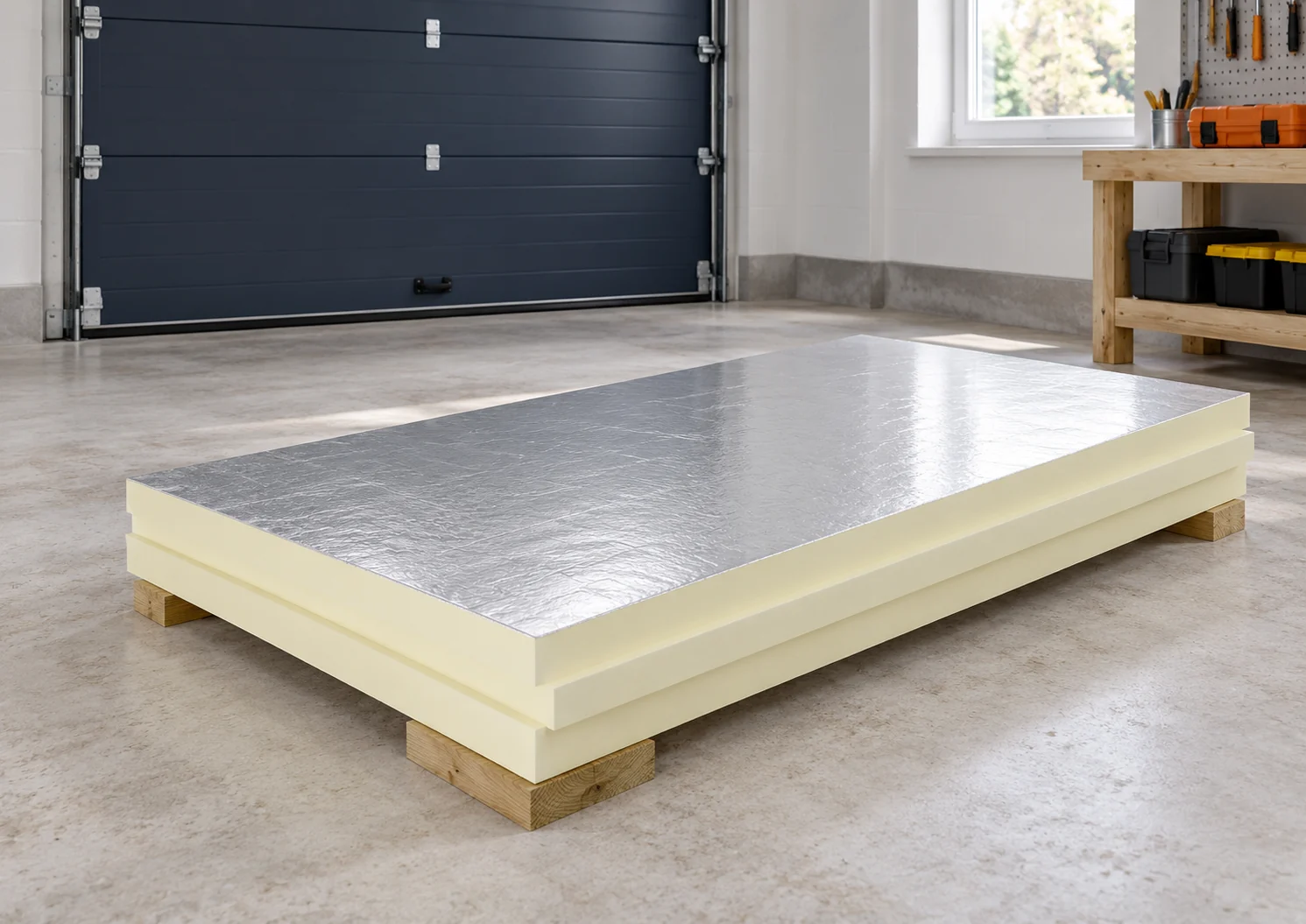
PIR or mineral wool: what to compare in a sandwich panel

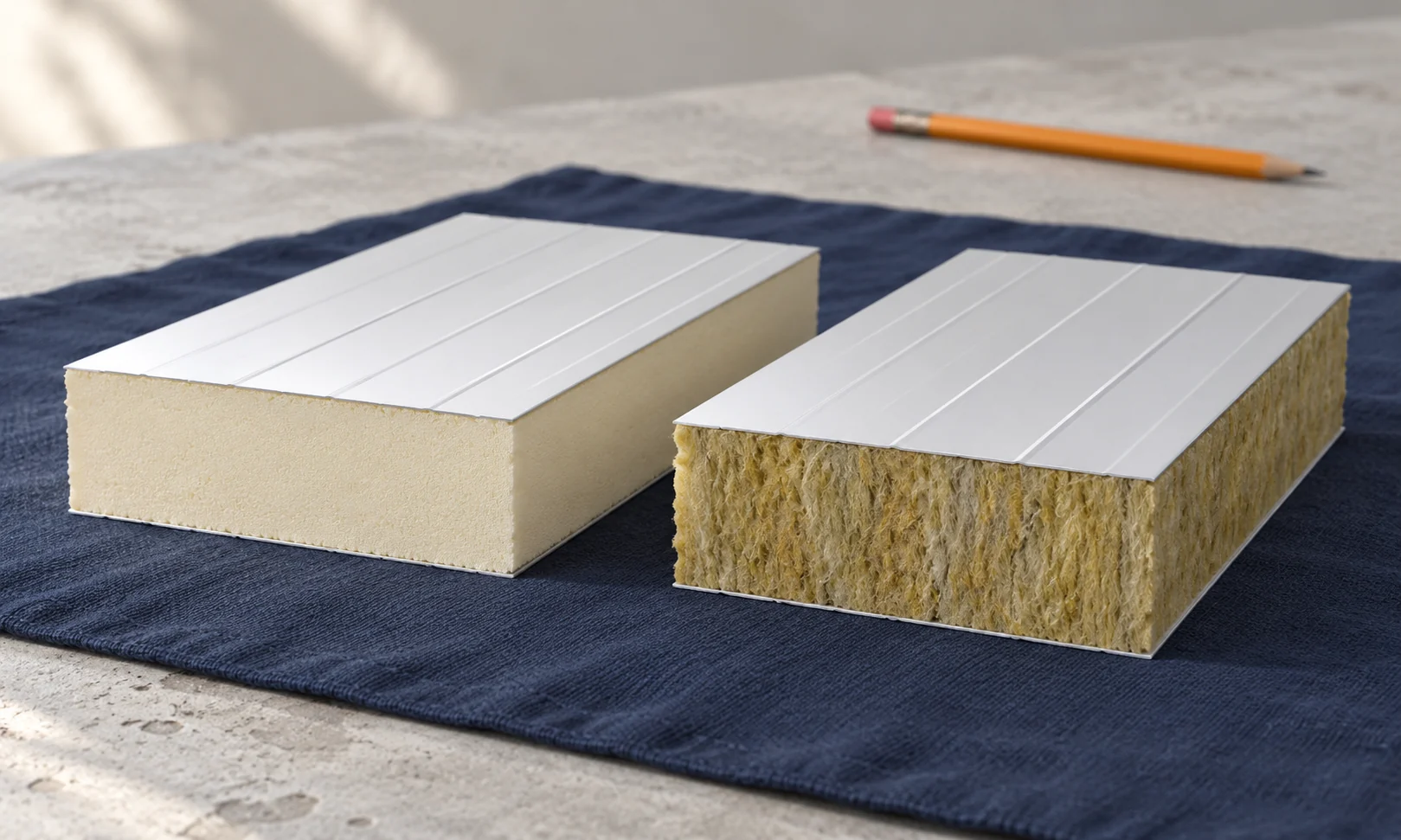
PIR and mineral wool are not substitutes chosen on price alone. The choice starts with fire, thermal and structural requirements. At the same thickness, panels can differ in mass and U-value. It is worth comparing full configurations and checking how much space the finished enclosure will take up. First establish the project requirements, especially those related to fire. The reaction to fire of the material and the fire resistance of the partition are different issues. The classification of the complete panel covers a specific construction. Conclusions should not be drawn from the core name alone.

By |2026-11-14T11:58:35+01:002022-10-07|Technology and applications|Comments Off on PIR or mineral wool: what to compare in a sandwich panel

Meeting fire safety requirements at openings and joints in a PIR roof

The fire performance parameter of a roof applies to a specific solution. The panels, supports, fixings and connections all matter. Therefore, changing the size of an opening or the purlin spacing may require re-verification. Preparing drawings before purchase helps maintain the conditions for which the properties of the selected system were confirmed. Reaction to fire describes the behaviour of the product during a fire test. It is not the same as the fire resistance of the complete roof. The behaviour of the roof under external fire exposure is specified separately. This information should be read separately.

By |2026-11-14T12:01:43+01:002022-09-21|Technology and applications|Comments Off on Meeting fire safety requirements at openings and joints in a PIR roof

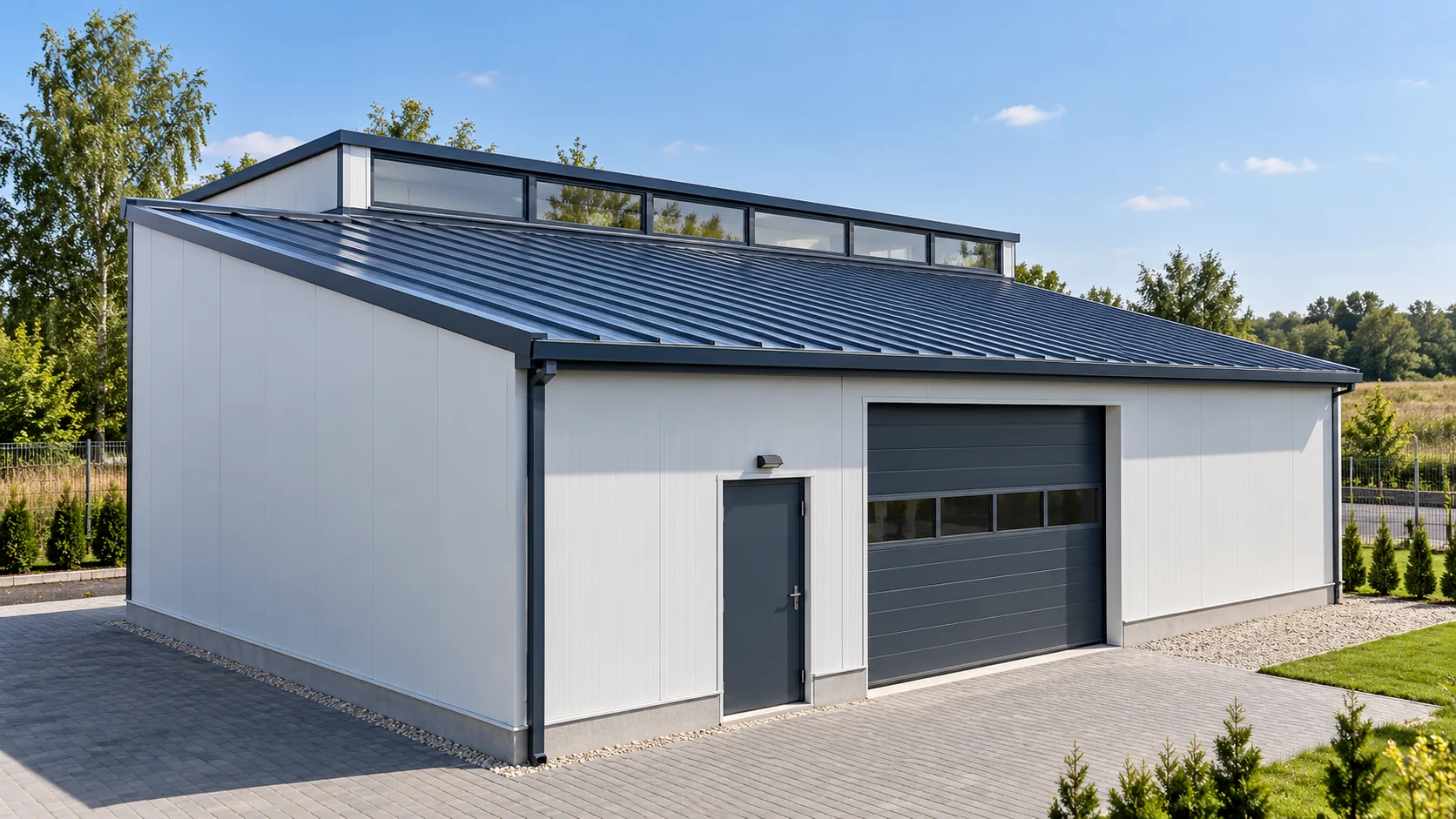
How to cheaply insulate a garage or small house without wasted savings?

Inexpensive insulation starts with determining how the building will be used. A cold storage room has different needs from a workshop heated on Saturdays, and both differ from a small house used throughout the winter. Savings are worth seeking in good cutting plans and simple details. Insulation that is too thin or ventilation that is omitted can quickly undo the effect. Note the planned temperature and heating hours. In a garage without a heat source, insulation alone will not maintain a constant residential temperature. It can slow the rate of cooling and heating, but the result also depends on the door, roof, floor and air exchange. Do not buy thickness based on the name “garage” alone.

By |2026-11-14T09:33:14+01:002022-08-07|Technology and applications|Comments Off on How to cheaply insulate a garage or small house without wasted savings?
Back to top