Reducing the risk of wind damage to a roof

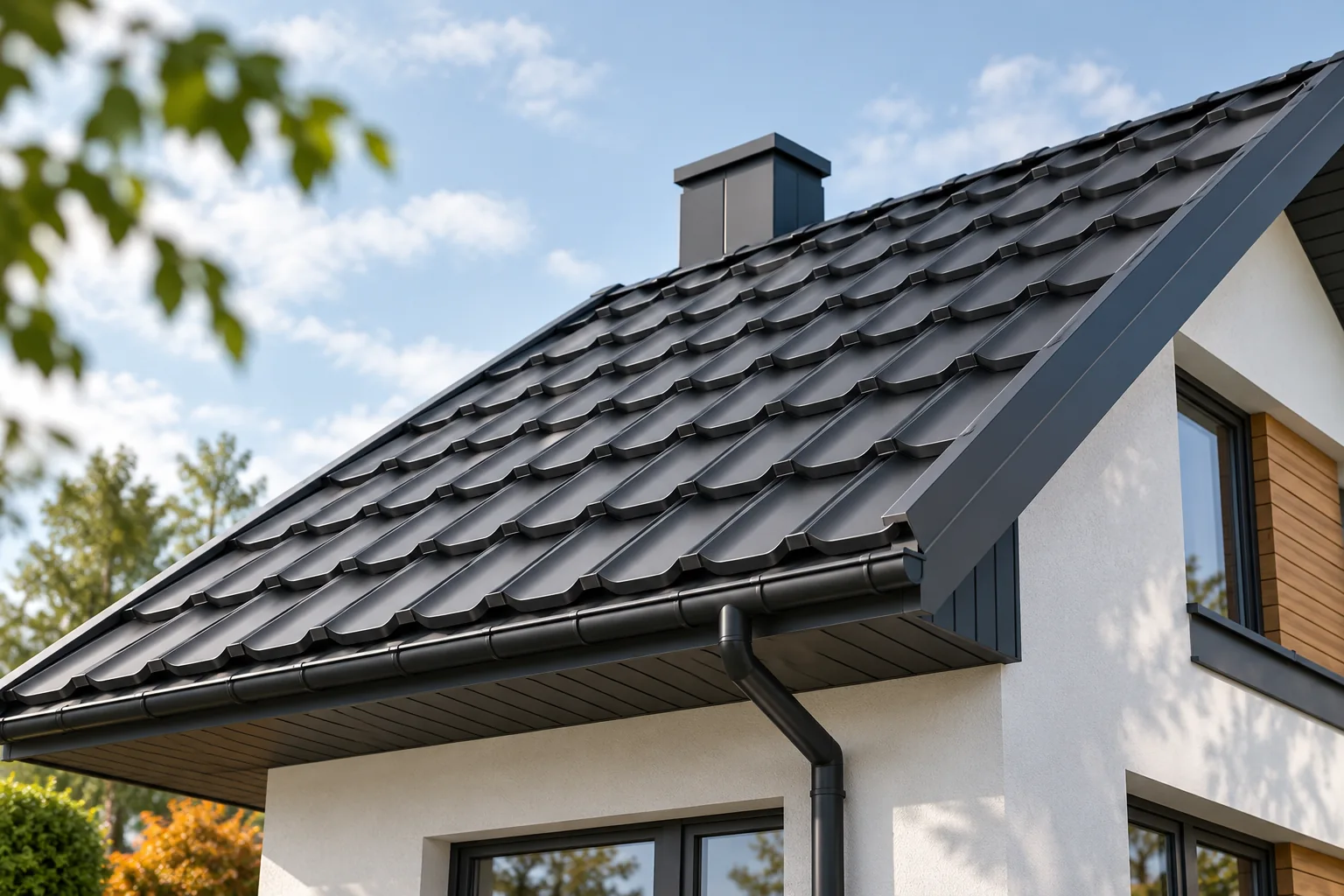
A roof's wind resistance depends on the entire load path, not just the covering. It is therefore worth checking whether the design and workmanship account for the local wind-load conditions, especially at edges and corners. The key decision variable is whether the fastener layout matches the documentation for the specific building, rather than the number of screws per square metre alone. The condition of the substrate and the seating of fasteners matter just as much for safety. When renovating, assess the whole force path: from the sheet through the screw to the batten or purlin.
By |2026-11-15T02:35:31+01:002026-10-04|Technology and applications|Comments Off on Reducing the risk of wind damage to a roof

Flat roofs: build-up, drainage and main advantages

On a section drawing of a flat roof, trace the path a raindrop would take from the high point to an outlet or the roof edge. This shows where the roof needs a fall and where a junction must maintain the continuity of the waterproofing. The insulation limits heat loss, while the supporting deck carries the loads. The order of the layers depends in part on whether the design uses a conventional or an inverted roof. This guide explains how to read both arrangements, which details to look for at parapets and service penetrations, and what determines whether water drains away.

By |2026-11-14T22:27:45+01:002026-09-26|Technology and applications|Comments Off on Flat roofs: build-up, drainage and main advantages

Replacing a roof covering: how to plan the work safely

The key is an early decision on the scope of inspection and repairs, not the replacement date itself. Before removing the covering, assess the condition of the structure, accessible roof truss sections, flashings and supports, and check for damp, wood damage and visible deformation. Establish whether old sheets contain asbestos, and prepare a plan for roof access, fall protection and material transport. Lighter new sheeting does not remove the problem of weakened support, so determine the repair scope before ordering material. Final design decisions remain with the designer.

By |2026-11-14T18:54:12+01:002026-09-23|Technology and applications|Comments Off on Replacing a roof covering: how to plan the work safely

Corrugated roof eaves. Sheet overhang and water drainage

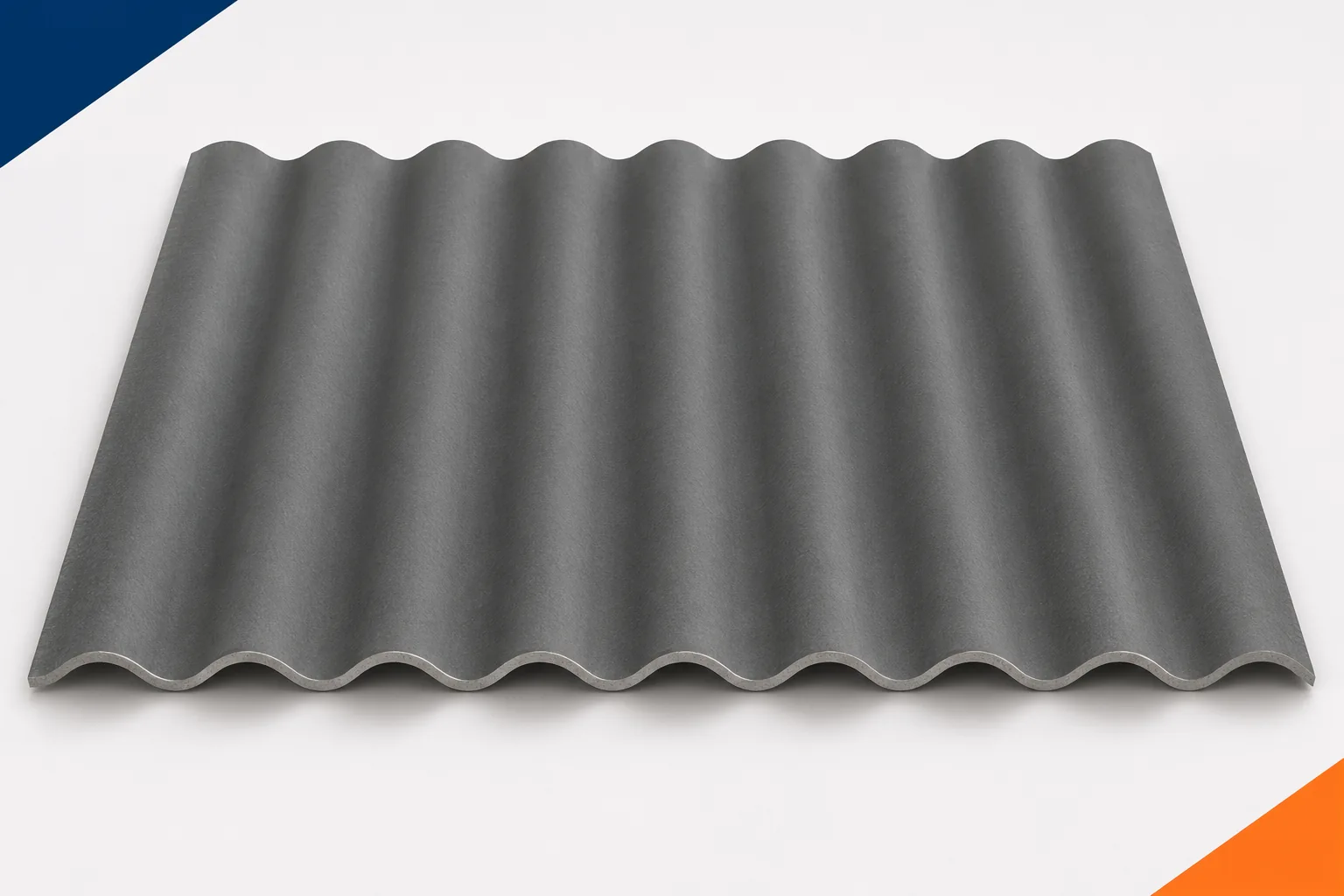
The eaves collect water from the entire roof slope and pass it to the gutter. At the same time, they often form the start of the ventilation path beneath the covering. Fibre-cement sheets must end here in the correct position relative to the support, fixing and drainage. Asbestos-free fibre cement cannot simply project as far as happens to suit the old gutter. An excessively large unsupported section is vulnerable to damage. A well-designed eaves combines edge protection with drainage and ventilation. In the drawing, the fixing distance from the edge and the length of the unsupported section may appear separately. These are not automatically the same dimensions. The width of the batten or purlin also affects them.

By |2026-11-15T17:20:41+01:002026-09-19|Technology and applications|Comments Off on Corrugated roof eaves. Sheet overhang and water drainage

Bringing daylight into a loft with windows and other options

First establish where light is genuinely lacking in the room, and only then choose the type of opening. Roof windows, gable windows and dormers differ in their structural and thermal requirements, so the selection should be preceded by a drawing of the furniture and of how the attic will be used day to day. Check the orientation, shading by trees and neighbouring buildings, and the glazed area rather than just the overall window dimension. Also consider protection against overheating, and bear in mind that one large opening will not always work better than several smaller ones nearer the places of activity.

By |2026-11-14T22:29:25+01:002026-09-09|Technology and applications|Comments Off on Bringing daylight into a loft with windows and other options

Five reasons to consider steel window sills

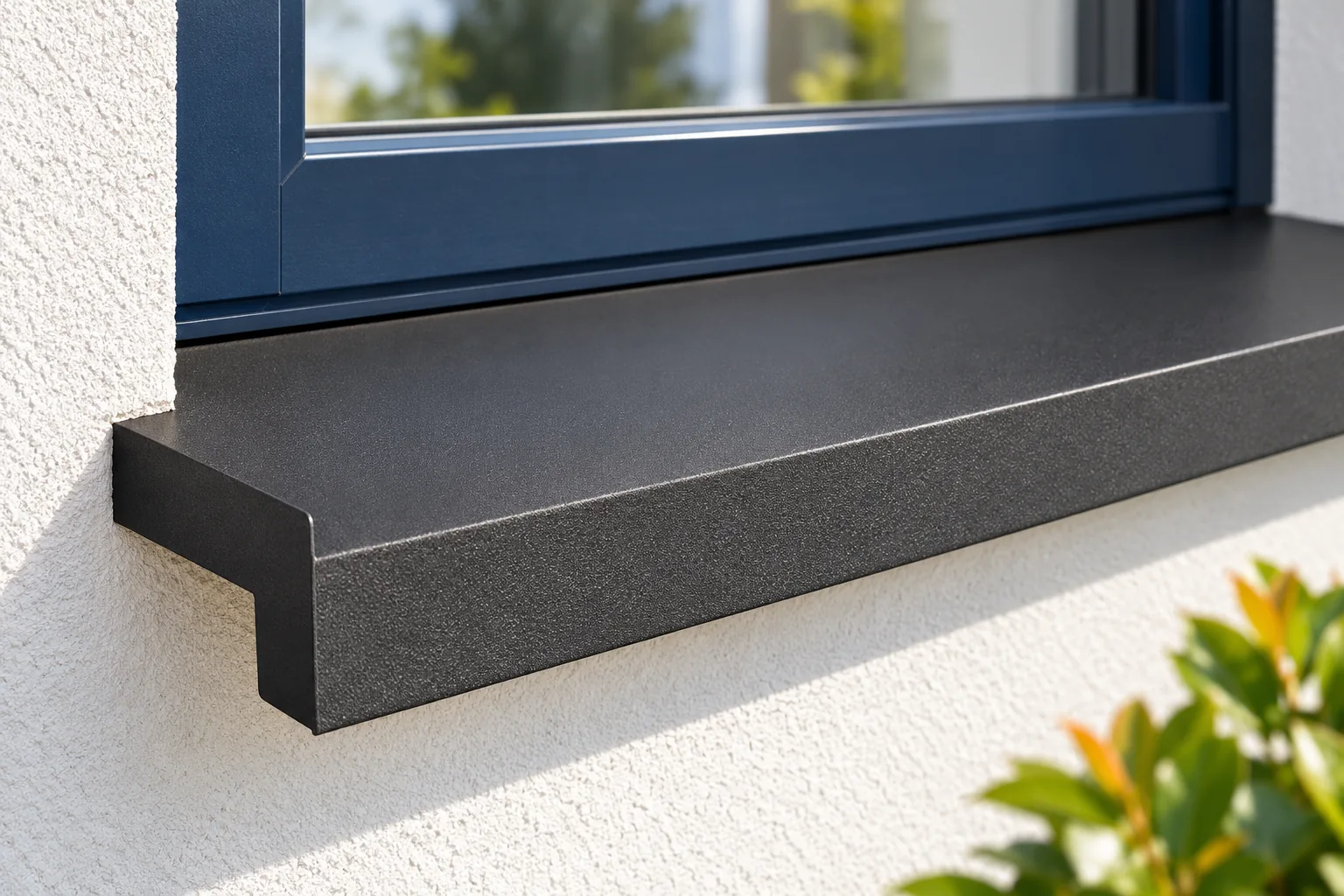
A steel window sill is worth considering above all when a lightweight trim tailored to a specific opening and façade thickness matters. The key decision, however, is not the colour or coating itself but the measurement of the finished layer build-up — including the recess under the frame, side terminations, clearances and the outward fall. Check whether support and the division of long sections have been planned, and whether the transport film will remain on the surface too long. Only then assess the aesthetic qualities and ease of cleaning.

By |2026-11-14T18:54:52+01:002026-09-05|Technology and applications|Comments Off on Five reasons to consider steel window sills

Replacing an old roof covering: when to consider a solar roof

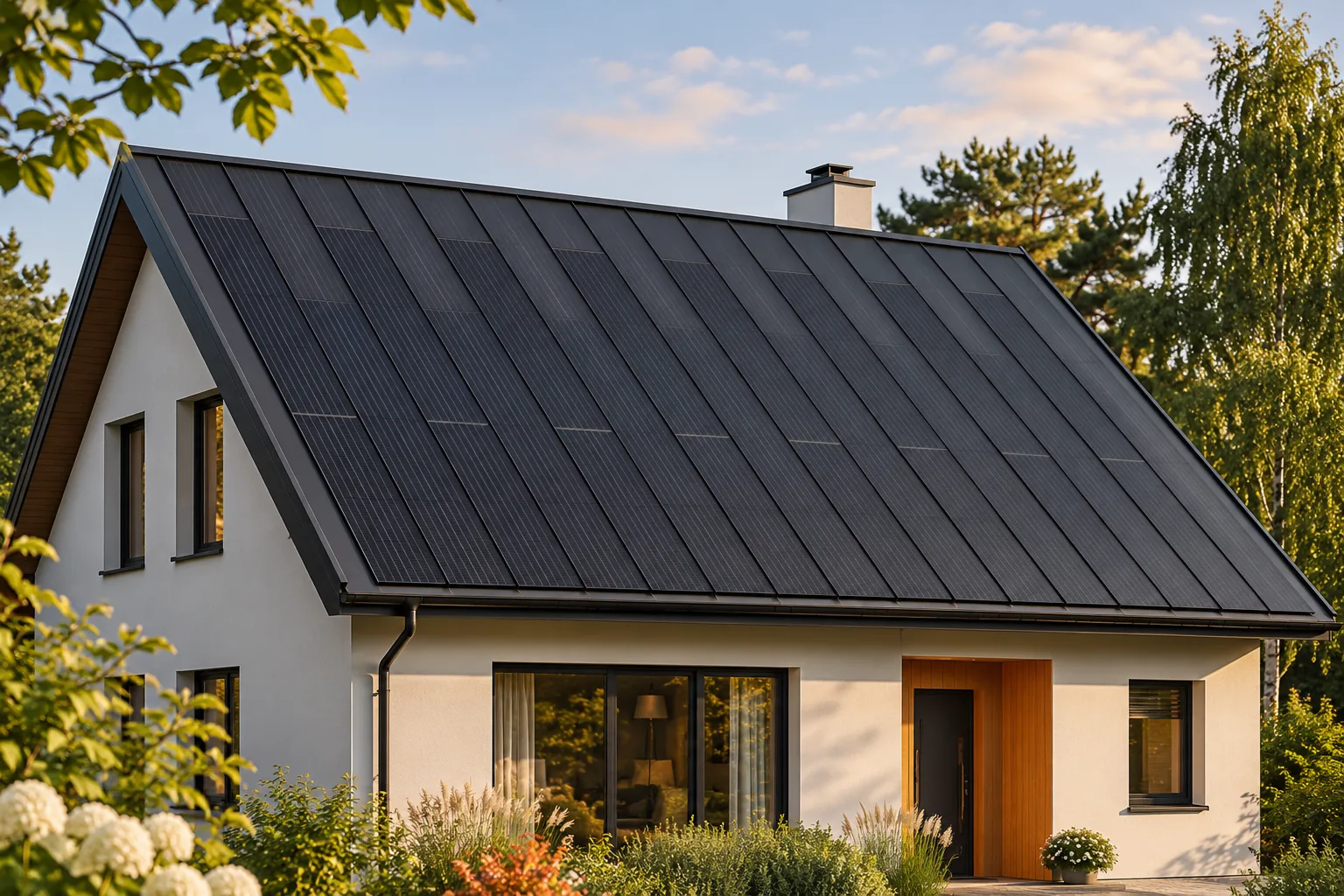
A necessary roof renovation is a good moment to compare a standard covering with a system integrated with photovoltaics. Part of the expenditure on a new roof surface has to be incurred anyway. BIPV allows the protection of the house to be combined with energy generation, and active and passive steel panels form a coherent whole. The decision should be made before ordering materials. First, however, it must be established whether the problem concerns the covering itself or also the layers and structure. Leaks, damaged flashings or a worn coating do not always mean the same scope of work. Sometimes repairing a specific spot is enough. In other cases, a large part of the covering has to be removed and the layers beneath it rebuilt.

By |2026-11-15T17:19:25+01:002026-09-03|Technology and applications|Comments Off on Replacing an old roof covering: when to consider a solar roof

What is chimney flashing and how does it shed water?

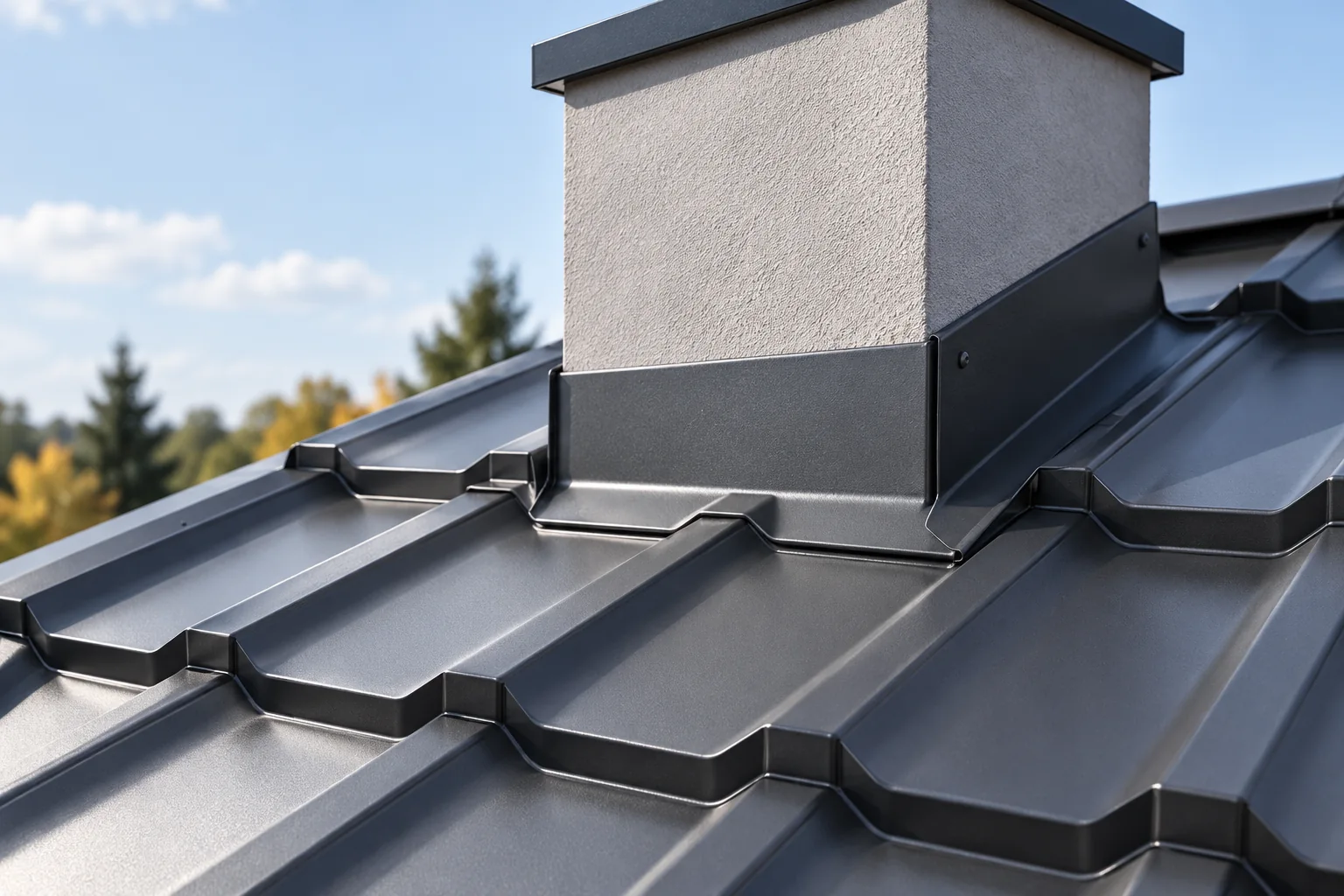
Chimney flashing is designed to intercept water running down the roof slope and guide it safely around the chimney before discharging it onto the covering. Before installation, establish not only the chimney dimensions and roof pitch but also the condition of its finish and the roof area above the obstruction – these determine the shape of the detail. Check that water has a clear path along the sides and that no section forms a pocket trapping debris. Sealant alone at the top edge will not replace correct geometry.

By |2026-11-14T22:27:04+01:002026-08-30|Technology and applications|Comments Off on What is chimney flashing and how does it shed water?

How long can tile-effect steel roofing last?

The service life of tile-effect metal roofing cannot be pinned down with a single figure that applies to every roof. What matters is the steel, the anti-corrosion protection, the coating, the home's surroundings and the quality of installation. The warranty is also not the date on which the covering is due to be replaced. A well-chosen material requires inspections and minor repairs. The owner has the greatest influence on removing dirt, checking water drainage and reacting quickly to damage. Two sheets in the same colour may have different surface protection. They differ in the type of coating, its thickness and the permissible environment of use. Colour does not describe these features. The term "matt sheet" likewise says mainly something about appearance. Resistance to service conditions is demonstrated by the data for the specific variant and the conditions of its use.

By |2026-11-14T15:40:54+01:002026-08-28|Technology and applications|Comments Off on How long can tile-effect steel roofing last?

When is a lightweight roof covering worth considering?

A lightweight sheet metal roof covering can make renovation easier and reduce the weight of the outer roof layer. However, it does not mean that the assessment of the structure can be dispensed with. All layers, snow, wind and additional equipment must be taken into account. Low weight also brings benefits in transport, but long sheets still require careful handling. The choice should be based on the entire roof system, not just the kilograms of a single material. The weight depends on the steel thickness, profile and coating. For an example of tile-effect metal roofing cut to size, the data sheet gives approximately 4.7 kg/m². This is the value for a specific product, not for every roof sheet. A high structural sheet or thicker trapezoidal steel sheet may have a different weight.

By |2026-11-14T15:41:50+01:002026-08-25|Technology and applications|Comments Off on When is a lightweight roof covering worth considering?
Back to top